
&imwidth=800&imheight=600&format=webp&quality=medium "‘Initially ignored, then became India’s deep-strike warrior’: How the Jaguar finally won over the Indian Air Force")
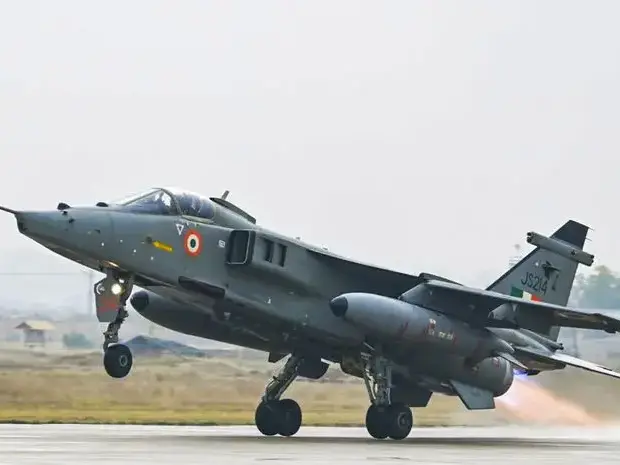
Two IAF pilots died in a Jaguar crash on Wednesday (July 9), but the aircraft’s journey into Indian skies began long before, and with no shortage of drama. On Wednesday afternoon, an Indian Air Force (IAF) Jaguar fighter jet crashed in Rajasthan’s Churu district, killing both pilots on board. The aircraft, which had taken off from the Suratgarh air base, went down in an agricultural field in Bhanoda village at around 1:25 p.m., according to police officials.
The IAF confirmed in a statement, “An IAF Jaguar Trainer aircraft met with an accident during a routine training mission… Both pilots sustained fatal injuries in the accident.” There was no damage reported to civilian property.

While investigations are underway, the tragedy has reignited interest in the SEPECAT Jaguar, once a modern deep strike aircraft.
Here's the story of how Jaguar made its way to IAF
Initially, the Indian Air Force wasn’t particularly interested in the Jaguar. Its hopes were pinned on the indigenous HF-24 ‘Marut’, developed by Hindustan Aeronautics Limited (HAL). However, after the death of HAL’s chief test pilot in a prototype crash in 1970, it became clear that the Marut wouldn’t meet the IAF’s requirement for a Deep Penetration Strike Aircraft (DPSA). Though the Marut served admirably in the 1971 war, its limitations, mainly in power and avionics, meant the IAF had to look elsewhere. Once the Marut was ruled out, the Jaguar quickly became India’s top choice.
Trending Stories
)
Nigeria: Protesters take to the streets, police fire shots
)
US-Iran war: Tehran draws red lines — seven demands before any peace talks
)
Russia-Europe tensions: Polish PM warns Russian attacks could test NATO's unity
&im=FitAndFill=(700,400))
‘Not the US or China’: These are the countries leading the world in arable land
)
EXCLUSIVE | Singer Hanita Bhambri on her Toxic debut, working with Vishal Mishra and more
)
Mark Carney mimics Trump in hilarious moment over C$70 billion clean-energy investment; room erupts in laughter
)
Delhi voter roll shake-up: 3.31 million electors flagged in SIR review
)
Aravana prasadam shortage at Sabarimala temple in Kerala triggers protests, TDB questioned
)
‘End of my career...’: NSA Doval recalls tense Sikkim mission when China captured Indian intelligence team
)
Report: Iran rebuilding Taleghan 2, nuclear site tied to past weapons research, hit twice by Israel
)
Trump defends AI amid growing alarm, announces new 'AI force' and promises an 'AI czar'
)
Iran sets 7 conditions to end war with US: What are Tehran’s demands?
)
Trump announces ‘AI Force’ as debate grows over AI risks and regulation
)
China may have gained access to US's classified F-35 jets; parts meant for repairs diverted to Hong Kong, sparking Pentagon inquiry
)
Gaza under attack: Health chief's son killed in IDF strikes
)
Arvind Kejriwal, family members, Delhi CM Rekha Gupta get SIR notices
)
Cochin shipyard starts building Indian Navy's next-gen missile vessels
)
Saudi vs Houthis: Houthis claim missiles & drones used in attack on key Saudi sites
)
Ed Sheeran addresses Macklemore's removal, Gaza conflict during Philadelphia concert: 'I cannot hide how I feel'
)
Nepal forms 7-member panel to probe August 26 Bhotekoshi flood from source to downstream
)
‘Will go to any extent’: Pakistan vows to defend Saudi Arabia amid Houthi attacks
66 years of the Indus Waters Treaty: How India and Pakistan settled a bitter river dispute
)
The Verdict | When precision fails: US commits war crime in Minab school strike, UN finds
)
9 women found dead near Johannesburg: South Africans rally, demand 'enough' to femicide
)
Kampala-Ankara rift deepens: Uganda suspends military ties, seeks Fred Lumbuye's extradition
)
Several petrol pumps, other businesses to refuse UPI payments above Rs 2,000 from Oct 16: Is it legal?
)
US-Iran war: Tehran sets seven conditions to re-engage in talks with US
)
Reacher star Alan Ritchson opens up about alleged blackmail, suicide attempt during difficult period
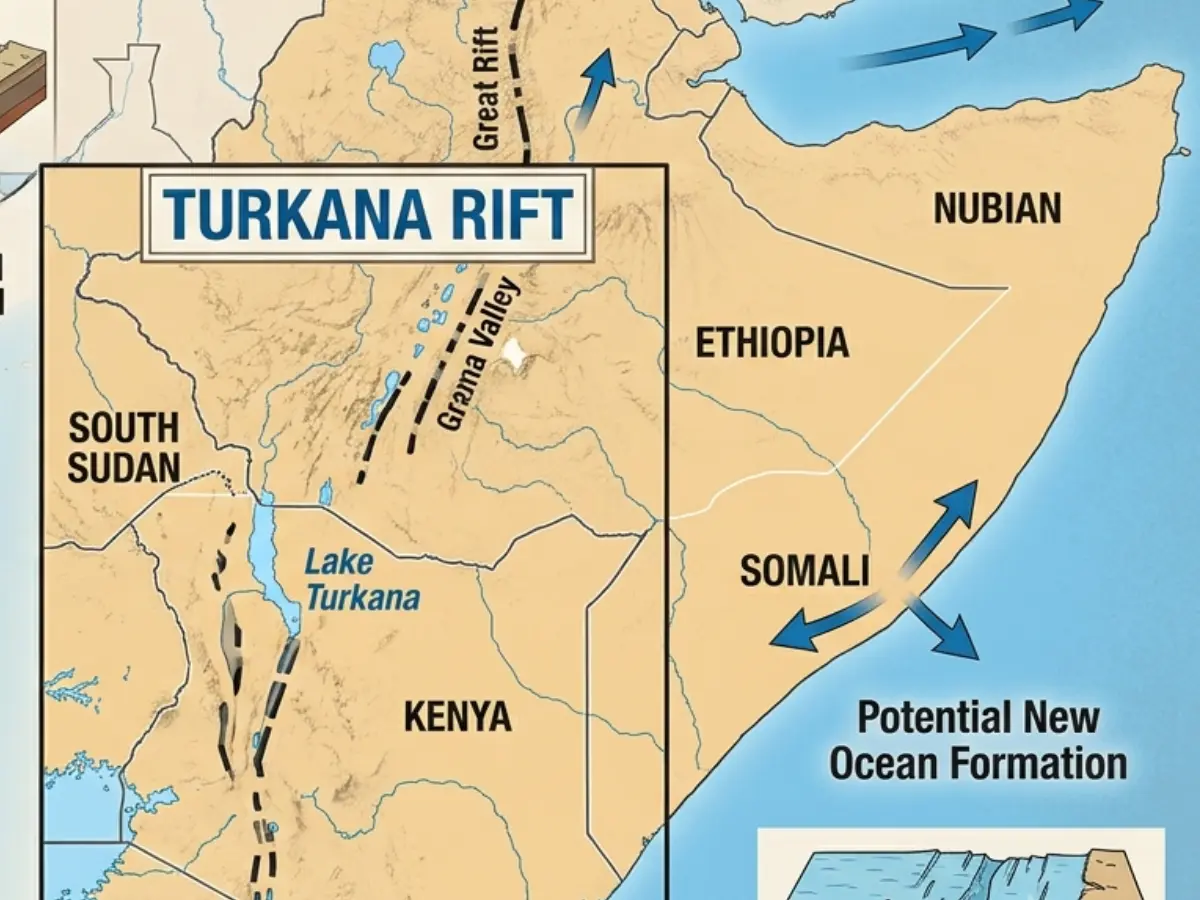)
Africa is splitting, and a lot sooner than estimated, giving way to a new ocean
)
Flying cars in UAE: Ras Al Khaimah signs deal with Chinese company to test new transport
)
West Indies Squad for India Series: Hetmyer included for T20Is, Holder rested
)
Trump bans CNN, MS NOW and Politico from White House over ‘FAKE NEWS’
)
Trump 2.0: Dark days ahead for America’s ‘imperial presidency’
&im=FitAndFill=(700,400))
How many F-35s does Britain, Japan and Israel have?
)
Harry Brook targets long reign at top of T20I rankings after Sri Lanka sweep
)
Russia's deadly Ukraine strikes kill 2 in Sumy, hit Dnipro mall
)
Russia holds first parliamentary elections since the beginning of the Ukraine war
&im=FitAndFill=(700,400))
Meet top 5 Indian batters with fastest T20I centuries
)
Raphinha hat-trick powers Barcelona to 3-1 win over Sevilla in La Liga
)
SEPECAT Jaguar was initially ignored
Interestingly, SEPECAT had pitched the Jaguar to India as early as 1968, even before the aircraft’s maiden flight. But the IAF, still scarred from its poor experience with the Folland Gnat (another British jet), showed no enthusiasm. It even turned down a low-cost offer and barely responded during formal presentations by legendary test pilots Jeffrey Quill and Jimmy Dell.
IAF wanted twin engines
During the mid-1970s, other competitors like France’s Mirage F1 and Sweden’s Viggen entered the race. However, the IAF wanted a twin-engine aircraft, ruling out both single-engine options. Britain’s then-Prime Minister James Callaghan had to personally assure India there would be no future arms sanctions, a promise that helped make Jaguar’s entry easy.
After the Emergency period, the new government pushed ahead with the DPSA project. An Indian team visited France, Sweden, and the UK in early 1978. By October that year, the government officially selected the Jaguar. British Aerospace (BAe) had already formed, consolidating several major aviation firms. A deal was signed in April 1979 for around 130 aircraft, including licence production in India and technology transfer.
Arrival of the Jaguar
On 27 July 1979, the first two Jaguars landed in India. These aircraft ushered in a new phase for the IAF, replacing outdated platforms like the Canberra and the Hunter. The Jaguar gave India its much-needed edge in low-level interdiction and deep-strike missions.
