Xi Jinping in Egypt: West Asia doesn’t need US to manage its security | Gravitas

&imwidth=600&imheight=450&format=webp&quality=medium "Xi Jinping in Egypt: West Asia doesn’t need US to manage its security | Gravitas")
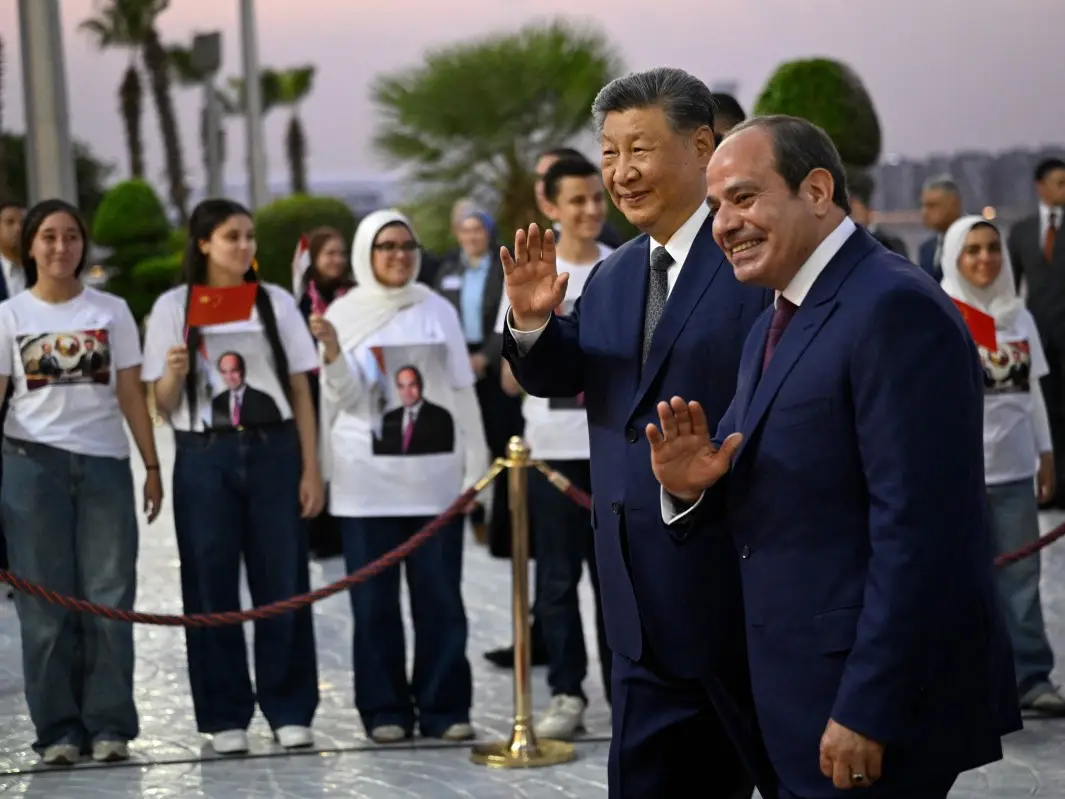
China's President Xi Jinping (L) and his Egyptian counterpart Abdel Fattah al-Sisi wave upon his arrival at the Cairo International Airport on September 1, 2026. Photograph: (AFP)
Xi also expressed support for West Asian nations exploring the creation of a new security architecture for the region. He affirmed that China is ready to work with countries in the region to safeguard the security of international shipping lanes and advance development cooperation.
As West Asia continues to reel under the barrage of Iran's drone and missile attacks in response to renewed US strikes, is China trying to fill the vacuum? This seems to be the case, as Chinese President Xi Jinping landed in Egypt with a powerful message for Trump.
This was Xi's first visit to West Asia in four years and the first visit to Egypt in a decade. Now, the bonhomie between the two countries was clearly on display right from the time of Xi's arrival in Cairo on Tuesday. He was personally welcomed by Egyptian President Abdel Fattah el-Sisi and his wife at the airport tarmac, flanked by a military guard of honour and officials lining up on both sides.
This was followed by a grand welcome ceremony at the presidential palace.
The limousine carrying Xi and his wife was escorted by a motorcycle convoy and met by a cavalry guard of honour near the palace entrance. A military band played music, and a 21-gun salute was fired as Xi's motorcade entered the palace grounds.
But why is this visit so significant?
Egypt is a major US defence partner and receives around 1.3 billion US dollars annually in military aid from Washington.
Trending Stories
)
)
)
)
)
)
)
)
)
)
&im=FitAndFill=(700,400))
)
)
)
)
)
)
&im=FitAndFill=(700,400))
)
)
)
)
)
)
)
)
)
)
)
)
&im=FitAndFill=(700,400))
)
)
)
)
What stood out, though, is Xi calling on West Asian nations to remain masters of their own affairs and oppose external interference. This was seen as a call for reducing American presence and influence in the region.
As the Iran war continues to drag on, reports have indicated a growing discontent within America's West Asian allies, which host large US military installations on their soil. There is also a grouse that the US military hasn't protected them enough. The depleting stock of interceptor missiles has raised more concerns about the defence of West Asia.
Now, Xi also expressed support for West Asian nations exploring the creation of a new security architecture for the region. Additionally, he affirmed that China is ready to work with countries in the region to safeguard the security of international shipping lanes and advance development cooperation.
These remarks assume significance, with two key regional alliances being forged in the last two months.
To begin with, Saudi Arabia and 13 other countries came together to form a maritime defence alliance in July, in response to the threat from the Iran-backed Houthis. The alliance, comprising countries like Pakistan, Kuwait, Bahrain, Qatar and Türkiye, resolved to protect shared maritime interests in Bab al-Mandab, the Red Sea and the Gulf of Aden.
This was followed by Pakistan, Türkiye and Saudi Arabia signing a Mecca joint defence agreement in August. According to this agreement, any armed attack against any one of these three countries shall be regarded as an attack against them all.
Now, China has high stakes in reopening the Strait of Hormuz because it is Iran's largest trading partner and purchases roughly 90 per cent of its crude oil.
It also emerged as a peacemaker in 2023 by brokering an agreement between Saudi Arabia and Iran, which re-established diplomatic relations with each other.
During Xi's visit to Cairo, both sides also signed an agreement to expand Beijing's footprint in the Suez Canal Economic Zone, which has already attracted around four billion US dollars in Chinese investment so far.
This gives Beijing greater influence in the Suez Canal, which handles around 12 to 15 per cent of global trade.
With growing questions over America's long-term role in West Asia, China is seeking to present itself as a stabilising alternative which opposes war and focuses on infrastructural development.