

&imwidth=800&imheight=600&format=webp&quality=medium "Which Indian river is known as the 'River of Blood' and why?")
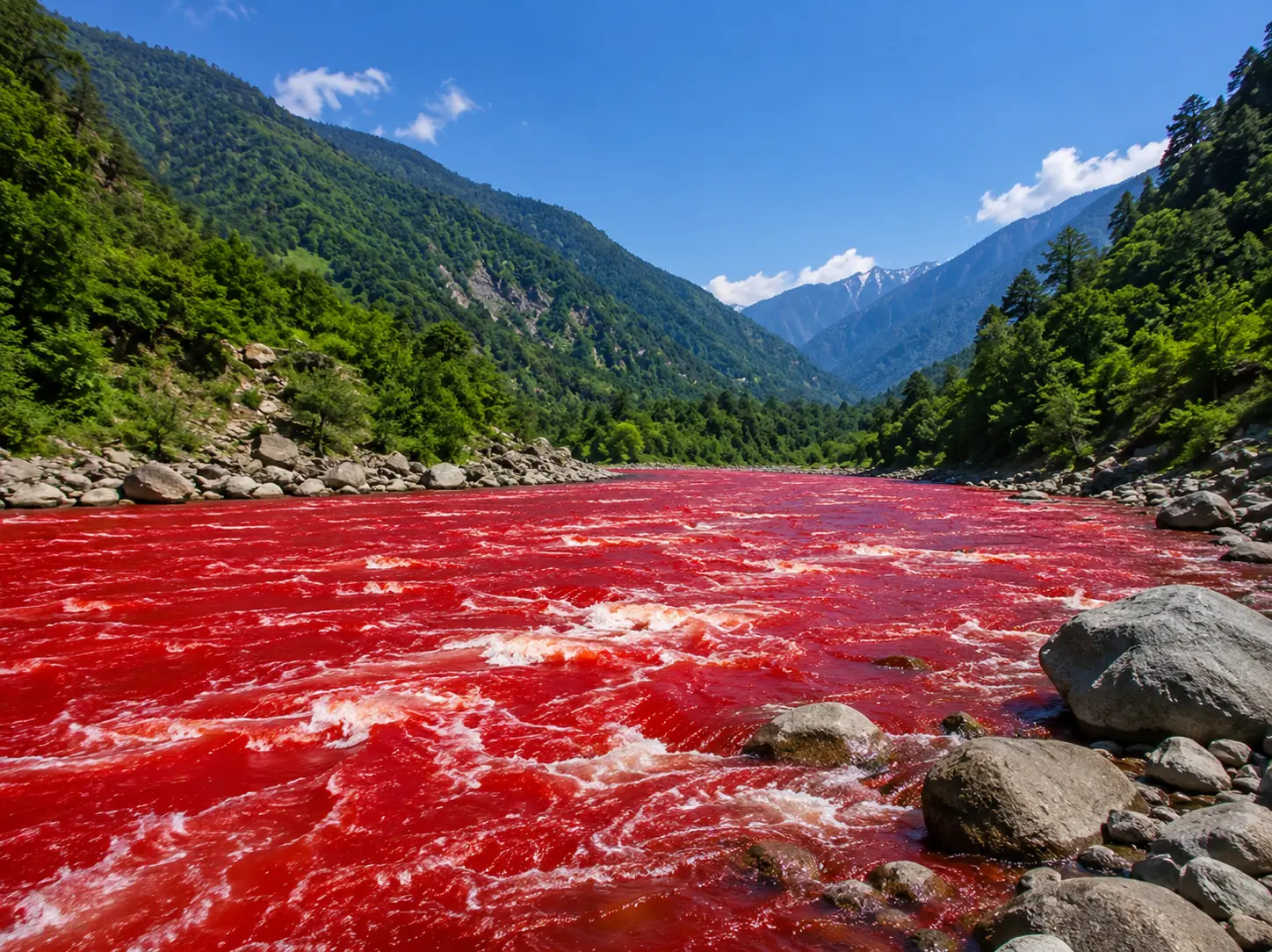
India is a land of diverse geographical wonders, but few are as captivating as the Lohit river. Tucked away in the remote, mist-covered mountains of Arunachal Pradesh, this majestic river has fascinated travellers, geologists, and locals alike. It is famously referred to as the 'River of Blood' in India, a dramatic and somewhat eerie name that sparks both curiosity and a deep sense of mystery.
Unlike the calm, predictable streams found in the plains, the Lohit is wild, untamed, and holds a secret that completely transforms its appearance during certain times of the year.
What is the Lohit, and where does it come from?
The Lohit river is a major and powerful tributary of the mighty Brahmaputra. It begins its long, turbulent journey high up in the snow-capped Zayal Chu range of eastern Tibet. From these freezing heights, it flows fiercely through the rugged mountainous landscape, travelling for about 200 kilometres through the northeastern state of Arunachal Pradesh before finally entering the flat plains of Assam.
As it cuts through the Mishmi Hills, the river forms a fast, aggressive, and highly unpredictable current. It is here, amidst the wild, untouched valleys and dense forests, that the river displays the unique characteristic that gives it its famous nickname. It stands in stark contrast to the usual blue or emerald green waters one might expect from a Himalayan watercourse.
Why is the Lohit called the river of blood?
Trending Stories
&imwidth=180&imheight=135&format=webp&quality=medium)
'This is humiliation': Vijay Deverakonda under fire over controversial marriage proposal remark on Koffee With Karan 9
&imwidth=180&imheight=135&format=webp&quality=medium)
Shikhar Mohan earns maiden India A call-up, replaces KL Rahul
&imwidth=180&imheight=135&format=webp&quality=medium)
AI slop or smart strategy? South African author Coral Hart defends Her 370 AI- assisted books in 20 months
&imwidth=180&imheight=135&format=webp&quality=medium)
Two BrahMos missiles on Tejas, triple the range and 100% indigenisation, says former BrahMos CEO
&imwidth=180&imheight=135&format=webp&quality=medium)
India-China face-off continues near Arunachal’s Taksing, reveals ITBP chief in first official confirmation of tensions
&imwidth=180&imheight=135&format=webp&quality=medium)
Ilhan Omar breaks silence over alleged marriage to her brother; Trump thinks it's 'really good answer'
&imwidth=180&imheight=135&format=webp&quality=medium)
WATCH: Trump demands Ilhan Omar removal from Congress for 'using fake name to be sworn in'. So what is her real name?
&imwidth=180&imheight=135&format=webp&quality=medium)
Netanyahu dials PM Modi, invites him and Capt Smit Machchhar to light torch on Israel’s Independence Day
&imwidth=180&imheight=135&format=webp&quality=medium)
Pakistan airline PIA unveils new crew uniforms, faces online criticism
&imwidth=180&imheight=135&format=webp&quality=medium)
Christa Pike's failed execution: Tennessee team struggled to insert IV lines, lawyer says
&imwidth=180&imheight=135&format=webp&quality=medium)
Did Neha Bora call for Bangladesh-like GenZ protest, 'anarchy' in India? WION Fact-checks viral claim
&imwidth=180&imheight=135&format=webp&quality=medium)
US midterms 2026: US Supreme Court allows New Hampshire to restrict student IDs for voting
&imwidth=180&imheight=135&format=webp&quality=medium)
A secret code, a midnight escape and 300 deaths: The Russian officer who turned on Putin
&imwidth=180&imheight=135&format=webp&quality=medium)
India’s 2022 CWG silver medallist Sabbhineni Meghana announces international retirement
&imwidth=180&imheight=135&format=webp&quality=medium)
Trump ordered to answer questions under oath in BBC defamation lawsuit by December 11
&imwidth=180&imheight=135&format=webp&quality=medium)
Putin says Russia is ready to resume Ukraine-US peace talks but rejects 'short ceasefire' amid deadly attacks
&imwidth=180&imheight=135&format=webp&quality=medium)
Horrific video shows the moment 18-year-old fell to her death from Mexico amusement park ride
&imwidth=180&imheight=135&format=webp&quality=medium)
'It's a crime not to see this scene': Tehran puts Trump 'behind bars'
&imwidth=180&imheight=135&format=webp&quality=medium)
IND-W vs ZIM-W, 1st ODI: Rawal, Charani star in India’s nine-wicket win over Zimbabwe
&imwidth=180&imheight=135&format=webp&quality=medium)
Meghan Markle’s father Thomas under investigation over alleged child abuse images: Report
&imwidth=180&imheight=135&format=webp&quality=medium)
SA vs AUS 2nd Test: Temba Bavuma reveals 'Tendulkar inspiration' behind career-best 179
&imwidth=180&imheight=135&format=webp&quality=medium)
China's dancing robot turns violent bodyguard, lifts cars and fights intruders - Watch
&imwidth=180&imheight=135&format=webp&quality=medium)
Watch: India rejects ‘imprecise and unsupported’ references in UN migrant rights report
&imwidth=180&imheight=135&format=webp&quality=medium)
US to get 850 F-35 stealth fighter jets under 10-year Pentagon-Lockheed deal
&imwidth=180&imheight=135&format=webp&quality=medium)
GRAVITAS | Putin fires nuclear-capable hypersonic missiles, Zelensky ready to surrender 25% territory
&im=FitAndFill=(700,400)&imwidth=180&imheight=135&format=webp&quality=medium)
New Friday OTT releases (October 23, 2026): Gajab Raat, Dorothy, Chaar Yaar- Watch these 6 new movies and TV shows on Netflix, Prime Video and more
&im=FitAndFill=(700,400)&imwidth=180&imheight=135&format=webp&quality=medium)
Serbia elections: Nearly 150,000 people take to streets in massive rally against Aleksandar Vucic | In pics
&imwidth=180&imheight=135&format=webp&quality=medium)
BCCI’s CoE cautious over Hardik Pandya’s fitness, sets expected comeback timeline
&imwidth=180&imheight=135&format=webp&quality=medium)
First Lady Melania Trump secures ceasefire between Russia, Ukraine in Oleshky: White House
&imwidth=180&imheight=135&format=webp&quality=medium)
Finance influencer dies by suicide in Chennai; father accuses tech CEO, who denies charge
&imwidth=180&imheight=135&format=webp&quality=medium)
'Vivek should keep it up': Trump defends Ramaswamy's controversial campaign ad targeting Amy Acton
&imwidth=180&imheight=135&format=webp&quality=medium)
One man, 8 months of work, and a river dirty again: Why Bittu Tabahi may quit
&imwidth=180&imheight=135&format=webp&quality=medium)
450 villagers in UP rush to take anti-rabies shots after consuming 'charnamrit'
&imwidth=180&imheight=135&format=webp&quality=medium)
US midterms 2026: Elon Musk’s political spending hits $445 million as Republicans battle to retain Senate control
&imwidth=180&imheight=135&format=webp&quality=medium)
ENG vs SL: Harry Brook breaks Shubman Gill’s record for fastest ODI double century
Mountain rivers usually boast crystal clear waters. However, the Lohit river often surprises onlookers by turning into striking shades of rust, bright orange, and crimson red.
The primary reason for this colourful transformation is completely natural and geological. The river flows right through a specific geographical area that is incredibly rich in laterite soil. Laterite is a type of earth that contains a very high concentration of iron oxides. When there is heavy seasonal rainfall, or when the river swells and flows with intense force, it rapidly erodes the riverbanks.
During this process, the water washes massive amounts of this red, iron-rich mud into the main stream. As this thick soil mixes with the fast-flowing rapids, the iron suspensions completely alter the water's appearance, making the entire river look like a rushing stream of thick blood.
The ancient myth of Parashuram Kund
Beyond the scientific and geological explanation, the 'River of Blood' is also deeply rooted in ancient Indian mythology. The river flows very close to Parashuram Kund, a highly revered Hindu pilgrimage destination located within the pristine Kamlang Reserve Forest.
According to local legends and ancient mythological texts, Lord Parashuram, who is considered an avatar of Lord Vishnu, was ordered by his father, Jamadagni, to behead his own mother, Renuka. Bound by duty, he committed the act, but the horrific sin of matricide weighed heavily upon him. Seeking penance and purification, Lord Parashuram journeyed to this exact region to wash his blood-stained axe in the freezing waters of the Lohit river.
Devotees and religious scholars believe that the blood from his axe washed off into the stream, turning the water red for eternity and permanently giving the river its historic, sacred name.
A thriving biodiversity hotspot
The region surrounding the Lohit river is not just known for its red water and mythological ties; it is also a massive ecological hotspot. The river basin transitions sharply from high-altitude alpine forests down to incredibly dense tropical jungles. This dramatic shift in altitude and climate makes it a perfect, undisturbed home for a rich variety of flora and fauna.
Botanists and nature lovers flock to the area to find rare orchids, beautiful wild rhododendrons, and highly sought-after medicinal plants like the Mishmi teeta, which is uniquely native to these mountain slopes.
The cultural landscape along the river is equally diverse and fascinating. As the river flows downward, the local communities change, showcasing a beautiful blend of ancient animist traditions in the upper reaches, Theravada Buddhism practised by the Khampti and Singpho tribes in the middle sections, and traditional Hindu beliefs closer to the plains.
If you are planning to witness this majestic river and its surrounding wilderness, the ideal time to visit is between the months of October and April, when the weather is most accommodating. However, tourists must remember that they need to obtain an Inner Line Permit to enter Arunachal Pradesh, a measure taken to protect the region's delicate environment and indigenous cultures.
