Poor sleeping patterns may increase asthma risk: Study

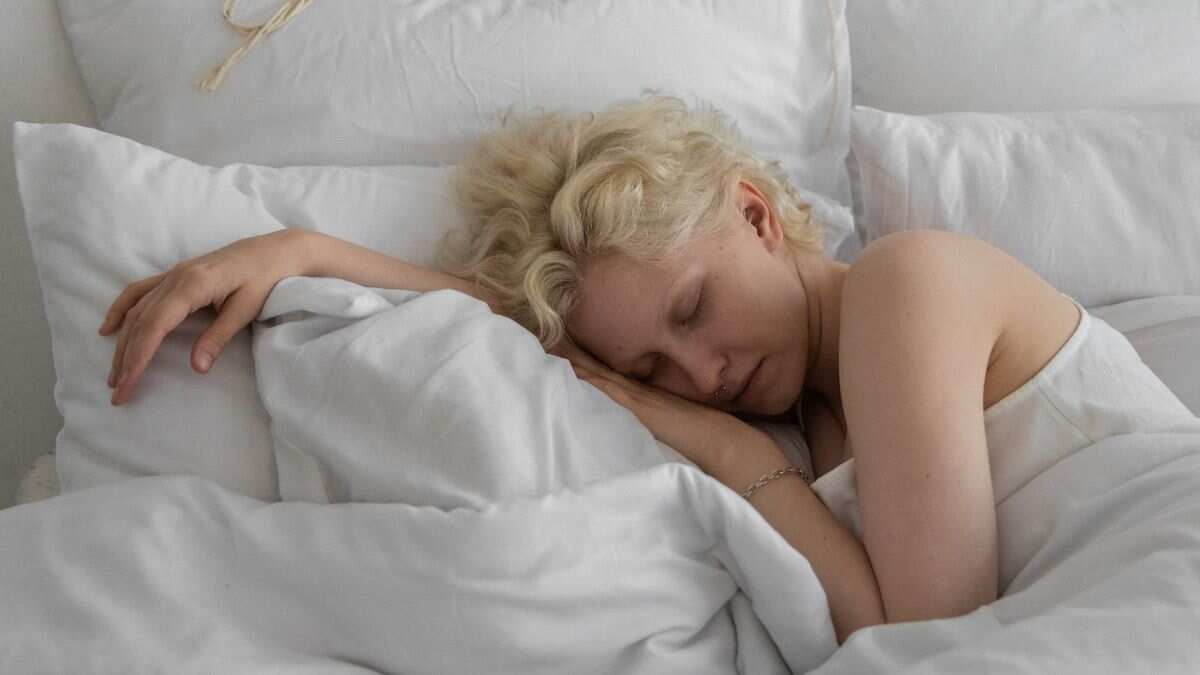
Regularly getting a good night’s sleep may reduce asthma risk
Most of us know that irregular sleeping patterns can lead to a number of health issues and could increase stress levels exponentially. But did you know that it could also increase asthma risk? A decade-long study has suggested that regularly enjoying a good night's sleep could significantly reduce your risk of developing asthma, which affects about 300 million people worldwide.
The findings, whichwere first published in the journal BMJ Open Respiratory Research,revealed that poor sleeping patterns may bolster genetic susceptibility to asthma and could potentially double the risk of being diagnosed with the inflammatory disease.
Meanwhile, ahealthy sleep pattern has been linked to a lower risk of asthma, which suggests that detecting and treating sleep disorders early on may lessen the risk.

Making use of the data provided by the UK Biobank study, ateam from Shandong University in Chinaexamined 455,405 people aged 38 to 73 anddeveloped a model of risk and sleep traits after following the participants for more than a decade.
People were asked about their sleeping patterns at the start of the study. They were also askedwhether they were a morning person or a night owl, how long they usually sleep, whether they snored, had insomnia and whether they experienced excessive sleepiness during the daytime.
&imwidth=180&imheight=135&format=webp&quality=medium)
The Royals season 2: Ishaan Khatter's series gets new director after two back-to-back exits- Report
&imwidth=180&imheight=135&format=webp&quality=medium)
Viral video shows cross falling on Colombia priest, no official confirmation | WATCH
&imwidth=180&imheight=135&format=webp&quality=medium)
Trump’s approval ratings hit a new low, Democrats want US president to campaign more
&imwidth=180&imheight=135&format=webp&quality=medium)
France reports first human case of livestock virus Shamonda, patient dies; what we know so far
&imwidth=180&imheight=135&format=webp&quality=medium)
Trump called Musk to lift Starlink restrictions affecting Ukraine's military operation: Report
&imwidth=180&imheight=135&format=webp&quality=medium)
Two BrahMos missiles on Tejas, triple the range and 100% indigenisation, says former BrahMos CEO
&imwidth=180&imheight=135&format=webp&quality=medium)
Ilhan Omar breaks silence over alleged marriage to her brother; Trump thinks it's 'really good answer'
&imwidth=180&imheight=135&format=webp&quality=medium)
Pakistan signs another defence pact even as Makkah Alliance shows no teeth. This time, it's with Qatar, Indonesia, Turkey
&imwidth=180&imheight=135&format=webp&quality=medium)
Netanyahu dials PM Modi, invites him and Capt Smit Machchhar to light torch on Israel’s Independence Day
&imwidth=180&imheight=135&format=webp&quality=medium)
'This time I’m not doing it': Trump reveals Google CEO refused his Atlantic Ocean renaming idea
&imwidth=180&imheight=135&format=webp&quality=medium)
US midterms 2026: US Supreme Court allows New Hampshire to restrict student IDs for voting
&imwidth=180&imheight=135&format=webp&quality=medium)
Putin fires nuclear capable hypersonic missiles, Zelensky ready to surrender 25% territory
&imwidth=180&imheight=135&format=webp&quality=medium)
Trump ordered to answer questions under oath in BBC defamation lawsuit by December 11
&imwidth=180&imheight=135&format=webp&quality=medium)
Putin says Russia is ready to resume Ukraine-US peace talks but rejects 'short ceasefire' amid deadly attacks
&imwidth=180&imheight=135&format=webp&quality=medium)
From Agni-V to Project Kusha: How are India’s indigenous missile systems and defence shield reshaping modern warfare
&imwidth=180&imheight=135&format=webp&quality=medium)
'It's a crime not to see this scene': Tehran puts Trump 'behind bars'
&imwidth=180&imheight=135&format=webp&quality=medium)
What is the ‘heat ray’ weapon? Pete Hegseth reportedly authorises DHS to test it at US-Mexico border
&imwidth=180&imheight=135&format=webp&quality=medium)
Will Rohit and Kohli play ODI World Cup 2027? BCCI president Manhas says board 'not in a position to comment'
&imwidth=180&imheight=135&format=webp&quality=medium)
China's dancing robot turns violent bodyguard, lifts cars and fights intruders - Watch
&imwidth=180&imheight=135&format=webp&quality=medium)
Watch: India rejects ‘imprecise and unsupported’ references in UN migrant rights report
&imwidth=180&imheight=135&format=webp&quality=medium)
US to get 850 F-35 stealth fighter jets under 10-year Pentagon-Lockheed deal
&imwidth=180&imheight=135&format=webp&quality=medium)
GRAVITAS | Putin fires nuclear-capable hypersonic missiles, Zelensky ready to surrender 25% territory
&imwidth=180&imheight=135&format=webp&quality=medium)
IIFA 2026: Salman Khan warns paps, kisses little fan and hugs Kareena Kapoor at press conference
&imwidth=180&imheight=135&format=webp&quality=medium)
US business activity grows in June, but tariffs and inflation cloud outlook
&imwidth=180&imheight=135&format=webp&quality=medium)
'That was great, who threw that punch?': Trump asks as protester punched at rally
&imwidth=180&imheight=135&format=webp&quality=medium)
‘I caution the president...’: Trump’s ex-press secretary warns after Zacharia’s exit
&imwidth=180&imheight=135&format=webp&quality=medium)
Trump’s bid to put his name on everything: This time, it was Atlantic Ocean; a look at past efforts
&imwidth=180&imheight=135&format=webp&quality=medium)
Diljit Dosanjh's Oct 30 Delhi show hits roadblock, Delhi Police denies permission
&imwidth=180&imheight=135&format=webp&quality=medium)
'This is despicable': Amy Acton hits back at Vivek Ramaswamy over Ohio campaign ad featuring her estranged mother
&imwidth=180&imheight=135&format=webp&quality=medium)
Finance influencer dies by suicide in Chennai; father accuses tech CEO, who denies charge
&imwidth=180&imheight=135&format=webp&quality=medium)
One man, 8 months of work, and a river dirty again: Why Bittu Tabahi may quit
&imwidth=180&imheight=135&format=webp&quality=medium)
'Vivek should keep it up': Trump defends Ramaswamy's controversial campaign ad targeting Amy Acton
&imwidth=180&imheight=135&format=webp&quality=medium)
ENG vs SL: Harry Brook’s 202 goes in vain as Sri Lanka pull off second-highest ODI chase
&imwidth=180&imheight=135&format=webp&quality=medium)
ENG vs SL: Harry Brook breaks Shubman Gill’s record for fastest ODI double century
&imwidth=180&imheight=135&format=webp&quality=medium)
Saudi Arabia targeted yacht carrying 14 Indians in Red Sea, rescue underway, Houthis claim
The study defines a healthy sleep patternas being more of a morning person, never having insomnia or experiencing it rarely, sleeping for seven to nine hours a night, no snoring and no frequent sleepiness during the day. The genetic makeup of all these in the study was mapped, and an asthma risk score was drawn up.
About one in every three participants was found to have a high genetic risk of developing asthma, a third had an intermediate risk and another third had a low risk. In total, 17,836 people were diagnosed with asthma.
"These results showed that a healthy sleep pattern could significantly decrease asthma risk in any genetic subgroup,"the researchers wrote. "Unhealthy sleep patterns and sleep traits … were significantly associated with the risk of asthma in adults. The combination of poor sleep pattern and high susceptibility could lead to additive asthma risk."
"A healthier sleep pattern could be beneficial in asthma prevention regardless of genetic conditions," the researchers concluded.
As compared to people with low genetic risk, those with high genetic risk were 47 per centmore likely to be diagnosed with asthma.While participants with a poor sleeping pattern were 55 per cent more likely to develop the condition.
Also, participants at high genetic risk, who also reported poor sleep patterns, were more than twice as likely to be diagnosed with asthma as those with a healthy sleep pattern and a low genetic risk.
The results showed that a healthy sleep pattern decreasesthe risk of asthma by 44 per cent in those at low genetic risk, 41 per cent in those at intermediate risk and 37 per cent in those with high genetic risk.
Urging caution, Dr Erika Kennington, the head of research and innovation at the charity Asthma and Lung UK said, "This research suggests there is a link between asthma and not getting enough sleep, although it is too early to say that treating poor sleep could reduce someone’s risk of developing asthma."