Cycling enthusiast’s tragic death sparks discourse on risks of over-exercising

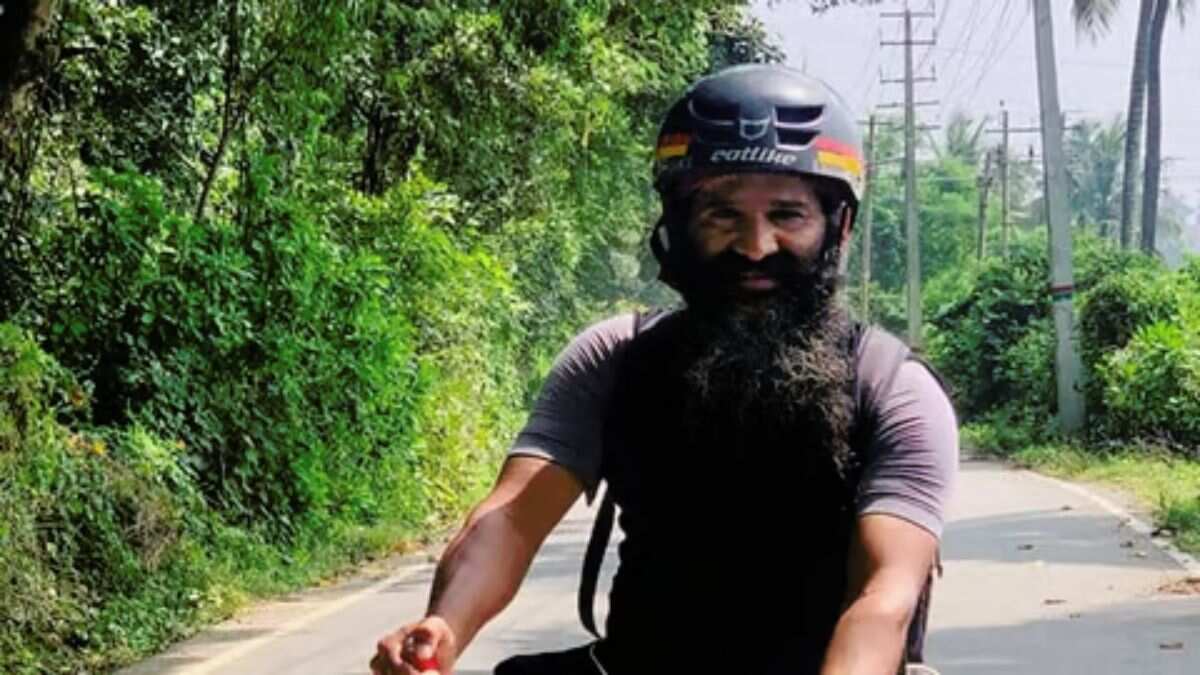
Anil Kadsur
The untimely demise of Anil Kadsur, a 45-year-old cycling enthusiast from Bengaluru known for his extraordinary feat of cycling 100 kilometres daily for over 1,000 days, has sent shockwaves through the cycling community and beyond. Kadsur's sudden death due to a cardiac arrest on February 2 has prompted discussions about intense physical activity and its potential impact on health.
Kadsur's passion for cycling and commitment to fitness made him a revered figure within the cycling community. His dedication inspired many to embrace a healthier lifestyle, but his tragic passing has also raised questions about the risks associated with extreme levels of exercise.
Anil Kadsur, also known as Cycle Yogi or Cycle Guru, gained prominence in August when he embarked on a challenge to cycle 100 kilometres daily for nine consecutive days. What started as a personal challenge soon became a mission, as Kadsur continued his daily cycling regimen for over three and a half years.

Despite facing challenges, including the restrictions imposed by the Bengaluru lockdown, Kadsur remained steadfast in his commitment to cycling. His dedication not only showcased his resilience but also served as a source of inspiration for many. The news of his sudden and tragic demise has left his admirers in utter shock and sadness.
Risks of Over-Exercising
While moderate exercise offers numerous health benefits, exceeding a certain threshold can have adverse effects and increase the risk of mortality. According to medical experts, several factors may have contributed to his untimely demise. Kadsur's relentless 100-kilometre cycling regimen, without rest days, may have surpassed the optimal exercise limit, leading to increased strain on his heart and body.
&imwidth=180&imheight=135&format=webp&quality=medium)
'Nidal Hasan's firing-squad execution to be livestreamed', says Pentagon; first US military execution since 1961
&imwidth=180&imheight=135&format=webp&quality=medium)
'Baseless and misconceived': India issues statement after Elon Musk's 'oligarchs' claim over Starlink delay
&imwidth=180&imheight=135&format=webp&quality=medium)
Trump's naked 23-karat gold statue unveiled near European Parliament
&imwidth=180&imheight=135&format=webp&quality=medium)
Musk doubles down on Starlink India licence allegations; Rahul Gandhi says ‘wait till...’
&imwidth=180&imheight=135&format=webp&quality=medium)
Thai Actors Fourth Nattawat, Gemini Norawit face racism accusations from Indian fans over viral Bollywood act
&imwidth=180&imheight=135&format=webp&quality=medium)
Nigeria govt rolls out 30-day NNPC petrol discount, insists it is not a subsidy
&imwidth=180&imheight=135&format=webp&quality=medium)
Captain Smit Machchhar on feet again, walks 10 steps as recovery continues after Flydubai flight attack
&imwidth=180&imheight=135&format=webp&quality=medium)
‘Battlespace has expanded’: Wg Cdr Priti Ojha (Retd) reflects on changing face of air power on IAF Day
&imwidth=180&imheight=135&format=webp&quality=medium)
‘IPL franchises provided a big base’: SA20 commissioner Graeme Smith on league’s success
&imwidth=180&imheight=135&format=webp&quality=medium)
24-year-old Sri Lankan man sentenced to death for blasphemy in Saudi Arabia
&imwidth=180&imheight=135&format=webp&quality=medium)
A Love Other Than Yours: The temptation to cheat and what pushes people over the edge
&imwidth=180&imheight=135&format=webp&quality=medium)
Russia president Putin promises to 'do everything' to help settle Middle East conflict as US-Iran negotiations stall
&imwidth=180&imheight=135&format=webp&quality=medium)
BTS agency HYBE announces first-ever Weverse Con Festival in India
&imwidth=180&imheight=135&format=webp&quality=medium)
Trump has a new 'enemy': Anyone who calls it 'artificial intelligence'. Here's what we wants instead
&imwidth=180&imheight=135&format=webp&quality=medium)
Paxton in leaked audio says Trump hurting his election chances
&imwidth=180&imheight=135&format=webp&quality=medium)
India at UN: Pak allows terror groups to operate from its soil
&imwidth=180&imheight=135&format=webp&quality=medium)
Air India, Air India Express increase fuel surcharge on domestic, international flights amid rising ATF costs
&im=FitAndFill=(700,400)&imwidth=180&imheight=135&format=webp&quality=medium)
Nana Patekar’s upcoming big-screen films: From Shakti Shalini to Eetha
&imwidth=180&imheight=135&format=webp&quality=medium)
Nobel Peace Prize 2026: Trump to Carney, who are the top contenders? Why the ISS is a surprise contender
&imwidth=180&imheight=135&format=webp&quality=medium)
Flydubai flight attack: Indian pilot Smit Machchhar to receive Israel's highest civilian bravery award for saving 174 lives
&im=FitAndFill=(700,400)&imwidth=180&imheight=135&format=webp&quality=medium)
US midterms 2026: 10 leaders and candidates to watch in the battle for Congress
&imwidth=180&imheight=135&format=webp&quality=medium)
42 ex-judges write open letter, express concern over allegations against Election Commission
&im=FitAndFill=(700,400)&imwidth=180&imheight=135&format=webp&quality=medium)
From Kramatorsk buses to Yandex fire: Russia-Ukraine war in the last 48 hours
&imwidth=180&imheight=135&format=webp&quality=medium)
Pakistan denies reports of PAF jets being used in attacks against Iran-backed Houthis in Yemen
&imwidth=180&imheight=135&format=webp&quality=medium)
New York ICE shooting sparks protests as Mamdani to call on Trump to halt ICE operations
&imwidth=180&imheight=135&format=webp&quality=medium)
Nana Patekar's #MeToo controversy: From Tanushree Dutta’s allegations to court ruling
&imwidth=180&imheight=135&format=webp&quality=medium)
Atlantic hurricane Isaias could make landfall as a strong Category 2 storm, tornado warnings issued
&imwidth=180&imheight=135&format=webp&quality=medium)
Who is Nana Patekar's wife Neelakanti? The bank officer who earned Rs 2,500 when he earned Rs 50
&imwidth=180&imheight=135&format=webp&quality=medium)
France student protests: Over 500 arrested, govt promises 3,000 substitute teachers
&imwidth=180&imheight=135&format=webp&quality=medium)
French students light European bonfire, protests erupt in Belgium, Italy & Greece | Gravitas
&imwidth=180&imheight=135&format=webp&quality=medium)
Arizona congressional candidate claims she was sexually assaulted while repairing signs
&imwidth=180&imheight=135&format=webp&quality=medium)
New Cold War: Why is China buying more gold? Explained
&imwidth=180&imheight=135&format=webp&quality=medium)
Zendaya gives The Odyssey white lace jacket a stylish twist at Paris Fashion Week 2026
&imwidth=180&imheight=135&format=webp&quality=medium)
SC asks Centre to frame mechanism against unethical pharma marketing practices
&imwidth=180&imheight=135&format=webp&quality=medium)
US suspends Microsoft, Infosys, Tata, Wipro from green card programme over alleged H-1B abuse
&imwidth=180&imheight=135&format=webp&quality=medium)
Trump honours Microsoft CEO Satya Nadella with top technology honour amid immigration scrutiny
&imwidth=180&imheight=135&format=webp&quality=medium)
Sri Lankan Tamil worker gets death sentence in Saudi Arabia over blasphemy, calls for pardon intensify
Speaking exclusively to WION, Dr Talha Meeran, Consultant Cardiologist in the Department of Advanced Cardiac Sciences and Heart Transplant at Sir H. N. Reliance Foundation Hospital and Research Centre, says, "It's important to note that while moderate exercise is beneficial, excessive exercise can have detrimental effects on health. Furthermore, the absence of recovery days canexacerbate the risks associated with over-exercising."
Here are some more potential dangers associated with excessive exercise:
Physical Injury: Over-exercising increases the risk of acute and chronic injuries, including muscle strains, sprains, stress fractures, and tendonitis. Pushing the body beyond its limits without adequate rest and recovery can lead to overuse injuries and long-term damage to joints, muscles, and connective tissues.
Fatigue and Exhaustion: Constantly engaging in high-intensity workouts without sufficient rest can lead to chronic fatigue and exhaustion. Over-exercising also disrupts sleep patterns and impairs recovery, leaving individuals feeling constantly tired and drained.
Weakened Immune System: Intense and prolonged exercise can suppress the immune system, making individuals more susceptible to infections and illnesses.
Hormonal Imbalances: Excessive exercise can disrupt hormonal balance, particularly in women. Female athletes may experience irregular menstrual cycles, amenorrhea (absence of menstruation), and hormonal imbalances due to excessive training and low body fat levels. In men, over-exercising can lead to low resting testosterone levels, alterations in their hypothalamic-pituitary-gonadal (HPG) axis, and display hypogonadism.
Cardiovascular Issues: Intense and prolonged exercise can place excessive strain on the cardiovascular system, leading to elevated heart rates, high blood pressure, and increased risk of heart problems, including arrhythmias, myocardial damage, and sudden cardiac arrest.
Mental Health Concerns: Over-exercising is often associated with psychological issues, including exercise addiction, body dysmorphia, and obsessive-compulsive behaviours. Individuals may develop an unhealthy obsession with exercise, experiencing anxiety, guilt, and withdrawal symptoms when unable to work out.
Disclaimer: Please note that thisinformation provided on thewebsite is for informational purposes only and is not intended as a substitute for professional medical advice, diagnosis, or treatment. Always seek the advice of your physician or other qualified healthcare providers with any questions you may have regarding a medical condition. The content provided on this website should not be used to diagnose or treat any health problem or disease. If you have or suspect that you have a medical problem, please contact your healthcare provider immediately. Never disregard professional medical advice or delay in seeking it because of something you have read on a website.