

&imwidth=800&imheight=600&format=webp&quality=medium "Is that silver on your sweet vegetarian? The fascinating history of Vark in India")
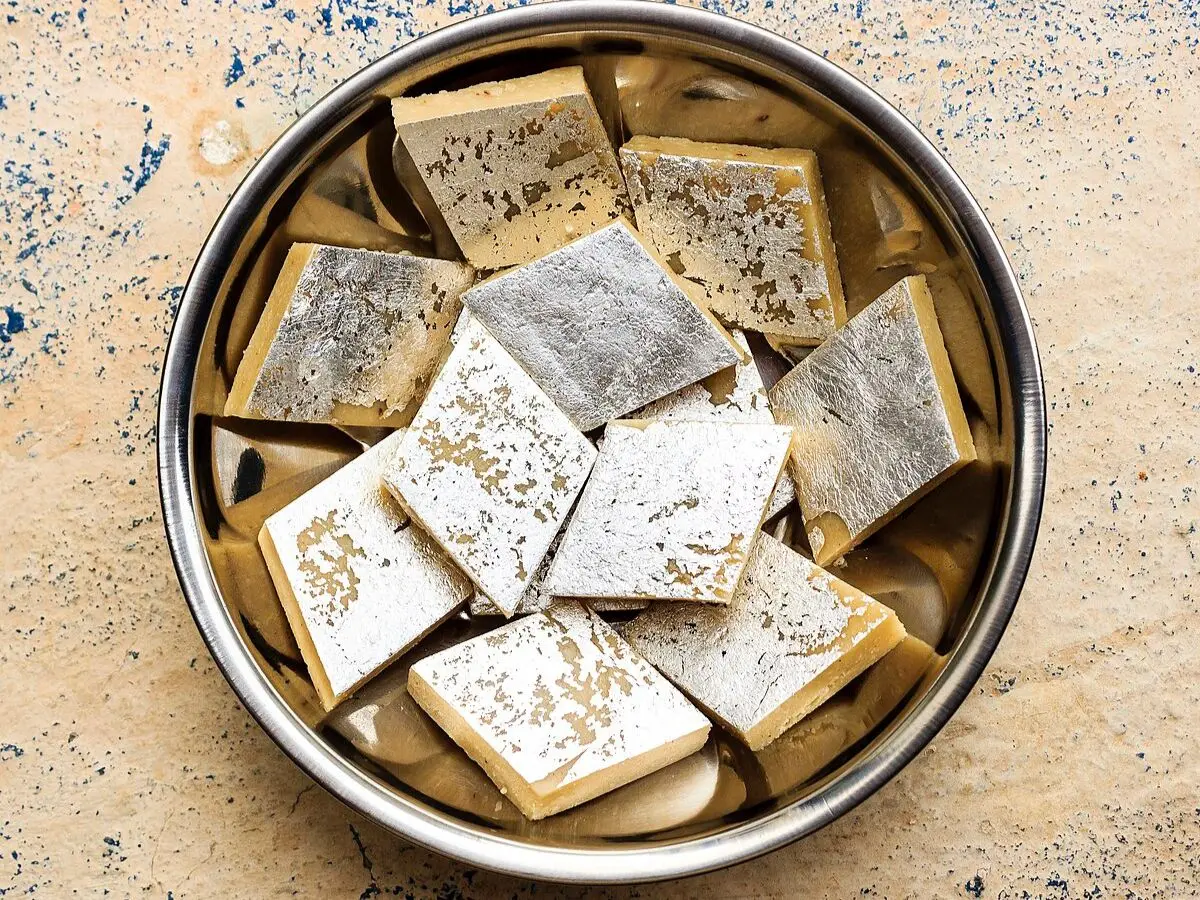
Step into an Indian sweet shop during the festive season, and you’ll be greeted by trays of kaju katli, barfi, and laddoos gleaming under silver light. That fragile shimmer, known as vark or chandi ka varq, is more than just decoration. For centuries, it has symbolized purity and prosperity. But behind its beauty lies a fascinating story of artistry, empire, Ayurveda, and ethical debate.
A legacy hammered in silver
The practice of coating food with precious metals dates back over 2,000 years. Ancient Ayurvedic texts mention rajata bhasma (silver ash) and swarna bhasma (gold ash) as medicinal ingredients believed to purify blood, cool the body, and enhance vitality. Silver’s natural antimicrobial properties even made it an early preservative, keeping food fresh before the era of refrigeration.
Over time, this medicinal tradition evolved into an art form. In royal courts, from the Mughals in Delhi to the Nawabs of Awadh, silver and gold were used to gild sweets, meats, and rice. Dishes like Moti Pulao (rice grains coated in silver and gold) and Chandi Qaliya became edible works of art, serving as symbols of power and refinement.
The artisans behind the shimmer
Trending Stories
&imwidth=180&imheight=135&format=webp&quality=medium)
West Bengal govt forms SIT to probe Kolkata Durga Puja stampede that killed 19
&im=FitAndFill=(700,400)&imwidth=180&imheight=135&format=webp&quality=medium)
What is the real meaning behind Pete Hegseth's tattoos?
&imwidth=180&imheight=135&format=webp&quality=medium)
Zohran Mamdani's Garba dance goes viral as he joins Indian community's Navratri celebrations | WATCH
&imwidth=180&imheight=135&format=webp&quality=medium)
Rafale Marine fighter begins flight trials in Goa ahead of Indian Navy induction
&imwidth=180&imheight=135&format=webp&quality=medium)
Explosions heard in Iran’s Hormozgan province near Strait of Hormuz: State media
&imwidth=180&imheight=135&format=webp&quality=medium)
Shock, anger and despair in Bangladesh over the executions
&imwidth=180&imheight=135&format=webp&quality=medium)
Americans told to prepare their will before visiting this country
&imwidth=180&imheight=135&format=webp&quality=medium)
WATCH | Mysterious haze grips Ohio city as toxic chemical leak forces mass evacuation – What is happening?
&imwidth=180&imheight=135&format=webp&quality=medium)
Kim Jong Un death rumors explode | China accused of secretly sending troops to Pyongyang
&imwidth=180&imheight=135&format=webp&quality=medium)
James Bond auction: Own Daniel Craig's Skyfall suit, Ana de Armas' dress and 300+ rare 007 collectibles
&imwidth=180&imheight=135&format=webp&quality=medium)
Trump says end to Ukraine war is 'closer than ever'; Witkoff's Putin remarks spark criticism
&imwidth=180&imheight=135&format=webp&quality=medium)
Trump waves at 'empty space' in viral video,' critics claim 'mental decline getting worse' | WATCH
&imwidth=180&imheight=135&format=webp&quality=medium)
IND vs NZ T20Is: Will Sooryavanshi play? Skipper Shreyas Iyer clears the air on Samson vs Vaibhav debate
&imwidth=180&imheight=135&format=webp&quality=medium)
US midterms: Democrats sue Trump administration over alleged 'threats and intimidation' ahead of election, Musk issues warning to Dems
&imwidth=180&imheight=135&format=webp&quality=medium)
‘Her heart and mind in good shape’: What Helen Haines’ husband said after MP loses both legs in ‘targeted’ attack
&imwidth=180&imheight=135&format=webp&quality=medium)
Israel election 2026: Three possible scenarios after October 27 polls
&imwidth=180&imheight=135&format=webp&quality=medium)
US midterms 2026: What polls and prediction markets indicate about Congress
&imwidth=180&imheight=135&format=webp&quality=medium)
US Midterms 2026 and money: From Bloomberg to Musk, corporate donors, super PACs and lobbies, it's all about the cash
&imwidth=180&imheight=135&format=webp&quality=medium)
Ramayana promotion takes a funny turn after Ranbir Kapoor's verbal blunder, leaves fans in splits | Watch
&imwidth=180&imheight=135&format=webp&quality=medium)
US orders embassy staff, families to leave Saudi Arabia amid Houthi attacks: Report
&imwidth=180&imheight=135&format=webp&quality=medium)
Priyanka Chopra celebrates Dussehra 2026 with Nick Jonas and daughter Malti Marie | See pics
&im=FitAndFill=(700,400)&imwidth=180&imheight=135&format=webp&quality=medium)
New OTT releases this week (October 19-25, 2026): Gajab Raat to Chaar Yaar-8 titles to watch during Dussehra week on Netflix, Prime Video and more
&imwidth=180&imheight=135&format=webp&quality=medium)
US business activity grows in June, but tariffs and inflation cloud outlook
&imwidth=180&imheight=135&format=webp&quality=medium)
'I’m not saying it’s extraterrestrial' - 'Mutant' creature forces Mexicans to flee their homes
&imwidth=180&imheight=135&format=webp&quality=medium)
‘I caution the president...’: Trump’s ex-press secretary warns after Zacharia’s exit
&imwidth=180&imheight=135&format=webp&quality=medium)
Hunger makes alcohol more appealing, study finds
&imwidth=180&imheight=135&format=webp&quality=medium)
Finance influencer dies by suicide in Chennai; father accuses tech CEO, who denies charge
&imwidth=180&imheight=135&format=webp&quality=medium)
France protests: 'Block everything' movement escalates as public fury over austerity grows; over 200 arrested. Here's all you to need to know
&imwidth=180&imheight=135&format=webp&quality=medium)
Kolkata airport: CISF detects ₹1.13 crore in US dollars hidden in bags of 2 Bangkok-bound passengers
&imwidth=180&imheight=135&format=webp&quality=medium)
Feds obtain DNA evidence that could prove Ilhan Omar married her brother: Report
&imwidth=180&imheight=135&format=webp&quality=medium)
US midterms 2026: Trump's approval rating hits record low as Democrats gain ground
&imwidth=180&imheight=135&format=webp&quality=medium)
French military plane crashes in northeast France, one dead
&imwidth=180&imheight=135&format=webp&quality=medium)
Turkey, Qatar, Pakistan and Indonesia sign 'Badr' defence cooperation pact in Doha
For generations, the creation of vark remained a craft passed down within families of silversmiths. Traditionally, artisans placed thin strips of pure silver between sheets of parchment and pounded them for hours until the metal stretched into nearly weightless sheets, less than one thousandth of a millimeter thick.
Historically, that parchment wasn’t paper; it was made from animal intestines or hide. The elasticity of the membrane helped achieve the delicate texture needed to produce perfectly thin silver foils. This detail remained largely unknown until the late 20th century, when investigations revealed that animal tissue was commonly used in the process.
Is silver leaf vegetarian?
That revelation stirred controversy across India. For many Jains and vegetarians, the idea of animal by-products touching food was unacceptable. Religious groups called for stricter regulations, and in 2016, India officially banned the use of animal intestines in the production of edible silver and gold leaf.
Today, most vark is made using plant-based or synthetic materials such as food-grade polyester or treated paper. These “vegetarian” versions have largely replaced the old methods, though some traditional craftsmen still argue that animal parchment produced finer results.
So, is vark vegetarian now? Mostly yes, but not always. While reputable sweet makers use certified vegetarian silver, cheaper, unregulated foils can still be questionable in origin or purity.
From Ayurveda to aesthetics
What began as a medicinal ingredient and royal indulgence eventually became a culinary symbol of celebration. Silver-covered sweets are now synonymous with festivals like Diwali, Eid, and weddings. The shimmer signifies wealth and purity, while the act of adorning sweets in silver is seen as an offering of respect and good fortune.
In Ayurveda, silver was believed to balance the body’s heat and enhance immunity, beliefs that still echo today. Although modern science suggests that edible silver has negligible nutritional value, it remains safe for consumption in trace amounts and continues to hold cultural and emotional significance.
A dying craft in a modern world
While vark continues to sparkle atop trays of barfi, the craft of hand-hammering silver has largely faded. Machine-made foils dominate the market, faster and cheaper to produce, but lacking the soul of the handmade kind.
Adding to the challenge, fake vark, made of aluminum or low-grade alloys, has flooded markets. Unlike genuine silver, these imitations can be harmful if consumed. A simple test helps distinguish the two: real vark doesn’t leave residue on your fingers; fake ones do.
So, the next time you see a sweet glistening under silver, remember that thin sheet carries centuries of craftsmanship and a legacy that shines brighter than metal itself.

