Interview | Pakistani actor Fawad Khan: Stories by Indian authors don't just belong to India, they are for all

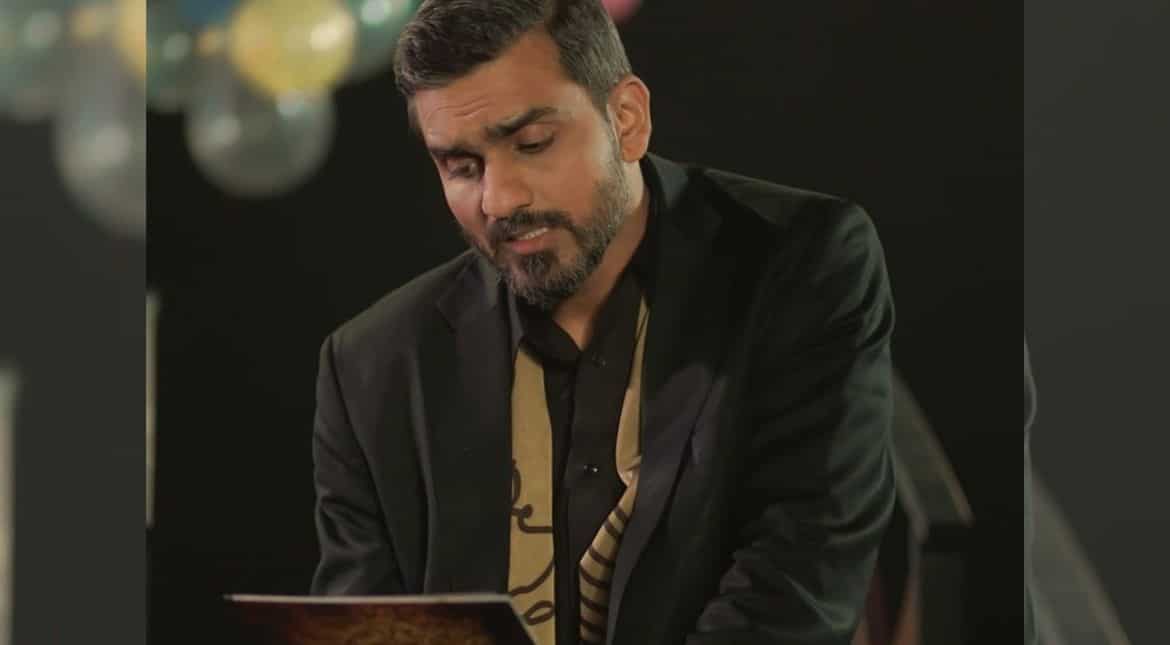
Pakistani actor Fawad Khan
Cinema and entertainment in general have always been a free spirit, never bound by geographical borders or caged by political states. Probably this is why Zee Theatre’s latest initiative ‘Yaar Julahey’ was such a massive success as it successfully brought talents from the Indian subcontinent together to make a unique property that truly mirrors our rich heritage of the forgotten past.
‘Yaar Julahey’ is a collection of dramatic readings by Pakistani artists of stories written by Indian and Pakistani authors and writers for a South Asian audience. The project consists of 12 episodes with stories read by veteran actors Mahira Khan, Sarmad Khoosat, Nimra Bucha, Fawad Khan, Sarwat Gillani, Sania Saeed, Irfan Khoosat, Yasra Rizvi, Samiya Mumtaz and Faysal Quraishi. WION got in conversation with Fawad Khan as he detailed about the one-of-a-kind initiative.
Excerpts from the conversation:

WION: Could you tell me a bit about the format and the unique story of 'Yaar Julahay'?
Fawad: 'Yaar Julahay’s’ format is very similar to that of a staged play where stories are told to a live audience. The difference is that here, the storyteller narrates a story before a camera and yet these narratives do not have the realism of cinema. They have a staged reality you find in plays. So it was interesting since usually we perform for a live audience or only for the camera but here we performed for the camera but with a theatrical audience in mind. So to some extent, the format was a mixture of cinema and theatre.
WION: Why is it called 'a series of dramatic readings'?
)
Emmys 2026: Matthew Rhys wins Best Actor twice, sets historic 78-year record
)
3 Italians fly from Delhi to Munich without immigration clearance; Air India gets notice on major security lapse
)
Did India risk its US trade deal despite softer stance at BRICS?
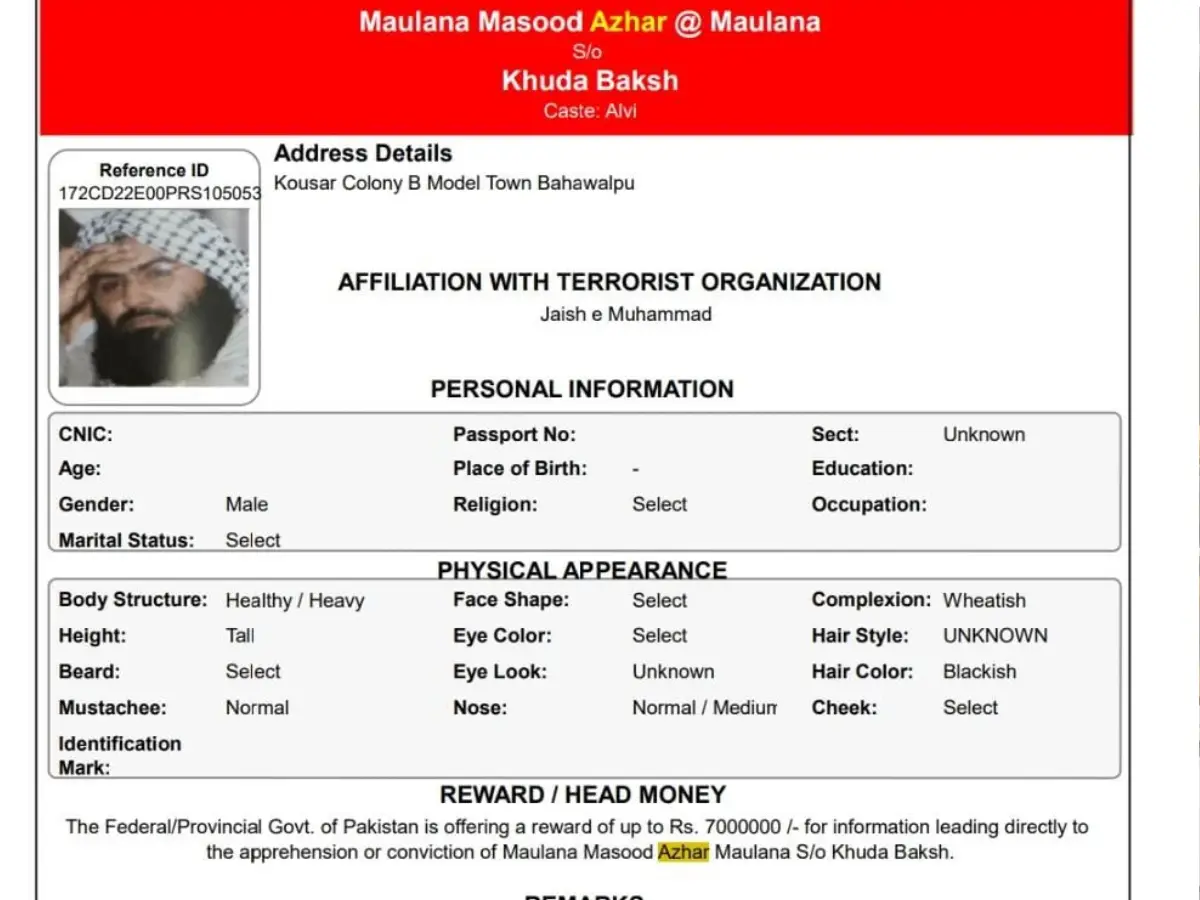)
Pakistan puts Pak Rs 70 lakh bounty on UN terrorist Masood Azhar; move draws skepticism in Delhi
)
‘US ensuring global energy supplies’: Trump demands reimbursement for securing Strait of Hormuz
)
'She married her brother': Ilhan Omar faces criminal probe over immigration fraud claims
)
'Huge destructive power': North Korea calls its latest missile launches 'live-fire drill' even as US dismisses 'immediate threat'
)
Ukraine strikes Syzran Oil Refinery deep inside Russia, fires erupt
)
‘Let’s go’: Newly declassified videos show dramatic rescue of US Air Force officers downed in Iran
)
Emmy Awards 2026: Widow's Bay and The Pitt win in lead categories- check out the complete list of winners
&im=FitAndFill=(700,400))
Why European Meteor missiles use ramjet engines compared to standard US solid rockets
)
Emmys 2026 In Memoriam: Catherine O’Hara honoured by on-screen children Macaulay Culkin, Annie Murphy, Dan Levy; Dolly Parton, Rob Reiner remembered
)
Iran, India agree to deepen humanitarian and political ties, President Pezeshkian says
)
‘Want to reset ties with India, have engagement based on mutual interests,’ says Bangladesh minister
&im=FitAndFill=(700,400))
Emmys 2026 Red Carpet: Zendaya, Nicole Kidman and Julia Garner lead the glamour peak
)
Turkish Airlines plane flies through a storm three times, triggering severe turbulence
&im=FitAndFill=(700,400))
Why Chinese PL-15 air-to-air missiles use dual-pulse motors compared to European interceptors
)
What is Hyrox, in news for athlete who soiled herself, but kept running and using common equipment?
)
Russia proposes to build 360 kmph Ivolga FG trains in India: What happened on sidelines of BRICS
)
800 million years old - Scientists discover 'fingerprints' of supercontinent Gondwana in ancient rocks
)
China discovers vast gold and silver 'mine' in the Pacific with unheard-of deposits
)
Plane carrying prominent figure crashes at Libya’s Misrata airport: Report
)
UPI payments up to Rs 2,000 to stays free, but bigger transactions may soon cost you: Govt
&im=FitAndFill=(700,400))
New OTT releases this week (September 14-20, 2026): Lust Stories 3, Waiting Hai, Irumudi- 5 new titles coming on Netflix, Prime Video and more
)
Sent home midway from UK tour, Pakistan's Salman Agha hits 300* in domestic return
)
Who is Kalyan Bainsla, accused in the Gurugram hit-and-run case involving woman biker?
)
Nigerian Navy seizes 10,000 litres of suspected illegal fuel in Rivers State crackdown
)
Saudi Arabia discovers 110 million tonnes of Uranium-rich ore in Madinah region
)
Dodgers beat Reds for playoff berth in bid for third consecutive World Series
)
Ecstasy tablets are rage in 'drug haven' Libya | Gravitas
)
'Now Trump is copying us': Shivakumar links US $5,000 plan to Congress guarantees
)
Video of Pakistani lawmaker struggling to read English tribute to Jinnah goes viral - WATCH
)
Trump downplays China's alleged 'help' to Iran in strike on Jordan base | Gravitas
)
Baba Vanga's first prophecy for 2027 is out, and straight out of science fiction
)
Trump loses Supreme Court battle over mail ballots ahead of US midterms: What happened?
)
BCCI VP Rajeev Shukla says Mohsin Naqvi 'did not object' India refusing trophy from ACC chief
)
Photographs, LeT labels vanish from two 2008 Mumbai attack entries in Pakistan’s most wanted list
)
Delhi govt to roll out ₹13,820 crore development projects under Seva Sankalp Abhiyan: CM Rekha Gupta
)
UK man admits drugging, raping wife for 20 years in shocking abuse case
)
Extreme warming in Indian Ocean added 695 billion tons of ice to Antarctica ice sheet
)
China thinned Himalayan troop presence in 2025, India defence report says; terms border situation 'stable'
Fawad: Firstly, it's not that we memorised the story. We had a script in our hands and we were reading from it. The purpose of a dramatic reading is to read the script with the requisite expressions so that the dramatic undercurrents in the story are visible to the audience. Anyone can read a story but when an artiste reads it, he or she highlights every emotion that the writer has put into the story.
WION: What can you tell me about Garrm Coat, the episode which you are a part of, about the character and the story a little bit?
Fawad: 'Garrm Coat' is a very famous story by author Rajinder Singh Bedi. It revolves around financial and other issues being faced by a lower-middle class family. In the middle of a searing winter, the father wishes to wear a 'Garrm Coat' but he does not have enough money. The events that follow are filled with really moving, emotional moments that he shares with his wife and children. Whoever loves subcontinental literature must have definitely read this really famous and beautiful story. I read it years ago and it has stayed with me since then. This time I really enjoyed bringing it to life as I got to enact all the different characters.

WION: How do you feel about this collaboration of Pakistani artists and Indian writers? What do you think it does for cross border friendship?
Fawad: If we are telling the stories of authors like Rajinder Singh Bedi or Amrita Pritam or Manto, we cannot just define them according to their nationalities because their voices and works had a resonance that transcended borders. Stories are not just Indian or Pakistani. They belong to everyone. The same is true for people. We are all humans first and only then Indian or Pakistani. The beauty of storytelling is such that it cannot be divided but only shared. Stories are like nomads and they keep traveling.
WION: Such collaborations are the need of the hour because they focus on what unites us rather than divides us. The fact that we're curating stories from both sides of the border and are bringing together artists and literary voices that are loved and recognised regardless of their nationality, is a message in itself. I feel the current generation needs such initiatives and we need to tell these stories to them. What do you think?
Fawad: Yes, I agree. You are definitely right. Unfortunately, the situation right now is one of polarisation on both sides even though Bollywood is really famous here and everyone loves and watches Indian content on YouTube or on Netflix. So beyond the negativity, in the end, it is our love for stories that brings us together. And we need shows like this to remind us of this fact repeatedly. Politics widens the gap between our countries but art can bridge this divide.
WION: Why the craze for Bollywood? Do you have any favourites from the recent lot of actors in India?
Fawad: Our sensibilities as people are very much alike. We are bonded by language and similar traditions in storytelling and entertainment and that is why audiences across the subcontinent connect with Bollywood. Call it Hindi or Urdu, the language we speak has similar nuances. As you know, the major connection between any cultures is the language and so we connect with Hindi cinema in a way that we do not with Hollywood or regional cinema.
Music has the same power to bring people together. On both sides of the border, the raaga based music that we sing and perform has similar classical roots. A German friend of mine recently used the term 'Pakistani music’ and I told him that there's no such thing as 'Pakistani music’ because it's the music of the subcontinent.
Regarding my personal favourites as far as performers go, there are many. There's Pankaj Tripathi Saheb and in recent times. I also really loved the performance of Siddhant Chaturvedi in ‘Gully Boy’.
WION: What is your viewpoint about the current status of exchange of art between the two countries?
Fawad: I think it's tragic how art always suffers the consequences of these tragedies. Artistic exchange should not be politicised. It would make my heart happy if more Indian artists performed in Pakistan. I have beautiful memories of enjoying the performance of a theatre group from Rajasthan. Every year NAPA (The National Academy of Performing Arts ) arranges an international theatre festival where people come from all around the world but we bond the most with the Indians who visit and when it's time for them to leave, we are genuinely in tears and there is such immense sadness. I wish we could work more with each other like we did five years back. There shouldn't be any restrictions in artistic exchange. We share so much, be it stories, poetry, language, ethos and this bond cannot be broken. Call it Hindi or Urdu, we communicate in the same way. According to me, it was a really good step when Zee5 started curating Pakistani dramas. We are all inspired by each other in a way. Just a few days back, I was watching an interview, where Satish Kaushik mentioned that in the film Mr. India, he drew the inspiration for his character from a Pakistani drama, 'Aangan Teda’, where actor Saleem Nasir played a cook in a certain way. So even at a point, where only Doordarshan existed, somehow such exchanges and osmosis would happen. I think this should continue and get stronger.
Watch:Yohani wins hearts of millions of Indians

