Explained | Are our copyright laws ready for the AI invasion?

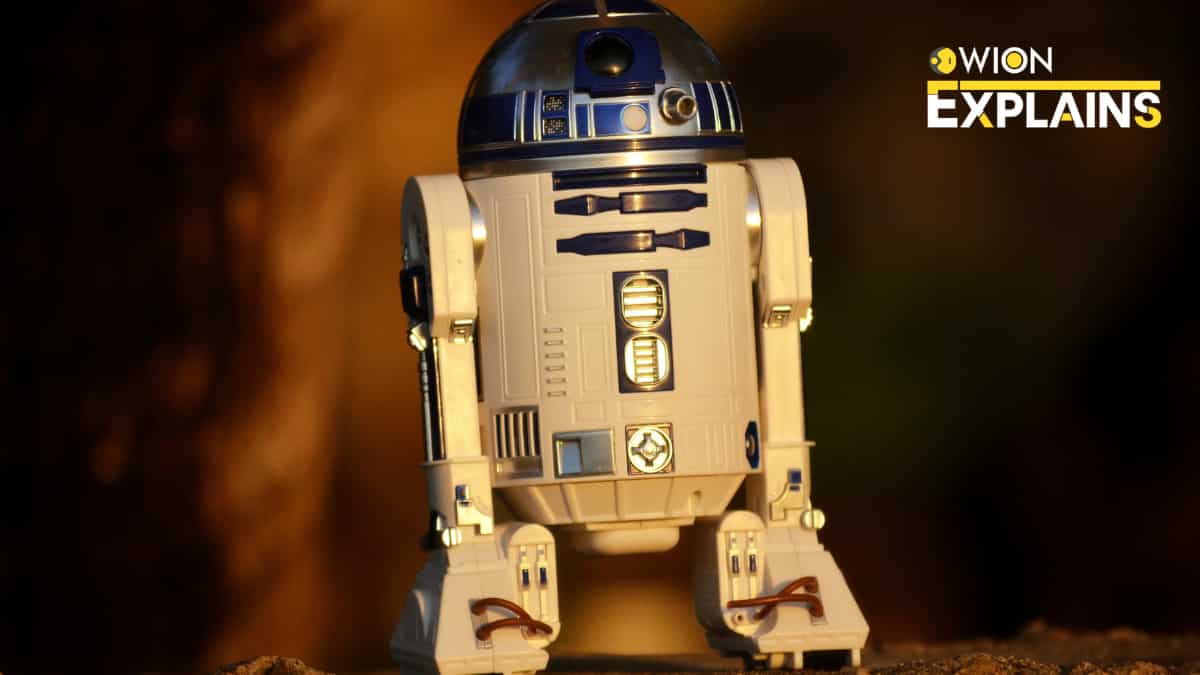
AI and AI-driven tools like ChatGPT have seemingly emerged out of nowhere, gaining wide prevalence.
The era of artificial intelligence or AIhas barged into our creative domain like an uninvited guest at a tea party. Suddenly, we have AI mimicking Drake and The Weeknd's vocal styles in a hit song, and even the mellifluous Stephen Fry found himself cloned by AI without his consent. It's like a sci-fi plot where machines steal the show, but it's our reality, and it's no laughing matter. We are facing a copyright conundrum of epic proportions, and our laws are just as befuddled as we are.
Let's explore howill-prepared current copyright laws are to address the invasion of AI into creative works.

The rise of AI
AI and AI-driven tools like ChatGPT have seemingly emerged out of nowhere, gaining wide prevalence in recent times. While discussions and advancements in AI technology have been ongoing for years, the sudden ubiquity of AI tools has taken many, including this scribe, by surprise. What was once a futuristic daydream is now our daily reality, infiltrating sectors from entertainment and healthcare to finance and education. And, for the most part, not for good. It is no longer a distant promise but a tangible reality that is shaping our world in profound ways.
The Stephen Fry incident: A wake-up call with a British accent
)
US vs China over South China Sea: Washington backs Philippines, Beijing hits back
)
US Supreme Court backs Trump administration's use of SAVE database to check voter citizenship
)
Outrage erupts after 3-year-old is married to 60-year-old man in Pakistan, link to her sister's murder being probed
)
‘Anti-social elements spreading false rumours’: LPU issues statement amid massive unrest over alleged rape
)
LPU students go on rampage, vandalise campus amid widespread protest: What's happening
)
OpenAI AI Agents hacked 4 websites before Hugging Face, researchers reveal
)
US Treasury Secretary Scott Bessent hails global crackdown on Iranian banks and airlines
&im=FitAndFill=(700,400))
New Friday OTT releases (September 25, 2026): Don’t Be Shy, Hunkkaar: The Roar, Mango Pachcha- 6 movies and TV shows on Netflix, Prime Video and more
)
Asian Games 2026: India face Afghanistan in quarterfinal on Sep 28; Pakistan clash with Hong Kong
)
‘Attack on Mecca a red line for Pakistan’: Shehbaz Sharif warns Houthis at UN
)
Ramayana: Yash’s Ravana gets first official poster from Nitesh Tiwari’s epic
)
'He's very much in our plans': Ravindra Jadeja ‘in mix’ for 2027 ODI World Cup, says batting coach
)
'Countries far from conflict are penalised': Jaishankar calls for Gulf peace, seafarer safety at UN
)
Bigg Boss 20: Salman Khan schools Rhiti Tiwari over Qazi Touqeer clash, compares her to Dolly Bindra
)
Gaza's war turned environmental damage into second crisis
)
Nations League: Spain sink England at Wembley; Modric shines for Croatia
)
Two men die of suspected chemical exposure inside public toilet in Mumbai
)
Trump-Xi summit wrap: Big pageantry, Iran talks, few major developments and more meetings planned
)
‘Could kill billions...’: Bill Gates backs calls to slow AI development amid fears of catastrophe
)
Bollywood x K-pop crossover! LE SSERAFIM’s Kazuha charms fans with Shah Rukh Khan’s ‘Chammak Challo’ steps
)
US-Iran war: Trump rejects Iran's Hormuz proposal, reports suggest talks expected next week
)
'What kind of confession is this?': Pakistan PM Shehbaz Sharif’s 'terrorists would be roaming New York' remark goes viral, raises alarm online. Watch
)
Sri Lankan Tamil migrant worker gets death sentence in Saudi Arabia, help sought from India
)
'FIRST LOOK from inside Noah’s Ark': Researchers share video from inside mysterious mound in Turkey
)
UNSC reform momentum grows: Russia, Portugal, Mauritius push for India's permanent seat bid
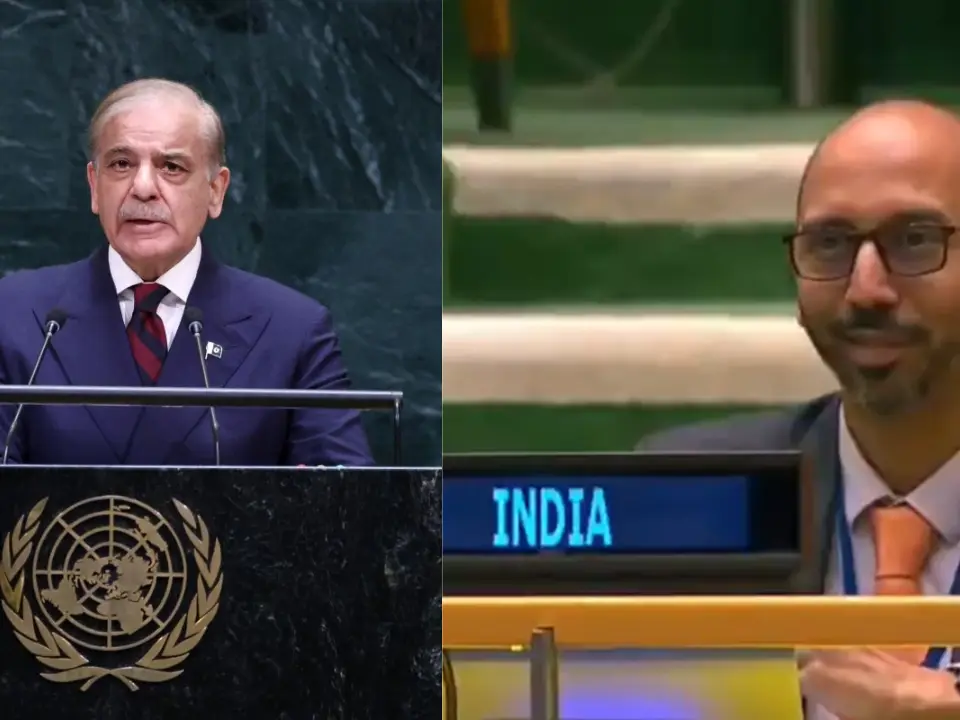)
WATCH | As Shehbaz Sharif claims Pakistan’s ‘victory’ during 2025 conflict, Indian diplomat R Srinivas laughs at UN
)
Ceuta migrant crisis: Protesters take to streets as Spain grapples with migrant challenge
)
Jaishankar at UNGA: Goodwill and friendship can't coexist with terrorism
)
'A terrorist country is asking me that question?': Jaishankar hits back at Pakistani journalist at UN; flags attacks on commercial shipping
)
Russia will achieve Ukraine war aims; Europe doing everything to block peace talks: Lavrov at UN
Stephen Fry's revelation at the CogX Festival about his voice being replicated by AI without his consent serves as a stark example of AI's potential misuse. This respected actor, comedian, and audiobook narrator found out that AI had decided to become the next Stephen Fry — a prospect almost as audacious as trying to replace James Bond with a robotic doppelgänger. Maybe the next Bond will not be Idris Elba or Tom Hardy. It will be the Terminator! But here's the kicker: Fry had the clout to make a fuss about it on a grand stage.
Also Read |Explained: How digital doubles, AI-generated trailers put Hollywood in a quandary
But what about hundreds of lesser-known voice actors, who narrate audiobooks, voice video games, and feature in commercials? They do not have the capability to highlight such infringements or the resources to fight back against misuse of their voice. They are particularly vulnerable to AI's incursion into their field. While their voices may be recognisable, they often lack the fame to control their voice's use sans consent. To make matters worse, their contracts often contain fine print that lets companies use their voices in every conceivable way until the sun burns out. Legal protection for these voice artists against AI voice replicas? About as scarce as a unicorn at a petting zoo. Laws offer little refuge for voice actors seeking protection against AI-generated replicas of their voices.
Popular AI tools have barely aged a year, and already they've unleashed a storm of voice cloning businesses that scavenge (I believe 'scrape' is the term) the internet for speech samples to create an AI orchestra of cloned voices. These companies offer lifelike voices at a fraction of the cost of hiring human professionals. As a result, voice actors face the prospect of losing their livelihoods as companies opt for cost-effective AI-generated voices.
Need for safeguards and regulations
There is an urgent need for comprehensive legal safeguards and regulations to protect the rights and livelihoods of all individuals working in the creative industries. AI's indiscriminate voice replication is a threat not just to the big names but to the entire ecosystem of artists, actors, and creators who rely on their unique talents and voices to make a living.
A recent Washington Post report quoted an award-winning voice artist Remie Michelle Clarke who was alerted by her sound engineer that he had found a voice that sounded like hers on Revoicer.com (which calls itself 'The most realistic AI Text To Speech online') that could be used for the subscribers of the site.
She said, “It’s completely bizarre. When you see your voice has been shifted and tampered with … there’s something so invasive about it.”
Revoicer.com removed her voice after being contacted by The Washington Post, but who's to say it's the only culprit? Clarke rightly asks, "How many other companies... are using my voice and my work and my livelihood without ever factoring me in?" It's a question that should rattle our conscience.
The role of AI in Hollywood
AI has also become a focal point of recent strikes within the Writers Guild of America (WGA) and the Screen Actors Guild-American Federation of Television and Radio Artists (SAG-AFTRA). The entertainment industry is grappling with the threat of AI replication, which could, if the studios got their way, potentially replace human actors and writers. These concerns are not unwarranted, as AI technology can convincingly mimic human voices and generate creative content. AI has already been used to resurrect deceased actors like Carrie Fisher in Star Wars: The Rise of Skywalker and more recently, Christopher Reeve as Superman in The Flash.
Breaking Bad star Bryan Cranston gave a passionate speech about AI's encroachment in Hollywood. While referring to Disney CEO, he said, “We’ve got a message to Mr Iger. I know, sir, that you look through things from a different lens. We don’t expect you to understand who we are but we ask you to hear us, and beyond that, to listen to us when we tell you we will not be having our jobs taken away and given to robots. We will not have you take away our right to work and earn a decent living.”
Legal dilemmas: Copyright and AI
A recent decision from a federal judge in the US did reinforce the well-established principle that copyrights are exclusively granted to works crafted by human creators, affirming the enduring nature of this fundamental concept. This noteworthy ruling emerged as part of a case in which Stephen Thaler sought to challenge the government's denial of copyright registration for AI-generated works. District Judge Beryl Howell's ruling was unequivocal: copyright law was never designed to protect works generated solely by emerging technologies without human involvement.
However, AI's breakneck progress has left copyright laws trailing far behind. We are stuck in a copyright quagmire, uncertain about how to handle situations where AI clones someone's voice or likeness for financial gain.
WATCH WION LIVE HERE
You can now write for wionews.com and be a part of the community. Share your stories and opinions with us here.