Yen plummets to 34-year low below 160 against dollar: Report

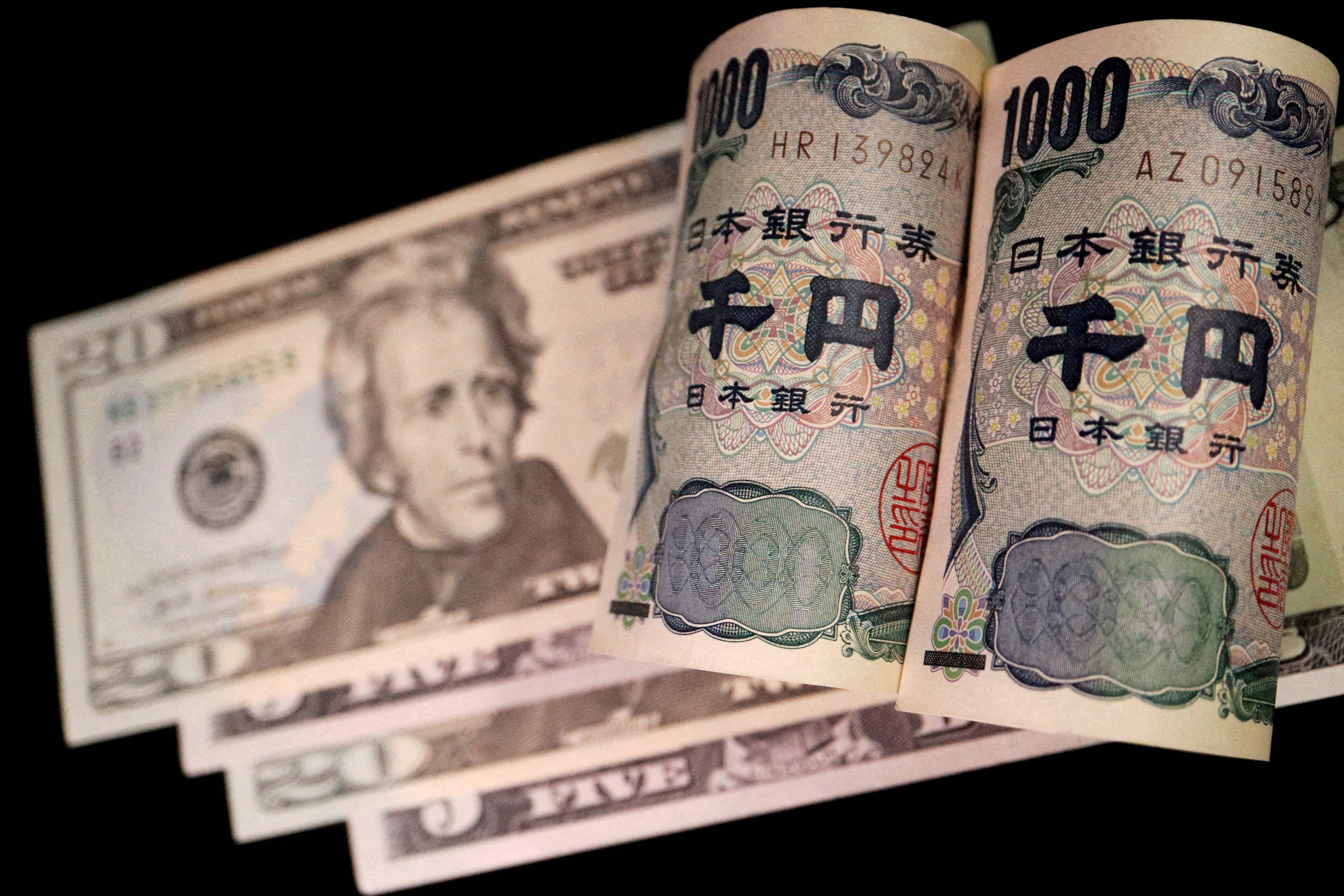
Banknotes of Japanese yen and U.S. dollar
The Japanese yen plunged to its lowest level in 34 years, slipping below 160 against the US dollar on Monday.
According to news agency AFP, this fall came after an unusually high US inflation report, which dashed hopes for possible interest rate cuts by the Federal Reserve this year.

Trading at 160.17 in morning sessions, the yen hit its weakest point since 1990, igniting speculation about potential intervention by Japanese authorities to strengthen their currency.
This would mark the first intervention since 2022, weighing growing concerns over the yen's rapid decline.
Last week, the Bank of Japan (BoJ) opted against further tightening of monetary policy, a decision that surprised spectators while pressures on the yen continued to mount.
)
Mushtaq Khan dies at 56: When Welcome actor opened up about his salary for iconic role Ballu
)
US Supreme Court backs Trump administration's use of SAVE database to check voter citizenship
)
Hawaii braces for Hurricane Nolo: NOAA warns of flash flooding and mudslides
)
Outrage erupts after 3-year-old is married to 60-year-old man in Pakistan, link to her sister's murder being probed
)
Donald Trump shares image of Xi's arrival in Washington, carries signs of AI
)
Pakistan deploys over 20,000 security personnel as PTI vows march for Imran Khan's release
)
Anthropic says Claude found a new gene-editing enzyme but science isn't confirmed
)
Prince Harry offers rare glimpse into Archie and Lilibet’s life after UK move
)
Farhan, who went viral for AK47 celebration vs India in Asia Cup, hopes to lead Pakistan beyond Asian Games
)
OpenAI AI Agents hacked 4 websites before Hugging Face, researchers reveal
)
LPU students go on rampage, vandalise campus amid widespread protest: What's happening
)
Pentagon quietly adds 37 wounded troops to Iran war tally without explaining when or how
&im=FitAndFill=(700,400))
New Friday OTT releases (September 25, 2026): Don’t Be Shy, Hunkkaar: The Roar, Mango Pachcha- 6 movies and TV shows on Netflix, Prime Video and more
)
Asian Games 2026: India face Afghanistan in quarterfinal on Sep 28; Pakistan clash with Hong Kong
)
‘Attack on Mecca a red line for Pakistan’: Shehbaz Sharif warns Houthis at UN
)
‘I rejected it’: Trump confirms turning down Iran’s proposal to reopen Hormuz, claims Tehran is losing ‘badly’
)
Did Hitler kill his niece Geli Raubal? Newly found records reopen a 95-year-old mystery
)
Nigeria Navy moves to boost oil security, tackle crude theft and infrastructure threats
)
Indian diplomat Petal Gahlot raises deteriorating situation in Pakistan-occupied Kashmir in right of reply at UN
)
'Countries far from conflict are penalised': Jaishankar calls for Gulf peace, seafarer safety at UN
)
Bigg Boss 20: Salman Khan schools Rhiti Tiwari over Qazi Touqeer clash, compares her to Dolly Bindra
)
‘It is all possible’: Putin weighs next steps on Ukraine talks, rules out Europe conflict
)
Global community 'absent' in Gulf crisis: Saudi at UN calls for freedom of navigation, pre war status for Hormuz
)
Gaza's war turned environmental damage into second crisis
)
Trump-Xi summit wrap: Big pageantry, Iran talks, few major developments and more meetings planned
)
‘Could kill billions...’: Bill Gates backs calls to slow AI development amid fears of catastrophe
)
Bollywood x K-pop crossover! LE SSERAFIM’s Kazuha charms fans with Shah Rukh Khan’s ‘Chammak Challo’ steps
)
US-Iran war: Trump rejects Iran's Hormuz proposal, reports suggest talks expected next week
)
'What kind of confession is this?': Pakistan PM Shehbaz Sharif’s 'terrorists would be roaming New York' remark goes viral, raises alarm online. Watch
)
Myanmar training camp case: US national, 6 Ukrainians allowed to meet their families abroad
)
'FIRST LOOK from inside Noah’s Ark': Researchers share video from inside mysterious mound in Turkey
)
Cindy Crawford’s son Presley Gerber cremated as death probe continues
)
WATCH | As Shehbaz Sharif claims Pakistan’s ‘victory’ during 2025 conflict, Indian diplomat R Srinivas laughs at UN
)
'A terrorist country is asking me that question?': Jaishankar hits back at Pakistani journalist at UN; flags attacks on commercial shipping
)
Russia will achieve Ukraine war aims; Europe doing everything to block peace talks: Lavrov at UN
)
‘Serial practitioner of terrorism’: Jaishankar calls out Pakistan’s ‘state-sponsored’ terror at UNGA
)
US court backs Pentagon's decision to exclude Anthropic over Claude AI restrictions
Despite assurances from Japanese officials about readiness to intervene in volatile exchange rate movements, doubts lingered about the effectiveness of such measures.
"Expectations of intervention having a sustained impact may disappoint given macro fundamentals do not support a sudden shift to a hawkish monetary stance," AFP quoted Tapas Strickland from National Australia Bank as saying.
The US Personal Consumption Expenditures (PCE) index posted a strong increase, marking the third consecutive surge in the consumer price index.
This, along with warnings from US Federal Reserve members warning against premature rate cuts, prompted investors to rethink their expectations.
Initial projections of up to six rate cuts in 2024 were slashed, with the consensus settling on just one reduction.
Market analysts eagerly anticipate the Federal Reserve's upcoming policy announcement, seeking fresh insights into the central bank's stance on monetary policy.
Meanwhile, the Bank of Japan is trying to facilitate supportive financial conditions with its decision to maintain its benchmark rate between zero and 0.1 per cent.
The BoJ's departure from negative rates last month with its first rate hike in 17 years, marked a major shift in Japanese monetary policy.
After struggling for decades with deflation and economic stagnation, Japan's inflation finally stabilised around two per cent.
Despite the BoJ's unique stance, it faces mounting pressure in the middle of the global trend of central banks raising rates to combat rising inflation.
This divergence in monetary policies has contributed to investors flocking to other currencies, worsening the yen's downward spiral.
"We still think we are quite close to the Finance Ministry's intervention, in light of the recent rhetoric on excessive currency market moves," AFP quoted Homin Lee of Lombard Odier as saying.
(With inputs from AFP)