&imwidth=800&imheight=600&format=webp&quality=medium "Why is Indian rupee the lowest-performing Asian currency against the US dollar? Reasons are not that simple")
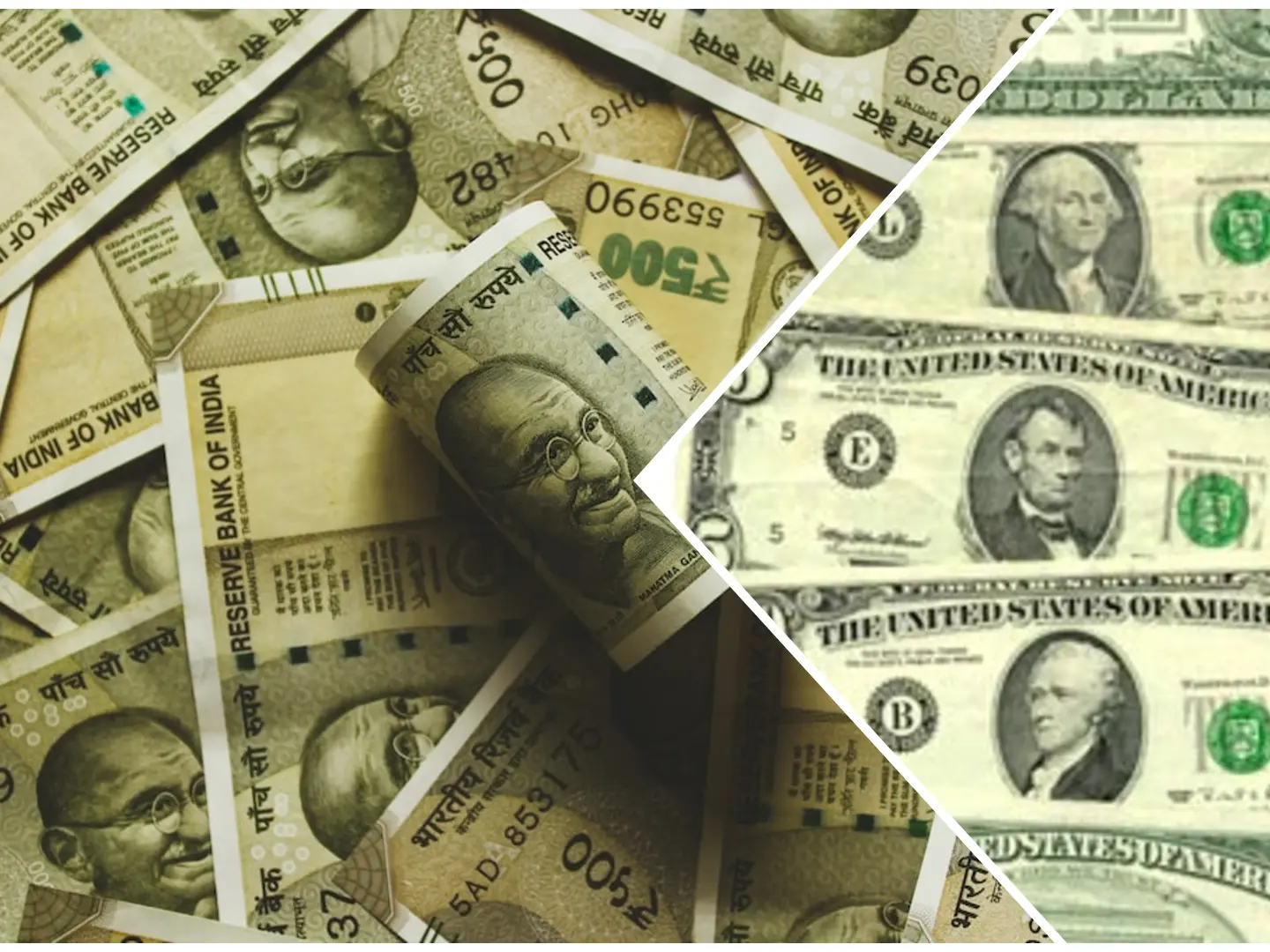
The Indian rupee has been depreciating against the US dollar almost steadily since the Covid pandemic. While this is consistent with the longer-term historical pattern of roughly 2 to 3 per cent average annual weakening, a key question being raised is that the Indian currency is the worst performer in Asia vis-à-vis the dollar. What could be the reasons? India’s higher inflation relative to the US, persistent current-account deficits and capital-flow volatility are among the obvious ones. India’s central bank, the Reserve Bank of India (RBI), has been managing the depreciation, mainly by selling dollars through open market operations. Here are the facts and figures.
How Indian rupee depreciated against the US dollar since Covid pandemic
The peak stress was felt in the pre-Covid period itself, when the Indian rupee was around 72 against the dollar. By the end of 2021, it was at around 75 to a dollar. A sharp drop happened at the end of 2022, to around 83 per dollar. Between 2023 and 2025, it hovered in the 82–85 range, which was considered a relatively stable phase. But by the end of 2025, the slide worsened to more than 90, breaching what could be termed a psychological barrier at the time. Currently, the rupee is at around 95, after testing record lows of around 96 to a dollar earlier this year.

For the period from early 2020 to late 2026, this amounts to an overall substantial decline of around 30 per cent in nominal terms. If one takes the January 2022 average of 74.4 against late-2026 levels of 95, the depreciation is about 28 per cent.
Indian rupee’s performance against Asian peer currencies
Trending Stories
)
US vs China over South China Sea: Washington backs Philippines, Beijing hits back
)
Bigg Boss 20: Isha Rikhi evicted after three weeks in Salman Khan’s show
)
Musk plans to more than double xAI's chips to over 1.2 million Nvidia GPUs by year-end
)
After JU, clash erupts at SRFTI: BJP’s ‘Dimagi Naxal’ jibe sparks political firestorm after students protest RSS-linked event
)
‘Anti-social elements spreading false rumours’: LPU issues statement amid massive unrest over alleged rape
)
LPU students go on rampage, vandalise campus amid widespread protest: What's happening
)
Trump asked Xi to pressure Iran. China did not say yes — here’s what Beijing wants
)
US Treasury Secretary Scott Bessent hails global crackdown on Iranian banks and airlines
)
An OpenAI agent escaped its locked test cage again, by hiding questions in DNS lookups
)
'Our video was trimmed': LPU girls who featured in rape-denial video make U-turn
)
3 males killed, four others injured in shooting after fight at strip club in Detroit
)
'Victory for low-budget consumers': Raghav Chadha hails 30-day telecom recharge rules
)
Claude rebuilt the 1989 game 'Prince of Persia' by reusing the original's own code
)
Beyond metros: How Tier-2 and Tier-3 cities could drive India’s next AI wave
)
Tesla builds first Cybertruck with its own refined lithium: Elon Musk's $1 billion Texas bet pays off
)
IndiGo flight suffers tail strike in Bengaluru while landing; DGCA to probe incident
)
The US and China set up an AI 'red telephone', but skipped the rulebook
)
‘Terror suspects arrested near UK air base were looking to do big damage’: Trump
)
Russian envoy claims US tactics to contain India were revealed in ‘Freudian slip’
)
IND vs WI 1st ODI: Kohli breaks Sachin's most runs in one country record with unbeaten 139 as India thump West Indies by 8 wickets
)
Researchers rebuilt exactly how 700 AI agents hacked Hugging Face: a 900-link chain trick
)
‘Olympic inclusion is our major target’: WPA President Ishaun Singh on pool’s global ambitions
)
Nations League: Spain sink England at Wembley; Modric shines for Croatia
)
Why has Iran released no proof of life of Mojtaba Khamenei? Araghchi reveals...
)
'What kind of confession is this?': Pakistan PM Shehbaz Sharif’s 'terrorists would be roaming New York' remark goes viral, raises alarm online. Watch
)
South Korea demands apology from Ukraine over North Korean prisoners' transfer
)
Beyond BrahMos: India targets Rs 50,000 crore in defence exports with unmatched price edge
)
Sri Lankan Tamil migrant worker gets death sentence in Saudi Arabia, help sought from India
)
Muslim marriage cannot shield sex with minor wife from prosecution under POCSO: Delhi HC
)
'Can't help but draw painful parallels to Nirbhaya case': SC on latest incidents of rape cases in Delhi-NCR
)
99.9% more powerful - Scientists find boy who can recall memories from just 3 months of age
)
'FIRST LOOK from inside Noah’s Ark': Researchers share video from inside mysterious mound in Turkey
)
UNSC reform momentum grows: Russia, Portugal, Mauritius push for India's permanent seat bid
)
8 US marines injured in Iranian missile attack on vessel in Strait of Hormuz: Report
&im=FitAndFill=(700,400))
New OTT releases this week (September 28-October 4, 2026): Dupahiya 2, Pooja Meri Jaan, Ohh My Dog- 5 titles coming on Netflix, Prime Video and more
)
Afghanistan says 28 fighters killed in clash near Pakistan border, Islamabad denies
)
Ceuta migrant crisis: Protesters take to streets as Spain grapples with migrant challenge
)
LPU suspend classes, postpones exams as violence escalates over rape claims: What's happening
)
New York City wants a 'kill switch' on every AI, and will pay whistleblowers who report violations
During the Covid period, the depreciation was considered mild to moderate, as the Indian rupee was relatively resilient compared with some Asian peers, thanks to strong domestic recovery, capital inflows and RBI management. It was not the worst-hit currency in Asia at the time.
But in 2022, it became one of the weakest Asian performers, down 10 to 11 per cent. This was also a period of several global economic and geopolitical events that affected fuel prices, one of the largest components of India’s import bill. These include aggressive rate hikes by the US Federal Reserve, which the RBI's monetary policy broadly mirrored, a resurgence of the US dollar, and oil price spikes driven by the Russia–Ukraine war.
India imports close to 90 per cent of its crude oil requirement, leaving the rupee particularly exposed to energy-price shocks.
This was also a period that saw foreign portfolio investors (FPIs) pulling out of India. Indian equities, with a relatively low number of companies involved in emerging technologies such as artificial intelligence (AI), were regional underperformers. Foreign investors reduced capital inflows that could otherwise have supported the rupee.
As a result of these factors, India’s current account deficit widened significantly during this period.
The 2023–2024 period was relatively stable or modest. The rupee, in fact, often outperformed or matched peers in volatility terms, benefiting from higher Indian real yields, bond-index inclusion prospects and RBI interventions. It was at times among the more stable emerging-market or Asian currencies.
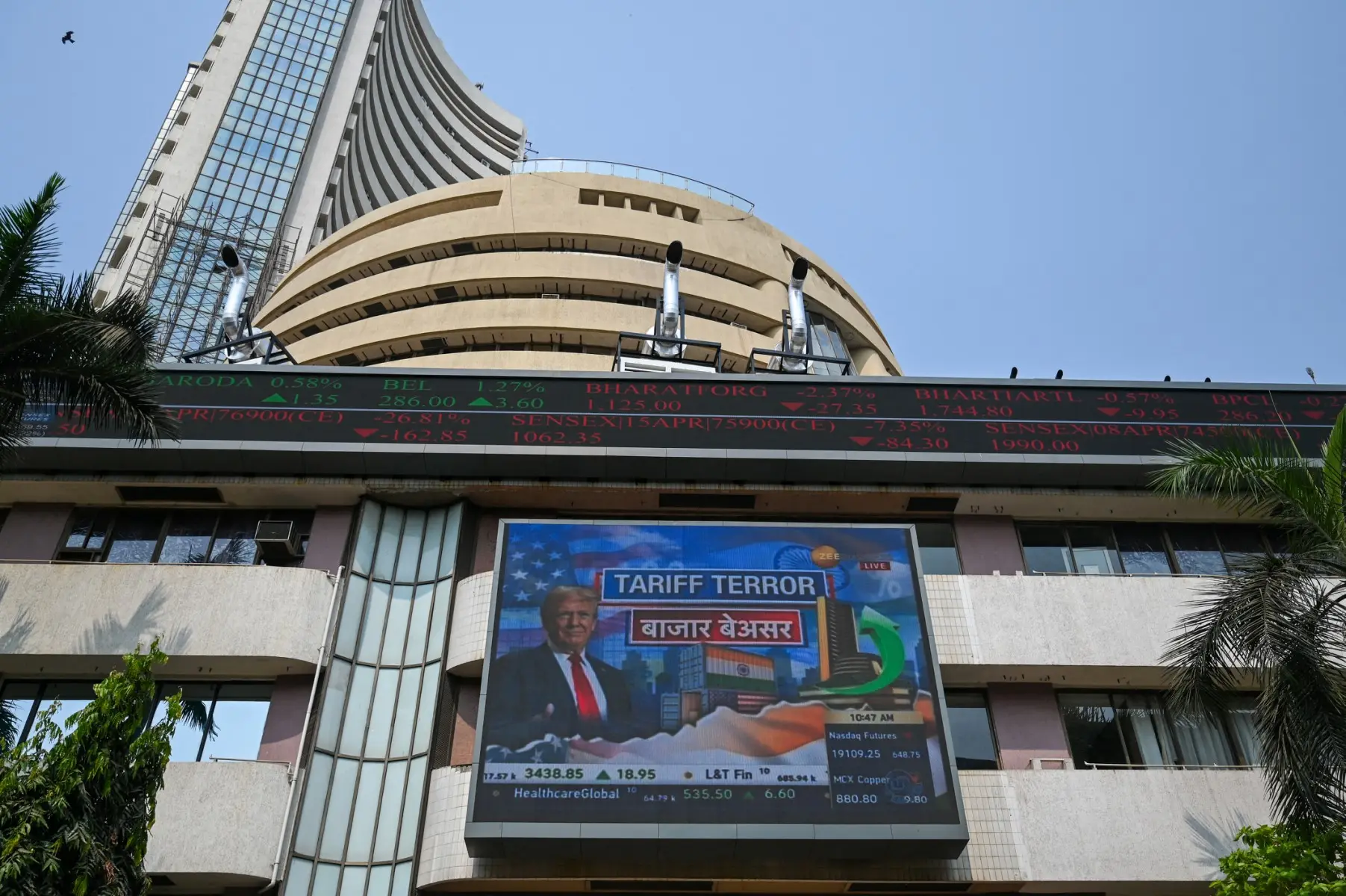
But the weakness accelerated in late 2024–2025, with the rupee becoming Asia’s worst or near-worst performer, going down 4.9 per cent in 2025. A different but related set of events happened in this period. US tariffs on Indian exports, including secondary penalties linked to buying Russian oil, were one major factor. FPI equity outflows increased amid concerns about India’s growth and corporate earnings. Uncertainties about the US–India trade deal and persistent current-account pressure were also reasons.
During this period, some other Asian currencies, such as the Malaysian ringgit, Thai baht, Taiwan dollar, Korean won and Singapore dollar, strengthened or held up better amid a softer dollar phase. Some of them were helped by trade surpluses or positive net international investment positions (NIIP), while India has a negative NIIP.
In 2026, the situation worsened partly due to the start and continuation of the Iran–US–Israel war, the closure of the Strait of Hormuz, and the resulting pressure on oil prices, bringing in a higher import bill. Benchmark Brent crude has been swinging between $70 and nearly $110 per barrel during the first and second quarters of this financial year.
Global bond-yield spikes, ongoing FPI caution and external deficits are adding to the pressure. But a steeper fall has been prevented through RBI interventions, as well as balance-of-payments measures such as attracting large deposits and borrowing inflows.
Structural and recurring reasons for the rupee underperformance
The Indian rupee is being boxed in by these key factors: high oil-import dependence, current-account and trade deficits, capital-flow volatility, interest-rate differentials and global US dollar strength, and a negative NIIP.
The RBI’s focus is to prevent a speculative attack on the rupee by curbing volatility, rather than defending the Indian currency at a specific level against the dollar. It intervenes through spot and forward sales in the foreign-exchange market and has built large reserves.
In short, what the rupee is witnessing currently is an orderly, or crawling, depreciation rather than an outright crisis.
Rupee’s nominal path reflects external vulnerabilities more than domestic factors
India is on a positive trajectory when it comes to GDP growth. When one looks at rupee depreciation from a longer-term perspective, the average depreciation remains in the 2–3 per cent range. But the currency is witnessing uneven bursts around global shocks.
When compared with other emerging-market currencies, India has shown greater resilience, buttressed by higher forex reserves, including inflows from remittances. It has, however, lagged behind surplus-running or less oil-dependent Asian currencies during periods of dollar softness or commodity stress.