US passes crypto regulation bills: What does it mean for the industry and investors?

&imwidth=600&imheight=450&format=webp&quality=medium "US passes crypto regulation bills: What does it mean for the industry and investors?")
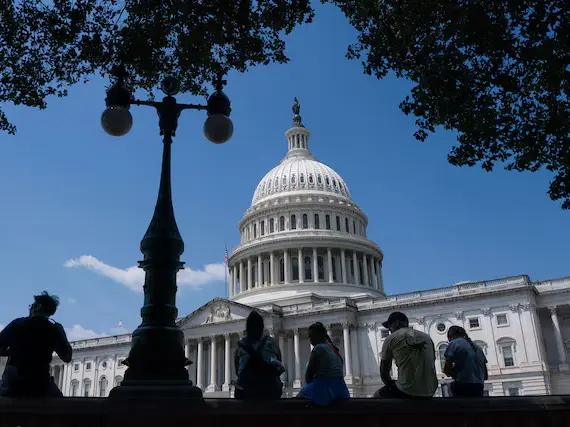
Visitors to the US Capitol rest in the shade on Capitol Hill in Washington, DC, US, June 25, 2025. Photograph: (Reuters)
The legislation could reshape the future of cryptocurrency in the US, especially for institutional investors and mainstream financial institutions. For years, the lack of a clear legal framework forced companies to operate under regulatory uncertainty.
In a historic move for the cryptocurrency industry, the US House of Representatives on July 17 passed three major pieces of crypto-related legislation, signalling the federal government’s most significant foray yet into regulating digital assets. The centrepiece of the package, known as the Genius Act, establishes a long-awaited federal framework for stablecoins—cryptocurrencies pegged to the US dollar or similar low-risk assets. The bill now heads to President Donald Trump, who is expected to sign it into law by July 18.
Two other bills—the Clarity Act, which defines the regulatory structure for cryptocurrencies, and a bill prohibiting the Federal Reserve from creating a central bank digital currency (CBDC)—were also passed by the House and are now awaiting Senate consideration. Together, the legislative package marks a milestone in the digital asset sector’s push for legitimacy and federal oversight.
What are the Genius Act and Clarity Act?
The Genius Act, which passed 308-122 with bipartisan support, creates a federal regulatory regime for stablecoins, a $238 billion market that has grown rapidly in recent years. Stablecoins are digital tokens designed to maintain a fixed value, typically $1, by being backed one-to-one with US dollars or similar highly liquid assets like short-term Treasury bills. Under the law, any issuer of stablecoins, including banks and crypto companies, will be required to:
- Hold sufficient reserves to back the value of the coins they issue
- Make monthly public disclosures of reserve composition
- Maintain liquidity and transparency standards to ensure consumer confidence
The Clarity Act, passed 294-134, aims to settle long-standing regulatory uncertainty by establishing when a cryptocurrency qualifies as a security or a commodity, a key issue that has defined battles between crypto firms and the US Securities and Exchange Commission (SEC). The bill seeks to:
Trending Stories
)
)
)
)
)
)
)
)
)
)
)
)
)
)
)
)
&im=FitAndFill=(700,400))
)
)
)
)
)
)
)
)
)
)
)
)
&im=FitAndFill=(700,400))
)
&im=FitAndFill=(700,400))
)
)
)
&im=FitAndFill=(700,400))
)
- Clearly delineate the SEC’s and the Commodity Futures Trading Commission’s (CFTC) roles
- Define which tokens fall under securities law (requiring strict compliance) and which are treated as commodities (with lighter oversight)
- Offer crypto platforms and investors clarity in launching and trading digital tokens
The third bill, less publicised but politically significant, bans the creation of a US central bank digital currency, citing privacy concerns. Backed largely by Republicans, the bill reflects growing suspicion about centralised digital currencies potentially tracking citizens’ transactions.
Impact on investors and the future of crypto
The legislation could reshape the future of cryptocurrency in the US, especially for institutional investors and mainstream financial institutions. For years, the lack of a clear legal framework forced companies to operate under regulatory uncertainty, with the SEC pursuing enforcement actions rather than offering guidance. Now, with the Genius and Clarity Acts:
- Stablecoin issuers gain legitimacy and may attract more users and institutional partners
- Retail investors could see improved protections, as stablecoins will now be backed by verifiable, liquid assets
- Crypto platforms can launch tokens with greater legal certainty, likely boosting innovation and product offerings
- Global companies may see the US as a crypto-friendly jurisdiction, attracting capital and talent
Advocates say the new rules could pave the way for broader adoption of digital assets in payments, remittances, and savings, even comparing the legislation’s impact to the securities laws of the 1930s that established Wall Street as a global financial hub.
The cryptocurrency sector, which spent millions lobbying Congress and backing pro-crypto candidates in the 2024 elections, sees the passage as a validation of its efforts and a critical step in escaping the legal grey area that defined much of the Biden-era crypto policy.
Controversy and criticism
Despite bipartisan support, the bills—particularly the Clarity Act—have not escaped criticism. Some Democrats voiced concerns that the legislation was tailored to benefit President Trump’s own crypto ventures. Trump, who once derided crypto as a “scam,” has embraced the sector since launching his own token ($TRUMP) and co-owning World Liberty Financial, a crypto finance firm.
Critics argue the Clarity Act could lead to softer-touch regulation that benefits Trump’s financial interests and undermines consumer protections. They also warn that legitimising stablecoins, often issued by tech firms, without subjecting them to full banking regulations could expose the financial system to new risks. A coalition of consumer groups wrote to Congress this spring, warning that the Genius Act may encourage the “proliferation of assets that consumers will wrongly perceive as safe” and cautioning that bankruptcy protections for stablecoin holders remain unclear.
With the Genius Act expected to be signed into law shortly, all eyes turn to the Senate, where Republicans hold a narrow majority. The fate of the Clarity Act and the CBDC ban will depend on whether Senate Democrats, many of whom remain sceptical, can be persuaded to support broader crypto regulation under a Trump-led White House.
Meanwhile, crypto markets responded positively. Bitcoin surged past $120,000, and stablecoin firms praised the new framework as a turning point for the sector.
(With inputs from agencies)