
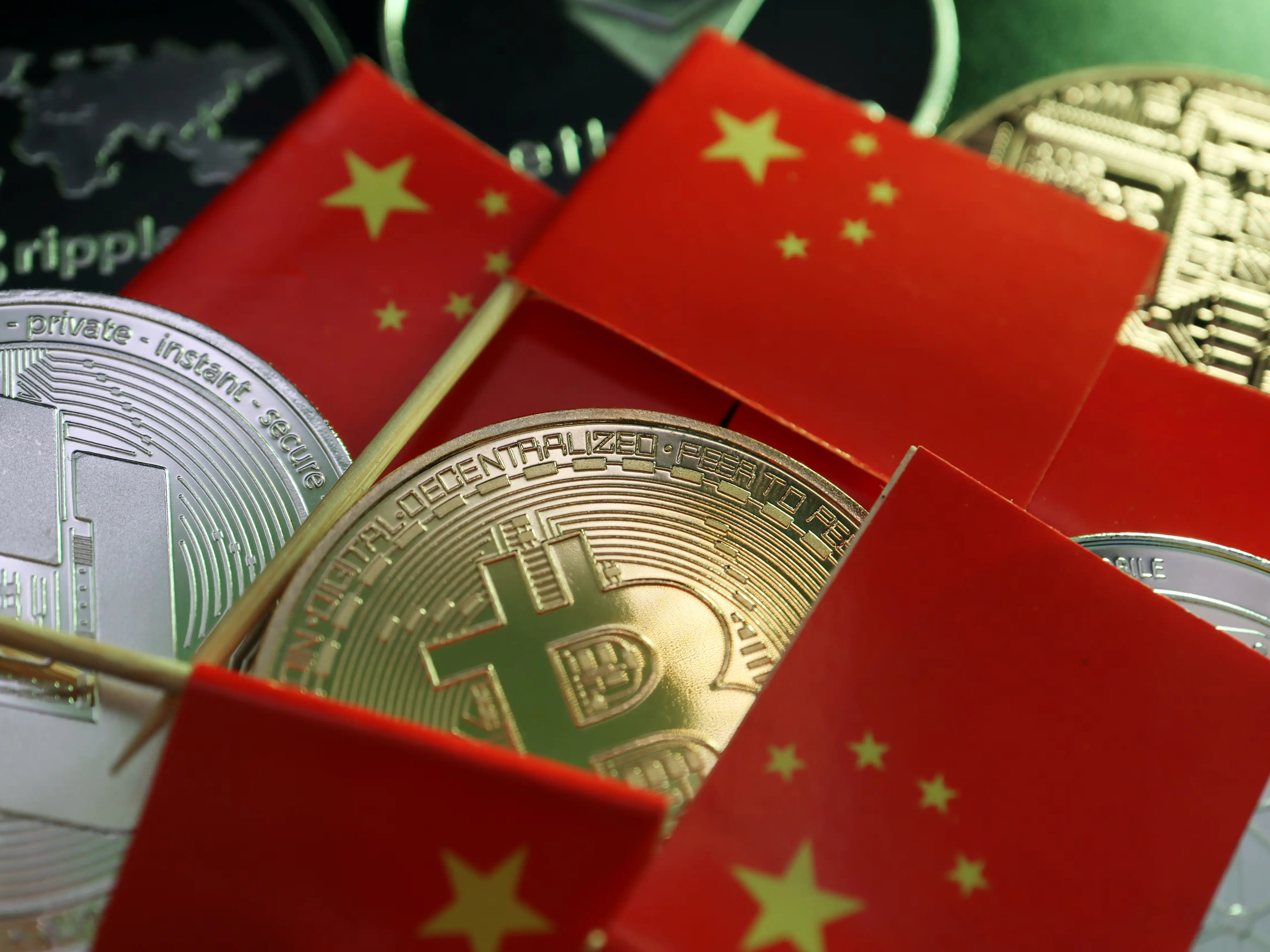
&imwidth=800&imheight=600&format=webp&quality=medium "Shanghai holds talks on stablecoin policy amid crypto ban")
In a sign of changing winds in China’s strict crypto stance, Shanghai’s top state-owned assets regulator has held high-level talks about stablecoins and digital currencies, an unusual move in a country where crypto trading is officially banned. According to Reuters, the Shanghai State-owned Assets Supervision and Administration Commission convened around 60 to 70 local government officials this week to discuss policy responses to the rapidly evolving world of blockchain-based payments.
“We need to have greater sensitivity to emerging technologies and enhanced research into digital currencies,” He Qing, the regulator’s director, told the gathering, as quoted in an official post on the agency’s WeChat account. While China has cracked down on crypto trading and mining since 2021 over financial stability concerns, the Shanghai meeting suggests at least parts of the government are examining ways to manage, adapt to, or even compete with global stablecoin developments.
Why Shanghai’s interest matters?

Shanghai is China’s main international financial hub and has often served as a testing ground for regulatory pilot programmes. Moves there can signal broader policy shifts. Reuters notes that calls have been growing among Chinese firms and experts to develop a yuan-pegged stablecoin to counter the rise of US dollar-linked cryptocurrencies.
Companies like JD.com and fintech giant Ant Group have reportedly urged China’s central bank to greenlight yuan-based stablecoins. According to Reuters, these firms plan to apply for stablecoin licenses in Hong Kong, where dedicated stablecoin legislation is set to take effect on August 1. “Given China’s strong fintech ecosystem, it has the potential to be a key player in shaping the future of blockchain-based payments,” Nick Ruck, director at LVRG Research, told Reuters.
Global context
Trending Stories
)
Did India risk its US trade deal despite softer stance at BRICS?
)
Pakistan puts Pak Rs 70 lakh bounty on UN terrorist Masood Azhar; move draws skepticism in Delhi
)
First naval drone battle? Ukraine says Sargan 3000 sank Russian unmanned boat
)
Practical Magic 2 breaks Spidey spell over North American box office
)
'Huge destructive power': North Korea calls its latest missile launches 'live-fire drill' even as US dismisses 'immediate threat'
)
‘Let’s go’: Newly declassified videos show dramatic rescue of US Air Force officers downed in Iran
)
Ganesh Chaturthi 2026: Devotees throng the iconic Lalbaugcha Raja pandal in Mumbai
)
Delhi’s balancing act: BRICS serves as a stage for West Asia diplomacy
&im=FitAndFill=(700,400))
Why European Meteor missiles use ramjet engines compared to standard US solid rockets
)
Iran, India agree to deepen humanitarian and political ties, President Pezeshkian says
)
‘Want to reset ties with India, have engagement based on mutual interests,’ says Bangladesh minister
)
Trump says Canada eager to reach a deal, it could come ‘fairly soon’ if Ottawa treats US farmers better
)
Turkish Airlines plane flies through a storm three times, triggering severe turbulence
&im=FitAndFill=(700,400))
Why Chinese PL-15 air-to-air missiles use dual-pulse motors compared to European interceptors
)
Orlando Bloom addresses Pirates of the Caribbean comeback and reunion with Johnny Depp
)
China thinned Himalayan troop presence in 2025, India defence report says; terms border situation 'stable'
)
Russia proposes to build 360 kmph Ivolga FG trains in India: What happened on sidelines of BRICS
)
800 million years old - Scientists discover 'fingerprints' of supercontinent Gondwana in ancient rocks
)
Israeli minister calls to strip Gaza film directors of citizenship
)
Natural caffeine sources gain popularity; matcha & botanicals offer calm energy
)
China discovers vast gold and silver 'mine' in the Pacific with unheard-of deposits
)
Russian drone hits Warsaw-bound train near Polish border, Zelensky accuses Moscow of ‘deliberate’ targeting
)
Plane carrying prominent figure crashes at Libya’s Misrata airport: Report
)
Veteran Bollywood actress Nafisa Ali shares health update as Stage 4 cancer progresses, starts targeted therapy
&im=FitAndFill=(700,400))
New OTT releases this week (September 14-20, 2026): Lust Stories 3, Waiting Hai, Irumudi- 5 new titles coming on Netflix, Prime Video and more
)
Liam Neeson sparks romance rumours after holding hands with Stella Stocker at TIFF 2026
)
Saudi Arabia discovers 110 million tonnes of Uranium-rich ore in Madinah region
)
Indian importers urge Bangladesh to lift export ban on 'Hilsa' fish ahead of Durga Puja
)
Video of Pakistani lawmaker struggling to read English tribute to Jinnah goes viral - WATCH
)
Did China give Iran intel before US base strike that killed 3 troops? Trump says, 'You’re right...'
)
Crude oil prices jump more than $107 per barrel following Houthi attacks on Saudi
)
Women's Asia Cup 2026: India denied trophy once again despite winning the title
)
Humans may lose control of AI: Anthropic CEO calls for slowdown, Altman, Musk back him
Stablecoins, cryptocurrencies typically pegged to fiat currencies like the dollar, have seen explosive growth worldwide, offering cheaper and faster transactions than traditional systems. According to Reuters, ARK Investment Management estimates the global transaction value of stablecoins hit $15.6 trillion last year, surpassing even Visa in volume. In the United States, where regulations are clearer, giants such as Amazon and Walmart are reportedly exploring stablecoin launches.
Asia is also moving forward. South Korea’s government has pledged to allow won-based stablecoins while building the necessary regulatory framework, although its central bank has warned of a need for gradual adoption.
Policy hurdles in China
Despite the Shanghai meeting’s open tone, big barriers remain. Reuters reports that at the meeting, a policy expert from Guotai Haitong Securities gave officials a detailed overview of stablecoins, their history, and global regulatory approaches, while also laying out opportunities and policy challenges.
Separately, Yang Tao, deputy director at the National Institution for Finance and Development, suggested China should test yuan-based stablecoins in both the Shanghai Pilot Free Trade Zone and Hong Kong simultaneously.
But analysts note that China’s strict capital controls are likely to be a major hurdle for any stablecoin initiative. China’s central bank governor Pan Gongsheng last month warned that the boom in digital currencies and stablecoins poses “huge challenges” for financial regulation, according to Reuters.
Crypto ban still in place
Mainland China banned cryptocurrency trading and mining in 2021 to limit risks to its financial system and curb capital flight. That ban remains in force. While discussions on stablecoins have heated up recently, the official outlook for other cryptocurrencies is far less clear.
Meanwhile, outside of China’s borders, crypto markets continue to boom. Bitcoin recently soared to a new record high above $118,000 on Friday, Reuters reported. Shanghai’s cautious but notable discussion of stablecoin policy suggests that while China’s crypto ban stands firm, authorities are now paying closer attention to the global shifts in digital finance and may be preparing for how to respond.