S&P 500 rebounds after Pakistan seeks Trump deadline extension on Iran

&imwidth=600&imheight=450&format=webp&quality=medium "S&P 500 rebounds after Pakistan seeks Trump deadline extension on Iran")
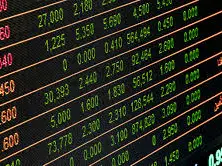
For representative purpose only Photograph: (Pexels)
S&P 500 rebounds after Pakistan seeks a delay of two weeks in Trump’s Iran deadline, highlighting how geopolitical signals are driving market swings
The S&P 500 did something remarkable on Tuesday (April 7). It erased all its losses and turned green, not after a peace deal, not after a ceasefire, not even after a formal negotiation. It turned out because of a request. A request from Pakistan asking Donald Trump to extend his 8 pm deadline on Iran by two weeks. Both sides said they were ‘reviewing the proposal’. That was enough. No agreement. No resolution. Just the possibility of delay. And the market flipped.
This isn’t normal market behaviour
Markets are supposed to move on fundamentals, earnings, growth, inflation, interest rates. Even geopolitics, historically, needed events to trigger sustained reactions: invasions, sanctions, treaties. But this wasn’t an event. This was a signal.
A sentence. A hint that a deadline might not be as hard as it sounded hours earlier. And suddenly, fear evaporated, at least for the day.
The pattern is becoming familiar
Watch closely, and a pattern begins to emerge. First, the escalation. Trump sets a hard deadline, wraps it in dramatic language, and raises the stakes around Iran. The message is clear: act, or face consequences. Markets react the only way they know how, by pricing in risk. They fall. Then, the intervention. A third party, this time Pakistan, steps in. Diplomacy enters the picture. Words like ‘extension’, ‘review’, and ‘backchannel’ begin to circulate. Nothing concrete changes, but the tone shifts. And then, the reversal. Markets recover. Sometimes sharply. Because the worst-case scenario, however briefly, feels less immediate. This is not a one-off reaction. It is a loop. Threat. Panic. Relief. Repeat.
Trending Stories
)
)
)
)
)
)
)
)
)
)
)
)
)
)
)
)
)
)
&im=FitAndFill=(700,400))
)
)
)
&im=FitAndFill=(700,400))
)
&im=FitAndFill=(700,400))
&im=FitAndFill=(700,400))
)
The rise of the ‘Trump signal’
What we are witnessing is something deeper than volatility. It is the emergence of what traders quietly understand as a signal-driven market. The signal, increasingly, is Trump himself. A deadline is not just a diplomatic tool; it is a market-moving variable. A tweet, a statement, a press briefing, each carries weight far beyond politics. They create micro-cycles of fear and relief that ripple across trillions of dollars. The market, in this case, did not wait for clarity. It moved on to probability. Not peace, but the chance of postponement.
Here’s where it gets uncomfortable. Volatility, once seen as chaos, is starting to look… predictable. When markets fall on escalation and rise on de-escalation hints, a rhythm begins to form. And rhythm, in financial markets, is not just observed, it is traded.
Those who recognize the pattern can position themselves accordingly:
- Exit when rhetoric spikes
- Re-enter when diplomacy whispers
No conspiracy is required. No master plan needs to be proven. All that is needed is a repeated structure, and participants who learn to anticipate it.
Who really benefits?
This is the question that lingers beneath the surface. Because while ordinary investors react, larger players often anticipate. Hedge funds, institutional desks, and algorithmic systems thrive on patterns. They don’t need certainty. They need signals with history. And if geopolitical rhetoric begins to behave like a cycle, then it stops being just a risk. It becomes an opportunity. At the same time, political incentives align in their own way. Strong rhetoric energizes a base. Crisis language dominates media cycles. A leader appears decisive, in control, central to the unfolding drama.
The battlefield is not just geographic anymore. It is informational.
The bigger question
At what point does this stop being a reaction and start becoming a dependence? When markets begin to hinge on the words of one leader, when trillions move on tone rather than outcome, the system itself begins to shift. Is this just modern geopolitics in a hyper-connected world? Or are we entering an era where crisis is not just managed, but priced in as a recurring feature?
The final thought
Maybe this isn’t a conspiracy. Maybe it’s something more complex and more troubling. A system where chaos has a pattern. A market that has learned the rhythm of fear. And a world where, sometimes, all it takes to move trillions is not action, but the suggestion that action can wait.
Disclaimer: WION takes utmost care to accurately and responsibly report ongoing conflicts in West Asia involving Israel, Iran, the US, Gulf nations, and non-state actors like Hezbollah, Hamas, Houthis, Islamic State, and others. Claims and counterclaims, disinformation and misinformation are being made online and offline. Given this context, WION cannot independently verify the authenticity of all statements, social media posts, photos, and videos.

