

&imwidth=800&imheight=600&format=webp&quality=medium "Rare earths, visas and chips take the center stage as US-China resume trade talks in London")
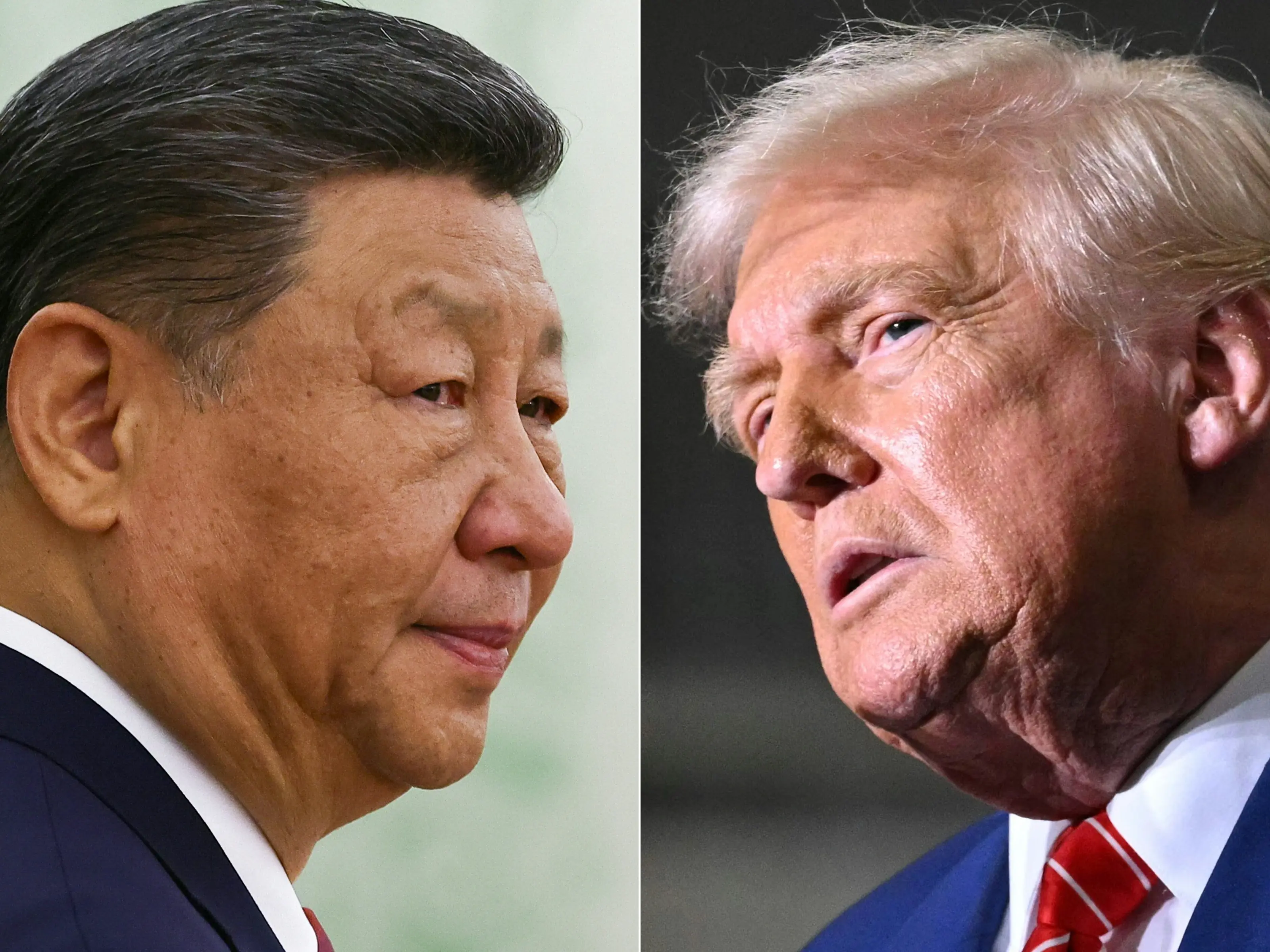
Top trade negotiators from the United States and China are meeting in London on June 9 in a high-stakes bid to defuse rising tensions between the world’s two largest economies.
The talks come after a brief thaw in Geneva last month and a phone call between President Donald Trump and Chinese President Xi Jinping last week, signalling a potential path back to cooperation.
The meeting in London, hosted at an undisclosed venue, includes US Treasury Secretary Scott Bessent, Commerce Secretary Howard Lutnick, and Trade Representative Jamieson Greer. They are set to meet a Chinese delegation led by Vice Premier He Lifeng.
The negotiations aim to rescue a 90-day tariff truce agreed upon in Geneva, which has since been marred by mutual recriminations and renewed hostilities.
The UK, while not directly involved in the negotiations, welcomed the talks. “We are a nation that champions free trade and have always been clear that a trade war is in nobody’s interests,” a UK government spokesperson said on June 8.
Rare earths and export controls at the heart of dispute
Trending Stories
&imwidth=180&imheight=135&format=webp&quality=medium)
Brendan Taylor overtakes Andy Flower to become Zimbabwe’s leading ODI run-scorer
&imwidth=180&imheight=135&format=webp&quality=medium)
Researchers name newly discovered Andean plant after Argentina legend Lionel Messi
&imwidth=180&imheight=135&format=webp&quality=medium)
Lawrence Bishnoi gang claims responsibility for firing at Tiger Shroff over ties to Salman Khan
&imwidth=180&imheight=135&format=webp&quality=medium)
Flying car race: Alef Aeronautics welcomes Tesla Roadster '11 years' later, but are the two models the same?
&imwidth=180&imheight=135&format=webp&quality=medium)
KATSEYE performs at Victoria’s Secret show, teases Sophia Laforteza’s return
&imwidth=180&imheight=135&format=webp&quality=medium)
Shastri backs Shami comeback; lauds Bhuvi and warns Bumrah on format workload ahead of World Cup
&imwidth=180&imheight=135&format=webp&quality=medium)
Saudi Arabia asks skyscraper employees to work from home amid Houthi threats
&imwidth=180&imheight=135&format=webp&quality=medium)
NFl 2026/27 - Saints vs Steelers to go ahead in Paris next week despite protest
&imwidth=180&imheight=135&format=webp&quality=medium)
4 killed, 19 critically injured in grass fire at Canada's largest military base
&im=FitAndFill=(700,400)&imwidth=180&imheight=135&format=webp&quality=medium)
Ghaziabad is world's fastest-growing city; Surat, Patna, Rajkot also feature on list
&imwidth=180&imheight=135&format=webp&quality=medium)
Nobel laureate Machado, who dedicated prize to Trump, confirmed as Venezuela opposition leader
&imwidth=180&imheight=135&format=webp&quality=medium)
After Kennedy Center and reflecting pool disputes, Trump turns to Washington golf course plan amid legal battle
&imwidth=180&imheight=135&format=webp&quality=medium)
Why France looks the most fragile in the G7 amid protests and budget deadlock
&imwidth=180&imheight=135&format=webp&quality=medium)
Asian Para Games: Nishad Kumar clinches T47 long jump gold; Ravi Budigina bags swimming silver
&imwidth=180&imheight=135&format=webp&quality=medium)
China responds to Trump's Press Secretary Katie Zacharia after toilet remark: 'Visit China more often'
&imwidth=180&imheight=135&format=webp&quality=medium)
PCB omits Atherton, Hussain from tri-series commentary panel over Imran Khan interview row
&imwidth=180&imheight=135&format=webp&quality=medium)
Anthropic’s public benefit plan: What its 5% share commitment means for AI’s future
&imwidth=180&imheight=135&format=webp&quality=medium)
Girl 'dead' for 8 hours wakes up at her own funeral, dad insists she wasn't breathing
&imwidth=180&imheight=135&format=webp&quality=medium)
MI5 is opening an AI threat centre, and OpenAI just told MPs the worst isn't over
&imwidth=180&imheight=135&format=webp&quality=medium)
Elon Musk features on Lucknow's 'anti-India' Ravan poster alongside Rahul Gandhi, Akhilesh
&im=FitAndFill=(700,400)&imwidth=180&imheight=135&format=webp&quality=medium)
New OTT releases this week (October 19-25, 2026): Gajab Raat to Chaar Yaar-8 titles to watch during Dussehra week on Netflix, Prime Video and more
&imwidth=180&imheight=135&format=webp&quality=medium)
Kylie Jenner makes Victoria’s Secret debut in $50 million diamond-encrusted design as Timothée Chalamet cheers
&imwidth=180&imheight=135&format=webp&quality=medium)
Putin wants joint meeting with Trump-Xi summit on Ukraine war, proposes talks alongside APEC: Report
&imwidth=180&imheight=135&format=webp&quality=medium)
No Ravindra Jadeja, Yashasvi Jaiswal in India’s 2027 ODI World Cup plans: Report
&imwidth=180&imheight=135&format=webp&quality=medium)
India moves to buy 10,000 more AI chips for a national compute pool open to startups
&imwidth=180&imheight=135&format=webp&quality=medium)
Tiger Shroff attacked by three gunmen in Mumbai, actor safe, two injured
&imwidth=180&imheight=135&format=webp&quality=medium)
Anirudh Ravichander-Kavya Maran wedding: Telangana CM reveals Chennai reception date
&im=FitAndFill=(700,400)&imwidth=180&imheight=135&format=webp&quality=medium)
Tesla Roadster engineering: The hidden hardware behind its flying demonstration
&imwidth=180&imheight=135&format=webp&quality=medium)
Karan Johar reimagines Student Of The Year with thriller series After Dark, Shanaya Kapoor to debut on OTT
&imwidth=180&imheight=135&format=webp&quality=medium)
US to review Russia sanctions waiver within 60 days as Rubio cites India’s ‘substantial’ Russian energy imports
&imwidth=180&imheight=135&format=webp&quality=medium)
'Grassroots leagues help bridge the gap': India's ODI WC winner Suresh Raina lauds ISCL ahead of Season 2
&imwidth=180&imheight=135&format=webp&quality=medium)
'We feel like Mr India': Gujarat’s undercover SHE team guard garba nights at Navratri
&imwidth=180&imheight=135&format=webp&quality=medium)
Cattle-feed bran in biscuits, detergent in milk: FSSAI acts against 3 companies
&imwidth=180&imheight=135&format=webp&quality=medium)
'It's a joy to see the makers bring it on such a grand scale': SS Rajamouli on Ramayana
&imwidth=180&imheight=135&format=webp&quality=medium)
Priest dies after crucifix falls on his head during livestreamed Mass in Ecuador | VIDEO
Central to the impasse is China’s dominance over rare earth elements—vital for manufacturing smartphones, electric vehicles (EVs), military equipment, and semiconductors.
Beijing recently restricted exports of seven rare earth elements, citing the need for tighter licensing, which disrupted global supply chains. The US responded with strong criticism, accusing China of violating the Geneva agreement.
President Trump, however, sounded optimistic after his recent call with Xi, claiming the Chinese leader had agreed to resume rare earth shipments.
“We want the rare earths, the magnets that are crucial for cell phones and everything else to flow just as they did before,” National Economic Council Director Kevin Hassett told CBS on June 8.
China’s Commerce Ministry confirmed it had approved some export licences, though without detailing specific recipients or sectors.
Technology, tariffs, and student visas add to the strain
The trade war, initially characterised by tit-for-tat tariffs that reached as high as 145 per cent, has now spilled into technology and education.
A US Commerce Department guidance issued just days after the Geneva meeting warned that chips from Chinese tech giant Huawei could violate US export restrictions, reigniting tensions.
The Chinese government was quick to condemn the move. “The Chinese side urges the US side to immediately correct its erroneous practices,” said a spokesperson from China’s Ministry of Commerce.
Another sore point has emerged around US policy changes affecting Chinese students. A US announcement to revoke visas of students linked to the Chinese Communist Party or those studying in sensitive fields further agitated Beijing. China labelled it a unilateral provocation that undermines the spirit of the Geneva agreement.
Market optimism tempered by geopolitical uncertainty
Financial markets opened the week on a positive note, buoyed by Friday’s US jobs report and optimism surrounding the London talks.
The MSCI Asia-Pacific Index rose 0.5 per cent, Japan’s Nikkei gained 0.9 per cent, and Hong Kong’s Hang Seng Index climbed 1.3 per cent, breaching the 24,000-point mark for the first time since March.
On Wall Street, stocks had already surged on June 6 after the Labor Department reported the US added 139,000 jobs in May, modestly ahead of expectations. Investors are now watching closely for inflation data set to release on June 11, which could influence the Federal Reserve’s interest rate trajectory.
Despite the positive momentum, analysts remain cautious. “Signs of further momentum in talks could give the markets a fresh boost to kick off the week,” Kyle Rodda of Capital.com told AFP. But he also noted, “Trade policy will remain the big macro uncertainty.”
Challenges beyond trade
Even if the June 9 discussions produce some progress, deeper issues continue to threaten long-term resolution. These include US complaints about China’s state-led economic model, Beijing’s posture toward Taiwan, and tensions over the illicit fentanyl trade.
The outcome of this new round of talks could determine whether Washington and Beijing are able to stabilise their fractious relationship or spiral into a renewed trade war.
Trump’s reprieve on tariffs is set to expire in August, and without a firm deal, he has threatened to restore duties to the high levels set earlier this year.
While the US seeks clarity on rare earths and export controls, China is pushing for a rollback of technology restrictions and assurances over market access. Both sides appear willing to talk, but with vastly different expectations, the road to resolution remains long and uncertain.