India-Japan Summit: Will dollar bypass take shape?

&imwidth=600&imheight=450&format=webp&quality=medium "India-Japan Summit: Will dollar bypass take shape?")
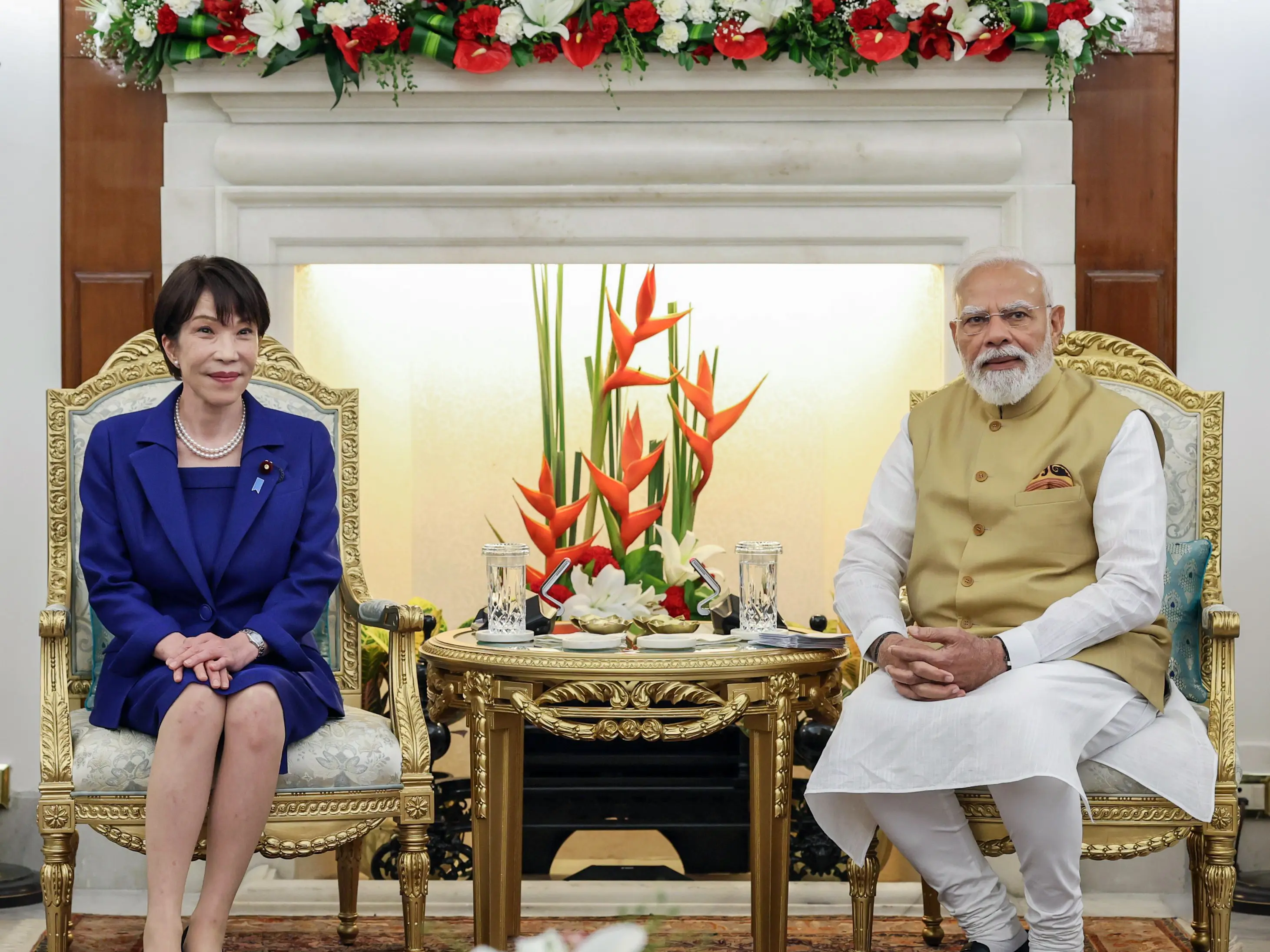
Prime Minister Modi and his Japanese counterpart Sanae Takaichi Photograph: (ANI)
India and Japan are expected to advance a local-currency trade mechanism, allowing direct Rupee-Yen bilateral settlements to lower forex transaction costs and bypass the US dollar for cross-border payments.
Beyond the signed MoUs and the listed plan for the India-Japan summit, bets are on currency plumbing. The headline story for Prime Minister Modi and his Japanese counterpart Sanae Takaichi's summit could be Rupee-Yen bilateral trade settlement.
Will India-Japan trade go local-currency?
India and Japan are expected to advance a direct yen-rupee settlement framework, letting Japanese non-resident entities open accounts with Indian banks and allowing both sides' financial institutions to settle cross-border payments without routing through the dollar.
The arrangement would eliminate the intermediary currency, lowering forex conversion costs, cutting remittance charges and speeding up settlement. The signal matters more than the mechanism.
If it makes the joint statement, it would be the first time currency cooperation of this kind has been formally written into a leaders' statement between the two countries.
Trending Stories
)
)
)
)
)
)
)
)
)
)
)
)
)
)
)
)
)
)
)
)
)
)
)
)
)
)
)
)
)
)
)
)
)
)
&im=FitAndFill=(700,400))
)
)
)
)
That will also be an upgrade from the softer language in last year's Japan-India joint vision.
India-Japan: joint statement
The scale justifies the urgency.
Bilateral trade hit $27.47 billion in fiscal year 2025-26, with Japan exporting $21.43 billion in goods to India. A $75-billion bilateral currency swap agreement, extended through 2026, already gives both central banks the baseline infrastructure needed.
Japan's Ministry of Finance is reportedly targeting a formal memorandum of cooperation with the RBI within fiscal 2026.
Will the global rupee plan get a G7 ally?
This isn't India's first local-currency experiment.
Since 2022, the RBI's special rupee vostro account mechanism has expanded across roughly 150 accounts spanning 30 countries, mostly with sanctioned or deficit-strapped partners like Russia.
Adding Japan, a G7 economy and major reserve-currency issuer, will be different.
That signals local-currency settlement graduating from crisis workaround to corporate standard among trusted allies.
Markets and investors will watch adoption and not just an announcement. A joint statement is a political commitment.
But actual usage depends on how fast banks build settlement rails and whether exporters in autos, electronics and capital goods, the sectors most exposed to Japan, use the mechanism. Takaichi's China problem, India's gain. Geopolitics adds urgency. With Tokyo-Beijing relations deteriorating over Taiwan and China's fresh export curbs on Japanese firms, Takaichi has a clear incentive to diversify financial and supply-chain dependencies towards India.