Flashback Friday: Revisiting the 1944 'Bombay Plan' and its vision for India

Indian economy
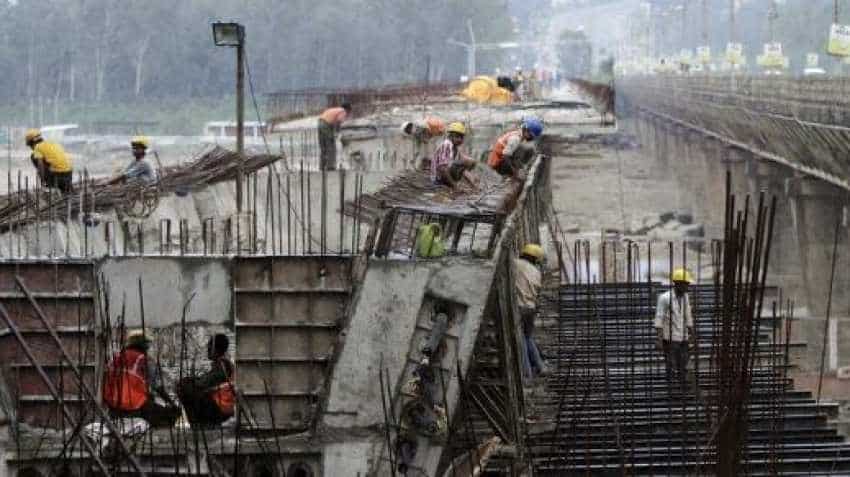
India marks its 75th Republic Day on January 26 -- the day its Constitution came into effect. A 1976 amendment to the Constitution added the word 'socialist' to the preamble.
Although never explicitly mentioned in the Constitution prior to 1976, socialist ideals have been a part of the Directive Principles of State Policy since Independence. For instance: Article 43 of the Constitution states that the State shall secure a living wage and a decent standard of life for workers.
India's socialism, however, differs from the Communist variety. Under Jawaharlal Nehru, India adopted a mixed economy, wherein the 'commanding heights of the economy' remained under the government's grip, but the private sector co-existed.

The 1948 Industrial policy and the second five-year plan (1956-1961) firmly established India's credentials as a mixed economy. However, the blueprint for the country's post-Independent economy could be traced to a pre-Independence plan.
The 'Bombay Plan'
In January 1944, a group of industrialists in Bombay (now Mumbai) came together to envision an economic policy for the soon-to-be-Independent India. The economic plan, titled 'Memorandum Outlining A Plan of Economic Development for India', is now popularly known as the 'Bombay Plan'.
)
'Lot of things to learn from experienced players': Jayasuriya backs Rohit, Virat for 2027 ODI World Cup
&im=FitAndFill=(700,400))
Kareena Kapoor birthday special: Inside her net worth, best movies, luxurious lifestyle and love story with Saif Ali Khan
)
Trump says he'll build an 'AI Force' and appoint a czar, for 'high IQ' people only
)
Punjab man consumes poison outside DC office; Congress, BJP target AAP government
)
SNL UK takes aim at Ed Sheeran with AI Princess Diana sketch
)
Iran sets 7 conditions to end war with US: What are Tehran’s demands?
)
AI actress Tilly Norwood glitches mid-interview, switches from English to Chinese | Watch
)
Mahabharat actor Saurav Gurjar arrested in Hyderabad, sent to 14-day judicial custody in sexual exploitation case
)
Chancellor Friedrich Merz vows to stay on as exit polls signal major poll setback
)
J&K Assembly Session begins amid chaos: BJP, ruling alliance clash as statehood demand dominates
)
Taylor Swift has a 'proud wife' moment as Travis Kelce scores first touchdown of season: 'That’s my husband!'
)
'Were you here to sell chickpeas?': Wasim Akram criticises Babar Azam's captaincy
&im=FitAndFill=(700,400))
New OTT releases this week (September 21-27, 2026): Shaque: Trust No One, Hunkkaar, Don’t Be Shy- 5 new titles coming to Netflix, Prime Video and more
)
Noel Tata challenges Chandrasekaran’s reappointment as Tata Sons chairman. What happened at the board meeting
)
Italy moves to ban face veils in schools as Meloni pushes new integration measures
)
TIFF 2026: Theja Rio’s Angh wins Platform Prize, puts Nagaland story on global stage
)
Delhi: Flagged voters remain on the draft roll but face hearings
)
Saudi Arabia exits China-led mBridge digital currency platform amid Saudi-Houthi conflict
)
40-foot waves crash into cruise ship in dangerous stretch near Antarctica. Watch
)
Jailer 2: Vidya Balan joins Rajinikanth's upcoming film as Kantha | Watch
)
‘0% chance’: Nvidia CEO Jensen Huang dismisses AI extinction fears by 2030
)
Samsung raises Galaxy S26 prices by Rs 20,000: Here’s what each model now costs
)
Bessent meets China’s He Lifeng to prepare for Trump-Xi summit
)
CDU suffers historic defeat in eastern Germany as AfD surges, Merz vows to stay on
)
China now makes advanced memory chips without the machines it was banned from buying
)
Arvind Kejriwal, family members, Delhi CM Rekha Gupta get SIR notices
)
Trump-Xi summit: US Treasury Secretary holds meeting with Chinese Vice Premier
)
Fleming's aspirations as England Test coach include WTC, top ranking and Ashes
)
Saudi vs Houthis: Houthis claim missiles & drones used in attack on key Saudi sites
)
Delhi Air pollution: Strict crackdown on waste burning
)
Apple reportedly building AI server with M8 Ultra chips, may use Nvidia technology
&im=FitAndFill=(700,400))
What TSMC's 2nm technology means for Apple
)
Glitch in the matrix caught on camera: Woman vanishes after talking to reporter
)
Several petrol pumps, other businesses to refuse UPI payments above Rs 2,000 from Oct 16: Is it legal?
)
AI kill switch explained: Why shutting down a dangerous AI may not be as simple as pressing a button
)
Microsoft executive called AI training the ‘largest theft of labour in human history’
)
Pilot recreates Mona Lisa in sky over Oklahoma and Arkansas in four-hour flight: VIDEO
)
US ships in Indian Ocean ‘will be attacked’ if war resumes, warns Iran
)
Samay Raina-Mukesh Chhabra controversy explained: What happened over girlfriend joke on India's Got Latent?
)
Putin's United Russia party wins 355 seats in Duma election; 4 other parties cross threshold to enter parliament
)
S Jaishankar, former Army chief among high-profile names issued Delhi SIR notices
The who's who of British India's business world, namely Purshotamdas Thakurdas, JRD Tata, GD Birla, Ardeshir Dalal, Shri Ram, Kasturbhai Lalbhai, AD Shroff and John Mathai, signed the vision document, which was released in two parts between 1944 and 1945.
The plan sought to double the per capita income of India within fifteen years, as part of three five-year plans.
"A threefold increase in our total national dividend would in effect mean a per capita income of Rs 135, representing a doubling of the 1931-32 figure (Rs 65)," the document read.
Boosting the per capita income was closely linked to raising the standard of living to a reasonable level by focusing on food, clothing, housing, health and education.
The 'Bombay Plan' argued that every Indian must get 2,800 calories per day on an average; a family of five must get a minimum of 500 square feet of housing; each person must get 30 yards of clothing.
In addition, it aimed for better healthcare facilities in towns and villages and full literacy for those between the ages of 11 and 50.
The key argument of the document was that State (read government) intervention would be necessary to fuel India's post-Independent economic growth.
"It is inevitable that in executing a comprehensive plan of economic development, especially in a country where the beginnings of such development have yet to be laid, the State should exercise in the interests of the community a considerable measure of intervention and control," the memorandum read.
Long story short: The decument urged the State to control strategic economic sectors, protect local industries from foreign competition, and ensure equitable distribution of resources across India.
Impact of 'Bombay Plan'
A striking aspect of the 1944 document is that it spoke of everything that Independent India carried outin the next four decades.
The plan also illustrated the need for a 'mixed economy' without even mentioning the concept.
It argued that the "distinction between capitalism and socialism has lost much of its significance from a practical standpoint".
There is little evidence to back that Nehru accepted the 'Bombay Plan'. But given how the economy shaped upafter 1947, the plan has achieved a sort of "mythical status"in India's economic history.
However, the 'Hindu rate of growth' and the 'license-permit raj' witnessed between 1952 and 1991exposed the shortcomings of State control over resources,
The vision document also had its set of detractors. The Communists criticised it for not addressing the questions of income inequality and land reforms.
Veteran Communist leader BT Ranadive dismissed the plan, stating, “Without an equitable distribution of wealth... an all-round increase in the standard of living is not possible. A plan which defers distribution or ignores it cannot be called a ‘plan’."
That the vision emanated from a group of capitalists raised suspicion among the Communists and democratic socialists in the Congress party. Moreover, the plan did not have the approval of the entire business class, severely limiting its acceptability.
But the idea of a group of competing industrialists coming together to create an economic vision for a diverse country like India continues to capture the imagination of scholars in 2024.