Flashback Friday: How the interplay between geopolitics & trade triggered the 1956 Suez Crisis

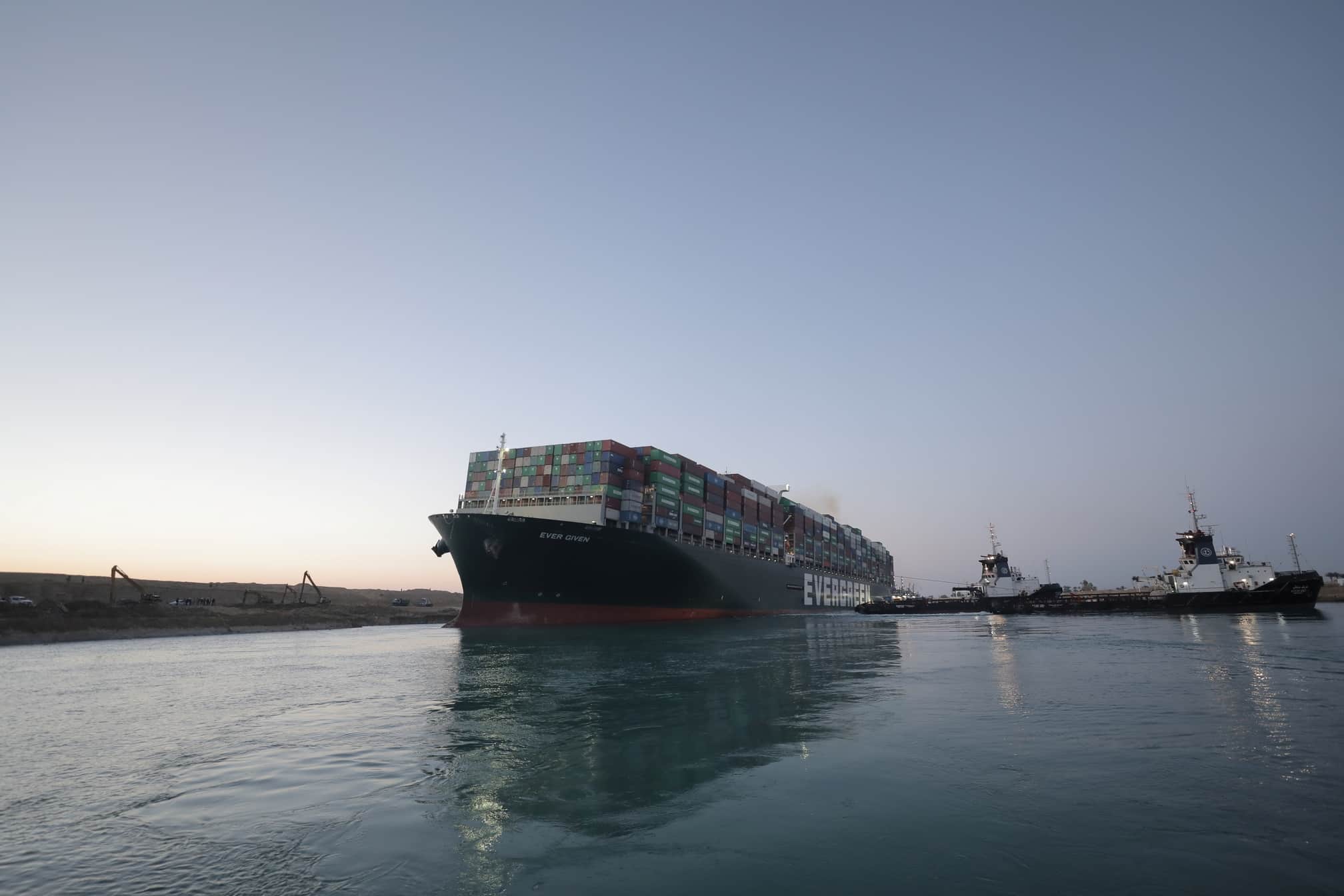
A view shows the container ship Ever Given
All eyes are on the Red Sea, where shipping routes have been disrupted due to attacks by Houthi rebels.
The Yemen-based rebels have apparently stepped up attacks on container ships in solidarity with Palestine, amid the ongoing Israel-Gaza war.
After initially stopping traffic via the Red Sea, several top shipping firms, including Denmark's Maersk and France's CMA CGM, have partially restarted operations under the protection of a US-led multinational naval force.

The blockade of the Red Sea has economic costs for the world economy. The Red Sea lies at the heart of the oil-producing Gulf region and is the gateway to the Suez Canal, which connects the Indian Ocean and the Mediterranean Sea.
The man-made canal, built between 1859 and 1969, accounts for about 12 per cent of the global trade, 9 per cent of oil demand, 6 per cent of LNG imports and 30 per cent of container shipments.
More importantly, it cuts down travel time by an average of eight to ten days for ships bound for Europe & North America. In the absence of the Suez Canal, ships have had to travel through the Cape of Good Hope in the Southern Atlantic Ocean -- something that several ships have been forced to do now.
)
Trump says Russia has ‘lost control’ of its diesel industry, calls for end to ‘ridiculous, never-ending’ war
)
Asian Games: Indian women's hockey team thrash Indonesia 17-1, blasts 36 goals in 2 matches
)
Putin's United Russia party wins 355 seats in Duma election; 4 other parties cross threshold to enter parliament
)
Delhi Air pollution: Strict crackdown on waste burning
)
'I never imagined…': Bihar-born Japan cricketer Abhishek Anand on historic India clash
)
‘0% chance’: Nvidia CEO Jensen Huang dismisses AI extinction fears by 2030
)
Samay Raina-Mukesh Chhabra controversy explained: What happened over girlfriend joke on India's Got Latent?
)
Four decades after leaving Kolkata, the Birlas may be coming back for more
)
BTS' fans question iHeartRadio’s treatment of group after brief festival set
)
Glitch in the matrix caught on camera: Woman vanishes after talking to reporter
)
Samsung raises Galaxy S26 prices by Rs 20,000: Here’s what each model now costs
)
IIT Bombay tensions ease after three-hour open house; director’s assurances pacify students
)
J&K Assembly Session begins amid chaos: BJP, ruling alliance clash as statehood demand dominates
)
8,000 bees worth over $20,000 stolen from hives in Queensland
)
Four Hands, Two Sonatas ep (5-8) review: Song Kang Lee, Jun Young elevate the emotional stakes after a tragic turn
)
The Verdict | The Mecca Agreement is under scrutiny as Houthis attack Saudis
)
Who was Sheikh Ahmed bin Rashid Al Maktoum? From Dubai Royal family to police, sports and racing
)
Saudi Arabia exits China-led mBridge digital currency platform amid Saudi-Houthi conflict
)
Maharashtra TET paper leak: Chargesheet reveals papers smuggled in shoe insoles for Rs 8,000
)
'Lot of things to learn from experienced players': Jayasuriya backs Rohit, Virat for 2027 ODI World Cup
)
Taylor Swift has a 'proud wife' moment as Travis Kelce scores first touchdown of season: 'That’s my husband!'
)
North Korea's nuclear tests triggered 1,399 earthquakes: Earth is still shaking | Gravitas
)
Mahabharat actor Saurav Gurjar arrested in Hyderabad, sent to 14-day judicial custody in sexual exploitation case
&im=FitAndFill=(700,400))
New OTT releases this week (September 21-27, 2026): Shaque: Trust No One, Hunkkaar, Don’t Be Shy- 5 new titles coming to Netflix, Prime Video and more
)
WATCH | Mysterious lights over Tehran caught on video. Drone, aircraft or something else?
)
What is Yom Kippur and why is it celebrated? All you need to know about the Jewish Day of Atonement
)
White House TV pool halts Trump coverage after CNN barred from UNGA events
)
Iranian airlines to shut worldwide on Sept 23, Bessent warns of US banking ban
)
Pilot recreates Mona Lisa in sky over Oklahoma and Arkansas in four-hour flight: VIDEO
)
Fitna Al-Khawarij: Decoding biggest security threat to Pakistan | Gravitas
)
Jailer 2: Vidya Balan joins Rajinikanth's upcoming film as Kantha | Watch
)
Microsoft executive called AI training the ‘largest theft of labour in human history’
)
40-foot waves crash into cruise ship in dangerous stretch near Antarctica. Watch
)
Mystery explosions rock Aleppo, residents told to stay indoors
)
BTS fans mock iHeartRadio’s day 2 turnout after short set controversy
)
The Scandal, why so scandalous? Ji Chang Wook leaves you gasping for air
So, it is the easy access to the Suez Canal which is at stake in the ongoing tensions with the Houthis.
However, this is not the first time that the Suez Canal has been at the centre of geopolitics.
Let's rewind the clock to July 26, 1956.
Then-President of Egypt, Gamal Abdel Nasser, announced the nationalisation of the Suez Canal Company, the British-French firm that controlled the canal.
This decision irked the United Kingdom, France and neighbouring Israel. The canal provided a strategic foothold to the two colonial powers, while Israel depended on access to the canal for trade.
Tensions reached a tipping point in October 1956, when Israel, followed by the UK and France, invaded the Sinai Peninsula in order to secure the Suez Canal.
But things did not go as per the plans. The new superpowers -- the United States and the Soviet Union -- came down heavily on the three countries, warning them to withdraw their troops from Egypt.
With international opinion against them, the three countries withdrew theirtroops and Nasser had the last laugh. Itwas a loss of prestige for the UK and France, the two colonial powers, with the former entering geopolitical oblivion.
But the economic cost of the nationalisation and subsequent hostilities lingered for many years.
The biggest impact was on Egypt which, despite securing a political victory, lost out economically. The country lost all American aid as well as its foreign currency reserves held in the UK and France.
Global oil production fell about 38 per cent in the immediate aftermath of the crisis, largely due to the disruption of traffic at the canal.
The disruptions at the canal had a major impact on Europe, which was largely dependent on Suez for its supplies. The United Kingdom, in particular, witnessed an economic panic as the Pound Sterling lost its international value.
This Suez crisis was the first-ever challenge for the International Monetary Fund, considering itas the 'first financial crisis of the post-war era'.
IMF, as the lender of the last resort for governments, was in pole position to squeeze or release key funds for the four combatants during the crisis. Untested for crises until then, the IMF emerged as a stronger organisation from the crisis, which ended by March 1957.
Overall, the economic fallout of the crisis was subtle and temporary. But the deadlock did highlight the interplay between geopolitics and international trade, something which we are witnessing during the ongoing crisis in 2023.
WATCH WION LIVE HERE