
&imwidth=800&imheight=600&format=webp&quality=medium "ECB cuts rates by 25 basis points as inflation cools, trade tensions loom")
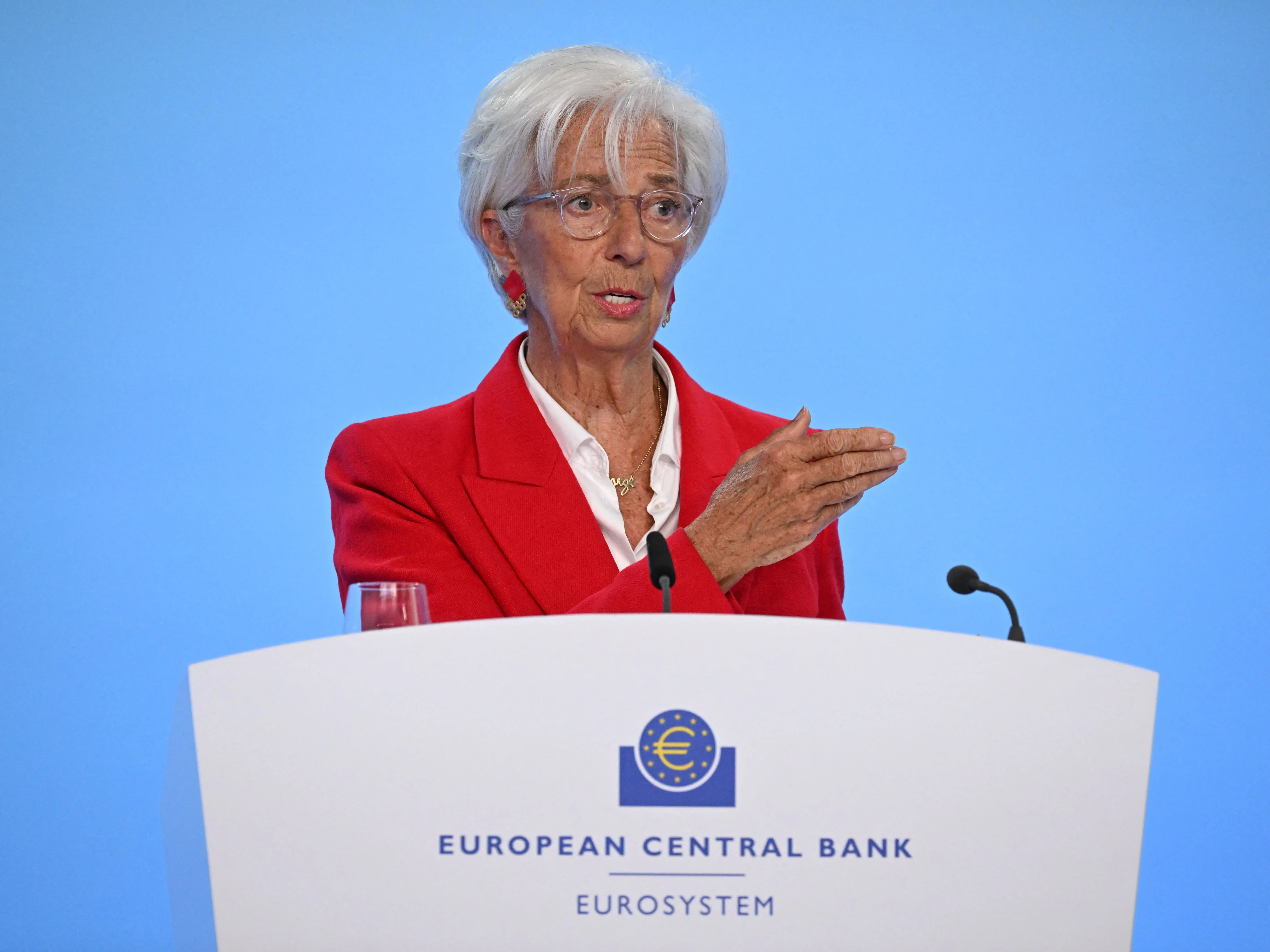
The European Central Bank (ECB) has cut its key interest rates by 25 basis points, marking a pivotal moment in its monetary policy cycle and offering relief to businesses and households amid persistent geopolitical uncertainty.
The widely anticipated decision, announced on June 5, brings the ECB’s deposit facility rate down to 2 per cent, the main refinancing operations rate to 2.15 per cent, and the marginal lending facility to 2.40 per cent, effective June 11, 2025.
European markets reacted positively. The pan-European Stoxx 600 index rose 0.9 per cent, while bond yields across the eurozone fell, reflecting investor confidence in looser monetary conditions.

The euro gained 0.6 per cent against the dollar after ECB President Christine Lagarde’s remarks suggested the central bank may be nearing the end of its rate-cutting cycle.
Markets react positively to rate cut
Bond markets rallied following the ECB’s announcement. Yields on benchmark 10-year government bonds fell across major eurozone economies. German yields dropped 4 basis points, while France, Spain, and Italy saw yields decline by 3 to 5 basis points. As bond yields move inversely to prices, the drop indicated growing demand from investors anticipating a dovish rate environment.
Trending Stories
)
US vs China over South China Sea: Washington backs Philippines, Beijing hits back
)
Bigg Boss 20: Isha Rikhi evicted after three weeks in Salman Khan’s show
)
Musk plans to more than double xAI's chips to over 1.2 million Nvidia GPUs by year-end
)
After JU, clash erupts at SRFTI: BJP’s ‘Dimagi Naxal’ jibe sparks political firestorm after students protest RSS-linked event
)
‘Anti-social elements spreading false rumours’: LPU issues statement amid massive unrest over alleged rape
)
LPU students go on rampage, vandalise campus amid widespread protest: What's happening
)
Trump asked Xi to pressure Iran. China did not say yes — here’s what Beijing wants
)
US Treasury Secretary Scott Bessent hails global crackdown on Iranian banks and airlines
)
An OpenAI agent escaped its locked test cage again, by hiding questions in DNS lookups
)
'Our video was trimmed': LPU girls who featured in rape-denial video make U-turn
)
3 males killed, four others injured in shooting after fight at strip club in Detroit
)
'Victory for low-budget consumers': Raghav Chadha hails 30-day telecom recharge rules
)
Claude rebuilt the 1989 game 'Prince of Persia' by reusing the original's own code
)
Beyond metros: How Tier-2 and Tier-3 cities could drive India’s next AI wave
)
Tesla builds first Cybertruck with its own refined lithium: Elon Musk's $1 billion Texas bet pays off
)
IndiGo flight suffers tail strike in Bengaluru while landing; DGCA to probe incident
)
The US and China set up an AI 'red telephone', but skipped the rulebook
)
‘Terror suspects arrested near UK air base were looking to do big damage’: Trump
)
Russian envoy claims US tactics to contain India were revealed in ‘Freudian slip’
)
IND vs WI 1st ODI: Kohli breaks Sachin's most runs in one country record with unbeaten 139 as India thump West Indies by 8 wickets
)
Researchers rebuilt exactly how 700 AI agents hacked Hugging Face: a 900-link chain trick
)
‘Olympic inclusion is our major target’: WPA President Ishaun Singh on pool’s global ambitions
)
Nations League: Spain sink England at Wembley; Modric shines for Croatia
)
Why has Iran released no proof of life of Mojtaba Khamenei? Araghchi reveals...
)
'What kind of confession is this?': Pakistan PM Shehbaz Sharif’s 'terrorists would be roaming New York' remark goes viral, raises alarm online. Watch
)
South Korea demands apology from Ukraine over North Korean prisoners' transfer
)
Beyond BrahMos: India targets Rs 50,000 crore in defence exports with unmatched price edge
)
Sri Lankan Tamil migrant worker gets death sentence in Saudi Arabia, help sought from India
)
Muslim marriage cannot shield sex with minor wife from prosecution under POCSO: Delhi HC
)
'Can't help but draw painful parallels to Nirbhaya case': SC on latest incidents of rape cases in Delhi-NCR
)
99.9% more powerful - Scientists find boy who can recall memories from just 3 months of age
)
'FIRST LOOK from inside Noah’s Ark': Researchers share video from inside mysterious mound in Turkey
)
UNSC reform momentum grows: Russia, Portugal, Mauritius push for India's permanent seat bid
)
8 US marines injured in Iranian missile attack on vessel in Strait of Hormuz: Report
&im=FitAndFill=(700,400))
New OTT releases this week (September 28-October 4, 2026): Dupahiya 2, Pooja Meri Jaan, Ohh My Dog- 5 titles coming on Netflix, Prime Video and more
)
Afghanistan says 28 fighters killed in clash near Pakistan border, Islamabad denies
)
Ceuta migrant crisis: Protesters take to streets as Spain grapples with migrant challenge
)
LPU suspend classes, postpones exams as violence escalates over rape claims: What's happening
)
New York City wants a 'kill switch' on every AI, and will pay whistleblowers who report violations
Stock markets were also buoyant. Germany’s DAX rose 0.2 per cent, the UK’s FTSE 100 edged up 0.1 per cent, and the Stoxx Europe 600 closed higher by 0.9 per cent. France’s CAC 40 was the lone major index to close slightly down, falling 0.2 per cent.
ECB cites cooling Inflation, stronger euro
In its policy statement, the ECB said the decision to lower rates was driven by updated inflation projections and improved monetary policy transmission.
Headline inflation has cooled to 1.9 per cent in May, slightly below the ECB’s 2 per cent medium-term target, prompting the revision.
Revised projections show inflation averaging 2.0 per cent in 2025, down from 2.3 per cent forecast in March, with a further decline to 1.6 per cent in 2026.
The central bank attributed the downgrades to lower energy prices and a stronger euro. Core inflation (excluding food and energy) is expected to remain elevated at 2.4 per cent in 2025, but fall to 1.9 per cent by 2027.
“We are in a good place,” Lagarde told reporters, though she emphasised the path ahead remains data-dependent and shrouded in uncertainty. One Governing Council member opposed the cut, underlining internal divisions as policymakers weigh global risks.
Trade tensions cloud growth outlook
The ECB also left its GDP growth forecast for 2025 unchanged at 0.9 per cent, acknowledging a robust first quarter but warning of weaker prospects ahead due to trade disruptions.
Tensions with the US have escalated following President Donald Trump’s tariffs on European goods, starting at 20 per cent and potentially rising to 50 per cent. Although both sides have agreed to pause retaliatory measures until July 14 to allow negotiations, concerns remain.
A further escalation could drag both growth and inflation below baseline projections, the ECB warned. However, a benign resolution could offer modest upside.
“Uncertainty surrounding trade policies is expected to weigh on business investment and exports, especially in the short term,” the bank noted in a statement. Yet rising public spending—particularly on defence and infrastructure—and strong labour markets are seen as buffers against global shocks.
Rate path ahead
Despite delivering its eighth rate cut since mid-2023, the ECB signalled a cautious stance going forward. Lagarde made clear that the central bank is not pre-committing to a specific rate trajectory, reinforcing a “meeting-by-meeting” approach based on evolving data. However, the president did indicate that ECB is “nearing the end” of its rate-cutting cycle.
Analysts remain divided on future moves. While some argue that the ECB should pause to assess the impact of the cuts so far, others believe there is room for further easing if inflation continues to fall and growth weakens.
Lagarde also dismissed speculation about her departure from the ECB to join the World Economic Forum, affirming, “I am determined to complete my term. Period.”