
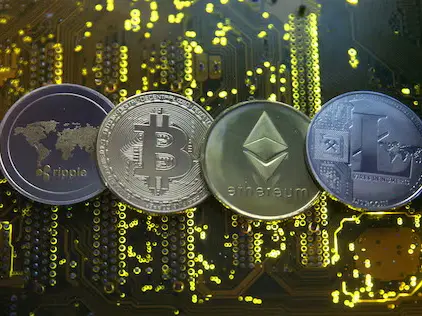
&imwidth=800&imheight=600&format=webp&quality=medium "Crypto finds new ground as Fed lifts reputational risk barrier")
The US Federal Reserve has officially removed “reputational risk” from its supervisory guidelines for banks, a move widely seen as a turning point for the cryptocurrency industry. This decision, echoed by similar actions from the Office of the Comptroller of the Currency (OCC) and the Federal Deposit Insurance Corporation (FDIC), is expected to unlock long-denied access to banking services for crypto firms long sidelined by regulatory caution. Until now, banks were often hesitant to engage with digital asset businesses due to the perceived damage to their reputation.
The unwritten rule led to many crypto companies being “debanked”, a practice criticised by lawmakers and industry players as stifling innovation and undermining financial inclusivity. The Fed’s updated policy pivots towards a more evidence-based risk assessment framework, focusing on financial stability and compliance rather than subjective public perception. While banks can still internally consider reputational risk, it will no longer play a role in supervisory evaluations.
Crypto inches into traditional finance

This regulatory rethink arrives just as traditional finance is showing growing interest in crypto integration. Major institutions such as Mastercard are rolling out hybrid offerings that blend fiat and stablecoin use under a single user interface. Mastercard’s “One Credential” feature, for example, allows consumers to spend both traditional and digital currencies seamlessly through one card.
The timing couldn’t be better for crypto investors. With global interest in digital assets rising, Bitcoin has outperformed traditional asset classes over the past decade. A recent survey shows that over 70 per cent of crypto investors use it as a hedge against inflation, while more than 60 per cent report feeling more financially hopeful than before.
Data from 2024 underscores this momentum. Over 88,000 individuals became crypto millionaires globally in the past year. Meanwhile, Bitcoin and Ethereum have posted double-digit returns, even amid geopolitical shocks like US airstrikes in Iran a few days ago, which triggered temporary volatility.
Trending Stories
)
Did India risk its US trade deal despite softer stance at BRICS?
)
Pakistan puts Pak Rs 70 lakh bounty on UN terrorist Masood Azhar; move draws skepticism in Delhi
)
First naval drone battle? Ukraine says Sargan 3000 sank Russian unmanned boat
)
Practical Magic 2 breaks Spidey spell over North American box office
)
'Huge destructive power': North Korea calls its latest missile launches 'live-fire drill' even as US dismisses 'immediate threat'
)
‘Let’s go’: Newly declassified videos show dramatic rescue of US Air Force officers downed in Iran
)
Ganesh Chaturthi 2026: Devotees throng the iconic Lalbaugcha Raja pandal in Mumbai
)
Delhi’s balancing act: BRICS serves as a stage for West Asia diplomacy
&im=FitAndFill=(700,400))
Why European Meteor missiles use ramjet engines compared to standard US solid rockets
)
Iran, India agree to deepen humanitarian and political ties, President Pezeshkian says
)
‘Want to reset ties with India, have engagement based on mutual interests,’ says Bangladesh minister
)
Trump says Canada eager to reach a deal, it could come ‘fairly soon’ if Ottawa treats US farmers better
)
Turkish Airlines plane flies through a storm three times, triggering severe turbulence
&im=FitAndFill=(700,400))
Why Chinese PL-15 air-to-air missiles use dual-pulse motors compared to European interceptors
)
Orlando Bloom addresses Pirates of the Caribbean comeback and reunion with Johnny Depp
)
China thinned Himalayan troop presence in 2025, India defence report says; terms border situation 'stable'
)
Russia proposes to build 360 kmph Ivolga FG trains in India: What happened on sidelines of BRICS
)
800 million years old - Scientists discover 'fingerprints' of supercontinent Gondwana in ancient rocks
)
Israeli minister calls to strip Gaza film directors of citizenship
)
Natural caffeine sources gain popularity; matcha & botanicals offer calm energy
)
China discovers vast gold and silver 'mine' in the Pacific with unheard-of deposits
)
Russian drone hits Warsaw-bound train near Polish border, Zelensky accuses Moscow of ‘deliberate’ targeting
)
Plane carrying prominent figure crashes at Libya’s Misrata airport: Report
)
Veteran Bollywood actress Nafisa Ali shares health update as Stage 4 cancer progresses, starts targeted therapy
&im=FitAndFill=(700,400))
New OTT releases this week (September 14-20, 2026): Lust Stories 3, Waiting Hai, Irumudi- 5 new titles coming on Netflix, Prime Video and more
)
Liam Neeson sparks romance rumours after holding hands with Stella Stocker at TIFF 2026
)
Saudi Arabia discovers 110 million tonnes of Uranium-rich ore in Madinah region
)
Indian importers urge Bangladesh to lift export ban on 'Hilsa' fish ahead of Durga Puja
)
Video of Pakistani lawmaker struggling to read English tribute to Jinnah goes viral - WATCH
)
Did China give Iran intel before US base strike that killed 3 troops? Trump says, 'You’re right...'
)
Crude oil prices jump more than $107 per barrel following Houthi attacks on Saudi
)
Women's Asia Cup 2026: India denied trophy once again despite winning the title
)
Humans may lose control of AI: Anthropic CEO calls for slowdown, Altman, Musk back him
The global crypto market has bounced back, with market capitalisation rising 3 per cent to $3.3 trillion following the Fed’s announcement. Though interest rates remain unchanged for now, a potential rate cut in July could further buoy crypto valuations.
Can volatile wealth buy peace of mind?
Yet, as crypto becomes more mainstream, a new narrative is emerging, one that grapples with the emotional toll of living in a volatile wealth system. While some investors enjoy financial freedom and autonomy, others face growing stress. The same market that mints millionaires can just as easily erase life savings overnight.
Retail investors report heightened financial anxiety during downturns, and crypto-related thefts topped $2 billion in 2024 alone. The risks are real, and the pressure to stay ahead, technologically and financially, is constant.
As crypto becomes part of daily financial life, from shopping with stablecoins to accessing blockchain-based lending, the big question remains: can digital money buy real happiness? The answer is complicated. While crypto may offer a lifeline in a crumbling economic environment, it also demands resilience, vigilance, and above all, balance.