Central banks can't give in to inaction as Fed takes lead on rate cuts


US Fed reduced interest rates by 50 basis points in the FOMC meeting on September 18.
The latest commentary from the Federal Reserve has emerged as a moment that does belong to global monetary policy, of course, but also especially to the Bank of England and the European Central Bank. Federal Reserve Bank of Chicago President Austan Goolsbee called for "measurable" interest rate cuts to safeguard the US labor market and economy and is advocating for "many more rate cuts over the next year."
This bold move will contrast strongly with hesitation seen in European central banks, who risk being left in the dust as fast-moving changes blossom in the economic landscape as detailed in a write-up on Bloomberg by Columnist, Marcus Ashworth.
Such clear messaging from the Fed underlines a trend of increasing divergence between the monetary policy path in the US and its European peers. The Bank of England (BOE) and European Central Bank (ECB) have lowered rates before, but are currently on the back foot, acting like they don't want to do something that will be taken as bold action. This will repeat the mistakes made in 2021 when markets did not capitalize on stabilization opportunities because of a lack of confidence in their actions.

In the past months, both the central banks have chosen a gradual cutting of the rates, usually reducing the rates by only 25 basis points in the quarter. That does not inspire leadership but instead reveals fear to act ahead of emerging data in the economy. In contrast, the Fed started its cutting cycle with a strong 50-basis-point cut and indicated its intention to take head-on the threats that economic downturns could pose in future cycles.
Current economic indicators are mixed. On the bright side, US September composite purchasing managers index is still strong and well within expansion territory at 54.4; however, inflation is still stuck at around 2.5 per cent, which is far from the target. The Fed's newfound interest in employment marks a recognition that proactive measures must be taken to keep the markets confident and risks relating to economic slowdown manageable.
The challenges of European central banks are simply unique to their economic topography. Purchasing manager surveys across the Eurozone suggest increasing recession risks, especially given that France and Italy face the harsh budgetary disciplines meted out by the European Commission. Both have been subjected to Excessive Deficit Procedure that entails some pretty bad fiscal consolidation.
)
'Lot of things to learn from experienced players': Jayasuriya backs Rohit, Virat for 2027 ODI World Cup
)
Jailer 2: Vidya Balan joins Rajinikanth's upcoming film as Kantha | Watch
)
Four Hands, Two Sonatas ep (5-8) review: Song Kang Lee, Jun Young elevate the emotional stakes after a tragic turn
)
IIT Bombay tensions ease after three-hour open house; director’s assurances pacify students
)
Glitch in the matrix caught on camera: Woman vanishes after talking to reporter
)
Delhi Air pollution: Strict crackdown on waste burning
)
Saudi Arabia exits China-led mBridge digital currency platform amid Saudi-Houthi conflict
)
‘0% chance’: Nvidia CEO Jensen Huang dismisses AI extinction fears by 2030
)
Samay Raina-Mukesh Chhabra controversy explained: What happened over girlfriend joke on India's Got Latent?
)
SNL UK takes aim at Ed Sheeran with AI Princess Diana sketch
)
J&K Assembly Session begins amid chaos: BJP, ruling alliance clash as statehood demand dominates
)
US and China vie for AI dominance as calls grow for regulation | Gravitas
)
What is Yom Kippur and why is it celebrated? All you need to know about the Jewish Day of Atonement
)
Asian Games: Indian women's hockey team thrash Indonesia 17-1, blasts 36 goals in 2 matches
)
The Scandal, why so scandalous? Ji Chang Wook leaves you gasping for air
)
Bessent meets China’s He Lifeng to prepare for Trump-Xi summit
)
Microsoft executive called AI training the ‘largest theft of labour in human history’
)
The Verdict | The Mecca Agreement is under scrutiny as Houthis attack Saudis
)
Fitna Al-Khawarij: Decoding biggest security threat to Pakistan | Gravitas
)
Mahabharat actor Saurav Gurjar arrested in Hyderabad, sent to 14-day judicial custody in sexual exploitation case
)
Maharashtra TET paper leak: Chargesheet reveals papers smuggled in shoe insoles for Rs 8,000
)
BTS fans mock iHeartRadio’s day 2 turnout after short set controversy
)
Samsung raises Galaxy S26 prices by Rs 20,000: Here’s what each model now costs
)
Pilot recreates Mona Lisa in sky over Oklahoma and Arkansas in four-hour flight: VIDEO
)
AI kill switch explained: Why shutting down a dangerous AI may not be as simple as pressing a button
)
White House TV pool halts Trump coverage after CNN barred from UNGA events
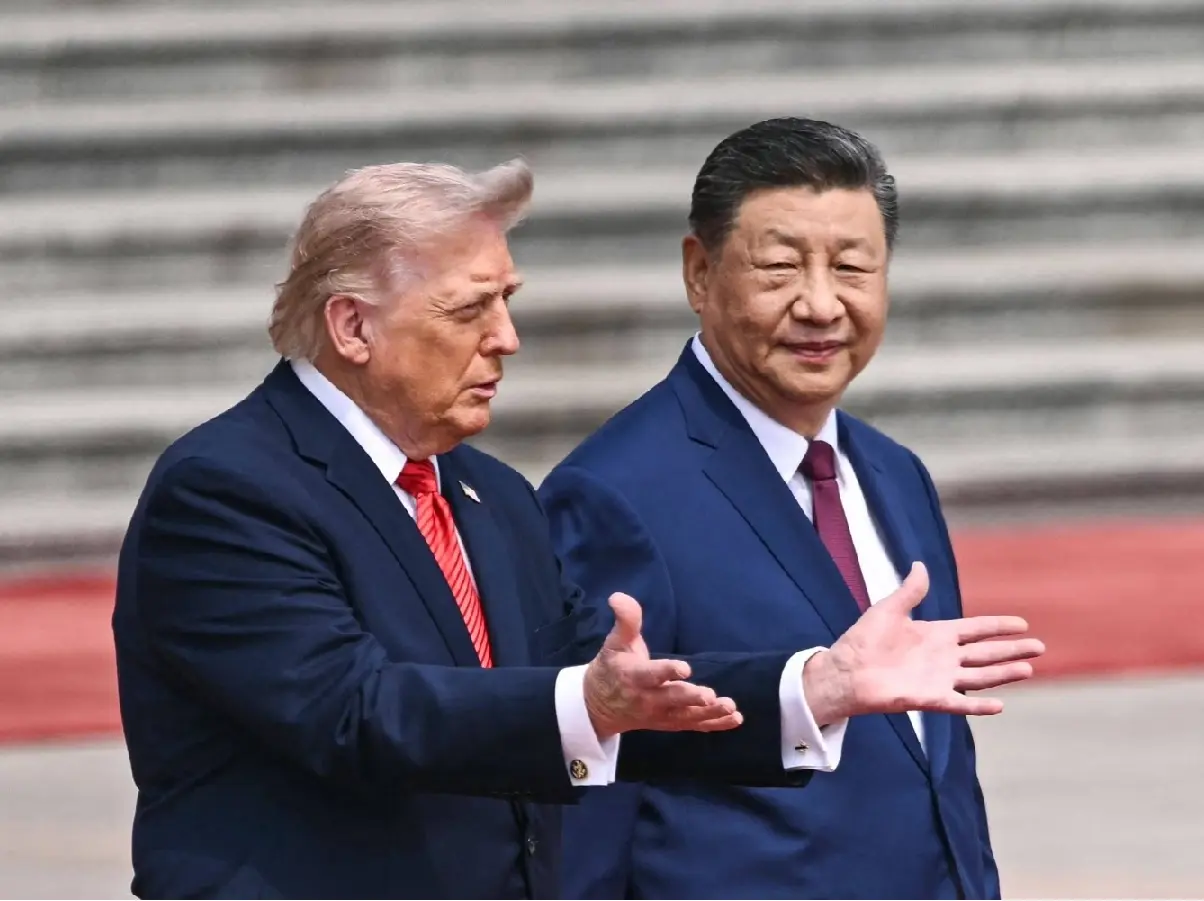)
Explainer: Why rare-earth export licences and Board of Trade are US priorities ahead of Trump-Xi summit
)
Four decades after leaving Kolkata, the Birlas may be coming back for more
)
Putin's United Russia party wins 355 seats in Duma election; 4 other parties cross threshold to enter parliament
)
Trump says Russia has ‘lost control’ of its diesel industry, calls for end to ‘ridiculous, never-ending’ war
)
Iranian airlines to shut worldwide on Sept 23, Bessent warns of US banking ban
)
40-foot waves crash into cruise ship in dangerous stretch near Antarctica. Watch
)
Who was Sheikh Ahmed bin Rashid Al Maktoum? From Dubai Royal family to police, sports and racing
)
Apple reportedly building AI server with M8 Ultra chips, may use Nvidia technology
&im=FitAndFill=(700,400))
New OTT releases this week (September 21-27, 2026): Shaque: Trust No One, Hunkkaar, Don’t Be Shy- 5 new titles coming to Netflix, Prime Video and more
)
Taylor Swift has a 'proud wife' moment as Travis Kelce scores first touchdown of season: 'That’s my husband!'
)
Chancellor Friedrich Merz vows to stay on as exit polls signal major poll setback
)
WATCH | Mysterious lights over Tehran caught on video. Drone, aircraft or something else?
Exports from Europe also face the pressures of a Chinese economy badly going through economic challenges. The recent stimulus measures taken by China and its rate cuts fail to impress me, in my opinion. According to the economists at Bloomberg, Euro-area growth is expected to be 0.7 per cent this year. This will be largely dominated by the southern European nations, but the major economies are still expected to remain lags for France and Germany.
Analysts argue that the BOE and ECB have to step up their rhetoric on rate-setting in light of these developments. Cutting official rates twice this year rather than the once in the case of BOE may help improve their efficacy in managing slowing economies, thus averting the possibility of having to cut rates very sharply going forward. If they do not get their act together, at least in terms of being bold and talking tough about waiting longer to hike rates, then bigger cuts than forecasted may be in store.
The situation for BOE is a bit less dire but still challenging. As inflation inches closer to the target while growth duds, UK consumer confidence has a long history of painful negative reiterations from policymakers. But even for Chancellor of the Exchequer Rachel Reeves, whose budget presentation comes on November 7 ahead of BOE's next quarterly review, which in turn will guide forward monetary policy choices.
With central banks everywhere dealing with growingly testing economic environments, the demand for urgent action could not be starker. Lessons from the Fed's bold policy action will guide both the BOE and ECB as they work their way through these raging waters. Steady but incrementally faster, instead of a choke hold, more incremental steps in rate-setting policies will better prepare Europe for whatever it might encounter in 2025 and beyond.
