

&imwidth=800&imheight=600&format=webp&quality=medium "Air India crash to inflate aviation insurance bills by 30% worldwide")
The tragic crash of Air India Flight AI171 in Ahmedabad on June 12—the deadliest aviation disaster in over a decade—is sending shockwaves through the global insurance industry. The crash, which killed 241 passengers and crew along with 33 people on the ground, has triggered an estimated insurance claim of $475 million (₹3,940 crore), making it India’s most expensive aviation insurance payout to date.
The Boeing 787 Dreamliner jet was completely destroyed, marking the first-ever total loss of this aircraft model since its introduction in 2011. The massive claim includes approximately $125 million for the hull and engines and over $350 million in liability, covering compensation for loss of life and property damage on the ground under the Montreal Convention. Air India’s fleet is insured for around $20 billion, with annual premiums close to $30 million. However, more than 90 per cent of this financial burden will fall on global reinsurers, primarily based in London and Bermuda.
Experts say this high-profile loss is likely to “harden” the global aviation insurance market, pushing premiums sharply higher in the coming renewal cycle. Bloomberg reported that Indian brokers expect increases between 10 per cent and 30 per cent across key coverages such as hull, war-risk, and liability insurance, which is far steeper than hikes seen after previous crashes.
Global ripple effect
While the crash occurred in India, its financial aftershocks will be global. According to insurance experts and market insiders, the scale of the claim means international reinsurers will reprice risk across their entire aviation portfolios. That means airlines around the world are likely to see their premiums rise significantly in the months ahead.
“This catastrophe will contribute to global rate hardening,” Sajja Praveen Chowdary, director at Policybazaar for Business, told Bloomberg. “It’s not just an Indian issue. Premiums for hull, liability, and war-risk covers could jump as much as 30 per cent globally.”
Trending Stories
&im=FitAndFill=(700,400)&imwidth=180&imheight=135&format=webp&quality=medium)
Navratri 2026: 9 days, 9 forms of Goddess Durga and 9 colours- Check the complete list
&imwidth=180&imheight=135&format=webp&quality=medium)
Trump weighs firing Kimberly Guilfoyle as US ambassador to Greece amid misconduct allegations: Report
&imwidth=180&imheight=135&format=webp&quality=medium)
Anti-SIR protest in Mumbai: Protestors wear black masks & ribbons in Mumbai
&imwidth=180&imheight=135&format=webp&quality=medium)
UK PM Andy Birnham renews claims of Russian meddling in Brexit vote
&imwidth=180&imheight=135&format=webp&quality=medium)
BCCI rejects venue shift reports, India vs Sri Lanka 1st ODI to remain in Delhi
&imwidth=180&imheight=135&format=webp&quality=medium)
1,500 drones illuminate Mumbai sky as Cordelia Cruises unveils second ship, Cordelia Sky
&imwidth=180&imheight=135&format=webp&quality=medium)
India Rejects Pakistan-China Boundary Commission, Tells Islamabad to Drop 'Theatrics' | GRAVITAS
&imwidth=180&imheight=135&format=webp&quality=medium)
Houthis warns US of 'painful response' if Washington joins Saudi war in Yemen as airlines suspend flights to Saudi Arabia
&imwidth=180&imheight=135&format=webp&quality=medium)
Congress demands action against chief election commissioner
&imwidth=180&imheight=135&format=webp&quality=medium)
Trump defends Russian diesel deal amid bipartisan backlash over fuel prices
&imwidth=180&imheight=135&format=webp&quality=medium)
Apple HomeView smart home hub may launch soon with A18 chip, display and Siri controls: What to expect
&imwidth=180&imheight=135&format=webp&quality=medium)
VIDEO: Houthi's strike Riyadh's King Khalid International airport as passengers wait for flights
&imwidth=180&imheight=135&format=webp&quality=medium)
'Turn approver, resign, we'll forgive you': Rahul Gandhi claims receiving messages from CEC Gyanesh Kumar
&imwidth=180&imheight=135&format=webp&quality=medium)
'I will not be silenced': Ilhan Omar alleges political intimidation after federal officers search her Washington home
&imwidth=180&imheight=135&format=webp&quality=medium)
Use AI as your ‘second brain’: Meta AI chief Alexandr Wang’s message to young people
&imwidth=180&imheight=135&format=webp&quality=medium)
Robotic surgery, advanced treatment: What is coming to this small Gujarat town?
&imwidth=180&imheight=135&format=webp&quality=medium)
US federal agents raid Dem Rep Ilhan Omar’s home ahead of midterms
&imwidth=180&imheight=135&format=webp&quality=medium)
Reports: Saudi crown prince Mohammed bin Salman is being moved to safe locations
&imwidth=180&imheight=135&format=webp&quality=medium)
Pakistan's government blames PTI for rise of terrorism in Khyber Pakhtunkhwa
&imwidth=180&imheight=135&format=webp&quality=medium)
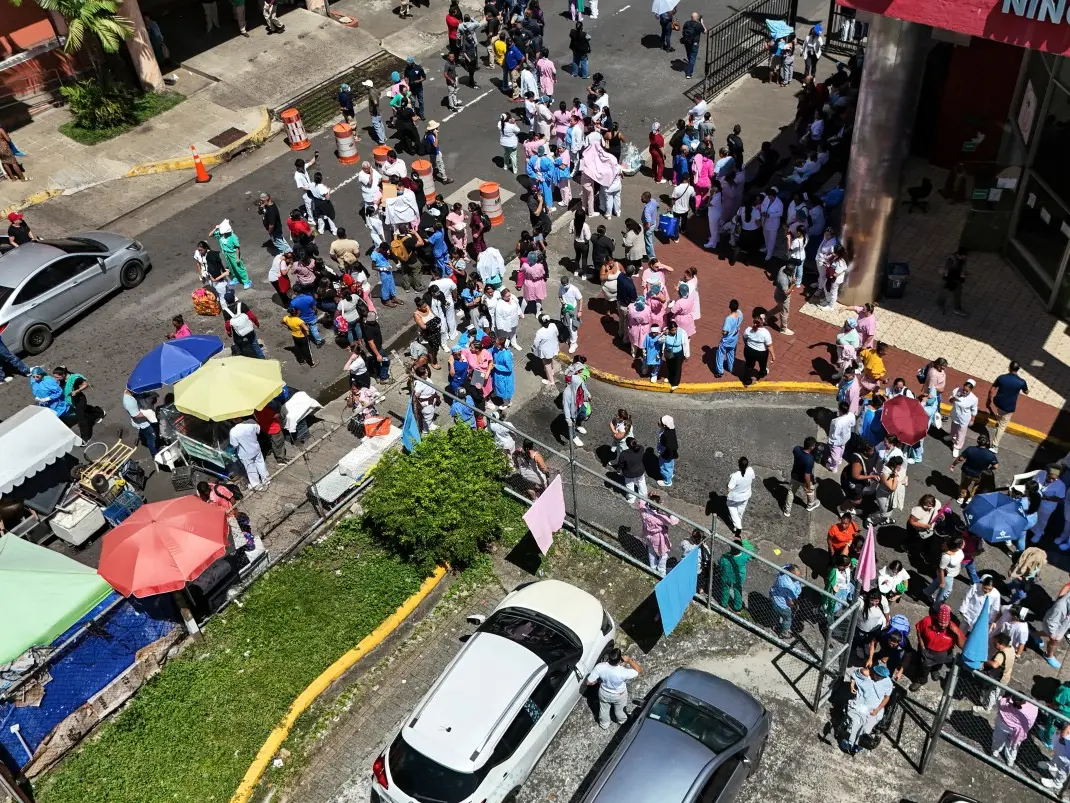
Powerful 7.7 magnitude earthquake strikes Panama, tsunami warning issued
&imwidth=180&imheight=135&format=webp&quality=medium)
‘This is just the start’: Maaya Rajeshwaran on historic ITF title, confidence boost and future goals
&im=FitAndFill=(700,400)&imwidth=180&imheight=135&format=webp&quality=medium)
How does a robot decide what to do next?
&imwidth=180&imheight=135&format=webp&quality=medium)
ICC penalises West Indies duo Powell, Rutherford for Code of Conduct breach
&imwidth=180&imheight=135&format=webp&quality=medium)
'Ouch!!! That must hurt': Kangana Ranaut hails Kamal Haasan's sharp reply to Elon Musk over Starlink row
&imwidth=180&imheight=135&format=webp&quality=medium)
Sidhu Moose Wala’s younger brother wins hearts by recreating late singer’s signature move at Toronto Hologram Show
&imwidth=180&imheight=135&format=webp&quality=medium)
UK school ditches technology, shifts from screen to pen and paper for learning
&imwidth=180&imheight=135&format=webp&quality=medium)
Opposition’s 10 demands in Supreme Court petition range from stay on SIR to audit of voter rolls
&imwidth=180&imheight=135&format=webp&quality=medium)
Portugal Federation confirms Cristiano Ronaldo’s return to national team despite suspension
&im=FitAndFill=(700,400)&imwidth=180&imheight=135&format=webp&quality=medium)
New OTT releases this week (October 12-18, 2026): Sacrifice, Koffee with Karan S9, Roadies Rebirth- 6 titles coming on Netflix, JioHotstar and more
&imwidth=180&imheight=135&format=webp&quality=medium)
Rishabh Pant ruled out of India A squad for New Zealand tour, Kumar Kushagra named replacement
&imwidth=180&imheight=135&format=webp&quality=medium)
India's Ajit Doval, Iran's Mohsen Rezaei hold talks amid escalating West Asia tensions, discuss 'issues of mutual interest'
&imwidth=180&imheight=135&format=webp&quality=medium)
'Almost certainly': UK Prime Minister Andy Burnham says Iran's IRGC behind RAF Fairford threat
Aviation insurance claims have already amounted to over $15 billion between 2019 and 2024, according to a report by Allianz SE.
With strong growth in air travel in Asia-Pacific and North American regions, total annual aviation premiums were projected to exceed $8 billion even before the Air India crash. Now, analysts warn the number could rise further, especially if more losses occur in the near future.
Brokers say insurers may introduce stricter underwriting standards, particularly for wide-body aircraft like the Boeing 787. The cost of coverage may also be passed on to passengers, as airlines operating on thin margins look to offset higher insurance expenses through higher fares or reduced services.
Claim complexities
The claim settlement process is expected to be long and layered, involving multiple insurers, reinsurers, and legal jurisdictions. While Indian insurers like Tata AIG and GIC Re are leading the local cover, they retain only 5-10 per cent of the risk.
The rest is reinsured abroad, and a portion of that is further distributed through retrocession, a mechanism by which reinsurers transfer risk to other parties, including global giants like Swiss Re, Munich Re, and various ILS funds.
Investigations into the crash are ongoing, with technical failure and potential liability still under scrutiny. Depending on the cause—accident, technical fault, or sabotage—different insurance policies (hull all-risk or war-risk) will be triggered.
Compensation for victims will follow international protocols, with each airline liable for up to 113,100 Special Drawing Rights (SDRs), equivalent to approximately ₹1.26 crore ($145,143) per victim.