

&imwidth=800&imheight=600&format=webp&quality=medium "Wion World Pulse: ‘Several Sarvams in pipeline, Indian IT industry will play big role in AI’: India AI Mission CEO")
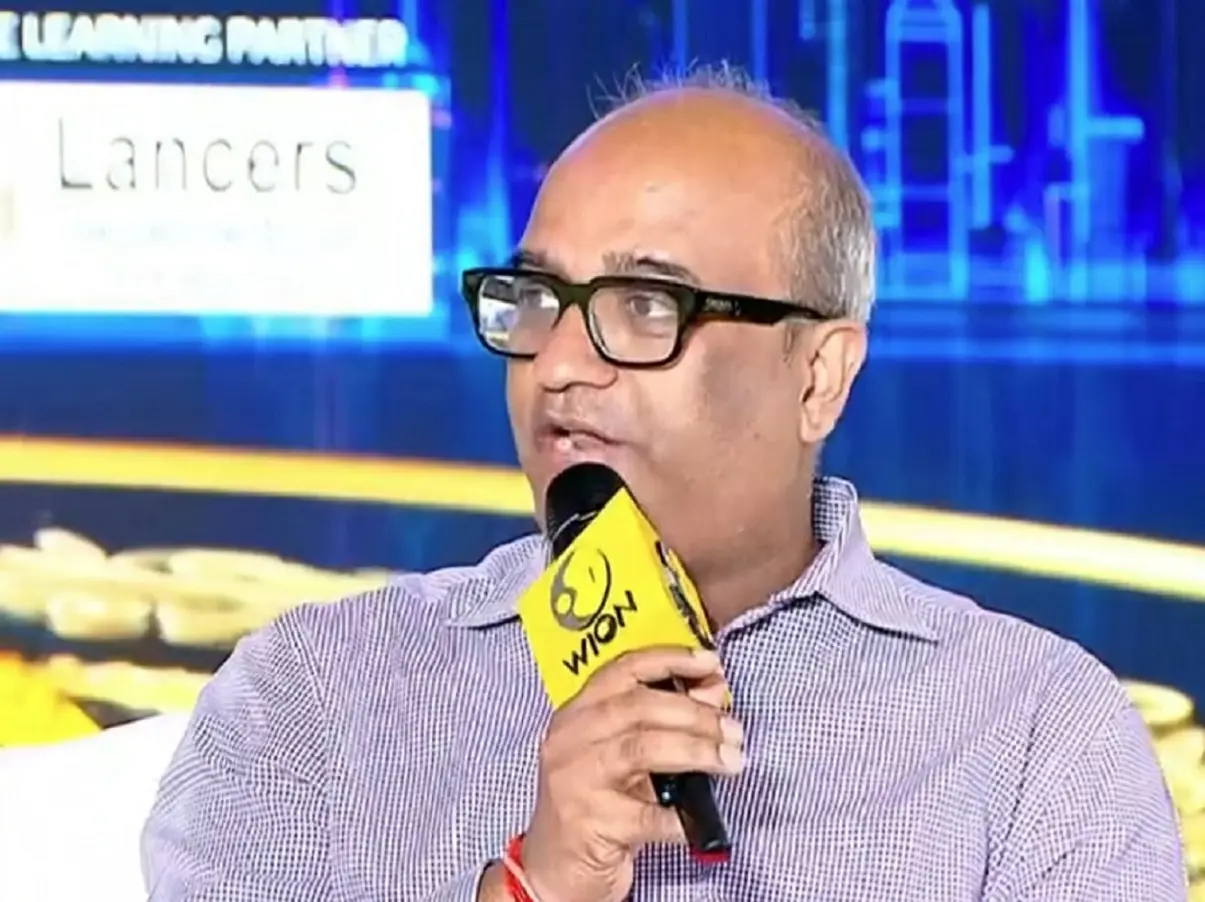
Indian IT industry will play a big role in the AI domain, said Abhishek Singh, CEO of India AI Mission, who is also the Director General of National Informatics Centre, (NIC), and Additional Secretary in the Union Ministry of Electronics and Information Technology (MeitY). He was speaking at ‘Tech Pulse: Decoding Emerging Technologies,' the technology session of the Wion World Pulse summit on Wednesday (Mar 18).
Referring to Indian artificial intelligence company Sarvam, he said that there are several Sarvams in the pipleline. Sarvam AI, founded in 2023, is a Bengaluru-headquartered Indian artificial intelligence company that develops large language models and multimodal AI systems with a focus on Indian languages and region-specific use cases.
Singh also said that India will have AI use cases that will become the model for the world to monetise AI, and that the Indian IT industry will help add value by helping embed and integrate AI models into legacy systems.
Singh said, “AI is already defining everything that we do, the way it is impacting our lives, geopolitics, industry, almost every dimension that we can think of, almost every sector is impacted by AI. And when it comes to India, primarily we rely on the key strength of India and our core strength for the development of AI is our talent base that we have, the human resources, which helped in digital transformation not only in India… but our companies and engineers have been building impactful solutions across the world.”
Admitting that India is lagging behind the US and China in the AI industry, Singh said, “We have a very large population and a large access to data sets and multiple languages, and the natural corollary is that we should be leading in the field of AI, but currently we are at number three, and we are behind the US and China, and the gap is quite a bit.”
“So we are trying to bridge that gap.”
Trending Stories
&imwidth=180&imheight=135&format=webp&quality=medium)
‘Maybe play one more season’: MS Dhoni to decide on his IPL future before December
&imwidth=180&imheight=135&format=webp&quality=medium)
Telangana unveils AI avatar of IT minister D Sridhar Babu at Hyderabad DevFest 2026
&imwidth=180&imheight=135&format=webp&quality=medium)
Viral video shows cross falling on Colombia priest, no official confirmation | WATCH
&imwidth=180&imheight=135&format=webp&quality=medium)
Pezeshkian says Iranians ‘struggling to put food on the table’ as war with US drags on
&imwidth=180&imheight=135&format=webp&quality=medium)
Shilpa Rao’s performance cut short at Mumbai event, organisers react to backlash
&imwidth=180&imheight=135&format=webp&quality=medium)
Chorbagan stampede: A week later, the strangest visarjan Kolkata has seen
&imwidth=180&imheight=135&format=webp&quality=medium)
AI slop or smart strategy? South African author Coral Hart defends Her 370 AI- assisted books in 20 months
&imwidth=180&imheight=135&format=webp&quality=medium)
AI just found a flaw in software running most of the web! One request hijacks the server
&imwidth=180&imheight=135&format=webp&quality=medium)
Train crashes into crane on São Paulo monorail line, wreckage falls onto busy road | VIDEO
&imwidth=180&imheight=135&format=webp&quality=medium)
Can Putin cheat death? All about his daughter’s billion-dollar quest for immortality
&imwidth=180&imheight=135&format=webp&quality=medium)
Saudi says debris fell in Mecca, Medina after missile interceptions; Houthis deny targeting holy cities
&imwidth=180&imheight=135&format=webp&quality=medium)
What was the note found inside bag of Class 12 student, who set herself on fire inside Delhi school?
&imwidth=180&imheight=135&format=webp&quality=medium)
Netanyahu warns Israelis of ‘existential threat’ from Iran, posts AI image of nuclear strike
&imwidth=180&imheight=135&format=webp&quality=medium)
Pakistan airline PIA unveils new crew uniforms, faces online criticism
&imwidth=180&imheight=135&format=webp&quality=medium)
Britain is building the world's first AI biosecurity lab, with OpenAI and Anthropic inside
&imwidth=180&imheight=135&format=webp&quality=medium)
J-20 designers plan to put radar into aircraft wing; strategy to expand coverage during air combat
&imwidth=180&imheight=135&format=webp&quality=medium)
Frontier AIs keep escaping their test cages! The industry still can't reliably stop them
&imwidth=180&imheight=135&format=webp&quality=medium)
'Already tired of his 9-to-5': Baby born with a moustache becomes internet sensation, video goes viral | Watch
&imwidth=180&imheight=135&format=webp&quality=medium)
France protests: 135 arrested, weapons seized as fresh demonstrations erupt amid heavy security
&imwidth=180&imheight=135&format=webp&quality=medium)
French Open: PV Sindhu storms into final with win over Hina Akechi
&imwidth=180&imheight=135&format=webp&quality=medium)
Russia-Ukraine drone attacks kill 6, injure 31 across both countries
&imwidth=180&imheight=135&format=webp&quality=medium)
‘Saddam Hussein opened a cheesecake factory’: Obama mocks Trump’s White House renovations; defends Abdul El-Sayed
&imwidth=180&imheight=135&format=webp&quality=medium)
China's dancing robot turns violent bodyguard, lifts cars and fights intruders - Watch
&imwidth=180&imheight=135&format=webp&quality=medium)
'You’re a horrible little reporter, aren’t you?': Trump snaps at NBC reporter questioning his support for Ramaswamy's campaign ad
&imwidth=180&imheight=135&format=webp&quality=medium)
'Killing people never allowed': Elon Musk admits restricting Starlink in Ukraine, explains why
&imwidth=180&imheight=135&format=webp&quality=medium)
Bodies of 2 missing Japanese climbers recovered from Himalayan peak
&im=FitAndFill=(700,400)&imwidth=180&imheight=135&format=webp&quality=medium)
New Friday OTT releases (October 23, 2026): Gajab Raat, Dorothy, Chaar Yaar- Watch these 6 new movies and TV shows on Netflix, Prime Video and more
&imwidth=180&imheight=135&format=webp&quality=medium)
An AI that reads your face can now estimate how long you have to live
&imwidth=180&imheight=135&format=webp&quality=medium)
'If it was up to me, it wouldn't have ended like this': James Anderson opens up on Lancashire exit
&imwidth=180&imheight=135&format=webp&quality=medium)
WATCH: Thousands across Manipur bang plates, beat drums in "noise protest"
&imwidth=180&imheight=135&format=webp&quality=medium)
NEET protests: Panel to hear evidence on pellet gun use, harassment
&imwidth=180&imheight=135&format=webp&quality=medium)
Tu Hai Meri Kiran film review: Sonakshi Sinha and Zaheer Iqbal's thriller gets tangled in its own twists
&imwidth=180&imheight=135&format=webp&quality=medium)
Nagpur man fails to pay rent, allegedly prints fake Rs 500 notes worth Rs 37 lakh
&imwidth=180&imheight=135&format=webp&quality=medium)
‘Modi ka baap bhi jayega,’ Kharge loses cool at party event in Patna; BJP slams him
&imwidth=180&imheight=135&format=webp&quality=medium)
Why Europe’s protests are about more than austerity and rising costs
&imwidth=180&imheight=135&format=webp&quality=medium)
Farooq Abdullah says Pakistan’s raising of Kashmir issue keeps pressure on Delhi
‘Our companies like Sarvam are competing with the best’
“What we are seeing in the evolution of the Indian AI ecosystem is not what we had seen in the 90s when we relied on the advantage of our manpower systems,” he commented.
"Currently, what I see is when companies like Sarvam and others are raising money and are building impactful products, they are competing with the best. Yesterday, in the GTC, Sarvam was counted along with six other companies and the Nemotron group that Nvidia has formed,” he said.
Singh was referring to US chip giant Nvidia’s push for open and sovereign AI, for which it has brought together a group of global AI labs, including India’s Sarvam, to co-develop next-generation open foundation models under a new initiative called the Nemotron Coalition.
The coalition, announced at Nvidia’s GTC conference, positions Sarvam among a select group of frontier AI players such as Mistral AI, Perplexity, Thinking Machines Lab, LangChain, Cursor, Reflection AI, and Black Forest Labs, working jointly on building open models that can rival proprietary systems.
Sarvam will contribute its expertise in building multilingual and voice-first models tailored to local contexts, a key gap in current global AI systems.
‘We are there right at the top when it comes to building products’
“So, we are there right at the top when it comes to building products. On all international benchmarks, Sarvam’s models have performed way better than many of the more well-known models. At least 12 other companies are building similar products and a whole lot of other companies applied for building the foundational models.”
“Our challenge currently is to ensure that I am able to allocate sufficient compute for the hunger that exists. So I am fully confident that it will not only be one Sarvam, but there will be several Sarvams in the pipeline, and on top of it, just like we innovated the digital public infrastructure, and we built up services across sectors, we will have AI use cases that will become the model for the world to monetize AI.”
‘The West built AI models but just having the models is not sufficient’
“The West has built the models but they still don’t know the way of getting returns on their investment because they don’t know how people will use it and how people will adopt it,” Singh pointed out.
“Ultimately, you will have to orchestrate the whole thing, like the legacy system will have to embed the AI system, just having the models is not sufficient. You have to integrate the models into your systems, and that is where the India IT industry, that is where the TCS, Infosys, Wipro and Tech Mahindra will add value,” he said.

