Why Japan chose the Northeast to answer China's connectivity push without naming it

&imwidth=600&imheight=450&format=webp&quality=medium "Why Japan chose the Northeast to answer China's connectivity push without naming it")
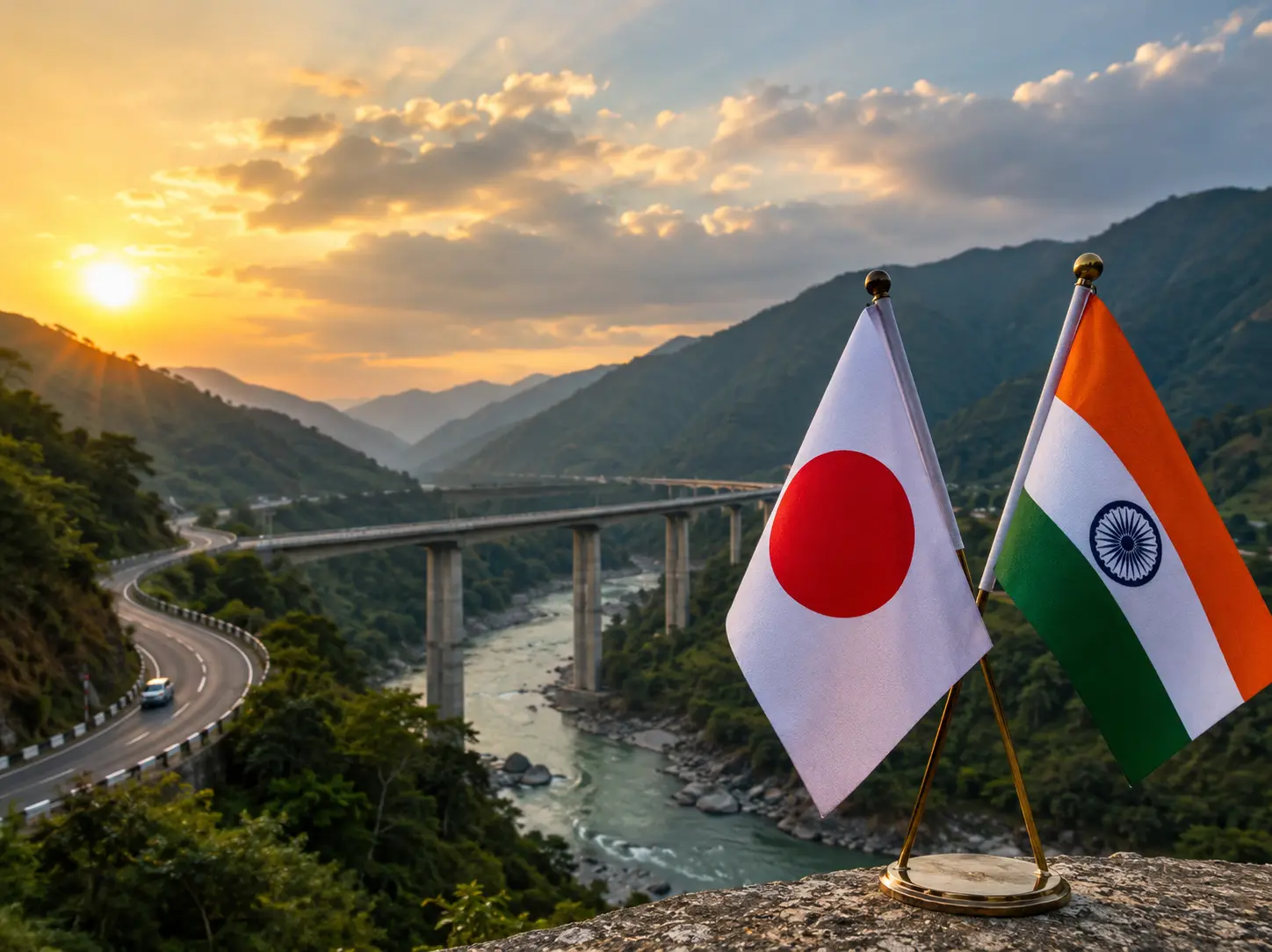
Why Japan chose the Northeast to answer China's connectivity push Photograph: (AI generated)
Japan is investing in India's Northeast infrastructure to provide a strategic alternative to China's regional ambitions. By funding projects like the Dhubri-Phulbari bridge, Tokyo and New Delhi are securing vital Indo-Pacific trade routes without explicitly naming Beijing.
Japan's escalating infrastructure investments in India's Northeast represent a strategic alignment between Tokyo and New Delhi. By pouring funds into this vital borderland, Japan is establishing a transparent, sustainable alternative to China's Belt and Road Initiative. Interestingly, neither Japanese nor Indian officials explicitly name Beijing as the target. Instead, their diplomatic vocabulary focuses on building a Free and Open Indo-Pacific and securing regional stability.
The strategic importance of the Northeast
India's Northeast shares borders with Bangladesh, Bhutan, China, and Myanmar. For Japan, this region is a vital geographical bridge connecting South Asia to Southeast Asia. It serves as the physical gateway for India's Act East Policy, a framework that aligns seamlessly with Japan's Free and Open Indo-Pacific vision. To facilitate this, India and Japan established the Act East Forum in 2017, a dedicated institutional mechanism aimed at modernising the Northeast. By developing infrastructure here, Tokyo ensures alternative trade routes that bypass Chinese-funded networks.
Key Japanese infrastructure projects
Japan's financial footprint in the region is extensive, primarily channelled through the Japan International Cooperation Agency (JICA). The agency's stated strategy is to assist Northeast India in becoming a hub for the Bay of Bengal region. The investments focus on practical, high-value developments:
Dhubri-Phulbari Bridge: Financed by a JICA loan, this massive project over the Brahmaputra River will connect Assam and Meghalaya, significantly reducing travel time.
Trending Stories
)
)
)
)
)
)
)
)
)
)
)
)
)
)
)
)
)
)
)
)
)
)
)
)
)
)
)
)
)
)
)
)
)
)
&im=FitAndFill=(700,400))
)
)
)
)
Road network expansion: JICA is funding major highway corridors, including the Shillong-Dawki road and NH-127B stretches, to facilitate seamless cross-border trade with Bangladesh.
Renewable energy and forestry: Beyond roads, Tokyo is backing hydroelectric power modernisation in Meghalaya, water supply systems in Assam, and sustainable forest management across Tripura, Nagaland, and Sikkim.
Countering with capital
While China's Belt and Road Initiative expands rapidly across Asia, Japan and India are responding with substantial financial commitments. During bilateral summits, Japan set a new target of 10 trillion Japanese Yen in private investment to India over the next decade, with a significant portion expected to flow into the Northeast.
Japan's targeted investments in Northeast India represent a quiet but significant geopolitical manoeuvre. By building roads, bridges, and energy systems, Tokyo and New Delhi are securing vital supply chains. This partnership proves that high-quality, transparent development can effectively counterbalance expanding global monopolies without firing a single rhetorical shot.