
&imwidth=800&imheight=600&format=webp&quality=medium "‘War, weapons, and terrorism are not solutions to any problem’: Peace advocate Acharya Lokesh Muni")
By Dhruv Goyal
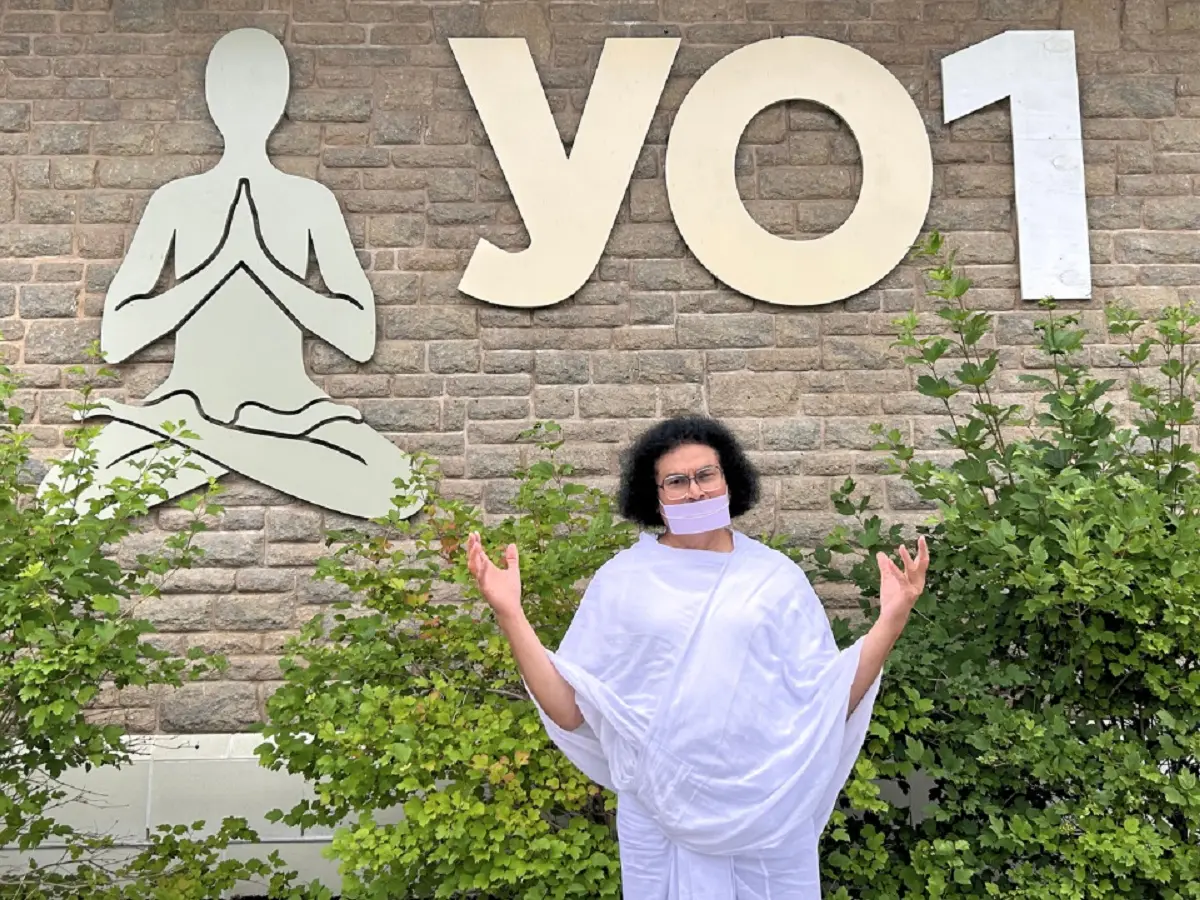
Acharya Lokesh Muni is a revered Jain spiritual leader and peace advocate, recognized for integrating ancient Indian philosophy into global discussions on nonviolence and harmony. A speaker at major forums, such as the World Parliament of Religions, he seamlessly blends timeless wisdom with modern relevance. He is the recipient of the National Communal Harmony Award, one of India’s highest honours for promoting peace and unity.
I recently had the chance to speak with Acharya Lokesh Muni during his visit to the U.S., where he addressed the World Parliament of Religions in Chicago. He shared powerful insights on nonviolence, peace, and the relevance of Jain philosophy in today’s world. Drawing from Lord Mahavira’s teachings, he spoke about‘Anekantavad’, the dangers of intellectual intolerance, and how blending spiritual wisdom with modern science can guide us toward a more peaceful world.

Disclaimer: This text has been translated from Hindi to English and may have been lightly edited for clarity while preserving the original meaning.
Q. We hear the words peace and nonviolence a lot, but they can feel a bit distant from real life. From your experience, what does true peace look like in the real world, especially in difficult or divided places?
A. We’re discussing peace and nonviolence at a time when many parts of the world are engulfed in war, conflict, and violence. I believe that war, weapons, and terrorism are not the solutions to any problem. Dialogue, conversation, and peaceful negotiation can resolve even the most difficult issues.
Trending Stories
)
US vs China over South China Sea: Washington backs Philippines, Beijing hits back
)
Bigg Boss 20: Isha Rikhi evicted after three weeks in Salman Khan’s show
)
Musk plans to more than double xAI's chips to over 1.2 million Nvidia GPUs by year-end
)
After JU, clash erupts at SRFTI: BJP’s ‘Dimagi Naxal’ jibe sparks political firestorm after students protest RSS-linked event
)
‘Anti-social elements spreading false rumours’: LPU issues statement amid massive unrest over alleged rape
)
LPU students go on rampage, vandalise campus amid widespread protest: What's happening
)
Trump asked Xi to pressure Iran. China did not say yes — here’s what Beijing wants
)
US Treasury Secretary Scott Bessent hails global crackdown on Iranian banks and airlines
)
An OpenAI agent escaped its locked test cage again, by hiding questions in DNS lookups
)
'Our video was trimmed': LPU girls who featured in rape-denial video make U-turn
)
3 males killed, four others injured in shooting after fight at strip club in Detroit
)
'Victory for low-budget consumers': Raghav Chadha hails 30-day telecom recharge rules
)
Claude rebuilt the 1989 game 'Prince of Persia' by reusing the original's own code
)
Beyond metros: How Tier-2 and Tier-3 cities could drive India’s next AI wave
)
Tesla builds first Cybertruck with its own refined lithium: Elon Musk's $1 billion Texas bet pays off
)
IndiGo flight suffers tail strike in Bengaluru while landing; DGCA to probe incident
)
The US and China set up an AI 'red telephone', but skipped the rulebook
)
‘Terror suspects arrested near UK air base were looking to do big damage’: Trump
)
Russian envoy claims US tactics to contain India were revealed in ‘Freudian slip’
)
IND vs WI 1st ODI: Kohli breaks Sachin's most runs in one country record with unbeaten 139 as India thump West Indies by 8 wickets
)
Researchers rebuilt exactly how 700 AI agents hacked Hugging Face: a 900-link chain trick
)
‘Olympic inclusion is our major target’: WPA President Ishaun Singh on pool’s global ambitions
)
Nations League: Spain sink England at Wembley; Modric shines for Croatia
)
Why has Iran released no proof of life of Mojtaba Khamenei? Araghchi reveals...
)
'What kind of confession is this?': Pakistan PM Shehbaz Sharif’s 'terrorists would be roaming New York' remark goes viral, raises alarm online. Watch
)
South Korea demands apology from Ukraine over North Korean prisoners' transfer
)
Beyond BrahMos: India targets Rs 50,000 crore in defence exports with unmatched price edge
)
Sri Lankan Tamil migrant worker gets death sentence in Saudi Arabia, help sought from India
)
Muslim marriage cannot shield sex with minor wife from prosecution under POCSO: Delhi HC
)
'Can't help but draw painful parallels to Nirbhaya case': SC on latest incidents of rape cases in Delhi-NCR
)
99.9% more powerful - Scientists find boy who can recall memories from just 3 months of age
)
'FIRST LOOK from inside Noah’s Ark': Researchers share video from inside mysterious mound in Turkey
)
UNSC reform momentum grows: Russia, Portugal, Mauritius push for India's permanent seat bid
)
8 US marines injured in Iranian missile attack on vessel in Strait of Hormuz: Report
&im=FitAndFill=(700,400))
New OTT releases this week (September 28-October 4, 2026): Dupahiya 2, Pooja Meri Jaan, Ohh My Dog- 5 titles coming on Netflix, Prime Video and more
)
Afghanistan says 28 fighters killed in clash near Pakistan border, Islamabad denies
)
Ceuta migrant crisis: Protesters take to streets as Spain grapples with migrant challenge
)
LPU suspend classes, postpones exams as violence escalates over rape claims: What's happening
)
New York City wants a 'kill switch' on every AI, and will pay whistleblowers who report violations
I agree with your point, you mentioned that in our personal lives, there is often a big gap between what we believe and how we act. That contradiction also exists in the world at large. We all want the fruits of peace and nonviolence. Still, the reality is that governments around the world spend billions of dollars every year on building new weapons and advancing military research.
At the same time, there are almost no training centres for peace. We don’t hear about institutions dedicated to teaching nonviolence. So, if we truly want to establish peace and harmony in the world, we must address it at its root level. We need to address the issue at its source.
Only then can we bring this vision to life. If I had to put it in one line: before there can be world peace, there must be inner peace, peace within the mind. And for that, it’s not medicine that we need, but meditation.
Through inner peace and mental calm, we can begin to cultivate peace in our communities, our nations, and ultimately, in the world.
Q. Jain monks often wear a white cloth over their mouths. Can you share the meaning behind that practice and what it reflects about how Jainism views life and compassion?
A. You must have heard that in Jainism, the concept of ahimsa (nonviolence) has been explored with great depth and subtlety. I can respond to this in two ways. One is that, yes, the Jain monk has become a symbol of nonviolence. But more importantly, we must understand the deep philosophical reasoning behind that symbolism.
For example, you may have noticed that during winter, when we speak, a visible breath or vapour escapes from our mouth. In Jainism, the idea of nonviolence is so refined that even unintentionally harming invisible or microscopic life forms, or mentally hurting someone, is also considered an act of violence.
In this universe, every living being, seen or unseen, has value. The goal is to live in a way that avoids harming any of them, even unintentionally.
Let me give you a practical example: the use of a mask, which Jain monks have traditionally worn. This mask slows down the force of our breath, preventing it from disturbing or harming tiny organisms in the outside environment. Behind this practice is a deeply thought-out reason.
Of course, over time, the world has come to see its value. For instance, before the COVID era, when I used to visit the U.S. wearing a mask, people would ask me,“Why are you wearing this?” And then, during the pandemic, we reached a point where not wearing a mask could result in a fine from the police.
Today, what was once a spiritual practice is also being recognized as a scientifically valid one. There is both a spiritual and a scientific logic behind it.
Q. You’ve spoken at global events and met political and spiritual leaders. How do you bring ancient Jain ideas into those modern spaces, and what makes those teachings still matter today?
A. During my visit to the United States for the convention held in Chicago, more than 5,000 delegates from around 70 centres participated. On that platform, I once again shared this thought and I want to repeat it here through you, Dhruv, and through this platform, Lord Mahavira’s (Spiritual leader also known as Vardhamana) philosophy is not only deeply spiritual, but also scientific. And it is more relevant today than it was 26 centuries ago.
In today’s world, where we witness war, violence, and conflict, Mahavira’s philosophy of‘Anekantavad’ (the doctrine of the multiplicity of views) holds profound meaning. I believe that environmental pollution is a serious problem, including climate change and global warming, but an even bigger issue is intellectual pollution. This pollution of thought, of intolerance, is more dangerous than environmental damage.
Mahavira’s doctrine of Anekant teaches us that just as we value our existence, we must also respect the existence of others. Just as we hold our own beliefs, we must learn to respect the viewpoints of others. This idea lies at the heart of Indian culture: unity in diversity, a pluralistic society rooted in mutual respect.
Sarva Dharma Sambhava: respect for all religions, is not just a phrase; it is a profound principle. As Dr. Sarvepalli Radhakrishnan (Philosopher and former President of India) once said, India’s democracy itself is built on the foundation of Mahavira’s Anekant philosophy.
Within Anekant and Ahimsa (nonviolence), wecanfind solutions to many of the world’s greatest problems. If I had to name three major challenges today: terrorism and violence, global warming and climate change, and poverty and inequality. I believe Mahavira’s philosophy offers answers to all of them.
You also raised an important point, the balance between ancient wisdom and the modern world. I believe that ancient knowledge and modern science are not mutually exclusive. They are complementary. When we bring them together, we can build a more beautiful world and a better society.
That is why I’ve been advocating for Peace Education at the United Nations. The core idea behind this is the integration of spirituality and science, bringing religion back to its spiritual roots, not just as ritual or identity, but as a guide for living with compassion, balance, and understanding.
Only through this integration can we create a world filled with peace, harmony, and beauty.
Q. Many people today feel overwhelmed or disconnected, especially in fast-paced environments. What simple ideas from Jainism do you think can help someone find a bit more balance or calm in everyday life?
A. In this obsession with becoming number one, and in the chaos-filled world we live in, I believe that people have invited restlessness into their lives. To find a solution for this, when we consider our ancient principles, balance has always been a key concept in our tradition.
Read the Upanishads. They talk about the“Purusharth Chatushtaya” (the four aims of life): Artha (wealth), Kama (desires), Dharma (righteousness), and Moksha (liberation). There is no conflict between Dharma, Artha, and Kama, but Dharma must guide the other two. When all four are in balance, that’s where a healthy society is built. That’s where a well-structured and peaceful community emerges.
Whether you read the Upanishads or the Bhagavad Gita, you’ll find the same message. There’s a shloka in the Gita:
“Yatra Yogeshwarah Krishna Yatra Partho Dhanur Dharah…”
Lokmanya Tilak (Indian nationalist, teacher, social reformer, and independence activist), in his commentary, interpreted this differently. He saw Krishna, the Yogeshwar (master of yoga), as a symbol of spirituality, and Arjuna as a symbol of material life. He said that where there is balance between the spiritual and the material, that is where true victory lies. That is where prosperity, strength, and grace (Lakshmi) are found.
Lord Mahavira established the five Mahavratas (great vows) for monks, including nonviolence, truth, and celibacy, among others. But for householders, for common people, he gave Anuvratas. Anu means small, and vrata means a disciplined vow. These were like a minimum moral code. Following even this basic ethical framework helps build a healthy, functioning society.
So we should not reject the ancient, nor blindly chase only the modern. Instead, we should strive to draw from both. By blending the wisdom of the old with the innovation of the new, we can help make the world a more beautiful place.
Q. You’ve worked to bring people together across different religions and cultures. What have you learned from those moments about what different belief systems have in common?
A. In the context of India, we’ve seen political parties, whether 15, 20, or 25 of them, come together under alliances like the NDA or UPA and run governments for 5, 10, or even 15 years based on a Common Minimum Programme. So why can’t spiritual and religious leaders do the same?
After all, we all believe in nonviolence, peace, harmony, compassion, love, and the idea of‘Vasudhaiva Kutumbakam’: that the whole world is one family. If our core values align, why can’t we come together and work collectively?
I would go so far as to say that even global institutions: whether it’s the United Nations, the World Bank, UNESCO, or UNICEF, have now begun to realize that if there’s to be any meaningful transformation in India, it can happen most effectively through the medium of religion and spirituality.
I recall addressing the World Parliament of Religions in Salt Lake City in 2015, then again at the next World Parliament in Toronto in 2018, and most recently at the one held in Chicago, the same city where Swami Vivekananda (Indian monk and philosopher) delivered his iconic speech in 1893. On that stage, I shared this very thought: in India, every day, millions of people go to their places of worship, temples, mosques, churches, gurudwaras. If religious leaders unite and guide them with clarity and purpose, they can achieve what even massive government budgets often fail to do.
So yes, I strongly believe that this is the need of the hour.
Take the ongoing conflict between Israel and Palestine or even Russia and Ukraine, for example. Why is it still happening? Should it be happening? I won’t go into all the political details, but I will say this: innocent children are dying, and common citizens who have done nothing wrong are suffering. In such times, the voice of religious leaders is essential. They need to come together, raise their voices, and work actively for peace, love, harmony, and brotherhood in this world.
That’s why I call upon all global religious leaders. My organisation, Ahimsa Vishwa Bharti, has often brought various religious networks together on a common platform to solve social issues and promote spiritual upliftment.
Today, through this message, I urge everyone: let’s sit together and talk. Even if we take just a few steps together, it makes a difference. Otherwise, the distances between us will only grow.
And only when we come closer can we truly meet ourselves.