US will help Australia develop guided missiles by 2025; cooperate with India for Indo-Pacific security

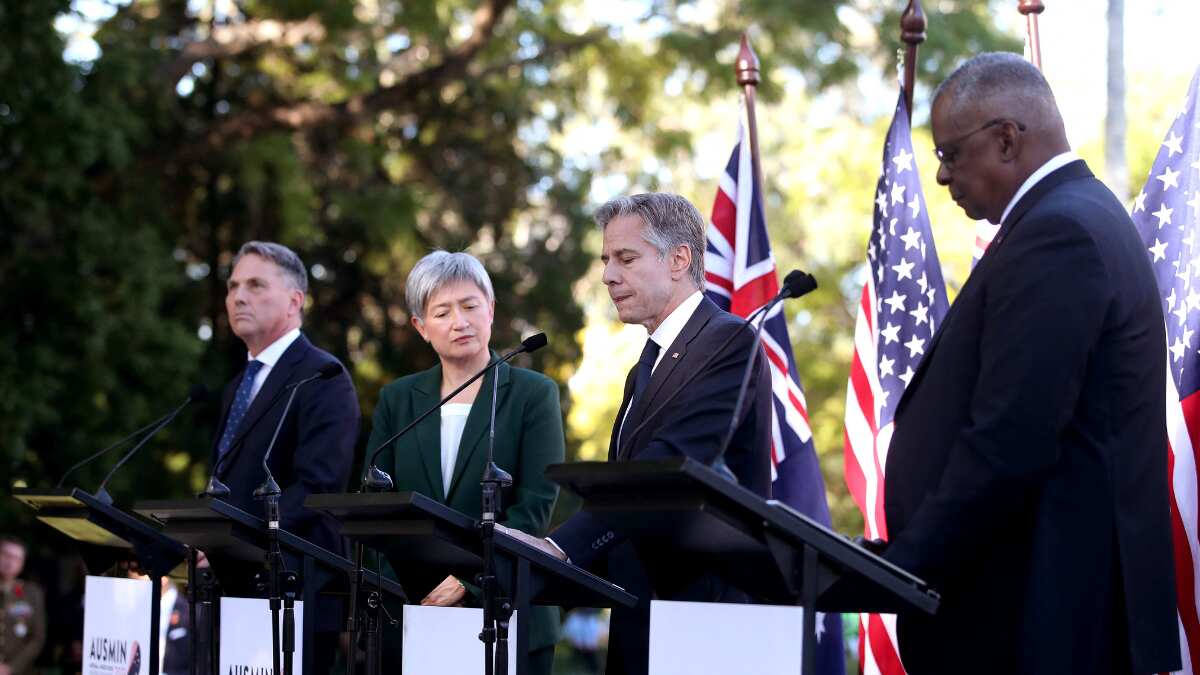
US-Australia meeting in Brisbane
The United States will help Australia to produce guided multiple-launch rocket systems by 2025, said the American Defense Secretary Lloyd Austin, on Saturday (July 29). The statement comes after the two-day Canberra-Washington meeting which focused on regional security and military cooperation where the officials also pledged to engage with China but also oppose it if needed.
US-Australia meetings in Brisbane
Austin and US Secretary of State Antony Blinken are in the Australian state of Queensland for the annual Australia-US ministerial dialogue (AUSMIN), with their Australian counterparts Defence Minister Richard Marles and Foreign Minister Penny Wong.

“We are pursuing several mutually beneficial initiatives with Australia's defence industry, and these include a commitment to help Australia produce guided multiple launch rocket systems...by 2025,” said Austin, during a press conference.
He added that Washington is also accelerating Canberra’s priority munitions through a streamlined acquisition process.
Similarly, Marles also said that Australia “hopes to see manufacturing of missiles commenced in Australia in two years’ time”. He added, “We are really pleased with the steps that we are taking in respect of establishing a guided weapons and explosive ordnance enterprise in this country.”
)
Trump says Russia has ‘lost control’ of its diesel industry, calls for end to ‘ridiculous, never-ending’ war
)
Asian Games: Indian women's hockey team thrash Indonesia 17-1, blasts 36 goals in 2 matches
)
Putin's United Russia party wins 355 seats in Duma election; 4 other parties cross threshold to enter parliament
)
AI kill switch explained: Why shutting down a dangerous AI may not be as simple as pressing a button
)
Delhi Air pollution: Strict crackdown on waste burning
)
SNL UK takes aim at Ed Sheeran with AI Princess Diana sketch
)
‘0% chance’: Nvidia CEO Jensen Huang dismisses AI extinction fears by 2030
)
Samay Raina-Mukesh Chhabra controversy explained: What happened over girlfriend joke on India's Got Latent?
)
Four decades after leaving Kolkata, the Birlas may be coming back for more
)
Apple reportedly building AI server with M8 Ultra chips, may use Nvidia technology
)
Glitch in the matrix caught on camera: Woman vanishes after talking to reporter
)
IIT Bombay tensions ease after three-hour open house; director’s assurances pacify students
)
Samsung raises Galaxy S26 prices by Rs 20,000: Here’s what each model now costs
)
J&K Assembly Session begins amid chaos: BJP, ruling alliance clash as statehood demand dominates
)
Injured pelican knocks on NOAA facility door in Florida seeking help
)
Bessent meets China’s He Lifeng to prepare for Trump-Xi summit
)
US and China vie for AI dominance as calls grow for regulation | Gravitas
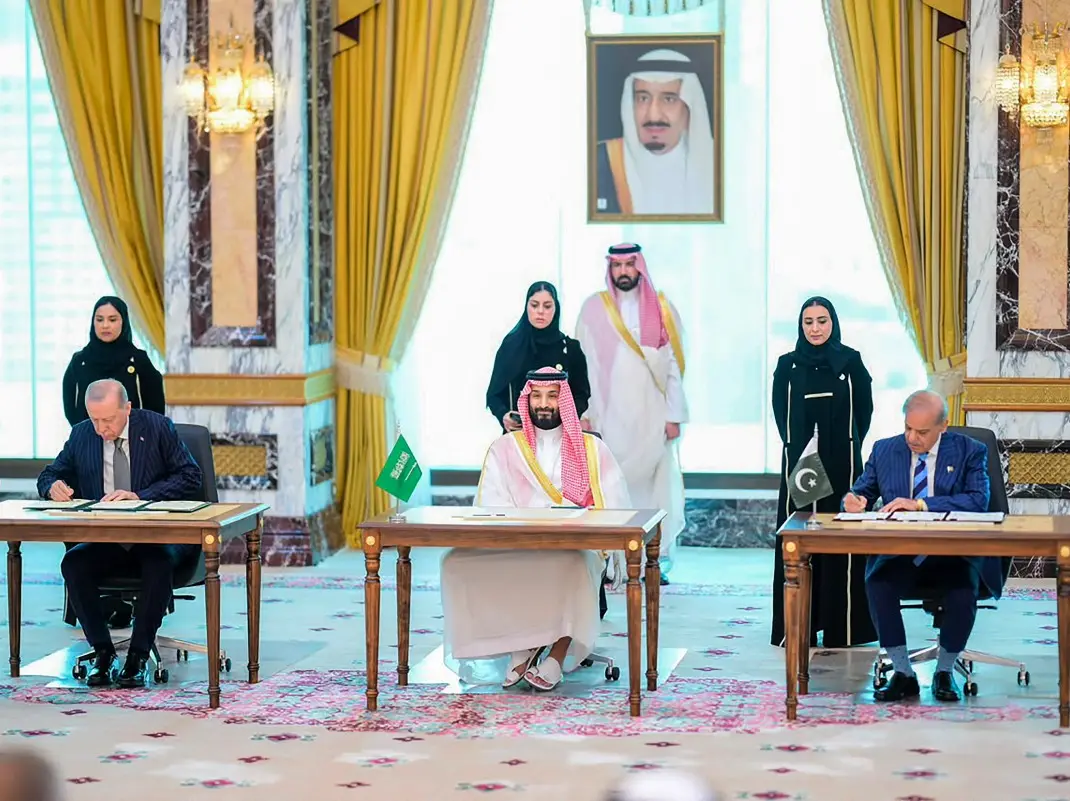)
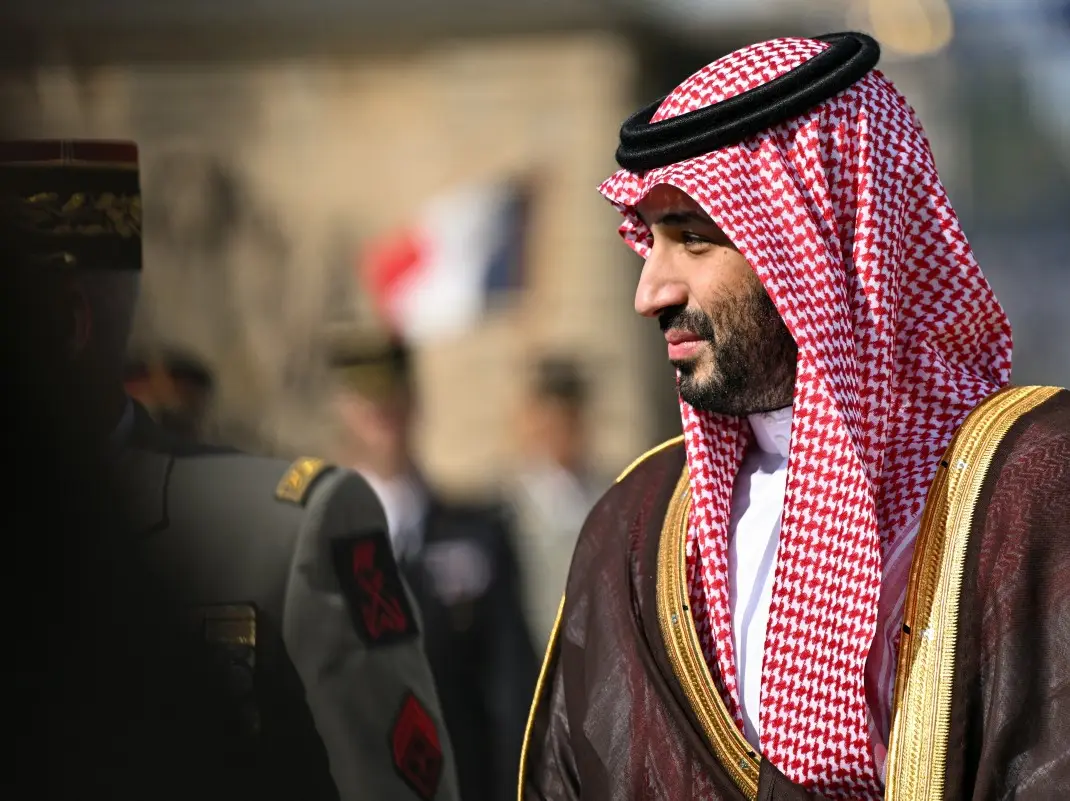
The Verdict | The Mecca Agreement is under scrutiny as Houthis attack Saudis
)
Saudi Arabia exits China-led mBridge digital currency platform amid Saudi-Houthi conflict
)
Maharashtra TET paper leak: Chargesheet reveals papers smuggled in shoe insoles for Rs 8,000
)
'Lot of things to learn from experienced players': Jayasuriya backs Rohit, Virat for 2027 ODI World Cup
)
Taylor Swift has a 'proud wife' moment as Travis Kelce scores first touchdown of season: 'That’s my husband!'
)
Chancellor Friedrich Merz vows to stay on as exit polls signal major poll setback
)
North Korea's nuclear tests triggered 1,399 earthquakes: Earth is still shaking | Gravitas
)
Mahabharat actor Saurav Gurjar arrested in Hyderabad, sent to 14-day judicial custody in sexual exploitation case
&im=FitAndFill=(700,400))
New OTT releases this week (September 21-27, 2026): Shaque: Trust No One, Hunkkaar, Don’t Be Shy- 5 new titles coming to Netflix, Prime Video and more
)
WATCH | Mysterious lights over Tehran caught on video. Drone, aircraft or something else?
)
What is Yom Kippur and why is it celebrated? All you need to know about the Jewish Day of Atonement
)
White House TV pool halts Trump coverage after CNN barred from UNGA events
)
Iranian airlines to shut worldwide on Sept 23, Bessent warns of US banking ban
)
China expels top generals Zhang Youxia, Liu Zhenli over ‘disloyalty’, corruption
)
Pilot recreates Mona Lisa in sky over Oklahoma and Arkansas in four-hour flight: VIDEO
)
Fitna Al-Khawarij: Decoding biggest security threat to Pakistan | Gravitas
)
Jailer 2: Vidya Balan joins Rajinikanth's upcoming film as Kantha | Watch
)
Microsoft executive called AI training the ‘largest theft of labour in human history’
)
40-foot waves crash into cruise ship in dangerous stretch near Antarctica. Watch
)
Explainer: Why rare-earth export licences and Board of Trade are US priorities ahead of Trump-Xi summit
)
BTS fans mock iHeartRadio’s day 2 turnout after short set controversy
)
The Scandal: Why so scandalous? Ji Chang Wook leaves you gasping for air
In line with this project, Australia will develop guided multiple-launch rocket systems, or GMLRS which the Pentagon chief said would help the US “sharpen our technological edge and strengthen our defence industrial base”.
This comes as Washington will help Canberra build a fledgling domestic missile industry nearly from the ground up while also securing a reliable pipeline for its own armed forces down the track.
There would also be an “increased tempo of visits from American nuclear-powered submarines to our waters” as a part of the agreement, said the Australian defence minister.
This also comes months after the two countries signed the AUKUS security treaty, a landmark military pact where Australia will develop its own nuclear-powered submarines, the progress of which was also discussed during the meetings that concluded on Saturday.
US about China and the Indo-Pacific
Meanwhile, Blinken spoke about how the “chief” among the high-profile talks with Australia was a shared commitment to a free and secure Indo-Pacific region.
“We’re doing that in part by engaging China, but also as necessary opposing its efforts to disrupt freedom of navigation overflight in the south and east China seas, to upend the status quo that’s preserved peace and stability across the Taiwan Straits, to pressure countries through economic coercion,” said Washington’s top diplomat.
After the two-day talks in Brisbane, Marles and Austin were set to travel to north Queensland for the Talisman Sabre war games where Australian and US military along with 11 other nations were to take part.
However, they have since been put on hold after an Australian military helicopter participating in the exercises crashed into the ocean, with at least four people onboard feared dead.
Washington-Canberra cooperation with India
The two countries also reaffirmed their commitment to enhance interoperability between the militaries of the Pacific through a range of exercises and welcomed Fiji, Indonesia, Papua New Guinea, and Tonga’s participation in the Talisman Sabre exercise for the first time.
Meanwhile, India, Singapore, Thailand, and the Philippines were also invited as inaugural observers, reported the Indian media, citing a fact sheet released by the US Department of Defence.
(With inputs from agencies)
WATCH WION LIVE HERE
You can now write for wionews.com and be a part of the community. Share your stories and opinions with us here.