

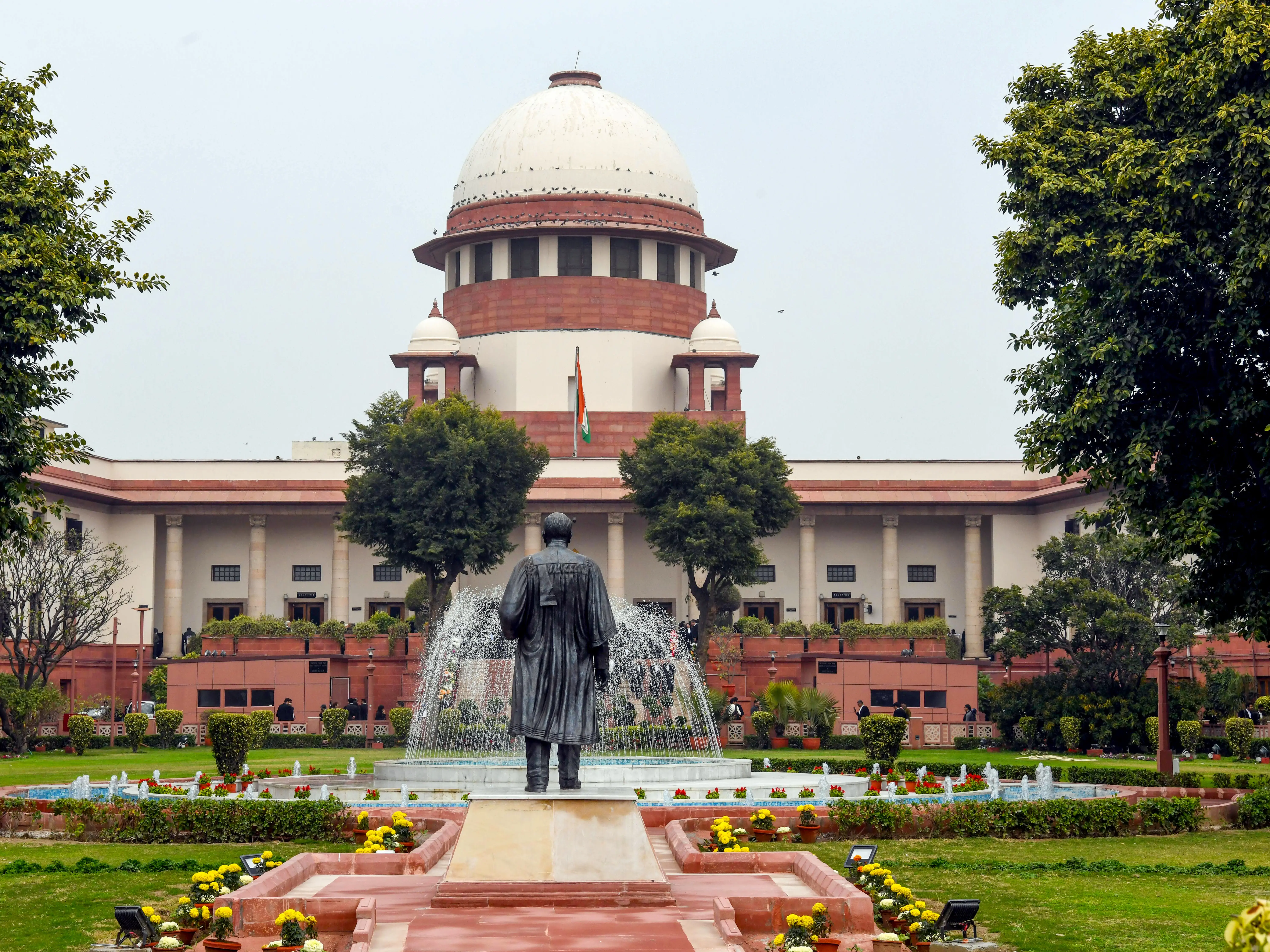
&imwidth=800&imheight=600&format=webp&quality=medium "US Supreme Court strikes down Donald Trump's global tariffs")
The US Supreme Court on Friday (Feb 20) ruled against Donald Trump's tariffs, saying that the US president has exceeded his authority in imposing sweeping duties that disrupted global trade. The decision blocks Trump from using tariffs as a tool, which he used freely to achieve political goals and renegotiate trade deals with countries aligned with his economic agenda.
Despite being a conservative majority, the court ruled six-three in the judgment stating that the International Emergency Economic Powers Act (IEEPA) "does not authorise the President to impose tariffs."
Chief Justice John Roberts delivered the opinion of the court while Justices Clarence Thomas, Samuel Alito and Brett Kavanaugh dissented.
“The president asserts the extraordinary power to unilaterally impose tariffs of unlimited amount, duration, and scope," Roberts wrote. However, the Trump administration “points to no statute" in which Congress has previously said that the language in the International Emergency Economic Powers Act (IEEPA) could apply to tariffs, he said
“In light of the breadth, history, and constitutional context of that asserted authority, he must identify clear congressional authorisation to exercise it," the Chief Justice remarked. He noted that any “extraordinary assertion" of such power requires “clear congressional authorisation", which Trump did not have.
The court also pointed out that "had Congress intended to convey the distinct and extraordinary power to impose tariffs" with IEEPA, "it would have done so expressly, as it consistently has in other tariff statutes."
Trending Stories
&imwidth=180&imheight=135&format=webp&quality=medium)
Jewar airport in Noida to be renamed Narendra Modi International Airport: CM Yogi
&imwidth=180&imheight=135&format=webp&quality=medium)
BTS agency HYBE announces first-ever Weverse Con Festival in India
&im=FitAndFill=(700,400)&imwidth=180&imheight=135&format=webp&quality=medium)
New Friday OTT releases (October 9, 2026): Reporting Live, Animals, Take Charge of My Heart- 6 new titles coming on Netflix, JioHotstar and more
&imwidth=180&imheight=135&format=webp&quality=medium)
‘Real boss of India’: Elon Musk escalates attack over Starlink’s India entry
&imwidth=180&imheight=135&format=webp&quality=medium)
New York ICE shooting sparks protests as Mamdani to call on Trump to halt ICE operations
&imwidth=180&imheight=135&format=webp&quality=medium)
Scientists find highly radioactive nuclear particles at Chernobyl 40 years after the disaster
&imwidth=180&imheight=135&format=webp&quality=medium)
‘We will end ICC’: US sanctions International court, threatens to cripple hours after Navi Pillay wins Nobel Peace Prize
&imwidth=180&imheight=135&format=webp&quality=medium)
‘Never-ending flow of cheap labour’: JD Vance hits back at Indian-origin Congresswoman over US green card curbs for major tech companies
&imwidth=180&imheight=135&format=webp&quality=medium)
SC questions closure of 57 Delhi Metro stations, asks Centre to resume services in regulated manner
&imwidth=180&imheight=135&format=webp&quality=medium)
JK Rowling announces two new 'Harry Potter' books
&imwidth=180&imheight=135&format=webp&quality=medium)
UK navy hit by espionage scandal: Sailor accused of spying for Russia | Gravitas
&im=FitAndFill=(700,400)&imwidth=180&imheight=135&format=webp&quality=medium)
Food shortages, suicide attempts and more: USS Abraham Lincoln returns to US after 321 day deployment amid Iran war — The whole row explained
&imwidth=180&imheight=135&format=webp&quality=medium)
‘Ruh Roh’: Top US official mocks ‘Indian market collapse’ claim after Trump’s IT curbs. But did it? | FACT CHECK
&imwidth=180&imheight=135&format=webp&quality=medium)
Pakistan denies reports of PAF jets being used in attacks against Iran-backed Houthis in Yemen
&imwidth=180&imheight=135&format=webp&quality=medium)
BTS' RM urges Peru fans not to gather outside hotel: 'We can't sleep', It's becoming a nuisance'
&imwidth=180&imheight=135&format=webp&quality=medium)
Powerful 7.7 magnitude earthquake strikes Panama, tsunami warning issued
&imwidth=180&imheight=135&format=webp&quality=medium)
Prince Harry opens up about loss, depression, and recovery: 'I felt guilty being happy'
&imwidth=180&imheight=135&format=webp&quality=medium)
US midterm elections 2026: What a blue wave or blue tsunami could mean for Trump
&imwidth=180&imheight=135&format=webp&quality=medium)
Russia president Putin promises to 'do everything' to help settle Middle East conflict as US-Iran negotiations stall
&imwidth=180&imheight=135&format=webp&quality=medium)
Trump has a new 'enemy': Anyone who calls it 'artificial intelligence'. Here's what we wants instead
&imwidth=180&imheight=135&format=webp&quality=medium)
Nigeria govt rolls out 30-day NNPC petrol discount, insists it is not a subsidy
&im=FitAndFill=(700,400)&imwidth=180&imheight=135&format=webp&quality=medium)
Fastest-growing Asian economies in 2026: Who tops the chart? Where does India rank?
&imwidth=180&imheight=135&format=webp&quality=medium)
SC asks Centre to frame mechanism against unethical pharma marketing practices
&imwidth=180&imheight=135&format=webp&quality=medium)
Katie Zacharia likely to succeed Karoline Leavitt as Trump's White House press secretary
&imwidth=180&imheight=135&format=webp&quality=medium)
Houthis continue direct hits on Saudi targets, Türkiye and Pakistan missing in action | Gravitas
&imwidth=180&imheight=135&format=webp&quality=medium)
IND vs WI: West Indies set record for highest successful run chase in T20Is against India
&imwidth=180&imheight=135&format=webp&quality=medium)
Man prays to Satan at an Iowa city council, pastor rushes to 'reverse the curse'
&imwidth=180&imheight=135&format=webp&quality=medium)
French students light European bonfire, protests erupt in Belgium, Italy & Greece | Gravitas
&imwidth=180&imheight=135&format=webp&quality=medium)
OpenAI shuts down Russian, Iranian influence operations using ChatGPT to spread propaganda
&imwidth=180&imheight=135&format=webp&quality=medium)
'Do not stop it altogether': SC asks Centre to review Delhi Metro curbs ahead of Oct 10 protests
&imwidth=180&imheight=135&format=webp&quality=medium)
Sri Lankan Tamil worker gets death sentence in Saudi Arabia over blasphemy, calls for pardon intensify
&imwidth=180&imheight=135&format=webp&quality=medium)
Trump honours Microsoft CEO Satya Nadella with top technology honour amid immigration scrutiny
&imwidth=180&imheight=135&format=webp&quality=medium)
Bangladesh named as Pakistan’s replacement for Asian Hockey Champions Trophy
&imwidth=180&imheight=135&format=webp&quality=medium)
Is Trump playing a double game with Iran?
&imwidth=180&imheight=135&format=webp&quality=medium)
Trump's naked 23-karat gold statue unveiled near European Parliament
&im=FitAndFill=(700,400)&imwidth=180&imheight=135&format=webp&quality=medium)
What is the real meaning behind Pete Hegseth's tattoos?
Notably, the ruling does not apply to sector-specific levies that Donald Trump separately imposed on imports of steel, aluminium, and various other goods under different legal authorities. Trump has long used tariffs as a primary means of exercising power and achieving political goals, often describing them as “beautiful” and hailing duties as a way to solve major national problems, such as the widening trade deficit and rising debt.
The US President even went to great lengths to use these levies as leverage, threatening long-standing partners Canada and Mexico with additional duties over policy disagreements. India has also been on the receiving end of Trump’s tariff wars; for months, New Delhi faced 50 per cent duties, among the highest in the world, before the two countries recently moved toward a new trade deal.
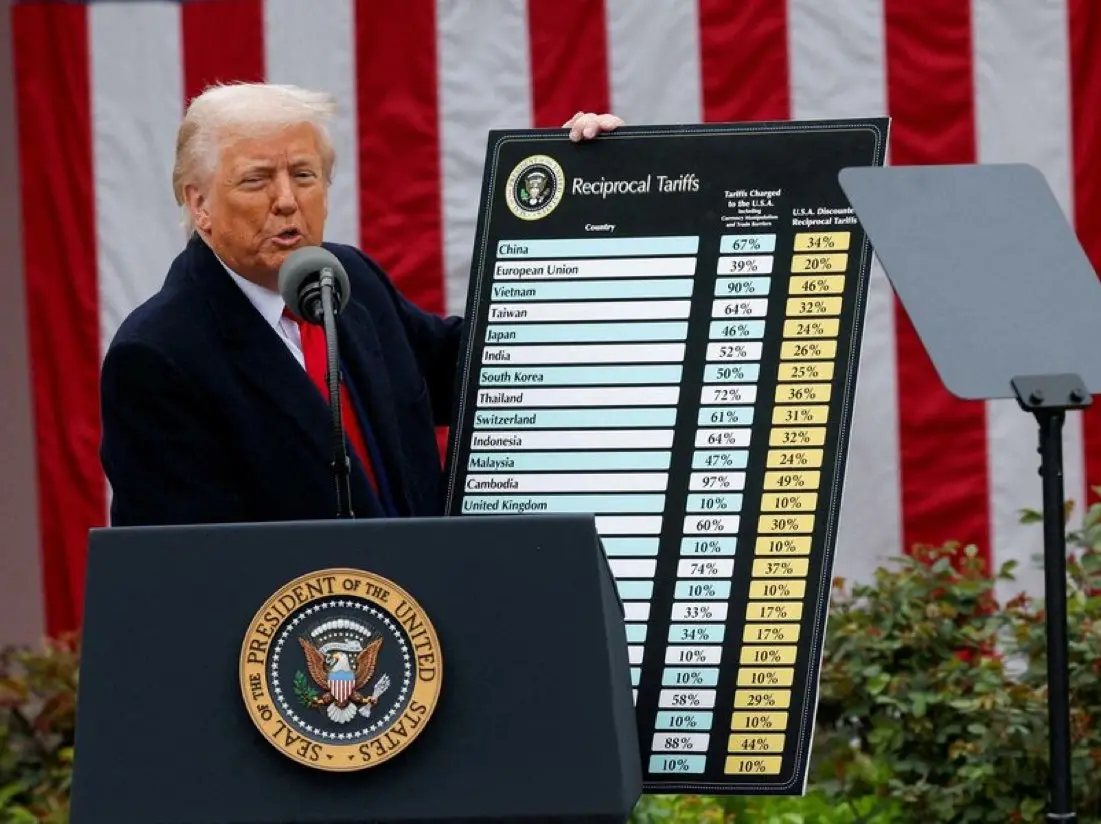
On April 2, 2025, a date he famously proclaimed as "Liberation Day," President Donald Trump signed Executive Order 14257 to launch the most aggressive trade policy in modern American history.
Invoking the International Emergency Economic Powers Act (IEEPA) by declaring a national emergency over the US trade deficit, the administration imposed a universal 10% baseline tariff on nearly all global imports. This framework also introduced "reciprocal" duties reaching as high as 50% for major trading partners, aiming to counteract foreign trade barriers and revitalise domestic manufacturing.
