

&imwidth=800&imheight=600&format=webp&quality=medium "US Stockpiles running dry? Heavy use in Iran war pushes THAAD, Patriot and Tomahawk reserves to the brink")
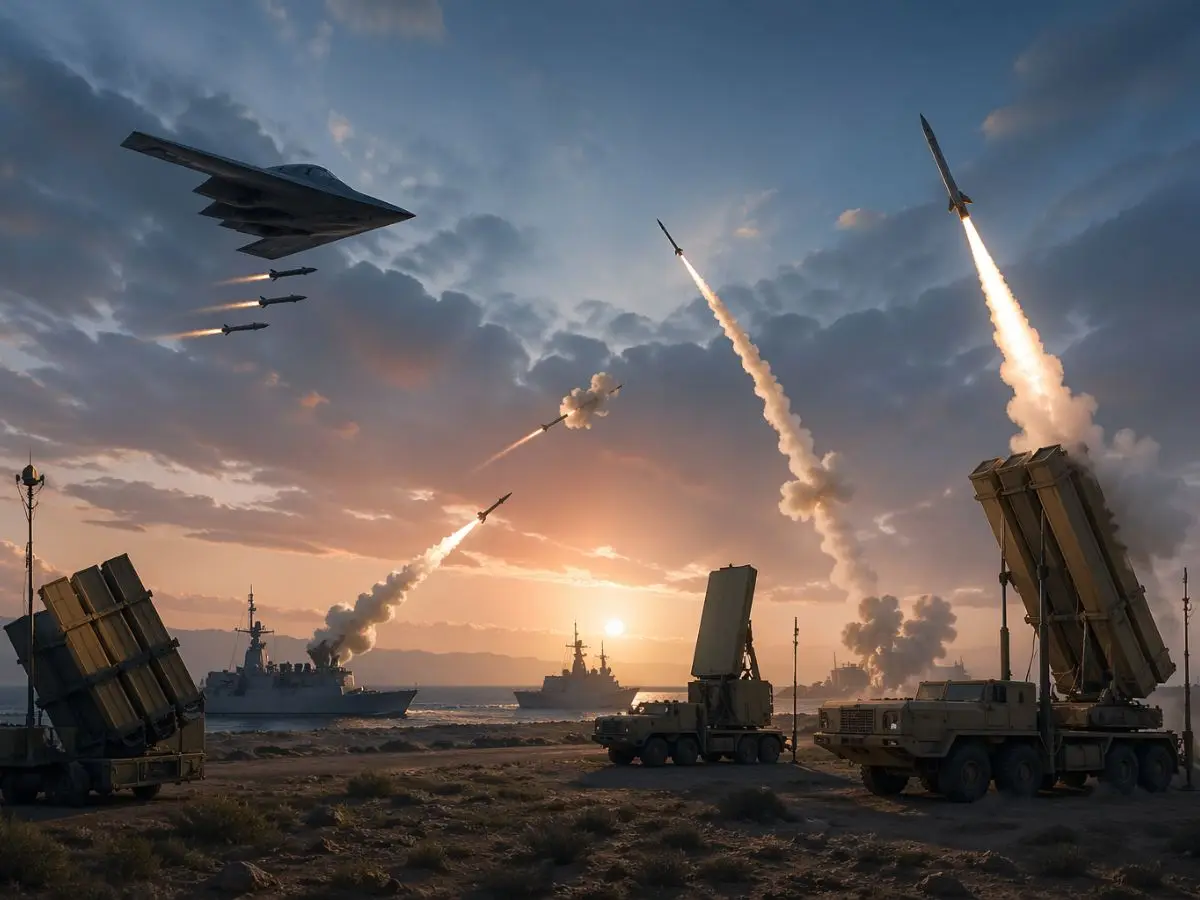
Concern over US munitions stockpiles has intensified after heavy use of Tomahawk, Patriot and other missiles in the Iran war. With a fragile ceasefire in place, a clearer picture has emerged: the United States has not run out of missiles, but has come close to testing the limits of its arsenal. Analysis of seven key munitions, conducted by the Centre of Strategic and International Studies, shows sufficient capacity to sustain this war under any plausible scenario. The immediate risk is not depletion. However, rapid consumption has thinned reserves, eroding strategic depth. The deeper concern is long-term strain, as rebuilding stockpiles will take years, exposing structural gaps in industrial capacity and readiness.
A War Fought at Unsustainable Intensity
In just 39 days of air and missile operations over Iran, the United States expended enormous volumes of high-end munitions. For four of the seven critical munitions analysed, the US may have used more than 50 per cent of its pre-war inventory. This is not marginal depletion, but it is a structural drawdown of core capabilities that underpin modern warfare. CSIS notes: Rebuilding to prewar levels for the seven munitions will take from one to four years as missiles in the pipeline are delivered.
Reduced inventories are also likely to constrain US supplies of Patriot, THAAD, and Precision Strike Missiles (PrSM) to Ukraine and other allies that depend on them. As stockpiles tighten, Washington will increasingly compete with partner nations seeking to rebuild their own arsenals, adding pressure to already stretched production lines. The challenge is further compounded by shifting dynamics among allies, with Japan recently opening the door to expanded arms exports, signalling a more active role in the global defence supply chain and probably intensifying competition for critical munitions and systems.
Trending Stories
&imwidth=180&imheight=135&format=webp&quality=medium)
‘Maybe play one more season’: MS Dhoni to decide on his IPL future before December
&imwidth=180&imheight=135&format=webp&quality=medium)
Telangana unveils AI avatar of IT minister D Sridhar Babu at Hyderabad DevFest 2026
&imwidth=180&imheight=135&format=webp&quality=medium)
Viral video shows cross falling on Colombia priest, no official confirmation | WATCH
&imwidth=180&imheight=135&format=webp&quality=medium)
Pezeshkian says Iranians ‘struggling to put food on the table’ as war with US drags on
&imwidth=180&imheight=135&format=webp&quality=medium)
Shilpa Rao’s performance cut short at Mumbai event, organisers react to backlash
&imwidth=180&imheight=135&format=webp&quality=medium)
Chorbagan stampede: A week later, the strangest visarjan Kolkata has seen
&imwidth=180&imheight=135&format=webp&quality=medium)
AI slop or smart strategy? South African author Coral Hart defends Her 370 AI- assisted books in 20 months
&imwidth=180&imheight=135&format=webp&quality=medium)
AI just found a flaw in software running most of the web! One request hijacks the server
&imwidth=180&imheight=135&format=webp&quality=medium)
Train crashes into crane on São Paulo monorail line, wreckage falls onto busy road | VIDEO
&imwidth=180&imheight=135&format=webp&quality=medium)
Can Putin cheat death? All about his daughter’s billion-dollar quest for immortality
&imwidth=180&imheight=135&format=webp&quality=medium)
Saudi says debris fell in Mecca, Medina after missile interceptions; Houthis deny targeting holy cities
&imwidth=180&imheight=135&format=webp&quality=medium)
What was the note found inside bag of Class 12 student, who set herself on fire inside Delhi school?
&imwidth=180&imheight=135&format=webp&quality=medium)
Netanyahu warns Israelis of ‘existential threat’ from Iran, posts AI image of nuclear strike
&imwidth=180&imheight=135&format=webp&quality=medium)
Pakistan airline PIA unveils new crew uniforms, faces online criticism
&imwidth=180&imheight=135&format=webp&quality=medium)
Britain is building the world's first AI biosecurity lab, with OpenAI and Anthropic inside
&imwidth=180&imheight=135&format=webp&quality=medium)
J-20 designers plan to put radar into aircraft wing; strategy to expand coverage during air combat
&imwidth=180&imheight=135&format=webp&quality=medium)
Frontier AIs keep escaping their test cages! The industry still can't reliably stop them
&imwidth=180&imheight=135&format=webp&quality=medium)
'Already tired of his 9-to-5': Baby born with a moustache becomes internet sensation, video goes viral | Watch
&imwidth=180&imheight=135&format=webp&quality=medium)
France protests: 135 arrested, weapons seized as fresh demonstrations erupt amid heavy security
&imwidth=180&imheight=135&format=webp&quality=medium)
French Open: PV Sindhu storms into final with win over Hina Akechi
&imwidth=180&imheight=135&format=webp&quality=medium)
Russia-Ukraine drone attacks kill 6, injure 31 across both countries
&imwidth=180&imheight=135&format=webp&quality=medium)
‘Saddam Hussein opened a cheesecake factory’: Obama mocks Trump’s White House renovations; defends Abdul El-Sayed
&imwidth=180&imheight=135&format=webp&quality=medium)
China's dancing robot turns violent bodyguard, lifts cars and fights intruders - Watch
&imwidth=180&imheight=135&format=webp&quality=medium)
'You’re a horrible little reporter, aren’t you?': Trump snaps at NBC reporter questioning his support for Ramaswamy's campaign ad
&imwidth=180&imheight=135&format=webp&quality=medium)
'Killing people never allowed': Elon Musk admits restricting Starlink in Ukraine, explains why
&imwidth=180&imheight=135&format=webp&quality=medium)
Bodies of 2 missing Japanese climbers recovered from Himalayan peak
&im=FitAndFill=(700,400)&imwidth=180&imheight=135&format=webp&quality=medium)
New Friday OTT releases (October 23, 2026): Gajab Raat, Dorothy, Chaar Yaar- Watch these 6 new movies and TV shows on Netflix, Prime Video and more
&imwidth=180&imheight=135&format=webp&quality=medium)
An AI that reads your face can now estimate how long you have to live
&imwidth=180&imheight=135&format=webp&quality=medium)
'If it was up to me, it wouldn't have ended like this': James Anderson opens up on Lancashire exit
&imwidth=180&imheight=135&format=webp&quality=medium)
WATCH: Thousands across Manipur bang plates, beat drums in "noise protest"
&imwidth=180&imheight=135&format=webp&quality=medium)
NEET protests: Panel to hear evidence on pellet gun use, harassment
&imwidth=180&imheight=135&format=webp&quality=medium)
Tu Hai Meri Kiran film review: Sonakshi Sinha and Zaheer Iqbal's thriller gets tangled in its own twists
&imwidth=180&imheight=135&format=webp&quality=medium)
Nagpur man fails to pay rent, allegedly prints fake Rs 500 notes worth Rs 37 lakh
&imwidth=180&imheight=135&format=webp&quality=medium)
‘Modi ka baap bhi jayega,’ Kharge loses cool at party event in Patna; BJP slams him
&imwidth=180&imheight=135&format=webp&quality=medium)
Why Europe’s protests are about more than austerity and rising costs
&imwidth=180&imheight=135&format=webp&quality=medium)
Farooq Abdullah says Pakistan’s raising of Kashmir issue keeps pressure on Delhi
High-Tempo Strikes Strain High-End Munitions
During the conflict, US forces struck over 13,000 targets in just 39 days, reflecting an exceptionally high operational tempo. As Iranian air defences were degraded, operations gradually shifted towards shorter-range, more readily available munitions. However, this transition was only partial. The United States continued to rely on long-range precision missiles for targets beyond reach or heavily defended, sustaining pressure on high-end inventories right up to the ceasefire.
Tomahawk Land Attack Missile (TLAM)
Tomahawk missiles, in service since the 1980s, have seen sustained operational use, but the Iran conflict marked an intense surge. CSIS says, US naval forces fired over 850 TLAMs in the first month, with totals likely exceeding 950 before the ceasefire. The strain is already visible: Japan’s planned delivery of 400 Tomahawks may be delayed, signalling pressure on both US inventories and allied commitments.
Joint Air-to-Surface Standoff Missile (JASSM)
More than 1,000 JASSMs were expended in the first month of operations, with an additional ~180 likely used before the ceasefire. Sustained sorties by B-52 bombers from UK bases kept demand high until the end. The scale of use highlights the missile’s central role in long-range strike operations—and the growing stress on high-end precision strike inventories.
Precision Strike Missile (PrSM)
The PrSM, still in early deployment, was used extensively against diverse targets, including reportedly maritime assets. One US Army official suggested the “entire inventory” may have been expended, though this remains contested. Even so, the scale of use has sharply reduced availability, likely halting near-term deliveries and exposing the vulnerability of low-volume, next-generation systems.
Terminal High Altitude Area Defense (THAAD)
THAAD interceptors, already limited in number, faced intense demand, with over 150 fired during the conflict. The US operates just eight batteries, several redeployed to the Middle East, stretching global coverage. According to the analysis, the production gaps are acute, no new interceptors delivered since August 2023, with supply only expected to resume by April 2027. THAAD relies on scarce AN/TPY-2 radars, with only 13 delivered to date. Their potential loss or damage creates a critical capability gap, making THAAD the most constrained and strategically sensitive system.
Patriot (PAC-3 MSE)
Patriot systems remain in high global demand, with 18 countries operating them and Ukraine a major user. Around half of annual production is allocated to allies, tightening availability for US needs. While Lockheed Martin plans to raise PAC-3 MSE output to 2,000 annually by 2030 (from 600), near-term supply constraints will force difficult decisions over allocation and prioritisation.
The scale of usage
The scale of US munitions use in the Iran conflict is stark against pre-war inventories. According to CSIS analysis, of roughly 3,100 Tomahawks, over 850 were used, while more than 1,000 JASSMs were expended from a stock of 4,400. Limited systems saw sharper strain: 40–70 PrSMs were used from just 90 available. Air defence was heavily taxed, with SM-3 usage (130–250) exceeding its 90-unit inventory, and SM-6 seeing 190–370 used from 410. Defensive systems bore the brunt, with THAAD (190–290 of 360) and Patriot (1,060–1,430 of 2,330) significantly depleted, highlighting the intensity and scale of consumption.

