US plans to reclaim Pacific airfield from where atom bombings were launched

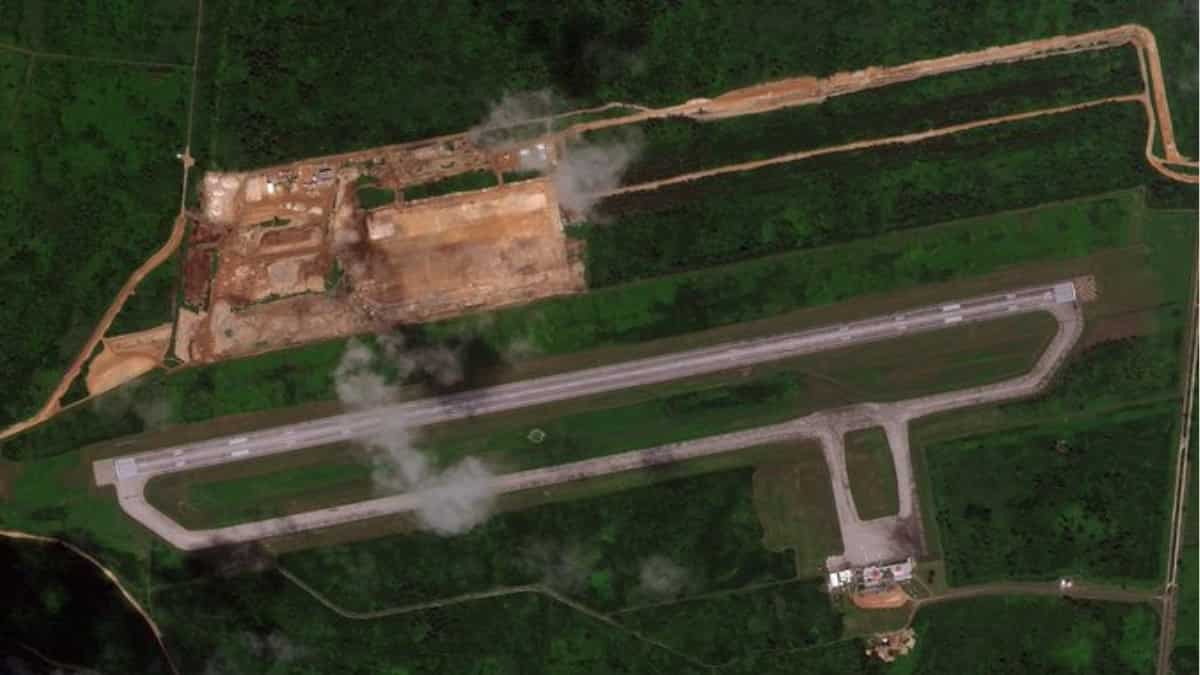
Images of Pacific Island airfield from where atomic bombs were launched in Japan.
The US Air Force has been planning to reclaim the Pacific Island airfield – the same place from where they once launchedatomic bombs on Japan – and bring it back into commission as it takes steps for broadening its basing options in case of any hostilities with China, said the service’s top officer in the Pacific.
Speaking in an interview with Nikkei Asia, commander of Pacific Air Forces Gen Kenneth Wilsbach said that North Airfield, which is located on the island of Tinian, will turn into an “extensive” facility after it has been completely reclaimed from a forest which has grown over the base since it was abandoned by the last US Army Air Force units in 1946.
“If you pay attention in the next few months, you will see significant progress, especially at Tinian North,” said Wilsbach. Facilities are also being added by the Air Force at Tinian International Airport, which is in the centre of the island.
Tinian has been part of the Commonwealth of the Northern Mariana Islands, which is a US territory in the Pacific and has a population of 3,000 people.
As per the Nikkei report, Wilsbach did not provide a timeline on when they will make the airfield operational.

Role ofTinianIsland in World War II
Tinian, as well as the nearby islands of Guam and Saipan, have played a major role in the US air operations. During World War II, after Japanese occupiers captured all three islands, it was home to US fleets of B-29 Superfortress bombers which caused destruction on the Japanese homeland.
On March 10, 1945, the deadliest bombing raid in history was carried out on Tokyo in which as many as 100,000 people were killed and a million had suffered injuries. The attack was carried out by B-29s, which were launched from the three islands.
In 1945, amid relentless bombing on Japan, North Field on Tinian – which had four 8,000-foot runways and 40,000 personnel – became the world's largest and busiest airport.
Watch:US Investors Bullish on India, Washington-Delhi Ties Mature says USISPF Chief Aghi
)
AI kill switch explained: Why shutting down a dangerous AI may not be as simple as pressing a button
)
US ships in Indian Ocean ‘will be attacked’ if war resumes, warns Iran
)
SNL UK takes aim at Ed Sheeran with AI Princess Diana sketch
)
Trump says he'll build an 'AI Force' and appoint a czar, for 'high IQ' people only
)
‘0% chance’: Nvidia CEO Jensen Huang dismisses AI extinction fears by 2030
&im=FitAndFill=(700,400))
What TSMC's 2nm technology means for Apple
)
'Were you here to sell chickpeas?': Wasim Akram criticises Babar Azam's captaincy
)
Mark Carney mimics Trump in hilarious moment over C$70 billion clean-energy investment; room erupts in laughter
&im=FitAndFill=(700,400))
Top 10 countries in mathematics: See the world’s best performers in 2026
)
Apple reportedly building AI server with M8 Ultra chips, may use Nvidia technology
)
TIFF 2026: Theja Rio’s Angh wins Platform Prize, puts Nagaland story on global stage
)
BTS' fans question iHeartRadio’s treatment of group after brief festival set
)
Samsung raises Galaxy S26 prices by Rs 20,000: Here’s what each model now costs
)
Operation Sindoor’s hidden naval dimension | MoD reveals Indian Navy Special Forces joined May 7 strikes
)
Trump-Xi summit: US Treasury Secretary holds meeting with Chinese Vice Premier
)
Bessent meets China’s He Lifeng to prepare for Trump-Xi summit
)
S Jaishankar, former Army chief among high-profile names issued Delhi SIR notices
)
CDU suffers historic defeat in eastern Germany as AfD surges, Merz vows to stay on
)
Iran sets 7 conditions to end war with US: What are Tehran’s demands?
)
Arvind Kejriwal, family members, Delhi CM Rekha Gupta get SIR notices
)
AI actress Tilly Norwood glitches mid-interview, switches from English to Chinese | Watch
)
Saudi vs Houthis: Houthis claim missiles & drones used in attack on key Saudi sites
)
Ed Sheeran addresses Macklemore's removal, Gaza conflict during Philadelphia concert: 'I cannot hide how I feel'
)
Punjab man consumes poison outside DC office; Congress, BJP target AAP government
)
Saudi Arabia exits China-led mBridge digital currency platform amid Saudi-Houthi conflict
)
ICE shooting in Texas leaves man seriously injured; officials demand independent investigation and transparency
)
Sudan gold mine collapse kills 11, injures 30; search under way for trapped miners
)
'Lot of things to learn from experienced players': Jayasuriya backs Rohit, Virat for 2027 ODI World Cup
)
Chancellor Friedrich Merz vows to stay on as exit polls signal major poll setback
)
North Korea's nuclear tests triggered 1,399 earthquakes: Earth is still shaking | Gravitas
)
Several petrol pumps, other businesses to refuse UPI payments above Rs 2,000 from Oct 16: Is it legal?
&im=FitAndFill=(700,400))
New OTT releases this week (September 21-27, 2026): Shaque: Trust No One, Hunkkaar, Don’t Be Shy- 5 new titles coming to Netflix, Prime Video and more
&im=FitAndFill=(700,400))
Gulshan Grover turns 70: Ram Lakhan, Gangster, Hera Pheri- Must-watch movies of the actor on OTT platforms
)
Noel Tata challenges Chandrasekaran’s reappointment as Tata Sons chairman. What happened at the board meeting
&im=FitAndFill=(700,400))
Kareena Kapoor birthday special: Inside her net worth, best movies, luxurious lifestyle and love story with Saif Ali Khan
)
China now makes advanced memory chips without the machines it was banned from buying
)
Trump in ‘deciding mode’ on Iran, says ‘very big things’ going to happen soon
)
Jailer 2: Vidya Balan joins Rajinikanth's upcoming film as Kantha | Watch
)
Microsoft executive called AI training the ‘largest theft of labour in human history’
)
Italy moves to ban face veils in schools as Meloni pushes new integration measures
On August 6, 1945, North Field made its place in history when a B-29 bomber named Enola Gay ejected its Runway Able – which was carrying the atomic bomb – and dropped it on Hiroshima, in which 70,000 people were killed in its initial blast and the world suddenly moved into the nuclear age.
Another B-29, called Bockscar, took off from Tinian three days later and dropped an atomic bomb on Nagasaki in which 46,000 people were killed in its initial blast.
(With inputs from agencies)