US AWACS hit in Iran strike: Why damage to E-3 Sentry is a major blow | EXPLAINED

&imwidth=600&imheight=450&format=webp&quality=medium "US AWACS hit in Iran strike: Why damage to E-3 Sentry is a major blow | EXPLAINED")
US Air Force E-3 Sentry (File) Photograph: (AFP)
An Iranian strike on Prince Sultan Air Base damaged a critical E-3 Sentry AWACS and injured service members, highlighting vulnerabilities in ageing US air command infrastructure and slowing regional coordination.
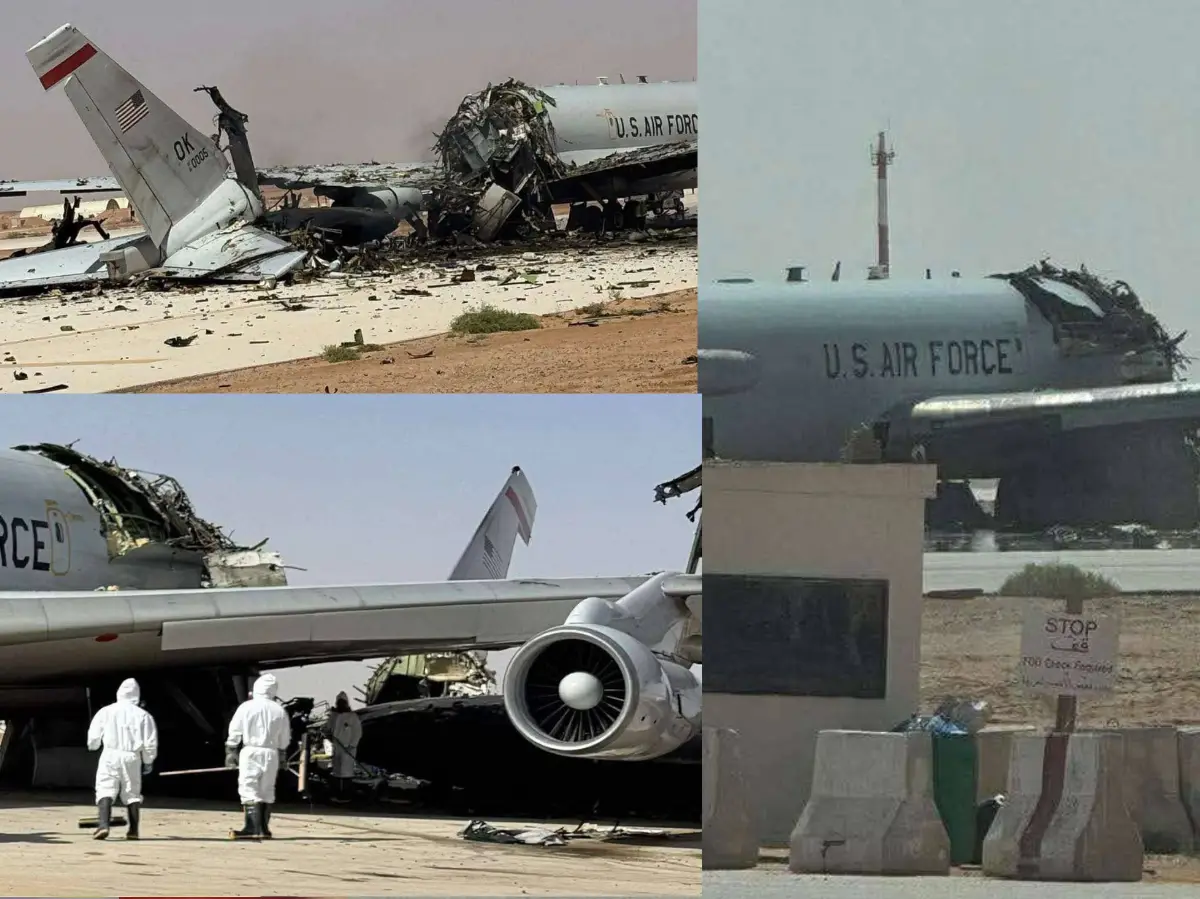
A key US Air Force E-3 Sentry Airborne Warning and Control System (AWACS) aircraft was damaged in an Iranian missile and drone strike on Friday (March 27) at Prince Sultan Air Base, according to people familiar with the matter cited by Air and Space Forces Magazine. The attack left more than 10 service members injured, including two seriously, and also damaged aerial refuelling tankers stationed at the base.
Images circulating on social media, and reviewed by the publication, appear to show significant damage to one of the E-3 aircraft. The visuals reportedly match runway signage and aircraft markings from Prince Sultan Air Base. Open-source flight tracking data indicates that up to six E-3 Sentry aircraft had been deployed at the base before the strike.
Why E-3 Sentry is a big deal
Also read: ‘Targeted assassination’: Iran FM Araghchi slams Israel after three journalists killed in Lebanon
The E-3 Sentry is a cornerstone of US air operations, serving as a flying command centre that provides command and control, intelligence, surveillance, and reconnaissance. In service since the 1970s, AWACS aircraft have played a crucial role in major conflicts, including Operation Desert Storm, the Kosovo war, campaigns in Iraq and Afghanistan, and the fight against the Islamic State under Operation Inherent Resolve.
Developed in the and widely exported to allies such as France, the UK, and Saudi Arabia, the E-3 is among the most widely used AWACS platforms globally. It enables forces to monitor vast airspaces, coordinate aircraft, and manage complex battle environments in real time.
Trending Stories
)
)
)
)
)
)
)
)
)
)
)
)
)
)
)
)
)
)
)
)
)
)
)
)
)
)
)
)
)
)
)
)
)
)
&im=FitAndFill=(700,400))
)
)
)
)
‘An incredibly problematic’ loss
Airpower experts warn that damage to such an aircraft could significantly impact battlefield coordination. Heather Penney, a former F-16 pilot and analyst at the Mitchell Institute, described the loss as “incredibly problematic,” noting that AWACS platforms are central to airspace management, targeting, and overall battle coordination.
Without the E-3, experts say, the Air Force risks gaps in battlespace awareness and may miss opportunities to effectively target adversary forces. Kelly Grieco, a senior fellow at the Stimson Centre, called it “a significant loss in the short term,” warning of potential coverage gaps in operations.
Penney likened the AWACS role to that of a “chessmaster,” providing the broader battlefield picture, while fighter pilots execute specific missions based on that intelligence.
A deliberate targeting strategy?
The strike on Prince Sultan Air Base, one of the most important US military hubs in the region, is being viewed by analysts as part of a broader Iranian strategy. The base hosts key assets supporting operations against Iran, making it a high-value target.
Experts suggest the attack may be part of an “asymmetric counter air campaign,” aimed at degrading critical enablers of US airpower, including radar systems, communications infrastructure, and high-value aircraft like AWACS.
Strain on an ageing fleet
The incident has also reignited debate over the future of US airborne battle management systems. While the proposed replacement, the Boeing E-7 Wedgetail, is under consideration, Pentagon leadership has shown interest in shifting toward space-based capabilities.
However, experts caution that such systems are not yet ready to fully replace airborne platforms. Penney warned that delaying investment in replacements risks overburdening the remaining fleet, accelerating wear and reducing overall effectiveness.
“The strain that the loss of this E-3 will impose… underscores the need to accelerate the procurement and delivery of the E-7,” she said, adding that the current shortfall reflects decades of underinvestment in battle management aircraft. With fewer AWACS aircraft available, the remaining platforms are likely to face increased operational pressure, which could potentially affect mission readiness in an already volatile region.

