Trump-Xi 2.0: Trade peace or temporary pause? Can Beijing and Washington avoid another trade shock?

&imwidth=600&imheight=450&format=webp&quality=medium "Trump-Xi 2.0: Trade peace or temporary pause? Can Beijing and Washington avoid another trade shock?")
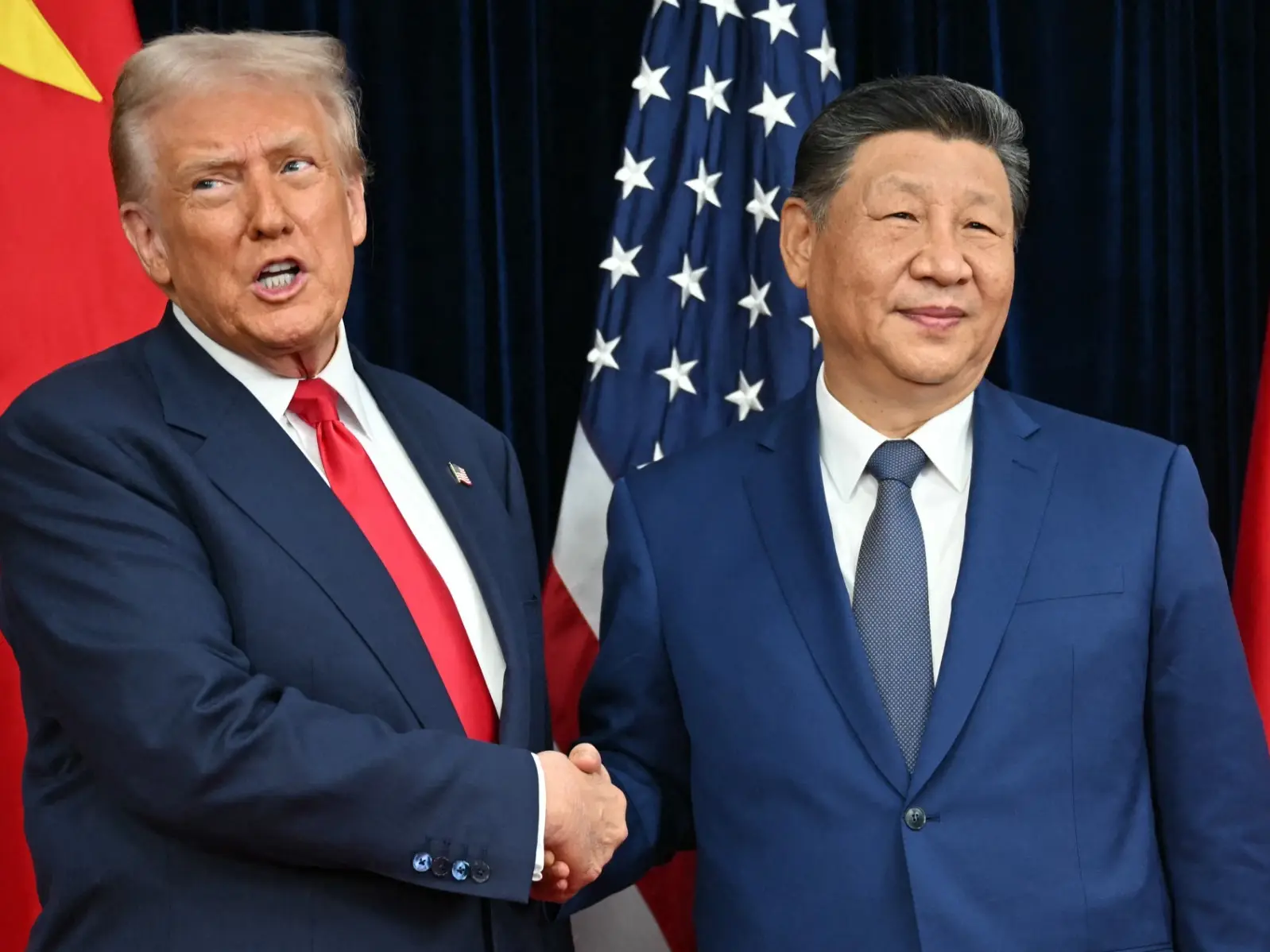
Donald Trump and Xi Jinping Photograph: (AFP)
From Busan to Beijing, Donald Trump and Xi Jinping face fresh tensions over tariffs, Taiwan, AI, rare earths, and global trade dominance
When Donald Trump and Xi Jinping met on the sidelines of the APEC summit in Busan, South Korea, in October 2025, the immediate goal was simple: stop the relationship between the world’s two biggest economies from spiraling into a full-scale economic confrontation. The meeting, their first face-to-face interaction in six years, came after months of tariff threats, semiconductor restrictions, and rare earth export controls that had shaken global markets.
The Busan summit produced what both sides called a temporary stabilisation. Trump agreed to pause new punitive tariffs and ease some pressure on Chinese imports, while Beijing signalled that it would restore purchases of American agricultural goods and soften restrictions on rare earth exports. Both countries also agreed to continue talks on fentanyl cooperation and high-tech trade controls. But the truce never fully resolved the deeper conflict.
Since Busan, Washington, and Beijing have continued to clash over semiconductors, artificial intelligence, supply chains, and Taiwan. The United States maintained restrictions on advanced chip exports to China, arguing they were necessary for national security. China, in return, used its dominance over rare earth minerals as leverage, reminding Washington how dependent American technology and defence industries remain on Chinese supply chains.
Taiwan has emerged as another major sticking point ahead of Wednesday’s summit in Beijing. China has grown increasingly frustrated with US military support and arms sales to Taiwan, while Washington insists its policy remains aimed at maintaining regional stability. Taiwanese officials themselves have expressed concerns about possible ‘surprises’ emerging from the Trump-Xi talks. Trade, however, remains the centerpiece of the relationship.
Trump continues to push for what he calls ‘fair trade’, with his administration pressing China to buy more American soybeans, poultry, beef, and Boeing aircraft. Beijing, meanwhile, wants relief from US export controls, especially restrictions tied to semiconductors and advanced technology. There is also a larger geopolitical backdrop shaping the meeting. Since the Busan summit, tensions in the Middle East and the Iran conflict have changed the balance between the two powers. China’s dependence on oil flows through the Strait of Hormuz and America’s military commitments in the region have added new urgency to the relationship. Trump is expected to pressure Xi over China’s purchases of Iranian oil and Beijing’s broader ties with Tehran.
Trending Stories
)
)
)
)
)
)
)
)
)
)
)
)
)
)
)
)
)
)
)
)
)
)
)
)
)
)
)
)
)
)
)
)
)
)
&im=FitAndFill=(700,400))
)
)
)
)
Artificial intelligence and technology security are also expected to feature prominently during the summit. Analysts believe both countries are increasingly worried about cyber risks, AI competition, and the strategic race for technological dominance. What makes this summit particularly significant is that both leaders now see the relationship differently than they did in Busan. China enters the talks projecting confidence, believing it has strengthened its global standing economically and strategically. Trump, meanwhile, arrives looking for deals that can demonstrate economic wins back home while avoiding another destabilising trade war.
That means Wednesday’s meeting is unlikely to produce a grand breakthrough. Instead, the focus may be on preventing fresh escalation, extending the tariff truce, and finding enough common ground to keep the US-China relationship from tipping back into open economic confrontation.

