

&imwidth=800&imheight=600&format=webp&quality=medium "Trump-Musk feud in out in the open AGAIN! Why is Tesla boss opposing US president's ‘big beautiful bill’? WION Explains")
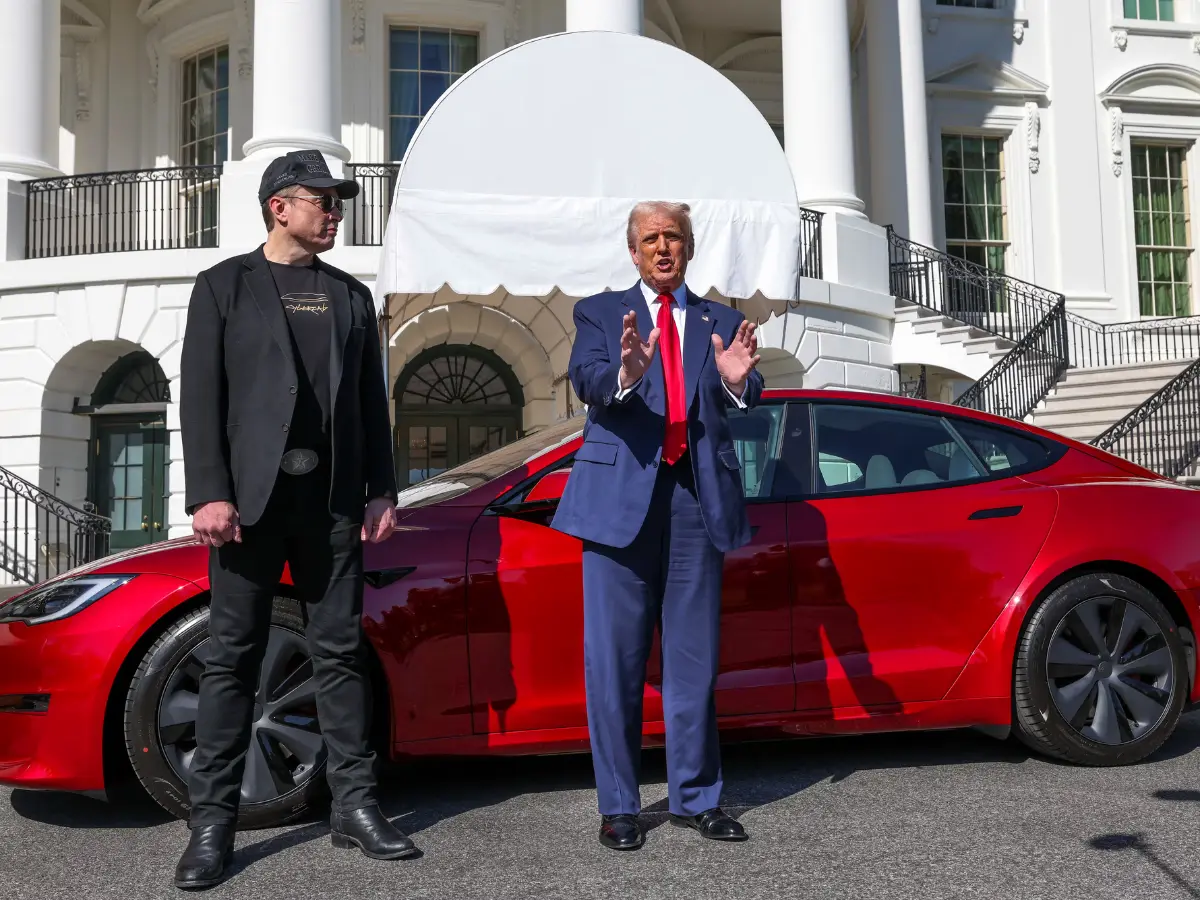
Donald Trump and Elon Musk - once best buddies - are now again at war publically on 'big beautiful bill' as marathon voting session in the US Senate on the bill is underway on Tuesday. While Trump claims that the bill will increase defence budget and help secure the nation, Musk claims that it will increase the debt ceiling, thus increasing the national debt and burdening the Americans. While both Trump and Musk are right, the real reason why the two former best friends are facing off on the bill may be different from what is stated.
Why is Elon Musk opposing ‘big beautiful bill’?
- Trump's tax bill does away with major portions of former President Joe Biden's Inflation Reduction Act, known as the IRA, which includes tax credits of up to $7,500 for EV purchases among many other incentives. This seems to be a major reason why the Tesla boss is opposing the bill - if Donald Trump and his team are to be believed. The elimination of $7,500 federal EV tax credit by September 30, 2025, which directly affect Tesla’s US sales by making their vehicles more expensive for consumers. Musk has in a post last year said, “Take away the subsidies. It will only help Tesla,” adding, “Also remove the subsidies from all industries!”
However, as the Senate votes on the bill, he and Tesla are arguing for the continuation of the tax credit. This change comes as Tesla has already restructured its supply chains and battery sourcing to meet the strict requirements of the IRA, so repealing the subsidy now would undermine those costly adjustments. Currently, 10 Tesla vehicle models qualify for the $7,500 IRA tax credit.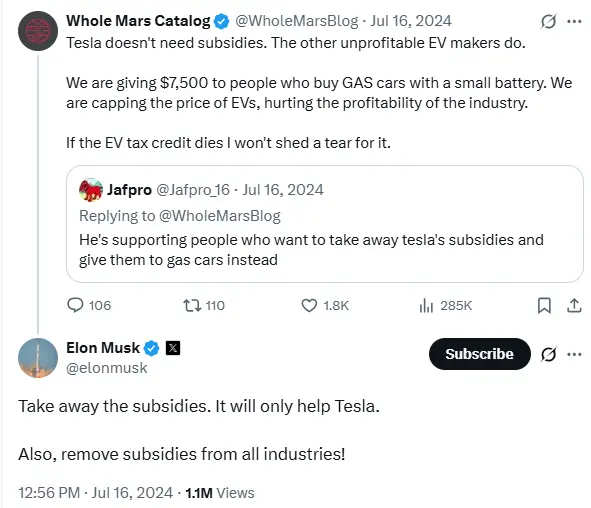
2. Secondly, the bill also threatens tax incentives for solar energy, battery storage, and clean grid infrastructure, which would negatively impact
Tesla’s growing energy business. “Abruptly ending the energy tax credits would threaten America’s energy independence and the reliability of our grid”, said Tesla’s solar power unit in its own post on X last month. “There is no change to tax incentives for oil & gas, just EV/solar,” said Musk in a follow-up post. Although Musk has criticised subsidies in the past, in this case, he sees the bill as a politically driven attack on clean energy, favouring the fossil fuel industry over technological innovation. He said in a post last month, ”It’s a fossil fuel protection act in disguise.”
3. Another crucial point regarding the bill is a clause that includes a "special rule" to keep IRA tax credits in place through "taxable year" 2026 but only for automakers that haven't yet sold 200,000 EV units by the end of 2025. Investors dot com pointed out that this would be beneficial for Rivian, Lucid and other EV startups while Tesla, General Motors, Ford and others would not be able to take advantage.
Trending Stories
&imwidth=180&imheight=135&format=webp&quality=medium)
Other Mommy leads North American box Office as Verity, Resident Evil round out top four
&im=FitAndFill=(700,400)&imwidth=180&imheight=135&format=webp&quality=medium)
Navratri 2026: 9 days, 9 forms of Goddess Durga and 9 colours- Check the complete list
&imwidth=180&imheight=135&format=webp&quality=medium)
Diljit Dosanjh’s Delhi concert gets a new date: When and where to catch the singer
&im=FitAndFill=(700,400)&imwidth=180&imheight=135&format=webp&quality=medium)
Is sending robots to Mars easier than sending humans?
&imwidth=180&imheight=135&format=webp&quality=medium)
A watchdog rated 'ChatGPT for Teens' an unacceptable risk and says keep under-18s off it
&imwidth=180&imheight=135&format=webp&quality=medium)
1,500 drones illuminate Mumbai sky as Cordelia Cruises unveils second ship, Cordelia Sky
&imwidth=180&imheight=135&format=webp&quality=medium)
'Just coincidence': Police mistakes protester as AISA chief Neha Bora, arrests her from site
&imwidth=180&imheight=135&format=webp&quality=medium)
Anthropic's AI invented a murder witness and sent the fake tip to Philadelphia police
&imwidth=180&imheight=135&format=webp&quality=medium)
Congress demands action against chief election commissioner
&imwidth=180&imheight=135&format=webp&quality=medium)
CJI Surya Kant declines INDIA bloc leaders’ request for meeting ahead of march to SC, asks them to file petition
&imwidth=180&imheight=135&format=webp&quality=medium)
Saif Ali Khan is finally on Instagram! Here's what he shared in his first post
&imwidth=180&imheight=135&format=webp&quality=medium)
'Turn approver, resign, we'll forgive you': Rahul Gandhi claims receiving messages from CEC Gyanesh Kumar
&imwidth=180&imheight=135&format=webp&quality=medium)
One Indian killed in Riyadh airport attack; 11 others injured : MEA
&imwidth=180&imheight=135&format=webp&quality=medium)
Top AI models flunked a test of inventing new AI research, so much for self-improving AI
&imwidth=180&imheight=135&format=webp&quality=medium)
Wasim Jaffer blames Ajit Agarkar-led selection panel for Virat Kohli’s Test retirement
&imwidth=180&imheight=135&format=webp&quality=medium)
'Ouch!!! That must hurt': Kangana Ranaut hails Kamal Haasan's sharp reply to Elon Musk over Starlink row
&imwidth=180&imheight=135&format=webp&quality=medium)
Sidhu Moose Wala’s younger brother wins hearts by recreating late singer’s signature move at Toronto Hologram Show
&imwidth=180&imheight=135&format=webp&quality=medium)
UK school ditches technology, shifts from screen to pen and paper for learning
&imwidth=180&imheight=135&format=webp&quality=medium)
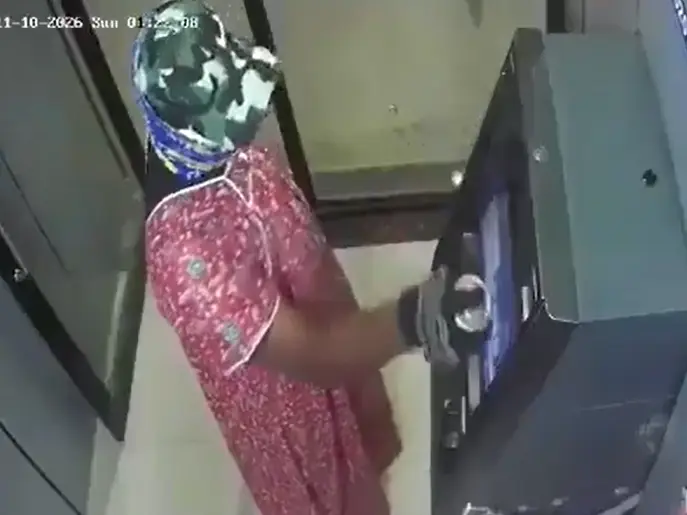
Telangana ATM heist: Thieves in nighties arrive in ambulance, break into SBI ATM in Kamareddy - VIDEO
&imwidth=180&imheight=135&format=webp&quality=medium)
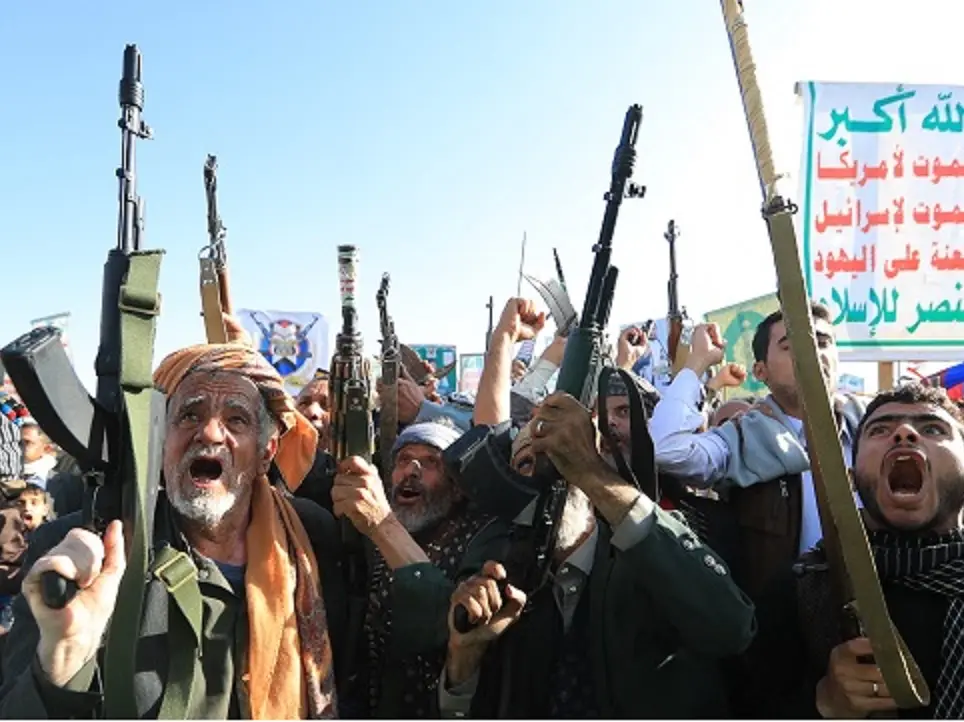
Houthis claim Riyadh airport attacks, Aramco strikes; issue fresh warning to airlines, travellers and workers
&imwidth=180&imheight=135&format=webp&quality=medium)
Portugal Federation confirms Cristiano Ronaldo’s return to national team despite suspension
&imwidth=180&imheight=135&format=webp&quality=medium)
Delhi protests: 'Court should not be dragged into political activity', says CJI Surya Kant
&im=FitAndFill=(700,400)&imwidth=180&imheight=135&format=webp&quality=medium)
New OTT releases this week (October 12-18, 2026): Sacrifice, Koffee with Karan S9, Roadies Rebirth- 6 titles coming on Netflix, JioHotstar and more
&imwidth=180&imheight=135&format=webp&quality=medium)
Microsoft's Nadella says treat every AI model as already hacked, and build an 'emergency brake'
&imwidth=180&imheight=135&format=webp&quality=medium)
Delhi protest: CJI Surya Kant declines to meet India Bloc leaders
&imwidth=180&imheight=135&format=webp&quality=medium)
Telangana man allegedly recruited into Russian military dies near Ukraine border
&imwidth=180&imheight=135&format=webp&quality=medium)
China imposes first-ever sanctions on ministers from Taiwan allies: What this means
&imwidth=180&imheight=135&format=webp&quality=medium)
McSweeney reveals how studying Virat Kohli’s YouTube clips helped Australia A conquer India
&imwidth=180&imheight=135&format=webp&quality=medium)
Maharashtra appoints FDA commissioner Tukaram Mundhe as secretary of committee for MPSC overhaul amid stir
&imwidth=180&imheight=135&format=webp&quality=medium)
Iran: US accepted some conditions, Clarity needed on others
&imwidth=180&imheight=135&format=webp&quality=medium)
Nana Patekar's cause of death confirmed; here's what his postmortem report says
&imwidth=180&imheight=135&format=webp&quality=medium)
iPhone Duo price index: Tracking Apple’s latest pricing trends
&imwidth=180&imheight=135&format=webp&quality=medium)
'Say no to Muse': Meta has no control over its own moderation AI while it forces a security nightmare on everyone
&imwidth=180&imheight=135&format=webp&quality=medium)
Delhi wakes up to heavy rain, thunderstorms; yellow alert in place; temperature drops
4. Moreover, the House-passed tax and spending bill would not only repeal many EV incentives, but it also includes a provision for the Federal Highway Administration to impose a $250 annual fee registration for an EV vehicle and a $100 annual fee for hybrid vehicles. This proposal aims to ensure that EV owners, contribute to road maintenance, as the current funding model relies heavily on gasoline taxes which EVs bypass. Supporters argue it's a necessary step for fairness and infrastructure funding, critics worry it could hinder EV adoption and contradict climate goals.

