

&imwidth=800&imheight=600&format=webp&quality=medium "'AI took it all': The world's biggest PC makers are now buying Chinese memory chips")
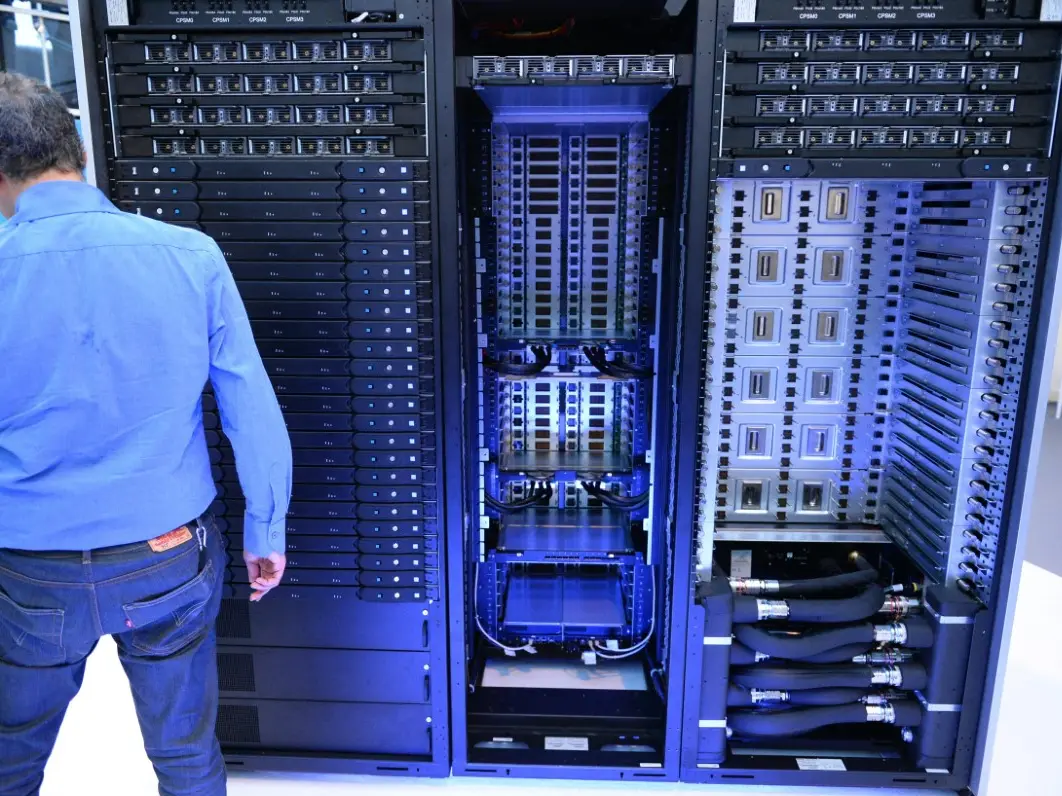
The artificial intelligence build-out has consumed so much of the world's memory chip supply that the largest Western PC manufacturers are now buying from the Chinese suppliers Washington spent years trying to keep out of their supply chains.
What Changed
Acer, Asus and HP have started using limited quantities of DRAM from ChangXin Memory Technologies, China's leading maker of dynamic random access memory, in their notebook computers. Dell has been weighing the same move.
For context on why that is notable: CXMT and its domestic peer Yangtze Memory Technologies, China's leading NAND flash manufacturer, have been treated for years as strategic competitors that American policy sought to constrain rather than as routine suppliers to Western brands.
The Cause Is AI, Not Policy
The shift is not the product of a diplomatic thaw. It is arithmetic.
Trending Stories
&imwidth=180&imheight=135&format=webp&quality=medium)
Shreyas Iyer blames dew for West Indies' record run chase in 2nd T20I in Ranchi
&imwidth=180&imheight=135&format=webp&quality=medium)
100,000 strikes in 3 years: How October 7 redefined Israel's war
&im=FitAndFill=(700,400)&imwidth=180&imheight=135&format=webp&quality=medium)
Happy Birthday Rekha: Watch these 7 evergreen Bollywood hits on Netflix, Prime Video and more
&imwidth=180&imheight=135&format=webp&quality=medium)
'I am not going to be watching it': JD Vance on livestream of Nidal Hasan's firing squad execution
&imwidth=180&imheight=135&format=webp&quality=medium)
UK navy hit by espionage scandal: Sailor accused of spying for Russia | Gravitas
&imwidth=180&imheight=135&format=webp&quality=medium)
Katie Zacharia likely to succeed Karoline Leavitt as Trump's White House press secretary
&imwidth=180&imheight=135&format=webp&quality=medium)
Delhi on high alert for CJP protest: Delhi police to use body cams to 'prove whether we did anything’; Pink Force, RAF, 35,000 personnel deployed
&imwidth=180&imheight=135&format=webp&quality=medium)
‘Never-ending flow of cheap labour’: JD Vance hits back at Indian-origin Congresswoman over US green card curbs for major tech companies
&imwidth=180&imheight=135&format=webp&quality=medium)
Panama president declares ‘major disaster’ after powerful 7.7-magnitude earthquake; over 80 aftershocks recorded
&imwidth=180&imheight=135&format=webp&quality=medium)
‘250? Cool.’: Shai Hope takes swipe at Shubman Gill’s Instagram caption after Ranchi T20I masterclass
&imwidth=180&imheight=135&format=webp&quality=medium)
'Jantar Mantar not the story of India': BJP's Sambit Patra claims 'anarchists' tried to hold Delhi captive
&imwidth=180&imheight=135&format=webp&quality=medium)
BJP MP Ravi Shankar Prasad slams CJP protests, calls it 'shadow boxing for AAP'
&imwidth=180&imheight=135&format=webp&quality=medium)
'I ended 8 wars': Trump slams Nobel Peace prize decision, claims award was his due
&imwidth=180&imheight=135&format=webp&quality=medium)
Dhurandhar: The Revenge album submitted for Grammy consideration; But what does it mean?
&imwidth=180&imheight=135&format=webp&quality=medium)
J&K Government orders major police reshuffle, transfers 100 officers across UT
&imwidth=180&imheight=135&format=webp&quality=medium)
New York protests erupt as Trump administration defends ICE shooting
&imwidth=180&imheight=135&format=webp&quality=medium)
Delhi protest: Metro curbs, train cancellations, traffic diversions as protesters seek CEC Gyanesh Kumar’s resignation
&imwidth=180&imheight=135&format=webp&quality=medium)
'Spent Rs 2,000 cr to elect Trump': Elon Musk bought US President's loyalty by writing the biggest political cheque in human history
&imwidth=180&imheight=135&format=webp&quality=medium)
Powerful 7.7 magnitude earthquake strikes Panama, tsunami warning issued
&imwidth=180&imheight=135&format=webp&quality=medium)
Adéla gives KATSEYE’s Lara Raj and Megan Skendiel a shout-out at Fonda Theatre in LA
&imwidth=180&imheight=135&format=webp&quality=medium)
'Modi is a dictator': Abhijeet Dipke claims govt 'scared' of youth, slams stringent measures ahead of CJP Jantar Mantar protest
&im=FitAndFill=(700,400)&imwidth=180&imheight=135&format=webp&quality=medium)
New Friday OTT releases (October 9, 2026): Reporting Live, Animals, Take Charge of My Heart- 6 new titles coming on Netflix, JioHotstar and more
&imwidth=180&imheight=135&format=webp&quality=medium)
Two-thirds of competitive GOP candidates split with trump ahead of November midterms
&imwidth=180&imheight=135&format=webp&quality=medium)
'Ouch!!! That must hurt': Kangana Ranaut hails Kamal Haasan's sharp reply to Elon Musk over Starlink row
&imwidth=180&imheight=135&format=webp&quality=medium)
‘Right to protest must be protected, but...’: Delhi Police reveals why it denied CJP permission for October 10 Jantar Mantar protest
&imwidth=180&imheight=135&format=webp&quality=medium)
Trump announces Russian diesel deal as Zelensky criticises move
&imwidth=180&imheight=135&format=webp&quality=medium)
Pakistan denies reports of PAF jets being used in attacks against Iran-backed Houthis in Yemen
&imwidth=180&imheight=135&format=webp&quality=medium)
All 22 Indian seafarers safe in attack on Panama-flagged tanker off UAE coast
&imwidth=180&imheight=135&format=webp&quality=medium)
Ryan Reynolds’ private messages reveal his blunt views on Justin Baldoni from Blake Lively’s legal case
&im=FitAndFill=(700,400)&imwidth=180&imheight=135&format=webp&quality=medium)
Rakul Preet Singh birthday special: 7 times the Ramayana actress served glamorous looks

Kamal Haasan slams Elon Musk over Starlink delay row: 'Indian people, will decide our own future - not Western'
&im=FitAndFill=(700,400)&imwidth=180&imheight=135&format=webp&quality=medium)
Food shortages, suicide attempts and more: USS Abraham Lincoln returns to US after 321 day deployment — What happened aboard the US carrier?
&imwidth=180&imheight=135&format=webp&quality=medium)
Thai queen becomes first reigning monarch to fly jet solothailand #queen #wion
&imwidth=180&imheight=135&format=webp&quality=medium)
SC questions closure of 57 Delhi Metro stations, asks Centre to resume services in regulated manner
&imwidth=180&imheight=135&format=webp&quality=medium)
Rahul Gandhi calls Modi, Shah ‘cowards’ amid CJP protest crackdown in Delhi
&imwidth=180&imheight=135&format=webp&quality=medium)
Flydubai co-pilot developed extremist views while studying in Australia: UAE prosecutors
&imwidth=180&imheight=135&format=webp&quality=medium)
Why was CJP founder Abhijeet Dipke detained? What Delhi Police said
&imwidth=180&imheight=135&format=webp&quality=medium)
Trump honours Microsoft CEO Satya Nadella with top technology honour amid immigration scrutiny
AI data centre construction is expected to absorb roughly 70 per cent of all memory chip production in 2026. Modern AI accelerators are memory-bound — a processor computes only as fast as memory can supply it data — which has made high-bandwidth memory and DRAM the binding constraint on AI infrastructure, and made memory manufacturers the beneficiaries of an unprecedented demand surge.
DRAM costs have tripled in the past eighteen months. Samsung has warned the shortage could persist into 2028 and has locked up to 70 per cent of its memory capacity in long-term agreements. When the incumbent suppliers are sold out years forward and prices have tripled, a PC manufacturer with laptops to ship has a narrow set of options.
What It Means For CXMT
The scale of the windfall is visible in the numbers. CXMT estimated its net profit for the first half of 2026 at between 52 billion and 58 billion yuan — an increase of as much as 2,530 per cent year-on-year.
Both CXMT and YMTC are undertaking their most aggressive capacity expansions to date, with equipment installation planned for the second half of 2026 and production starting in 2027. That timing matters: the additional supply arrives precisely when the shortage is forecast to be at its most acute, positioning Chinese manufacturers to capture share at the moment Western buyers have the fewest alternatives.
The Strategic Irony
American technology policy over the past several years has aimed at limiting Chinese firms' access to advanced semiconductors and reducing Western dependence on Chinese suppliers. The AI boom driven largely by American companies has now produced a shortage severe enough to push Western manufacturers toward those same suppliers.
The mechanism is straightforward. AI infrastructure spending — the roughly $740 billion in combined 2026 capital expenditure from Amazon, Alphabet, Meta and Microsoft — bids memory away from consumer electronics. Consumer manufacturers cannot match data centre prices. The supply that remains available at consumer price points is increasingly Chinese.
It is the same dynamic visible in the United States banning imports of new Chinese humanoid robots in July while Chinese manufacturers shipped the majority of the world's humanoids. Policy can restrict what enters a market. It has a harder time changing who has the capacity to build things when demand outruns domestic supply.
The Consumer End
For buyers, the immediate effect is price. Memory is one of the largest cost components in a laptop, and tripled DRAM costs pass through to retail. Chinese memory is currently the mechanism by which some of that increase is being absorbed rather than passed on in full.
The AI infrastructure boom has been discussed almost entirely in terms of data centres, capital expenditure and model capability. This is the point where it reaches an ordinary consumer purchase — and reshapes a supply chain that governments had spent years attempting to steer in the opposite direction.
