

&imwidth=800&imheight=600&format=webp&quality=medium "The ultimate frenemies? From ‘big, fat hug’ to bitter trade wars, analysing a decade of Trump-Xi rollercoaster equation")
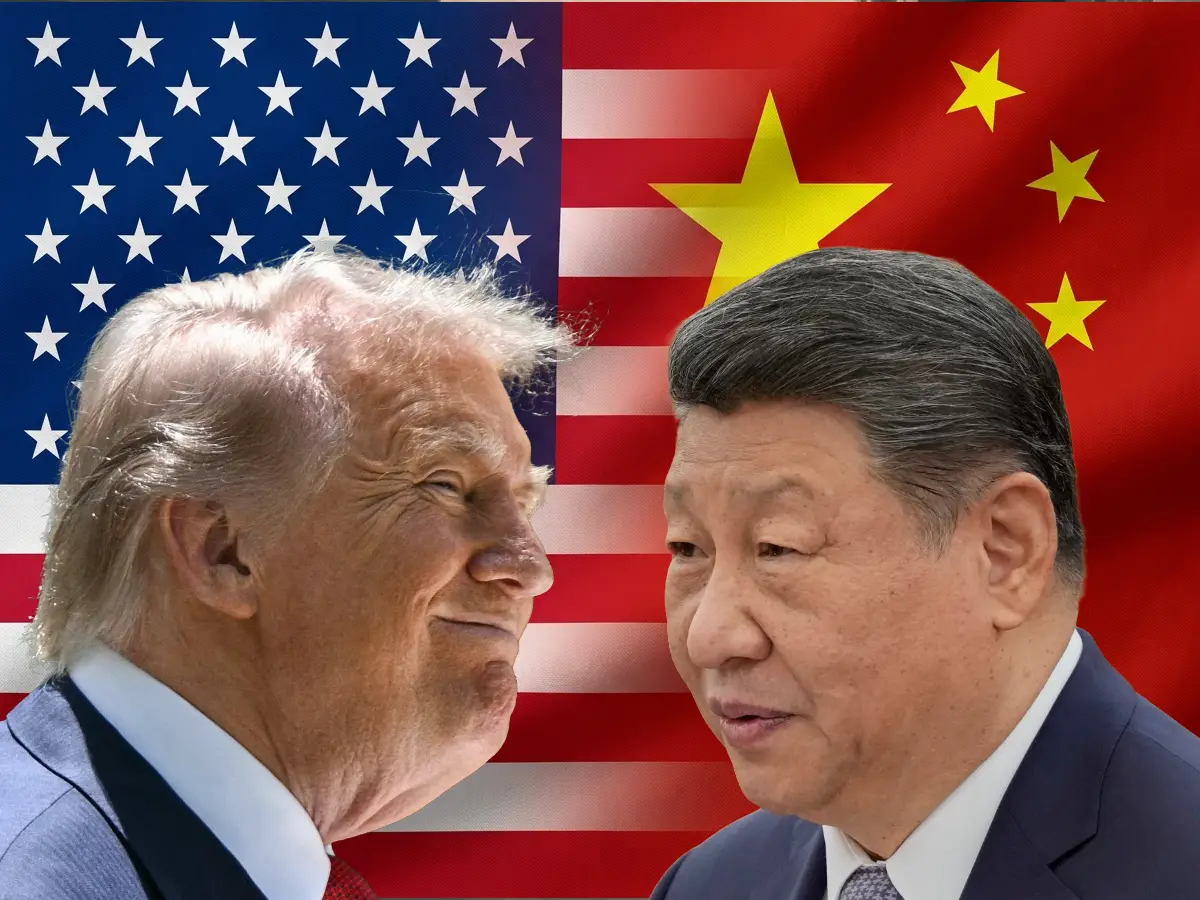
US President Donald Trump expects a "big, fat hug" from his Chinese counterpart, Xi Jinping, when they meet in Beijing this week. The US President will be in China from May 13 to 15. The meeting will be the seventh Trump and Xi face-to-face meeting, and the first trip by a US leader to China in 2017. The three-day summit is expected to focus on the US-Israel war on Iran, trade and the status of Taiwan.
Trump and Xi’s relationship has always been a curious blend of personal flattery and strategic hostility, warm handshakes often followed by economic warfare. Let's take a look at the Trump-Xi equation over the years.
2017: First meeting to first shots fired in US-China trade war
The two leaders first met at Trump's private Mar-a-Lago resort on April 6, 2017, during the Republicans' first term. The meeting was offset by Trump breaking decades of diplomatic precedent set in 1979 when Washington cut off relations with Taiwan and talking to the nation's President Tsai Ing-wen for a congratulatory phone call. However, despite that, the two appeared to build a personal rapport and later Trump claimed that they had made "tremendous progress" towards improving US-China relations.
In July 2017, the two leaders met in Hamburg, Germany, on the sidelines of the G20 summit, where they discussed North Korea’s nuclear programme and economic ties. Just a month later, the US fired the first shot in the US-China trade war by launching an investigation into alleged theft of US intellectual property and finally invoking Section 301 of the Trade Act of 1974. With this, the White House laid the groundwork to impose punitive tariffs on China.
Trending Stories
&imwidth=180&imheight=135&format=webp&quality=medium)
‘Maybe play one more season’: MS Dhoni to decide on his IPL future before December
&imwidth=180&imheight=135&format=webp&quality=medium)
Telangana unveils AI avatar of IT minister D Sridhar Babu at Hyderabad DevFest 2026
&imwidth=180&imheight=135&format=webp&quality=medium)
Viral video shows cross falling on Colombia priest, no official confirmation | WATCH
&imwidth=180&imheight=135&format=webp&quality=medium)
Pezeshkian says Iranians ‘struggling to put food on the table’ as war with US drags on
&imwidth=180&imheight=135&format=webp&quality=medium)
Shilpa Rao’s performance cut short at Mumbai event, organisers react to backlash
&imwidth=180&imheight=135&format=webp&quality=medium)
Chorbagan stampede: A week later, the strangest visarjan Kolkata has seen
&imwidth=180&imheight=135&format=webp&quality=medium)
AI slop or smart strategy? South African author Coral Hart defends Her 370 AI- assisted books in 20 months
&imwidth=180&imheight=135&format=webp&quality=medium)
AI just found a flaw in software running most of the web! One request hijacks the server
&imwidth=180&imheight=135&format=webp&quality=medium)
Train crashes into crane on São Paulo monorail line, wreckage falls onto busy road | VIDEO
&imwidth=180&imheight=135&format=webp&quality=medium)
Can Putin cheat death? All about his daughter’s billion-dollar quest for immortality
&imwidth=180&imheight=135&format=webp&quality=medium)
Saudi says debris fell in Mecca, Medina after missile interceptions; Houthis deny targeting holy cities
&imwidth=180&imheight=135&format=webp&quality=medium)
What was the note found inside bag of Class 12 student, who set herself on fire inside Delhi school?
&imwidth=180&imheight=135&format=webp&quality=medium)
Netanyahu warns Israelis of ‘existential threat’ from Iran, posts AI image of nuclear strike
&imwidth=180&imheight=135&format=webp&quality=medium)
Pakistan airline PIA unveils new crew uniforms, faces online criticism
&imwidth=180&imheight=135&format=webp&quality=medium)
Britain is building the world's first AI biosecurity lab, with OpenAI and Anthropic inside
&imwidth=180&imheight=135&format=webp&quality=medium)
J-20 designers plan to put radar into aircraft wing; strategy to expand coverage during air combat
&imwidth=180&imheight=135&format=webp&quality=medium)
Frontier AIs keep escaping their test cages! The industry still can't reliably stop them
&imwidth=180&imheight=135&format=webp&quality=medium)
'Already tired of his 9-to-5': Baby born with a moustache becomes internet sensation, video goes viral | Watch
&imwidth=180&imheight=135&format=webp&quality=medium)
France protests: 135 arrested, weapons seized as fresh demonstrations erupt amid heavy security
&imwidth=180&imheight=135&format=webp&quality=medium)
French Open: PV Sindhu storms into final with win over Hina Akechi
&imwidth=180&imheight=135&format=webp&quality=medium)
Russia-Ukraine drone attacks kill 6, injure 31 across both countries
&imwidth=180&imheight=135&format=webp&quality=medium)
‘Saddam Hussein opened a cheesecake factory’: Obama mocks Trump’s White House renovations; defends Abdul El-Sayed
&imwidth=180&imheight=135&format=webp&quality=medium)
China's dancing robot turns violent bodyguard, lifts cars and fights intruders - Watch
&imwidth=180&imheight=135&format=webp&quality=medium)
'You’re a horrible little reporter, aren’t you?': Trump snaps at NBC reporter questioning his support for Ramaswamy's campaign ad
&imwidth=180&imheight=135&format=webp&quality=medium)
'Killing people never allowed': Elon Musk admits restricting Starlink in Ukraine, explains why
&imwidth=180&imheight=135&format=webp&quality=medium)
Bodies of 2 missing Japanese climbers recovered from Himalayan peak
&im=FitAndFill=(700,400)&imwidth=180&imheight=135&format=webp&quality=medium)
New Friday OTT releases (October 23, 2026): Gajab Raat, Dorothy, Chaar Yaar- Watch these 6 new movies and TV shows on Netflix, Prime Video and more
&imwidth=180&imheight=135&format=webp&quality=medium)
An AI that reads your face can now estimate how long you have to live
&imwidth=180&imheight=135&format=webp&quality=medium)
'If it was up to me, it wouldn't have ended like this': James Anderson opens up on Lancashire exit
&imwidth=180&imheight=135&format=webp&quality=medium)
WATCH: Thousands across Manipur bang plates, beat drums in "noise protest"
&imwidth=180&imheight=135&format=webp&quality=medium)
NEET protests: Panel to hear evidence on pellet gun use, harassment
&imwidth=180&imheight=135&format=webp&quality=medium)
Tu Hai Meri Kiran film review: Sonakshi Sinha and Zaheer Iqbal's thriller gets tangled in its own twists
&imwidth=180&imheight=135&format=webp&quality=medium)
Nagpur man fails to pay rent, allegedly prints fake Rs 500 notes worth Rs 37 lakh
&imwidth=180&imheight=135&format=webp&quality=medium)
‘Modi ka baap bhi jayega,’ Kharge loses cool at party event in Patna; BJP slams him
&imwidth=180&imheight=135&format=webp&quality=medium)
Why Europe’s protests are about more than austerity and rising costs
&imwidth=180&imheight=135&format=webp&quality=medium)
Farooq Abdullah says Pakistan’s raising of Kashmir issue keeps pressure on Delhi
By November that year, Trump was in Beijing enjoying full state-visit pageantry, from the Forbidden City to lavish banquets, while touting major business deals. Then came tariffs.
Trade war years: smiles, then sanctions
From Hamburg to Buenos Aires (Dec 2018) to Osaka (June 2019), Trump and Xi repeatedly met on the sidelines of global summits, often using personal diplomacy to cool tensions temporarily.
But beneath each handshake, the trade war deepened. Trump launched Section 301 investigations, imposed tariffs on hundreds of billions in Chinese goods, and targeted firms like Huawei and ZTE. China retaliated in kind, imposing tariffs on $110bn worth of US goods.
Eventually, months later, the two nations signed a “phase one” trade deal, under which Washington agreed to roll back several tariffs, and Beijing pledged to buy $200bn worth of US goods and services. However, the trade deal never fully delivered on its promises, and China did not meet its purchase commitments during the required timeframe.
2025: Reunion after six years
Their October 2025 meeting in Busan marked their first in-person encounter in six years, coming after tariff levels between both countries had exploded past 100 per cent - the US had imposed 145 per cent duties on China, in return, Beijing imposed 125 per cent duties on Washington. That summit produced a one-year truce, a pause in the trade war.
2026: Why Beijing matters now
This week’s summit comes at an even more turbulent moment as the US-Israel-Iran conflict, Taiwan tensions, technology restrictions, and global supply chain stress all raise the stakes far beyond trade deficits.
Trump may joke about hugs, but this meeting could shape whether the US-China rivalry stabilises, worsens, or simply gets postponed again. Notably, history suggests one thing clearly: when it comes to Trump and Xi, personal chemistry has never guaranteed political calm. Sometimes, it has simply bought time before the next fight.

