

&imwidth=800&imheight=600&format=webp&quality=medium "The Mogami-class offer: Japan pitches stealth-frigate co-production under Make in India")
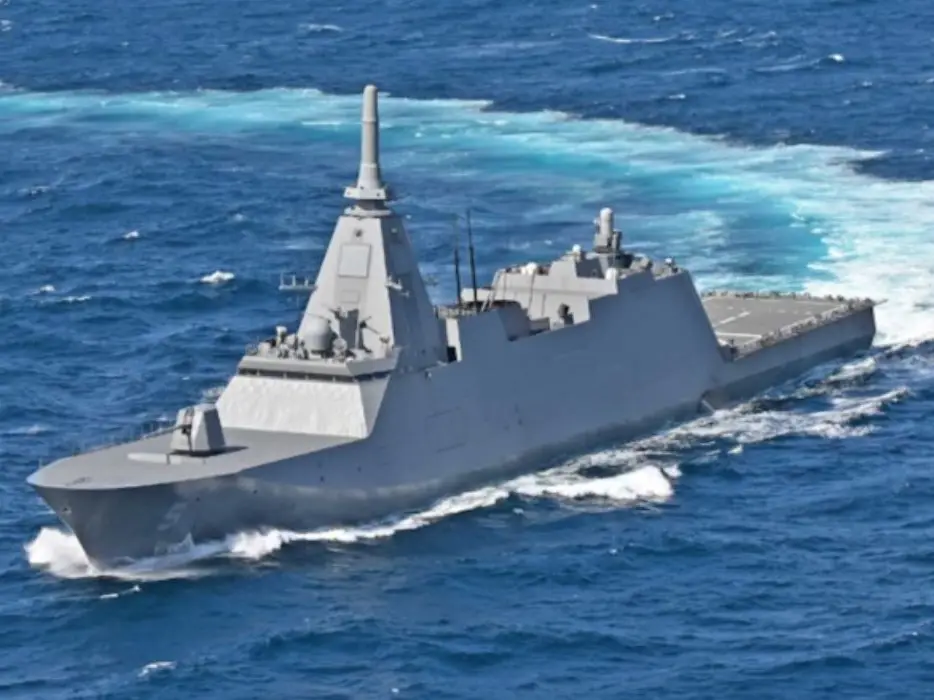
Japan has proposed one of its most ambitious defence partnerships with India by offering local production of the Mogami-class stealth frigate under the Make in India programme. According to multiple reports, Tokyo is prepared to share the warship's design and support construction in Indian shipyards, marking a major shift in Japan's defence export policy. While neither government has formally announced an agreement, the proposal has drawn attention because of its potential impact on India's naval modernisation and regional security.
Why the Mogami-class matters
The Mogami-class is among the newest multi-role frigates operated by the Japan Maritime Self-Defence Force. Designed with stealth features, the warship has a reduced radar signature and can carry out anti-submarine warfare, anti-surface operations, mine countermeasures and maritime security missions.
One of its biggest strengths is automation. Unlike many modern warships that require large crews, the Mogami-class can operate with around 90 personnel, reducing manpower requirements while maintaining advanced combat capability. Reports also say the vessel can exceed 30 knots and carries modern sensors, missiles and sonar systems.
Why Japan's offer is significant
Japan has traditionally maintained strict controls on defence exports. Although Tokyo relaxed some of those restrictions over the past decade, offering the design and possible local production of an advanced frontline warship represents a major step in defence cooperation.
Trending Stories
&imwidth=180&imheight=135&format=webp&quality=medium)
Premier League: Haaland wants Manchester City to 'try to enjoy the situation and win the game'
&imwidth=180&imheight=135&format=webp&quality=medium)
'Nidal Hasan's firing-squad execution to be livestreamed', says Pentagon; first US military execution since 1961
&imwidth=180&imheight=135&format=webp&quality=medium)
Trump's naked 23-karat gold statue unveiled near European Parliament
&imwidth=180&imheight=135&format=webp&quality=medium)
‘Never-ending flow of cheap labour’: JD Vance hits back at Indian-origin Congresswoman over US green card curbs for major tech companies
&imwidth=180&imheight=135&format=webp&quality=medium)
Thai Actors Fourth Nattawat, Gemini Norawit face racism accusations from Indian fans over viral Bollywood act
&imwidth=180&imheight=135&format=webp&quality=medium)
Nigeria govt rolls out 30-day NNPC petrol discount, insists it is not a subsidy
&im=FitAndFill=(700,400)&imwidth=180&imheight=135&format=webp&quality=medium)
Fastest-growing Asian economies in 2026: Who tops the chart? Where does India rank?
&imwidth=180&imheight=135&format=webp&quality=medium)
A Love Other Than Yours: The temptation to cheat and what pushes people over the edge
&imwidth=180&imheight=135&format=webp&quality=medium)
Russia president Putin promises to 'do everything' to help settle Middle East conflict as US-Iran negotiations stall
&imwidth=180&imheight=135&format=webp&quality=medium)
‘Wait till you discover the other guy’: Rahul Gandhi takes a swipe as Musk's 'Ambani real boss of India' remark triggers X subscription cancellations
&imwidth=180&imheight=135&format=webp&quality=medium)
BTS agency HYBE announces first-ever Weverse Con Festival in India
&imwidth=180&imheight=135&format=webp&quality=medium)
Trump has a new 'enemy': Anyone who calls it 'artificial intelligence'. Here's what we wants instead
&imwidth=180&imheight=135&format=webp&quality=medium)
India at UN: Pak allows terror groups to operate from its soil
&imwidth=180&imheight=135&format=webp&quality=medium)
Air India, Air India Express increase fuel surcharge on domestic, international flights amid rising ATF costs
&imwidth=180&imheight=135&format=webp&quality=medium)
'Something truly catastrophic will happen': Former OpenAI researchers sound the alarm, claim they were fired for prioritising AI safety
&imwidth=180&imheight=135&format=webp&quality=medium)
Scientists find highly radioactive nuclear particles at Chernobyl 40 years after the disaster
&imwidth=180&imheight=135&format=webp&quality=medium)
Nana Patekar's #MeToo controversy: From Tanushree Dutta’s allegations to court ruling
&imwidth=180&imheight=135&format=webp&quality=medium)
Pakistan denies reports of PAF jets being used in attacks against Iran-backed Houthis in Yemen
&imwidth=180&imheight=135&format=webp&quality=medium)
New York ICE shooting sparks protests as Mamdani to call on Trump to halt ICE operations
&imwidth=180&imheight=135&format=webp&quality=medium)
Atlantic hurricane Isaias could make landfall as a strong Category 2 storm, tornado warnings issued
&im=FitAndFill=(700,400)&imwidth=180&imheight=135&format=webp&quality=medium)
From Kramatorsk buses to Yandex fire: Russia-Ukraine war in the last 48 hours
&imwidth=180&imheight=135&format=webp&quality=medium)
AUS vs SA: 'That's fine,' says Cummins on Khawaja's book contents about Sandpapergate
&imwidth=180&imheight=135&format=webp&quality=medium)
Who is Nana Patekar's wife Neelakanti? The bank officer who earned Rs 2,500 when he earned Rs 50
&imwidth=180&imheight=135&format=webp&quality=medium)
KATSEYE’s Sophia Laforteza to return in 2027 after hiatus, agency issues statement
&imwidth=180&imheight=135&format=webp&quality=medium)
French students light European bonfire, protests erupt in Belgium, Italy & Greece | Gravitas
&imwidth=180&imheight=135&format=webp&quality=medium)
France student protests: Over 500 arrested, govt promises 3,000 substitute teachers
&imwidth=180&imheight=135&format=webp&quality=medium)
Arizona congressional candidate claims she was sexually assaulted while repairing signs
&imwidth=180&imheight=135&format=webp&quality=medium)
New Cold War: Why is China buying more gold? Explained
&imwidth=180&imheight=135&format=webp&quality=medium)
OpenAI shuts down Russian, Iranian influence operations using ChatGPT to spread propaganda
&imwidth=180&imheight=135&format=webp&quality=medium)
'Understood consequences of a few mistakes': Ishan Kishan reflects on journey back to India team
&im=FitAndFill=(700,400)&imwidth=180&imheight=135&format=webp&quality=medium)
435 House seats, 35 Senate races: The numbers behind US midterms 2026
&imwidth=180&imheight=135&format=webp&quality=medium)
Zendaya gives The Odyssey white lace jacket a stylish twist at Paris Fashion Week 2026
&imwidth=180&imheight=135&format=webp&quality=medium)
SC asks Centre to frame mechanism against unethical pharma marketing practices
&imwidth=180&imheight=135&format=webp&quality=medium)
US suspends Microsoft, Infosys, Tata, Wipro from green card programme over alleged H-1B abuse
&imwidth=180&imheight=135&format=webp&quality=medium)
Man prays to Satan at an Iowa city council, pastor rushes to 'reverse the curse'
&imwidth=180&imheight=135&format=webp&quality=medium)
Trump honours Microsoft CEO Satya Nadella with top technology honour amid immigration scrutiny
&imwidth=180&imheight=135&format=webp&quality=medium)
Flydubai flight attack: Indian pilot Smit Machchhar to receive Israel's highest civilian bravery award for saving 174 lives
For India, the proposal aligns closely with the Make in India and Atmanirbhar Bharat initiatives, which aim to increase domestic defence manufacturing and reduce dependence on imports. Building the frigates locally could also strengthen India's shipbuilding industry and create opportunities for technology transfer.
With this partnership, the Indian Navy could gain faster access to a modern stealth frigate platform while retaining the flexibility to integrate some indigenous systems and weapons in the future. Defence analysts believe the partnership could also improve interoperability between the Indian Navy and the Japan Maritime Self-Defence Force during joint exercises and maritime operations in the Indo-Pacific. As both countries continue to deepen security cooperation through the Quad grouping, stronger naval capabilities are becoming increasingly important. The proposal also comes at a time when regional maritime competition is intensifying. A stronger India-Japan defence partnership could therefore have implications beyond shipbuilding alone.
The reported offer highlights the growing strategic relationship between India and Japan. If finalised, it could become one of the largest defence-industrial collaborations between the two countries and further strengthen India's efforts to build advanced military platforms at home.
