The Capitals: Riyadh leads Sudan evacuation effort, Moscow’s Latin America outreach, and more

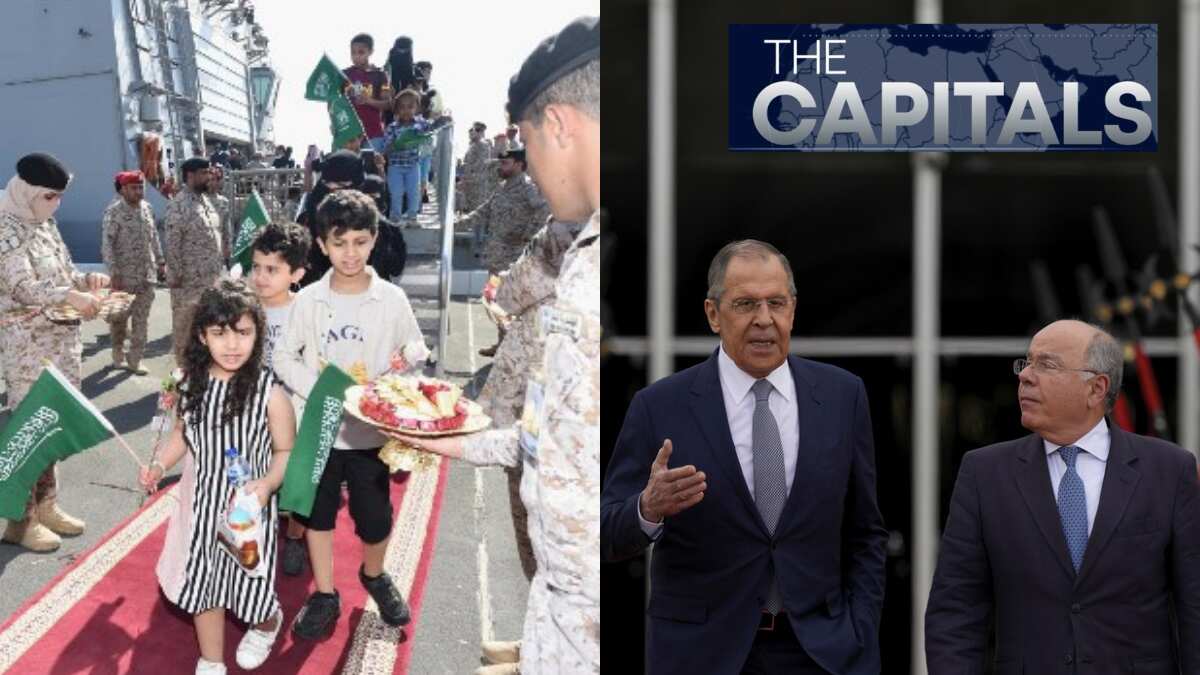
The Capitals (April 17-April 23, 2023)
Hello and Welcome. This is The Capitals. Your weekly round-up of some of the biggest stories from the corridors of power all over the world.
This week, Riyadh’s successful efforts towards the evacuation of foreign nationals from conflict-hit Sudan became a crucial moment of geopolitical respite in at least 12 capitals. The Russian foreign minister Sergei Lavrov tried to shore up support for Moscow’s offensive against Ukraine with his visits to four Latin American capitals.
In New Delhi, India tried to leverage its legacy as birthplace of Buddhism as country organised the maiden Global Buddhist Summit.

Here’s what all happened in the capitals this week:
Khartoum, Sudan

&imwidth=180&imheight=135&format=webp&quality=medium)
Poland: 19-year-old stabs several at Polish vocational school
&imwidth=180&imheight=135&format=webp&quality=medium)
'Baseless and misconceived': India issues statement after Elon Musk's 'oligarchs' claim over Starlink delay
&imwidth=180&imheight=135&format=webp&quality=medium)
‘Team first and team ahead’: India coach Gambhir pens heartfelt wish for chief selector Ajit Agarkar
&imwidth=180&imheight=135&format=webp&quality=medium)
Trump's naked 23-karat gold statue unveiled near European Parliament
&imwidth=180&imheight=135&format=webp&quality=medium)
Nana Patekar: Remembering a legend of the Indian cinema
&imwidth=180&imheight=135&format=webp&quality=medium)
Thai Actors Fourth Nattawat, Gemini Norawit face racism accusations from Indian fans over viral Bollywood act
&imwidth=180&imheight=135&format=webp&quality=medium)
Captain Smit Machchhar on feet again, walks 10 steps as recovery continues after Flydubai flight attack
&imwidth=180&imheight=135&format=webp&quality=medium)
'They came in, they hit us': New videos show Iranian attacks on US Camp Buehring in Kuwait | Watch
&imwidth=180&imheight=135&format=webp&quality=medium)
Ronaldo sends 'a hug' after Messi says he misses 'wearing the blue and white'
&imwidth=180&imheight=135&format=webp&quality=medium)
Trump distances himself from senior political advisers over work for pro-Russian government
&imwidth=180&imheight=135&format=webp&quality=medium)
Narendra Modi Stadium bomb threat declared hoax; India & Australia U19 squads safe
&imwidth=180&imheight=135&format=webp&quality=medium)
US midterms 2026: Why the Latino vote could shape control of Congress
&imwidth=180&imheight=135&format=webp&quality=medium)
BTS agency HYBE announces first-ever Weverse Con Festival in India
&imwidth=180&imheight=135&format=webp&quality=medium)
US Midterms 2026: Barack Obama hits campaign trail to boost Democratic candidates
&imwidth=180&imheight=135&format=webp&quality=medium)
Shia LaBeouf and Mia Goth head for divorce after nearly 10 years
&imwidth=180&imheight=135&format=webp&quality=medium)
Nana Patekar's philanthropic legacy: His work for farmers and rural communities
&imwidth=180&imheight=135&format=webp&quality=medium)
Nicolas Maduro, wife likely to face new charges over alleged torture of US citizens: Report
&imwidth=180&imheight=135&format=webp&quality=medium)
Texas man executed by lethal injection; first US execution since botched Christa Pike execution
&imwidth=180&imheight=135&format=webp&quality=medium)
Christa Pike wakes after failed execution, asks 'Where am I and who are you?'
&imwidth=180&imheight=135&format=webp&quality=medium)
Christa Pike 'angry' and 'confused' after failed execution; judge orders to preserve evidence
&imwidth=180&imheight=135&format=webp&quality=medium)
Nigerian President Bola Ahmed Tinubu hails Modi’s 25-year leadership milestone, calls for deeper Nigeria-India strategic ties
&im=FitAndFill=(700,400)&imwidth=180&imheight=135&format=webp&quality=medium)
US midterms 2026: 10 leaders and candidates to watch in the battle for Congress
&imwidth=180&imheight=135&format=webp&quality=medium)
Nana Patekar's #MeToo controversy: From Tanushree Dutta’s allegations to court ruling
&imwidth=180&imheight=135&format=webp&quality=medium)
Veteran actor Nana Patekar dies at 75 after suffering cardiac arrest
&imwidth=180&imheight=135&format=webp&quality=medium)
Musk alleges ‘oligarchs’ blocking Starlink in India, here is what we know so far
&imwidth=180&imheight=135&format=webp&quality=medium)
Lightning strikes IndiGo Patna-Lucknow flight at 17,000 feet, damages nose; all 110 safe
&imwidth=180&imheight=135&format=webp&quality=medium)
Mall of America attack: FBI arrests man over alleged ISIS-inspired mass shooting plot with AK-47 and 200 rounds
&imwidth=180&imheight=135&format=webp&quality=medium)
France holds talks with Taliban government amid diplomatic outreach
&imwidth=180&imheight=135&format=webp&quality=medium)
IndiGo flight struck by lightning at 17,000 feet, nose of Patna-Lucknow flight damaged
&imwidth=180&imheight=135&format=webp&quality=medium)
US readying to strike Iran? Report suggests Trump preparing to put on show of strength ahead of US midterms
&im=FitAndFill=(700,400)&imwidth=180&imheight=135&format=webp&quality=medium)
World’s top vehicle producers: Top 10 countries making the most cars. Check where India stands
&imwidth=180&imheight=135&format=webp&quality=medium)
Trump to honour Elon Musk, Sergey Brin and Jensen Huang with top science honour at White House. Check the full list here
&imwidth=180&imheight=135&format=webp&quality=medium)
'We don't think so': Trump says Russian plague lab worker's death not linked to bio-weapon
&imwidth=180&imheight=135&format=webp&quality=medium)
Sri Lankan Tamil worker gets death sentence in Saudi Arabia over blasphemy, calls for pardon intensify
&imwidth=180&imheight=135&format=webp&quality=medium)
France protests: How a Gen Z school movement turned into a political war | The Verdict
Members of the armed forces passing out chocolates and flowers to Saudi citizens and other nationals upon their arrival in Jeddah, following their rescue from Sudan | AFP
Riyadh’s naval operations led the first successful evacuation of foreign nationals from the conflict-hit Sudan, where since nearly two weeks, the battle for control over the country between its army and the paramilitary Rapid Support Forces (RSF) has left hundreds dead and thousands wounded.
The main airport in the Sudanese capital Khartoum continues to be the site of heavy fighting, and that has left only one route left for the evacuation: the sea route.
Riyadh carried out the evacuation from Port Sudan on the Red Sea, 850 km east of Khartoum. It announced the “safe arrival” of 91 Saudi citizens and around 66 nationals from 12 countries: Kuwait, Qatar, the United Arab Emirates, Egypt, Tunisia, India, Pakistan, Bulgaria, the Philipines, Canada and Burkina Faso.
The United States could extract fewer than 100 people. Several thousand US citizens including dual nationals are stranded in the conflict-ridden country. France, Britain, Turkey, European Union, Jordan, Iraq, Lebanon, Libya, China, Japan, South Korea and Indonesia continue to be on standby to extract their citizens at the earliest.
Havana (Cuba), Caracas (Venezuela), Brasilia (Brazil), Managua (Nicaragua)

Russian foreign minister Sergey Lavrov, left, talks with Brazilian foreign minister Mauro Vieira in Brasilia, Brazil, on April 17, 2023. | AP Photo
Russian foreign minister Sergei Lavrov this week concluded his five-day trip to the countries in Latin America, most of whom were perceived to be the allies of earstwhile Soviet Union during cold war. While the host capitals called for a peaceful political settlement to the Ukraine crisis, Lavrov repeatedly emphasised Russian opposition to “foreign interference in national affairs and unilateral sanctions”.
Rio ended up as the most significant of all geopolitical pitstops that Lavrov took in Latin America this week. In Rio, Russia managed to extract a crucial assertion against American support to the Ukrainian war-effort.
President Luiz Inacio Lula da Silva said the United States and European allies should stop supplying arms to Ukraine, arguing that they were prolonging the war. "If you are not making peace, you are contributing to war," Lula said.
London, United Kingdom

Former UK Deputy Prime Minister, Lord Chancellor and Secretary of State for Justice Dominic Raab was forced to resign from Prime Minister Rishi Sunak's cabinet this week | Reuters
London’s Downing Street had a politically significant moment with a yet another scandelous exit. The deputy Prime Minister Dominic Raab resigned from Prime Minister Rishi Sunak’s cabinet soon after an inquiry revealed that Raab bullied civil servants at multiple ministries in recent past. Raab has been replaced by Oliver Dowden as the UK deputy prime minister. Raab’s exit comes just weeks before local pay will test Rishi Sunak’s political leadership as a Conservative Party headman in Britain.
New Delhi, India

Delegates at Global Buddhist Summit in New Delhi | @sidhant/Twitter | WION
India hosted first Global Buddhist Summit in New Delhi that saw delegates from about 30 countries participating in the event, including Dalai Lama, the Tibetan spiritual leader living in-exile in India since 1959. The Tibetan leader spoke of “compassion, wisdom and meditation” during the event. India intends to leverage its legacy as the birthplace of Buddhism by amplying its calls to promote peace amid raging conflicts worldwide.
Lima, Peru

Peru's former President Alejandro Toledo walks with others after his arrival at the airport following his extradition to Peru, in Callao, Peru | Reuters
Peru’s former President Alejandro Toledo arrived in Lima in what his detractors called “to face the law”. Toledo, who was Peru’s president from 2001 to 2006, surrendered to the US authorities on Friday, ending a yearslong legal battle against his extradition which started in 2019 when he was first arrested in California.
Peru’s former president will serve 18 months of preventative detention while an investigation will probe his alleged role in a bribery scandal. Toledo is accused of taking at least $20 million in bribes and kickbacks from a Brazilian construction company that has previously admitted to have bribed officials to win contracts throughout Latin America.
Tunis, Tunisia

Rached Ghannouchi | Reuters image
The first bud of Arab Spring, which unleashed a bloom of democratic transitions in West Asia and parts of Africa, continues its struggle towards a democratic blossom.
This week, country’s top opposition figure Rached Ghannouchi was arrested, on charges of incitement against state authorities led by President Kaid Saied.
The 81-year-old leader’s arrest marks a week of dramatic developments in the capital Tunis which saw nearly 100 policemenraiding the house of Ennahdha party leader while he was reportedly breaking his Ramadan fast. Hours later, the headquarters of Ghannouchi’s party, ‘Ennahdha’, a self-styled “Muslim democrat” party, were closed.
The arrest of Ghannouchi has drawn global condemnation, with the United States saying that the rise in arrests of Tunis opposition figures ‘represent a troubling escalation by the Tunisian government against perceived opponents’.
That's all from The Capitals this week. See you next weekend.
WATCH WION LIVE HERE
You can now write for wionews.com and be a part of the community. Share your stories and opinions with us here.