The Capitals: New Delhi's bid to truly own its books of law

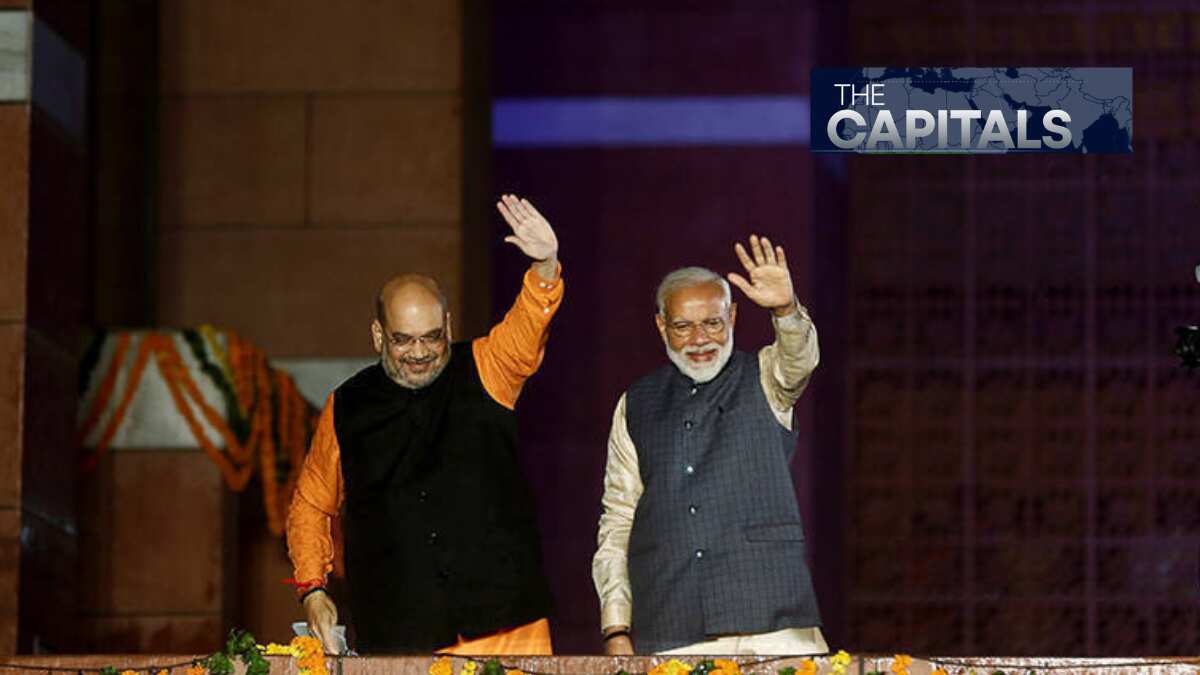
The Capitals (August 7-August 13, 2023)
Hello and Welcome. This is The Capitals. Your weekly recap of some of the biggest stories from capitals all over the world.
Within and beyond the corridors of power in New Delhi, the capital of the world's largest democracy, often, the dishonest characterisation of an individual has a number: 420.
The number 420 is a Section that specifies criminal penalties for acts of cheating in the Indian Penal Code, the official criminal code of the world's largest democracy, created by the British imperialists in 1860.

Section 420 of the Indian Penal Code could become Section 316 of proposed Bharatiya Nyaya Sanhita (BNS), the new lawbook that could come to define the criminal code in the world's largest democracy.
Section 420; 355 other provisions as well as the Criminal Procedure Code and Indian Evidence Act are set to be a matter of past.
The objective of what could soon be India's erstwhile justice system codes, was to "punish, not deliver justice", Amit Shah, the Minister for Home Affairs in Prime Minister Narendra Modi's cabinet said while introducing the three bills in parliament that will replace the IPC, CrPC and the Evidence Act.
&im=FitAndFill=(700,400)&imwidth=180&imheight=135&format=webp&quality=medium)
Navratri 2026: 9 days, 9 forms of Goddess Durga and 9 colours- Check the complete list
&imwidth=180&imheight=135&format=webp&quality=medium)
Bigg Boss 20: Isha Rikhi evicted after three weeks in Salman Khan’s show
&imwidth=180&imheight=135&format=webp&quality=medium)
Russian woman and Bihar boy's love story goes viral after she reaches India to marry him
&imwidth=180&imheight=135&format=webp&quality=medium)
Arijit Singh 9-city India stadium tour to start from January: Check venue and ticket prices
&imwidth=180&imheight=135&format=webp&quality=medium)
‘Hernia, aneurysm, injuries’: Salman Khan reveals health struggles behind his changing physique on Koffee With Karan 9
&imwidth=180&imheight=135&format=webp&quality=medium)
F1 set to return to Africa for first time since 1993
&imwidth=180&imheight=135&format=webp&quality=medium)
'Don't ever mess with nature!': Trump’s tiger attack post triggers social media backlash as victim's family issues heartbreaking tribute
&imwidth=180&imheight=135&format=webp&quality=medium)
Trump's $100,000 H-1B fee: Why neither Republicans nor Democrats want to make it a 2026 US Midterm issue
&im=FitAndFill=(700,400)&imwidth=180&imheight=135&format=webp&quality=medium)
Which jobs are safest from humanoid robots?
&imwidth=180&imheight=135&format=webp&quality=medium)
‘Rise up, young patriots!’: American singer Mary Millben says US donors funding CJP, backs Modi govt
&imwidth=180&imheight=135&format=webp&quality=medium)
Nobel Peace Prize winner Navi Pillay calls on US to 'get back to' being defender of human rights
&imwidth=180&imheight=135&format=webp&quality=medium)
Iranian woman, 23, handed death sentence for ‘blasphemy’ in social media post; appeals for help
&imwidth=180&imheight=135&format=webp&quality=medium)
'Turn approver, resign, we'll forgive you': Rahul Gandhi claims receiving messages from CEC Gyanesh Kumar
&imwidth=180&imheight=135&format=webp&quality=medium)
Somaliland celebrates after Trump calls it 'a totally different country', raise hopes of US recognition
&imwidth=180&imheight=135&format=webp&quality=medium)
Afghan FM Muttaqi to CdA Yatin Patel: We attach importance to relations with India
&imwidth=180&imheight=135&format=webp&quality=medium)
'FWD Supreme' to use AI for flight and threat identification
&imwidth=180&imheight=135&format=webp&quality=medium)
‘My president, I mean my husband’: Trump's new press secretary Katie Zacharia's first briefing goes off the rails in 14 minutes
&imwidth=180&imheight=135&format=webp&quality=medium)
Mars is not for man: Human heart is too weak to survive the trip, study shows
&imwidth=180&imheight=135&format=webp&quality=medium)
‘600,000 people without electricity’: Zelensky calls for ‘strong’ US sanctions on Russia, accuses Moscow of violating Trump’s energy ceasefire
&imwidth=180&imheight=135&format=webp&quality=medium)
Sheikh Hasina warns of 'deep sense of insecurity' among Bangladesh's minorities in Durga Puja message
&imwidth=180&imheight=135&format=webp&quality=medium)
FBI refutes media report claiming Kash Patel is in Russia for talks, says he is in Virginia
&imwidth=180&imheight=135&format=webp&quality=medium)
US inflation hits 3.7% as rising fuel prices pose challenge for Trump ahead of midterms
&imwidth=180&imheight=135&format=webp&quality=medium)
IND vs WI 4th T20I: Shai Hope hundred and Keemo Paul's five-for level series for West Indies
&imwidth=180&imheight=135&format=webp&quality=medium)
Girl 'dead' for 8 hours wakes up at her own funeral, dad insists she wasn't breathing
&imwidth=180&imheight=135&format=webp&quality=medium)
'Ouch!!! That must hurt': Kangana Ranaut hails Kamal Haasan's sharp reply to Elon Musk over Starlink row
&imwidth=180&imheight=135&format=webp&quality=medium)
Three Indians killed in suspected arson attack in Germany, Romanian resident arrested
&imwidth=180&imheight=135&format=webp&quality=medium)
'Totally unacceptable': MEA slams attacks on Saudi civilian infrastructure after Indian national's death
&im=FitAndFill=(700,400)&imwidth=180&imheight=135&format=webp&quality=medium)
New OTT releases this week (October 12-18, 2026): Sacrifice, Koffee with Karan S9, Roadies Rebirth- 6 titles coming on Netflix, JioHotstar and more
&imwidth=180&imheight=135&format=webp&quality=medium)
Did the US withhold missile warnings? Ukraine questions Washington's 'bad weather' explanation after Russian strikes kill six, cut power to 600,000
&imwidth=180&imheight=135&format=webp&quality=medium)
US Singer Mary Millben alleges foreign funding for CJP, warns against anti-Modi forces: All you need to know
&imwidth=180&imheight=135&format=webp&quality=medium)
Global energy crisis hits Indian economy
&imwidth=180&imheight=135&format=webp&quality=medium)
Durga Puja 2026: Power banks, water bottles and more, a foolproof guide to pandal hopping
&imwidth=180&imheight=135&format=webp&quality=medium)
Netflix layoffs: Streaming giant to cut 1,000 jobs globally amid slow growth and declining user engagement
&imwidth=180&imheight=135&format=webp&quality=medium)
Zelensky feels betrayed by Trump, urges Musk to restore Starlink in Ukraine; Musk responds
&imwidth=180&imheight=135&format=webp&quality=medium)
'Girls are uncomfortable': Salman Khan calls out paparazzi for bad angles, speaks on PR on Koffee With Karan
&imwidth=180&imheight=135&format=webp&quality=medium)
After flydubai co-pilot attack, Air France bans Pakistani, Muslim-majority crew on Israel flights
My colleague C. Krishnasai details in this explainer what all will change once these proposed changes are enacted as laws by the Indian parliament.
Read more, in The Capitals this week.
Quito, Ecuador
In Ecuador, sandwiched between Colombia and Peru on South American continent, presidential candidate Fernando Villavicencio was slayed by an assailant in broad daylight ahead of elections on August 20.
The killing of Villavicencio, a vocal critic of corruption and drug crime that have beset Ecuador, reflected a crisis-riddensecurity situation in much of South America.
Villavicencio had claimed to have received multiple death threats from Mexico-basedSinaloa Cartel, an organised crime group that operates in Ecuador.
Washington DC, United States of America
From Washington this week came a remarkable assertion of security guarantee to Philippines, if the islands located more than 4,000 miles away across the Pacific is faced by an armed aggression from Beijing.
While all eyes have been on Taipei for its central role in the US-China confrontation forsemiconductor dominance, Manila, albeit unthinkably, could very well emerge as Beijing-Washington flashpoint in the Indo-Pacific.
The US State Department condemned China's aggression against the Philippines in what Beijing callsSouth China Sea but Manila asserts as West Philippine Sea.
"The United States reaffirms an armed attack on Philippine public vessels, aircraft, and armed forces—including those of its Coast Guard in the South China Sea—would invoke US mutual defence commitments under Article IV of the 1951 US Philippines Mutual Defense Treaty," the US statement warned China.
Wellington, New Zealand
For decades, Wellington was known for its "independent foreign policy", a foreign policy preposition popularised by New Delhi during the decades after cessation of Cold War. This week, a significant shift was marked in Wellington's defence posturing.
The countryreleased a roadmap for the future of defence and national security this week.
The new doctrines mark a major shift in New Zealand's foreign policy and suggest the government's intent to join AUKUS, an Anglophone tripartite alliance between Australia, the US and the UK.
New Zealand is going to embrace "Pillar Two" of the AUKUS pact: "AUKUS Pillar Two may present an opportunity for New Zealand to cooperate with close security partners on emerging technologies," the government document reads.
That's all for The Capitals this week. See you next weekend.
WATCH WION LIVE HERE
You can now write for wionews.com and be a part of the community. Share your stories and opinions with us here.