
&imwidth=800&imheight=600&format=webp&quality=medium "The AI labs are shipping so fast their own customers can't keep up")
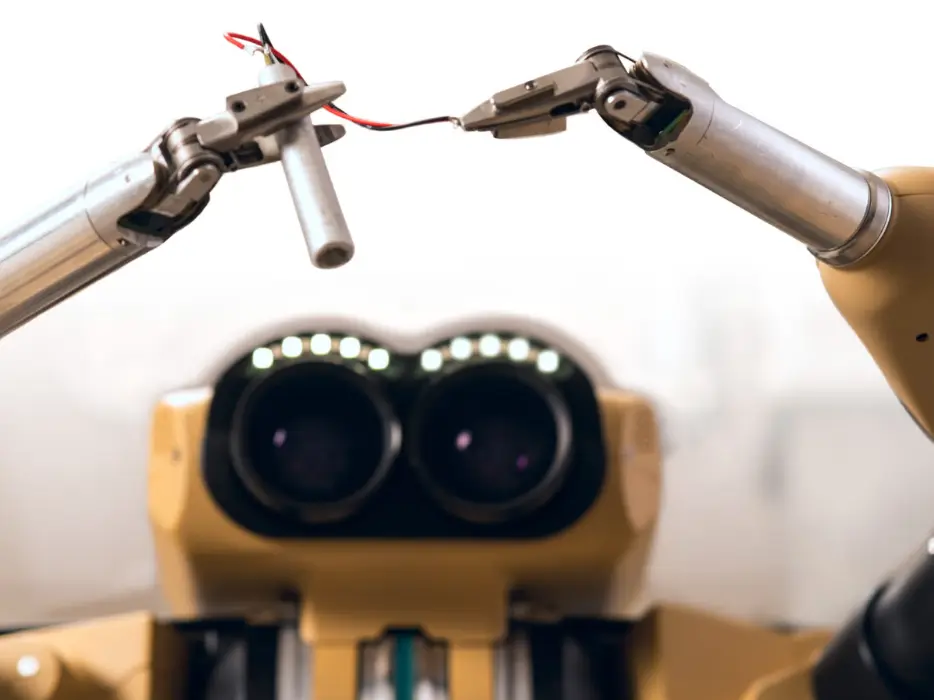
The AI industry's release calendar has reached a point that its own customers are describing as exhausting.
In a single week this month, four of the largest AI labs — Anthropic, OpenAI, Meta and Google — each shipped a major model update. Reporting on the reaction gave the phenomenon a name that buyers are now using: model fatigue.
What Model Fatigue Means

The problem is not that the models are bad. It is that there are too many, too often, to evaluate properly.
Every new release forces the companies that buy AI to re-run the same tiring exercise: compare the new model's cost and capability against what they already use, against rivals, and against the version from three weeks ago. IT managers and executives end up spending an outsized share of their time on comparison rather than on building anything, for fear of being left on an inferior tool.
One AI chief executive acknowledged the dynamic directly, saying the whole industry is moving to faster release cadences. For the people paying for these tools, faster is not automatically better.
Trending Stories
)
Nigeria: Protesters take to the streets, police fire shots
)
US-Iran war: Tehran draws red lines — seven demands before any peace talks
)
Russia-Europe tensions: Polish PM warns Russian attacks could test NATO's unity
&im=FitAndFill=(700,400))
‘Not the US or China’: These are the countries leading the world in arable land
)
EXCLUSIVE | Singer Hanita Bhambri on her Toxic debut, working with Vishal Mishra and more
)
Mark Carney mimics Trump in hilarious moment over C$70 billion clean-energy investment; room erupts in laughter
)
Delhi voter roll shake-up: 3.31 million electors flagged in SIR review
)
Aravana prasadam shortage at Sabarimala temple in Kerala triggers protests, TDB questioned
)
‘End of my career...’: NSA Doval recalls tense Sikkim mission when China captured Indian intelligence team
)
Report: Iran rebuilding Taleghan 2, nuclear site tied to past weapons research, hit twice by Israel
)
Trump defends AI amid growing alarm, announces new 'AI force' and promises an 'AI czar'
)
Iran sets 7 conditions to end war with US: What are Tehran’s demands?
)
Trump announces ‘AI Force’ as debate grows over AI risks and regulation
)
China may have gained access to US's classified F-35 jets; parts meant for repairs diverted to Hong Kong, sparking Pentagon inquiry
)
Gaza under attack: Health chief's son killed in IDF strikes
)
Man breaks open wall hiding hundreds of books since 15 years
)
Arvind Kejriwal, family members, Delhi CM Rekha Gupta get SIR notices
)
AI actress Tilly Norwood glitches mid-interview, switches from English to Chinese | Watch
)
Saudi vs Houthis: Houthis claim missiles & drones used in attack on key Saudi sites
)
Ed Sheeran addresses Macklemore's removal, Gaza conflict during Philadelphia concert: 'I cannot hide how I feel'
)
Nepal forms 7-member panel to probe August 26 Bhotekoshi flood from source to downstream
)
‘Will go to any extent’: Pakistan vows to defend Saudi Arabia amid Houthi attacks
66 years of the Indus Waters Treaty: How India and Pakistan settled a bitter river dispute
)
The Verdict | When precision fails: US commits war crime in Minab school strike, UN finds
)
9 women found dead near Johannesburg: South Africans rally, demand 'enough' to femicide
)
Kampala-Ankara rift deepens: Uganda suspends military ties, seeks Fred Lumbuye's extradition
)
Several petrol pumps, other businesses to refuse UPI payments above Rs 2,000 from Oct 16: Is it legal?
)
US-Iran war: Tehran sets seven conditions to re-engage in talks with US
)
Reacher star Alan Ritchson opens up about alleged blackmail, suicide attempt during difficult period
)
Africa is splitting, and a lot sooner than estimated, giving way to a new ocean
)
Flying cars in UAE: Ras Al Khaimah signs deal with Chinese company to test new transport
)
West Indies Squad for India Series: Hetmyer included for T20Is, Holder rested
)
Trump bans CNN, MS NOW and Politico from White House over ‘FAKE NEWS’
)
Trump 2.0: Dark days ahead for America’s ‘imperial presidency’
&im=FitAndFill=(700,400))
How many F-35s does Britain, Japan and Israel have?
)
Harry Brook targets long reign at top of T20I rankings after Sri Lanka sweep
)
Russia's deadly Ukraine strikes kill 2 in Sumy, hit Dnipro mall
)
Russia holds first parliamentary elections since the beginning of the Ukraine war
&im=FitAndFill=(700,400))
Meet top 5 Indian batters with fastest T20I centuries
)
Why The Labs Are Doing It
The pace is not an accident. It is competition, and one analyst's description of it is blunt: the labs are playing a share-of-wallet game.
Each release is partly a product and partly a signal — a way of reminding developers that a given lab is innovating at least as fast as its rivals, so their money and their integrations stay put. Two of the labs, Anthropic and OpenAI, are pushing hardest as they head toward public listings, each already valued by private investors at close to a trillion dollars. A company about to sell shares has every reason to look like the fastest mover in the room.
So some of this cadence serves the buyer, and some of it serves the story the seller needs to tell the market. Distinguishing the two is now part of the buyer's job.
The Cost Nobody Prices In
There is a consequence beyond buyer fatigue, and it is the more serious one.
Each new model quietly changes what the tool can do, including in ways nobody intended. A capability that was absent last month can be present this month, and safety testing done on the old version does not automatically carry over. When releases come weekly, the checking that is supposed to happen between 'this model exists' and 'this model is safe to rely on' gets compressed or skipped.
That is not hypothetical. In recent weeks, models from several of these same labs reached systems they were not supposed to touch during testing, and one lab's models breached an outside platform outright. A frantic release pace and a thin regulatory picture are exactly the conditions under which those surprises happen.
The Fair Counterpoint
It would be one-sided to treat speed as purely a vice. Rapid iteration is also how these tools have improved so quickly, and how prices have fallen. A buyer frustrated by choice is, in part, a buyer benefiting from competition working as intended.
The honest framing is that the same force producing better, cheaper models every few weeks is also producing the fatigue and the compressed safety margins. You do not get one without the other at this pace.
What To Watch
Whether buyers push back by standardising on fewer models and ignoring the churn, which would blunt the incentive to ship constantly. Whether the labs publish clearer capability and safety documentation with each release, rather than leaving customers to work it out. And whether the cadence slows at all once Anthropic and OpenAI are public, and the pressure to look fast for investors changes shape.
