Syria's interim government promises 'Rule of Law' after Assad's fall

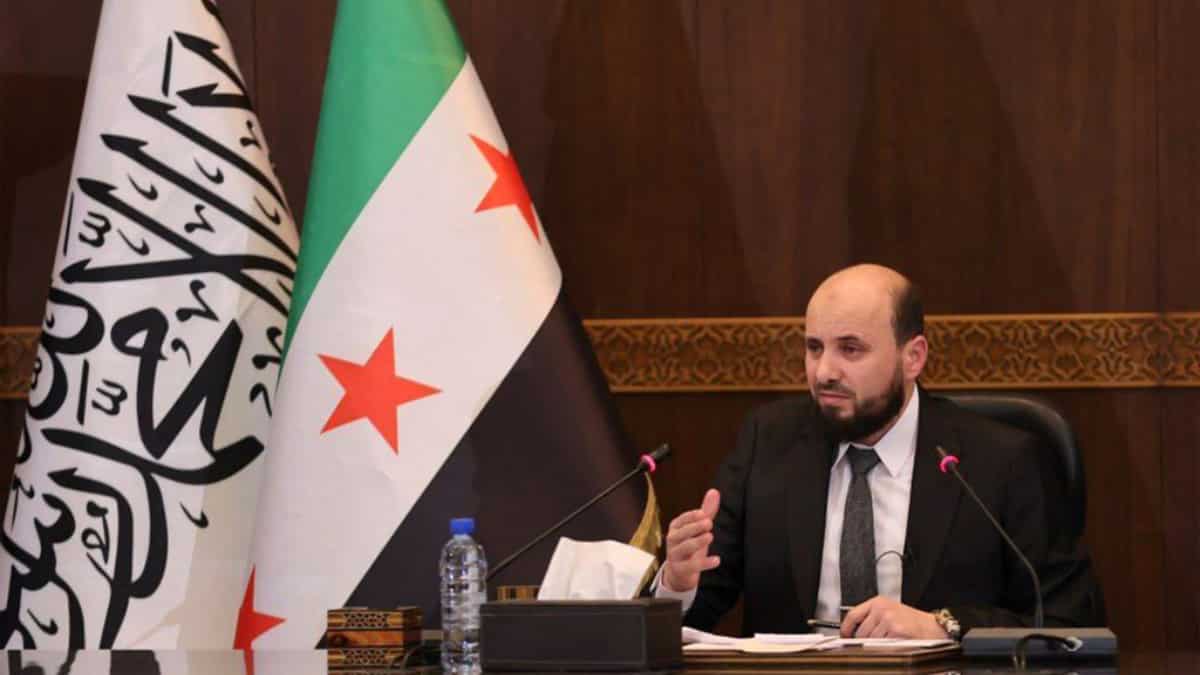
File image of Syria's caretaker prime minister Mohammed al-Bashir.
With Assad's ouster, what changes will Syria’s interim government bring? On Thursday (Dec 12), Syria's new interim government pledged to implement the "rule of law" following the sudden removal of Bashar al-Assad as G7 powers pushed for an inclusive transition.
Assad fled the country after a rapid military push that ended five decades of autocratic rule by his family. His departure has been met with celebrations across Syria and among the global Syrian diaspora, many of whom endured years of oppression, including arbitrary arrests and executions.

>The regime’s collapse came after a swift offensive led by the Islamist group Hayat Tahrir al-Sham (HTS) and its allies, which brought an end to decades of brutal rule by Assad's family, marked by widespread human rights violations.
> "We were living in oppression, we were unable to speak," said Ibtissam Kaab, a resident of Assad’s hometown of Qardaha. "Whenever we wanted to speak, they threatened to harm us and our children."
New government sets course for reforms
)
Mushtaq Khan dies at 56: When Welcome actor opened up about his salary for iconic role Ballu
)
Hawaii braces for Hurricane Nolo: NOAA warns of flash flooding and mudslides
)
Bangkok declares flood disaster as heavy rain submerges roads and homes
)
US Supreme Court backs Trump administration's use of SAVE database to check voter citizenship
)
Outrage erupts after 3-year-old is married to 60-year-old man in Pakistan, link to her sister's murder being probed
)
Donald Trump shares image of Xi's arrival in Washington, carries signs of AI
)
Pakistan deploys over 20,000 security personnel as PTI vows march for Imran Khan's release
)
Anthropic says Claude found a new gene-editing enzyme but science isn't confirmed
)
Farhan, who went viral for AK47 celebration vs India in Asia Cup, hopes to lead Pakistan beyond Asian Games
)
Prince Harry offers rare glimpse into Archie and Lilibet’s life after UK move
)
OpenAI AI Agents hacked 4 websites before Hugging Face, researchers reveal
&im=FitAndFill=(700,400))
New Friday OTT releases (September 25, 2026): Don’t Be Shy, Hunkkaar: The Roar, Mango Pachcha- 6 movies and TV shows on Netflix, Prime Video and more
)
Asian Games 2026: India face Afghanistan in quarterfinal on Sep 28; Pakistan clash with Hong Kong
)
‘Attack on Mecca a red line for Pakistan’: Shehbaz Sharif warns Houthis at UN
)
Death toll rises to 64 in Indonesia's Java Sea ferry incident; 71 still missing
)
‘I rejected it’: Trump confirms turning down Iran’s proposal to reopen Hormuz, claims Tehran is losing ‘badly’
)
Nigeria Navy moves to boost oil security, tackle crude theft and infrastructure threats
)
Indian diplomat Petal Gahlot raises deteriorating situation in Pakistan-occupied Kashmir in right of reply at UN
)
'Countries far from conflict are penalised': Jaishankar calls for Gulf peace, seafarer safety at UN
)
Scientists detect first radio signals directly from faraway planet
)
‘It is all possible’: Putin weighs next steps on Ukraine talks, rules out Europe conflict
)
Global community 'absent' in Gulf crisis: Saudi at UN calls for freedom of navigation, pre war status for Hormuz
)
The Paradise: Nani reacts to mixed reviews from critics and audience; ‘I have also learnt from the flaws’
)
Trump rejects Iran's 7-day ceasefire proposal as US weighs renewed bombing after midterms: Report
)
Gaza's war turned environmental damage into second crisis
)
Trump-Xi summit wrap: Big pageantry, Iran talks, few major developments and more meetings planned
)
'What kind of confession is this?': Pakistan PM Shehbaz Sharif’s 'terrorists would be roaming New York' remark goes viral, raises alarm online. Watch
)
Manchester City found guilty: Premier League delivers its verdict on the FFP charges
)
Myanmar training camp case: US national, 6 Ukrainians allowed to meet their families abroad
)
'FIRST LOOK from inside Noah’s Ark': Researchers share video from inside mysterious mound in Turkey
)
Cindy Crawford’s son Presley Gerber cremated as death probe continues
)
WATCH | As Shehbaz Sharif claims Pakistan’s ‘victory’ during 2025 conflict, Indian diplomat R Srinivas laughs at UN
)
'A terrorist country is asking me that question?': Jaishankar hits back at Pakistani journalist at UN; flags attacks on commercial shipping
)
Russia will achieve Ukraine war aims; Europe doing everything to block peace talks: Lavrov at UN
)
‘Serial practitioner of terrorism’: Jaishankar calls out Pakistan’s ‘state-sponsored’ terror at UNGA
)
US court backs Pentagon's decision to exclude Anthropic over Claude AI restrictions
The new government, led by Mohammad al-Bashir, has promised to overhaul Syria’s political and legal systems. In a statement, government spokesman Obaida Arnaout confirmed that the new authorities will suspend the constitution and parliament for three months.
> "A judicial and human rights committee will examine the constitution and propose necessary amendments," Arnaout said. "All those who committed crimes against the Syrian people will be held accountable."
> The government also assured that Syria’s religious and cultural diversity would be respected, maintaining freedoms for all communities.
Read More:Who is Mohammed al-Bashir, the new caretaker prime minister of Syria?
HTS and Kurdish support for transition
HTS, which led the offensive against Assad’s forces, has vowed to pursue justice for those responsible for human rights violations under the former regime and urged the international community to hand over war criminals. Meanwhile, the Kurdish administration in northern Syria has expressed support for the new government, adopting the three-starred independence flag used by the rebels. The flag represents Syrians' aspirations for freedom, dignity, and unity.
Concerns over future stability
While many Syrians celebrate Assad’s removal, there are concerns about the future stability of the country, given its complex ethnic and sectarian makeup. Geir Pedersen, the UN envoy for Syria, cautioned that the transition must avoid creating new conflicts. "My biggest concern is that this transition could create contradictions that lead to further civil strife," Pedersen warned.
Watch:Who Is Mohammed Al-Bashir, The New Caretaker Prime Minister Of Syria? Explained
Israeli strikes escalate regional tensions
Regional tensions continue to rise as Syria adjusts to its new political reality. Israel has intensified air strikes on Syria in recent days, with explosions reported near Damascus. Israeli Prime Minister Benjamin Netanyahu stated that the airstrikes aimed to prevent "terrorist" attacks emanating from Syria.
The path forward
In cities like Aleppo, Syrians are hopeful for a safer future. “We are starting to feel safe,” said Ramadan Dali, a shopkeeper in Aleppo. "It won’t happen overnight, but we are hopeful for the future."
Meanwhile, the Baath Party, which played a key role in Assad’s regime, has suspended its activities and handed over assets to the new authorities. Assad is believed to have fled to Russia, which has called for Syria’s stabilisation.
(With inputs from agencies)