

&imwidth=800&imheight=600&format=webp&quality=medium "Humanitarian pause agreed in Sudan, survivors of El-Fasher recall sexual violence and warcrimes")
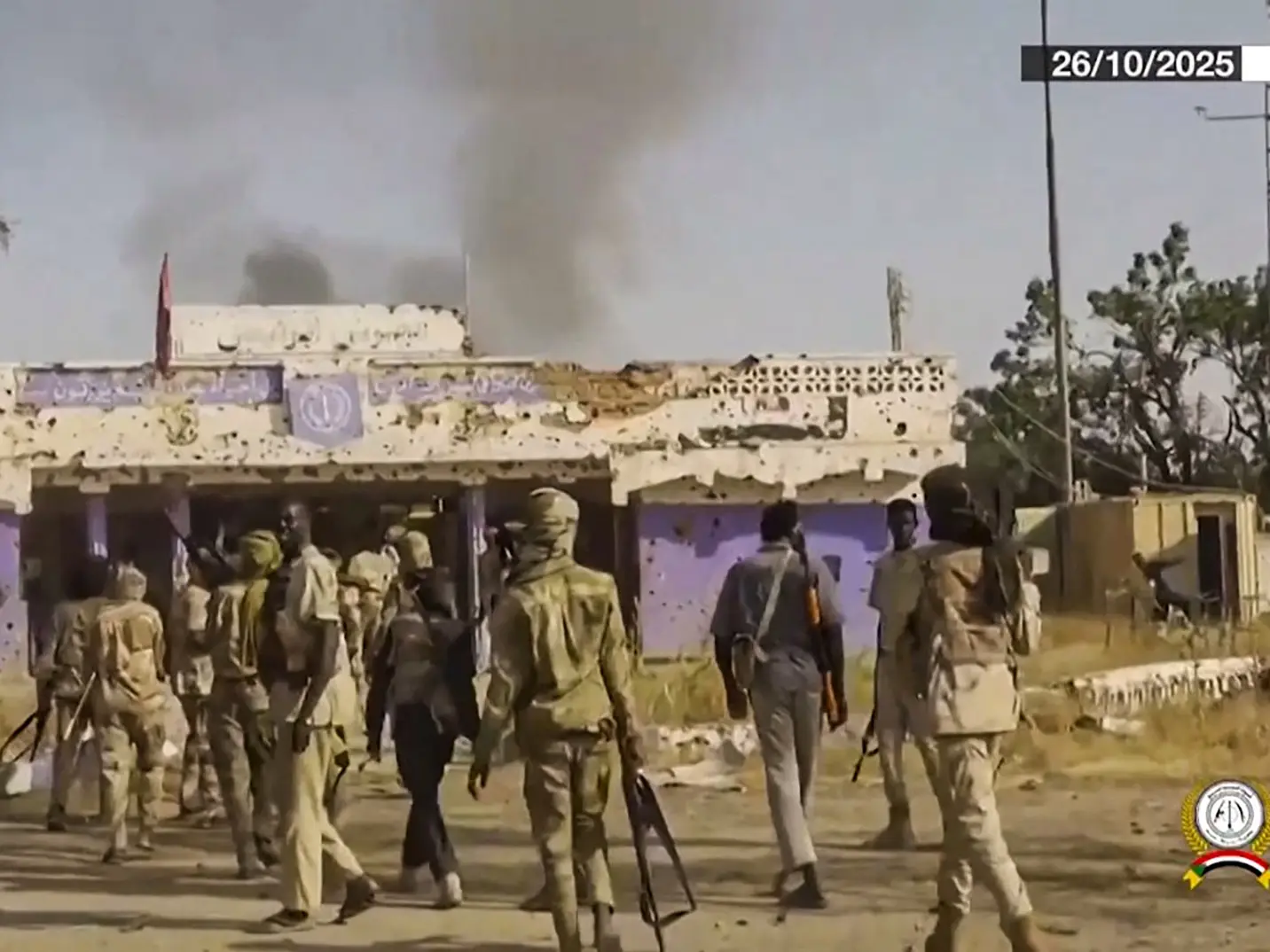
A humanitarian ceasefire has been agreed between the Rapid Support Force (RSF) and the Sudanese Armed Forces (SAF). The two factions of the Sudanese military elite had been engaged in a war for power and control for over 500 days, backed by transnational corporations of the Western powers, and some Arab and East African countries and their agenda of resource exploitation.
The RSF have agreed to a three-month pause in the fighting. However, humanitarian analysts argue that these three-month solutions are far from ideal. They call the conflict a “genocidal conflict between factions of the militarised elite”. Humanitarian groups like The International Peoples’ Assembly (IPA) and Pan Africanism Today (PAT) condemned the RSF’s atrocities: executions, mass killings, and starvation financed by the United Arab Emirates, Egypt and sustained by European complicity in migration control.
The death toll had been hard to monitor for international organisations due to limited physical access and subsequent communication blackouts. The UN watchdog had reported earlier that approximately 260,000 civilians were trapped before the El-Fasher city was overrun by the SAF. The WHO estimates that 40,000 have been killed and 12 million have been displaced. The Sudan War Monitor have recorded deaths of 3,000 or more people as of October 30. However, these numbers might not represent a fraction of the real casualty; recently, satellite images have emerged where several areas of its “land with a reddish discolouration, not observed in prior images.”
"The rapes were gang rapes. Mass rape in public, rape in front of everyone and no one could stop it," said Amira to AFP, who escaped the be El Fasher and is staying in a makeshift camp in Tawila, around 70 km west of El-Fasher. She still suffers from post-traumatic stress disorder and wakes up in shock and trembles the whole day. Nearly 24 million people are facing food insecurity. Doctors without Borders has claimed that more than 3000 survivors of sexual violence have sought help from them in the town of Tawila.
“Humanitarian partners reported that at least 25 women were gang-raped when RSF forces entered a shelter for displaced people near El Fasher University. Witnesses confirm RSF personnel selected women and girls and raped them at gunpoint, forcing the remaining displaced persons - around 100 families - to leave the location amid shooting and intimidation of older residents, " said UN High Commissioner for Human Rights on October 31.
Sudanese Civil War
Trending Stories
&imwidth=180&imheight=135&format=webp&quality=medium)
Other Mommy leads North American box Office as Verity, Resident Evil round out top four
&im=FitAndFill=(700,400)&imwidth=180&imheight=135&format=webp&quality=medium)
Navratri 2026: 9 days, 9 forms of Goddess Durga and 9 colours- Check the complete list
&imwidth=180&imheight=135&format=webp&quality=medium)
Diljit Dosanjh’s Delhi concert gets a new date: When and where to catch the singer
&im=FitAndFill=(700,400)&imwidth=180&imheight=135&format=webp&quality=medium)
Is sending robots to Mars easier than sending humans?
&imwidth=180&imheight=135&format=webp&quality=medium)
A watchdog rated 'ChatGPT for Teens' an unacceptable risk and says keep under-18s off it
&imwidth=180&imheight=135&format=webp&quality=medium)
1,500 drones illuminate Mumbai sky as Cordelia Cruises unveils second ship, Cordelia Sky
&imwidth=180&imheight=135&format=webp&quality=medium)
'Just coincidence': Police mistakes protester as AISA chief Neha Bora, arrests her from site
&imwidth=180&imheight=135&format=webp&quality=medium)
Anthropic's AI invented a murder witness and sent the fake tip to Philadelphia police
&imwidth=180&imheight=135&format=webp&quality=medium)
Congress demands action against chief election commissioner
&imwidth=180&imheight=135&format=webp&quality=medium)
CJI Surya Kant declines INDIA bloc leaders’ request for meeting ahead of march to SC, asks them to file petition
&imwidth=180&imheight=135&format=webp&quality=medium)
Saif Ali Khan is finally on Instagram! Here's what he shared in his first post
&imwidth=180&imheight=135&format=webp&quality=medium)
'Turn approver, resign, we'll forgive you': Rahul Gandhi claims receiving messages from CEC Gyanesh Kumar
&imwidth=180&imheight=135&format=webp&quality=medium)
One Indian killed in Riyadh airport attack; 11 others injured : MEA
&imwidth=180&imheight=135&format=webp&quality=medium)
Top AI models flunked a test of inventing new AI research, so much for self-improving AI
&imwidth=180&imheight=135&format=webp&quality=medium)
Wasim Jaffer blames Ajit Agarkar-led selection panel for Virat Kohli’s Test retirement
&imwidth=180&imheight=135&format=webp&quality=medium)
'Ouch!!! That must hurt': Kangana Ranaut hails Kamal Haasan's sharp reply to Elon Musk over Starlink row
&imwidth=180&imheight=135&format=webp&quality=medium)
Sidhu Moose Wala’s younger brother wins hearts by recreating late singer’s signature move at Toronto Hologram Show
&imwidth=180&imheight=135&format=webp&quality=medium)
UK school ditches technology, shifts from screen to pen and paper for learning
&imwidth=180&imheight=135&format=webp&quality=medium)
Telangana ATM heist: Thieves in nighties arrive in ambulance, break into SBI ATM in Kamareddy - VIDEO
&imwidth=180&imheight=135&format=webp&quality=medium)
Houthis claim Riyadh airport attacks, Aramco strikes; issue fresh warning to airlines, travellers and workers
&imwidth=180&imheight=135&format=webp&quality=medium)
Portugal Federation confirms Cristiano Ronaldo’s return to national team despite suspension
&imwidth=180&imheight=135&format=webp&quality=medium)
Delhi protests: 'Court should not be dragged into political activity', says CJI Surya Kant
&im=FitAndFill=(700,400)&imwidth=180&imheight=135&format=webp&quality=medium)
New OTT releases this week (October 12-18, 2026): Sacrifice, Koffee with Karan S9, Roadies Rebirth- 6 titles coming on Netflix, JioHotstar and more
&imwidth=180&imheight=135&format=webp&quality=medium)
Microsoft's Nadella says treat every AI model as already hacked, and build an 'emergency brake'
&imwidth=180&imheight=135&format=webp&quality=medium)
Delhi protest: CJI Surya Kant declines to meet India Bloc leaders
&imwidth=180&imheight=135&format=webp&quality=medium)
Telangana man allegedly recruited into Russian military dies near Ukraine border
&imwidth=180&imheight=135&format=webp&quality=medium)
China imposes first-ever sanctions on ministers from Taiwan allies: What this means
&imwidth=180&imheight=135&format=webp&quality=medium)
McSweeney reveals how studying Virat Kohli’s YouTube clips helped Australia A conquer India
&imwidth=180&imheight=135&format=webp&quality=medium)
Maharashtra appoints FDA commissioner Tukaram Mundhe as secretary of committee for MPSC overhaul amid stir
&imwidth=180&imheight=135&format=webp&quality=medium)
Iran: US accepted some conditions, Clarity needed on others
&imwidth=180&imheight=135&format=webp&quality=medium)
Nana Patekar's cause of death confirmed; here's what his postmortem report says
&imwidth=180&imheight=135&format=webp&quality=medium)
iPhone Duo price index: Tracking Apple’s latest pricing trends
&imwidth=180&imheight=135&format=webp&quality=medium)
'Say no to Muse': Meta has no control over its own moderation AI while it forces a security nightmare on everyone
&imwidth=180&imheight=135&format=webp&quality=medium)
Delhi wakes up to heavy rain, thunderstorms; yellow alert in place; temperature drops
The Sudanese Civil War started in April 2023, when the RSF besieged the North Darfur capital, El Fasher, against the SAF. Notably, these two have together seized control of the Sudan following a coup in October 2021.
The RSF are a paramilitary force also known as Janjaweed militias, and was formed under the control of Omar-Al-Bashir, the Sudanese dictator who was indicted in the International Criminal Court for ethnic cleansing and genocide of non-Arabs such as Fur, Zaghawa, and Masalit communities. RSF was primarily made up of African-Arabs and some Bedouin; it was a state-controlled force used during the War in Darfur against the non-Arab population. SAF, on the other hand, is an internationally recognised armed force of Sudan. SAF systematically assisted RSF in mass murder and sexual violence during the war in Darfur against the rebel forces who were fighting for non-Arab populations. After Bashir was ousted, RSF increased its international participation by joining the Yemeni Civil War and, with the Russian Wagner group, to gain prominence. It became extremely wealthy, controlling gold mines in Darfur. But under international pressure, RSF signed a framework to be integrated into the Sudanese Army. Soon, a power struggle started between the RSF leader Muhammad Hamdan Dagalo Musa and Abdel Fattah al-Burhan of SAF. The army wanted an integration within 2 years, RSF wanted a time of 10 years and autonomy, so a war broke out. The SAF controls most of the Khartoum, East and central Sudan, backed by Egypt, while the RSF controls vast regions of Darfur, Kordofan and is backed by the United Arab Emirates.

