
&imwidth=800&imheight=600&format=webp&quality=medium "Strait Of Hormuz reopening: These conditions set by Iran could decide what happens next")
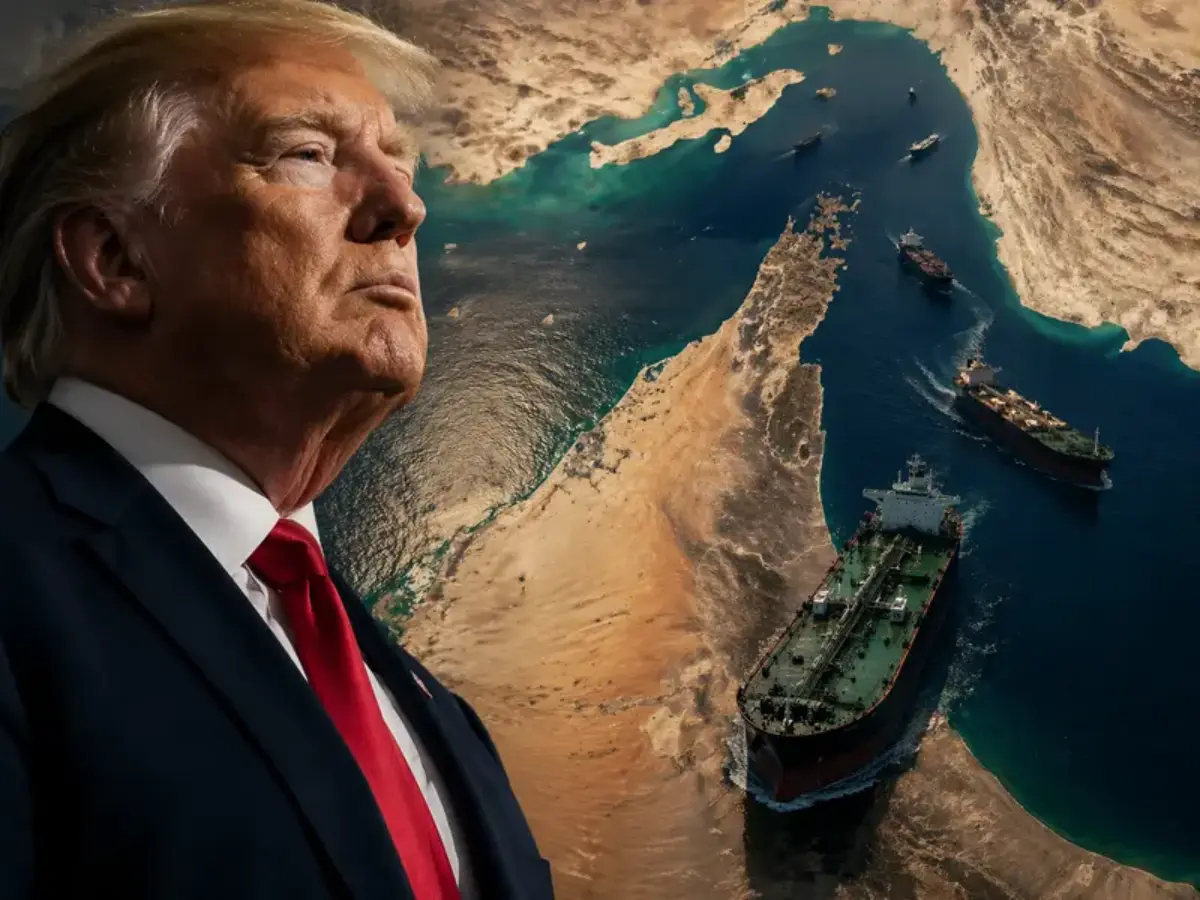
Iran has issued a sweeping list of demands that the United States must meet before the strategically vital Strait of Hormuz can fully reopen to maritime traffic, raising fresh uncertainty over the future of the major global shipping route. Mohammad Bagher Zolghadr, secretary of Iran’s Supreme National Security Council, announced the conditions on Saturday in a statement carried by Iranian state media. His demands include an end to the US naval blockade and sanctions against Iran, the withdrawal of American military forces from the region, compensation for war damages and the release of frozen Iranian assets.
Zolghadr also demanded an end to attacks against Iran’s regional allies and to what Tehran describes as US threats against Iran. The White House did not immediately respond to the demands. Under an earlier cease-fire agreement reached between Iran and the United States in June, sanctions were expected to be fully lifted only after a final agreement on Iran’s nuclear program. US officials have also previously maintained that Iran's frozen assets could be released only if Tehran agreed to give up its highly enriched uranium.
The latest demands come as Iran and Oman continue negotiations over the future management and reopening of the Strait of Hormuz, the crucial waterway separating Iran from Oman and one of the world's most important energy shipping corridors. Iran effectively restricted traffic through the strait after the United States and Israel launched attacks against Iran in February. The disruption has since raised concerns over global oil supplies, shipping costs and energy prices. Zolghadr's statement has complicated expectations that an agreement between Iran and Oman could soon restore normal commercial traffic through the waterway. It also puts additional pressure on US President Donald Trump as Washington weighs how to contain the crisis while limiting the impact on energy prices and American consumers.

Iranian officials had already indicated on Saturday that the reopening of Hormuz was unlikely to happen immediately. Hossein Mohebbi, a spokesman for Iran's Islamic Revolutionary Guards Corps, said reopening the waterway was “not contingent on the Iran-Oman negotiations.” Speaking to Tasnim, an Iranian outlet affiliated with the Guards, Mohebbi said reopening the strait would depend “on the United States fully accepting Iran’s conditions.” He did not provide a complete list of those conditions, but said Washington must not interfere in Iran's negotiations with Oman or other countries.
Iranian Foreign Minister Abbas Araghchi, meanwhile, said Iran and Oman were “very close” to reaching an agreement, according to Tasnim. “However, the reopening of the Strait of Hormuz is contingent on other conditions, including the United States compensating for its violations of the Islamabad Memorandum,” Araghchi was quoted as saying. The Islamabad memorandum refers to the cease-fire arrangement reached between Iran and the United States in June with Pakistani mediation.
The agreement called for the reopening of the Strait of Hormuz and a temporary easing of oil sanctions against Iran. However, its language was sufficiently vague that Washington and Tehran developed different interpretations of the terms. The United States supported a southern shipping route that would allow vessels to skirt Oman's coastline and avoid Iranian waters. Iran objected to the arrangement and warned vessels using the route, with some ships subsequently coming under attack.
Trending Stories
)
Justice eludes Air India 1985 bombing victims as Canada probe goes 'inactive' | Gravitas
)
Trump revives India-Middle East-Europe economic corridor as India emerges central to West Asia’s future: What is it?
)
Erdogan again raises Kashmir issue at UNGA, calls for dialogue under UN Charter
)
Major League Soccer referee sacked for sexist comment about female match referee
)
Trump signs Greenland security deal with Denmark, paving way for two new US military bases
)
IND vs JPN T20I: How an overturned wide became point of difference between India's win and a tie
)
Trump-Xi summit: From trade to Taiwan, what will the US and Chinese presidents discuss in Washington?
)
Cyclone Arnab: Landfall expected before midnight tomorrow as IMD issues orange alerts across six states
)
ICC plans T20I expansion and fewer ODIs in 2027–2031 FTP cycle: Report
)
US-China tech war: Businesses in the front line
)
Gravitas | Boosting NHS productivity could save 20,600 lives in UK annually: Report
)
Nor'easter could batter 13 US states this week. What you should know
)
WION Iconic Tourism Summit: Seychelles envoy says India partnership is important for Seychelles
)
US and China vie for AI dominance as calls grow for regulation | Gravitas
)
Yemen clashes kill 154 people in two days as cornered Saudi battles Houthi offensive | Gravitas
)
China to test supersonic jet that moves at Mach 2, double the speed of sound
)
Bomb scare in New York amid UNGA: Suspicious suitcase found near UN headquarters
)
IND vs JPN, one-off T20I: Japan captain Kendel on pushing India to the brink - ‘It was special’
)
Mikel Arteta verbally agrees to three-year extension with Arsenal after title-winning Premier League season
)
WION Iconic Tourism Summit and Awards 2026: Key voices to discuss India’s tourism future
)
WION Iconic Tourism Summit and Iconic Awards 2026: India's travel economy leaders gather in Delhi
&im=FitAndFill=(700,400))
New OTT releases this week (September 21-27, 2026): Shaque: Trust No One, Hunkkaar, Don’t Be Shy- 5 new titles coming to Netflix, Prime Video and more
)
81st UN General Assembly: Burnham announces UK-US AI defence tie-up
)
Trump calls on nations to quit ‘rogue’ and ‘out-of-control’ International Criminal Court, rips UN
)
Infections transmitted from pregnant woman linked to autism risk
)
'What kind of confession is this?': Pakistan PM Shehbaz Sharif’s 'terrorists would be roaming New York' remark goes viral, raises alarm online. Watch
)
Elephants hide behind trees, stage surprise attack on poachers targeting rhinos in South Africa
)
IIT Bombay professor Suryanarayana Doolla sent on leave amid Sahil Wakode death probe
&im=FitAndFill=(700,400))
National Film Awards 2026: Kartik Aaryan, Mammootty, Yami Gautam, Randeep Hooda and other key winners
)
El Niño 2026 heats up to become strongest in 1,000 years
)
Anne Hathaway to run in supporting race for Nolan's epic
)
Over 4,200 books withdrawn from circulation in J&K colleges, 94% from Kashmir
)
From Gaddafi tearing up UN Charter to Trump’s ‘escalatorgate’: Most unforgettable UNGA moments
)
Explainer: Why rare-earth export licences and Board of Trade are US priorities ahead of Trump-Xi summit
)
Asia prepares for record El Nino, food shock
)
Forget apps: Qualcomm CEO says AI agents will change how we use smartphones
)
Four female students raped during 'Red Zone' at California university. What we know
The cease-fire later collapsed, and Washington reinstated its naval blockade of Iranian ports. “The Americans were seeking to establish new routes through the Strait of Hormuz, and despite the warnings issued by our country, they sought to undermine Iran’s management of the strait,” Araghchi said. “Therefore, any violation of the memorandum of understanding or of Iran’s management of the Strait of Hormuz is absolutely unacceptable to the Islamic Republic of Iran.”
Araghchi said Iranian and Omani officials were negotiating a temporary route through the waterway, while the two countries' militaries were working out the operational details. Officials familiar with the emerging arrangement have said it could formalize some of Iran's claims over the management of shipping through the strait. The hard-line demands from Tehran may also reflect growing domestic political pressure on Araghchi and Iranian President Masoud Pezeshkian. Both officials have faced criticism from Iranian hard-liners who oppose any agreement with Washington.
Raz Zimmt, an Iran expert at Israel's Institute for National Security Studies, said the statements from Mohebbi and Araghchi suggested that Tehran sees the Iran-Oman talks as being primarily about determining how the waterway could eventually be reopened. Even if Iran and Oman finalize an agreement, Zimmt argued that Tehran is unlikely to implement it without progress from Washington on the commitments made under the earlier memorandum, including the removal of the naval blockade and renewed sanctions relief.
Also Read: Ukraine braces for brutal winter as Zelenskyy warns virtually no thermal plants remain intact
New attack on commercial shipping
The diplomatic uncertainty was accompanied by another maritime incident on Saturday. The United Arab Emirates said an Iranian attack had targeted a tanker owned by Abu Dhabi National Oil Company while it was crossing the Strait of Hormuz. ADNOC said Friday that at least 15 of its vessels had been attacked in the waterway since the conflict began. The incidents have reportedly resulted in one crew member being killed and 20 others injured.
Oman's Foreign Ministry condemned what it described as “repeated attacks on ships transiting the Strait of Hormuz,” warning that such incidents violate international law and territorial sovereignty. At the same time, Oman said its negotiations with Iran were continuing in a positive environment and urged all sides to avoid actions that could undermine the progress already achieved.
US seeks safe shipping route
US Vice President JD Vance described Washington as being involved in the broader discussions with Oman and Iran during an interview with Fox News on Saturday. Vance said the talks were in “the middle of the game” and focused on creating a system that would allow commercial vessels to safely navigate the waterway.
“What we’re really working through now is how you can actually set up a traffic scheme so that the ships that pass can pass through safely,” Mr. Vance said. “That includes of course demining, but it also includes a commitment from the Iranians that they’re not going to fire at commercial vessels.” Vance did not detail what concessions Washington might be prepared to make to Tehran. Instead, he emphasized the pressure currently facing Iran. “They’re hurting in a big way,” he said. “They want this thing to be over. The question is whether they’re able, their system is able, to give the things that are necessary for us to be happy.”
Strait of Hormuz traffic remains severely disrupted
The scale of the disruption is significant. According to maritime data company Kpler, slightly more than a dozen ships per day crossed the Strait of Hormuz over the past week. Before the conflict, the waterway handled an average of about 130 ships daily.
The actual number of vessels crossing is difficult to establish because some ships have switched off their automatic identification transponders to avoid detection by Iranian or US forces involved in the maritime confrontation.
The latest Iranian demands therefore leave the reopening of the Strait of Hormuz dependent on more than the emerging Iran-Oman arrangement. For Tehran, the waterway appears to have become part of a broader negotiation with Washington involving sanctions, military deployments, frozen Iranian assets, regional allies and the terms of the June cease-fire.
For the United States and its allies, the immediate priority remains restoring safe commercial navigation without allowing Iran to gain unacceptable control over one of the world's most important maritime chokepoints. Until those competing demands are resolved, a full return to normal shipping through the Strait of Hormuz remains uncertain.

