

&imwidth=800&imheight=600&format=webp&quality=medium "Pakistan's insurgency takes a shocking turn as BLA unveils women attackers; Who are Asifa Mengal and Hawa Baloch?")
Just a day after coordinated suicide bombings and gun assaults in Balochistan killed 33 people, most of them civilians, Pakistan’s long-running insurgency in the region has taken a striking new turn. After coordinated, high-intensity attacks across multiple districts, the Balochistan Liberation Army (BLA) has now pushed two women to the centre of its public narrative: Asifa Mengal and Hawa Baloch. With this, there's a shift in how the group is framing its campaign, blending armed violence with symbolism and identity. This comes as Pakistani officials and security forces claimed to have killed 145 ‘Fitna al-Hindustan’ militants in less than two days during sweeping counterterrorism raids across Balochistan.
Also read | Pakistan claims killed 145 ‘Fitna al-Hindustan’ terrorists, accuses India without offering proof
Who is Asifa Mengal? The face of the latest attacks
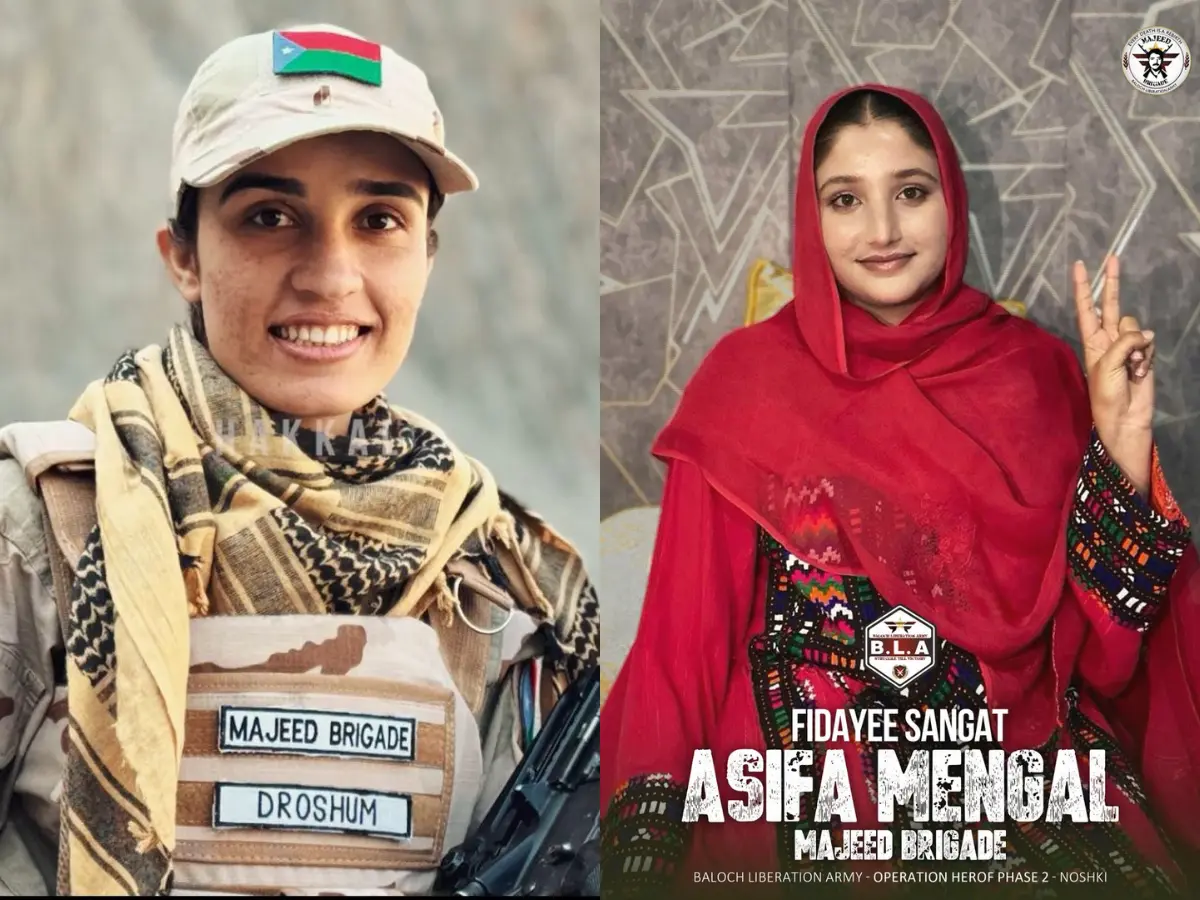
Asifa Mengal, 24, has been identified by the BLA as one of the female attackers involved in the latest wave of violence. The group claims she was from the Nushki district and the daughter of Mohammad Ismail.
Born in October 2002, Asifa reportedly joined the BLA’s elite Majeed Brigade after turning 21. According to the group’s own account, she volunteered last year to become a “fidayee”, committing herself to a suicide mission.
The BLA claims Asifa played a key role in the attack on an Inter-Services Intelligence (ISI) facility in Nushki. Photographs released by the group show her in militant attire, widely interpreted as an attempt to elevate her into a symbol of resistance.
Trending Stories
&imwidth=180&imheight=135&format=webp&quality=medium)
'My name has always been Ilhan Omar': Congresswoman hits back at Trump, calls him a 'creep'
&imwidth=180&imheight=135&format=webp&quality=medium)
Gravitas | US attack could trigger WW III: Russian planes in Tehran, Israeli jets, US warships in action
&imwidth=180&imheight=135&format=webp&quality=medium)
Viral video shows cross falling on Colombia priest, no official confirmation | WATCH
&imwidth=180&imheight=135&format=webp&quality=medium)
'This is humiliation': Vijay Deverakonda under fire over controversial marriage proposal remark on Koffee With Karan 9
&imwidth=180&imheight=135&format=webp&quality=medium)
US Navy, Marine Corps boards defy Trump's transgender military ban, vote to retain troops
&imwidth=180&imheight=135&format=webp&quality=medium)
Will the US attack Iran this weekend? Trump's envoy says, 'absolutely'
&im=FitAndFill=(700,400)&imwidth=180&imheight=135&format=webp&quality=medium)
Why do army tanks have different types of armour?
&imwidth=180&imheight=135&format=webp&quality=medium)
India-China face-off continues near Arunachal’s Taksing, reveals ITBP chief in first official confirmation of tensions
&imwidth=180&imheight=135&format=webp&quality=medium)
Nairobi building collapse: Several feared trapped after 16-storey structure crumbles; rescue operation underway
&imwidth=180&imheight=135&format=webp&quality=medium)
Pakistan airline PIA unveils new crew uniforms, faces online criticism
&imwidth=180&imheight=135&format=webp&quality=medium)
Did Neha Bora call for Bangladesh-like GenZ protest, 'anarchy' in India? WION Fact-checks viral claim
&imwidth=180&imheight=135&format=webp&quality=medium)
Horrific video shows the moment 18-year-old fell to her death from Mexico amusement park ride
&imwidth=180&imheight=135&format=webp&quality=medium)
IND-W vs ZIM-W, 1st ODI: Rawal, Charani star in India’s nine-wicket win over Zimbabwe
&imwidth=180&imheight=135&format=webp&quality=medium)
Massive 7.2 magnitude quake off Vanuatu triggers tsunami warning for coasts within 300 km
&imwidth=180&imheight=135&format=webp&quality=medium)
Microsoft AI diagnoses complex medical cases more than twice as accurately as doctors, study finds
&imwidth=180&imheight=135&format=webp&quality=medium)
Google Fitbit Air’s new health guardian feature tracks trends: How it works
&imwidth=180&imheight=135&format=webp&quality=medium)
US midterms 2026: Trump revises Canada tariffs as Susan Collins faces tight re-election race in Maine
&imwidth=180&imheight=135&format=webp&quality=medium)
US midterms 2026: Viral video claims Lindsey Graham paid underage men for sex; clip released weeks before his sister's Senate race
&imwidth=180&imheight=135&format=webp&quality=medium)
IND vs NZ 2nd T20I: Shreyas Iyer on brink of breaking Rohit Sharma’s record
&imwidth=180&imheight=135&format=webp&quality=medium)
AI deepfakes are spreading online: Why is removing them so difficult?
&imwidth=180&imheight=135&format=webp&quality=medium)
China's dancing robot turns violent bodyguard, lifts cars and fights intruders - Watch
&imwidth=180&imheight=135&format=webp&quality=medium)
Global cybersecurity alert: PHP flaws trigger website shutdowns as hack attempts surge into millions
&imwidth=180&imheight=135&format=webp&quality=medium)
'You’re a horrible little reporter, aren’t you?': Trump snaps at NBC reporter questioning his support for Ramaswamy's campaign ad
&imwidth=180&imheight=135&format=webp&quality=medium)
Apple’s first touchscreen MacBook Pro may cost Rs 4 lakh in India: What to expect on October 28
&imwidth=180&imheight=135&format=webp&quality=medium)
US charges two former FBI officials with lying to Congress about Hunter Biden probes. 'Politically motivated' Trump grievance or something else?
&im=FitAndFill=(700,400)&imwidth=180&imheight=135&format=webp&quality=medium)
New Friday OTT releases (October 23, 2026): Gajab Raat, Dorothy, Chaar Yaar- Watch these 6 new movies and TV shows on Netflix, Prime Video and more
&imwidth=180&imheight=135&format=webp&quality=medium)
Anthropic security chief issues grim cyberattack warning: ‘It’s going to get a lot worse’
&imwidth=180&imheight=135&format=webp&quality=medium)
Tu Hai Meri Kiran film review: Sonakshi Sinha and Zaheer Iqbal's thriller gets tangled in its own twists
&imwidth=180&imheight=135&format=webp&quality=medium)
First Lady Melania Trump secures ceasefire between Russia, Ukraine in Oleshky: White House
&imwidth=180&imheight=135&format=webp&quality=medium)
One man, 8 months of work, and a river dirty again: Why Bittu Tabahi may quit
&imwidth=180&imheight=135&format=webp&quality=medium)
Jenna Ortega plans TV break after Wednesday: ‘I want to leave time for new things’
&imwidth=180&imheight=135&format=webp&quality=medium)
Five killed, several injured after explosion in Bihar's Siwan as firecrackers catch fire
&imwidth=180&imheight=135&format=webp&quality=medium)
Iran targeting US diplomats? Intelligence warns of 'advanced' assassination plots: Report
&imwidth=180&imheight=135&format=webp&quality=medium)
Emmanuel Macron calls Paris suburb shooting a 'racist terrorist attack' after one killed, several injured
Hawa Baloch and the Gwadar front
Alongside Asifa, another woman known as Hawa Baloch, alias Droshum, has emerged as a prominent figure in BLA propaganda. The group claims that she was also a member of the Majeed Brigade and reportedly fought in the Gwadar front during what the group calls Operation Hero Phase II. The BLA has compared her symbolic role to that of Mahsa Amini in Iran, presenting her not just as a fighter but as an ideological figure.
Reports circulated by the group suggest she was a writer before joining the armed movement. Her father had previously been involved in the Baloch struggle and was killed in combat years ago. The BLA claims Hawa took part in prolonged clashes near Gwadar, a strategic hub of the China-Pakistan Economic Corridor (CPEC). Her death has been portrayed as “martyrdom”, with the group insisting the mission was a strategic success despite heavy losses.
Why is BLA pushing women fighters to the forefront?
By placing women in frontline roles, the BLA is breaking with traditional norms of militancy in the region. Analysts say this is a calculated move aimed at increasing psychological pressure on the state and drawing international attention.
In videos released by the group, one of the women accuses Pakistan of targeting Baloch families, framing the violence as retaliation rather than aggression. The messaging suggests the BLA is trying to reshape its image from a regional insurgency into a broader ideological movement.

