

&imwidth=800&imheight=600&format=webp&quality=medium "Nepal royal massacre case to be reopened: 12 unanswered questions about 2001 royal killings | WION Decodes")
Nepal government on Tuesday (June 9) announced that the reopening of files related to the royal massacre of 2001, in which the entire family of then-king Birendra Shah was killed. The announcement was made by Home Minister Sudan Gurung soon after he assumed office for the second time. Gurung rose to national prominence as a central organiser of Nepal's massive 2025 Gen-Z youth protests against government corruption and old-guard political failure. He first became Home Minister in March 2026 but was forced to resign just 48 days later in April amid allegations regarding undeclared financial investments. But he has now been reappointed after been given clean chit in the case.
What is the 2001 royal massacre case?
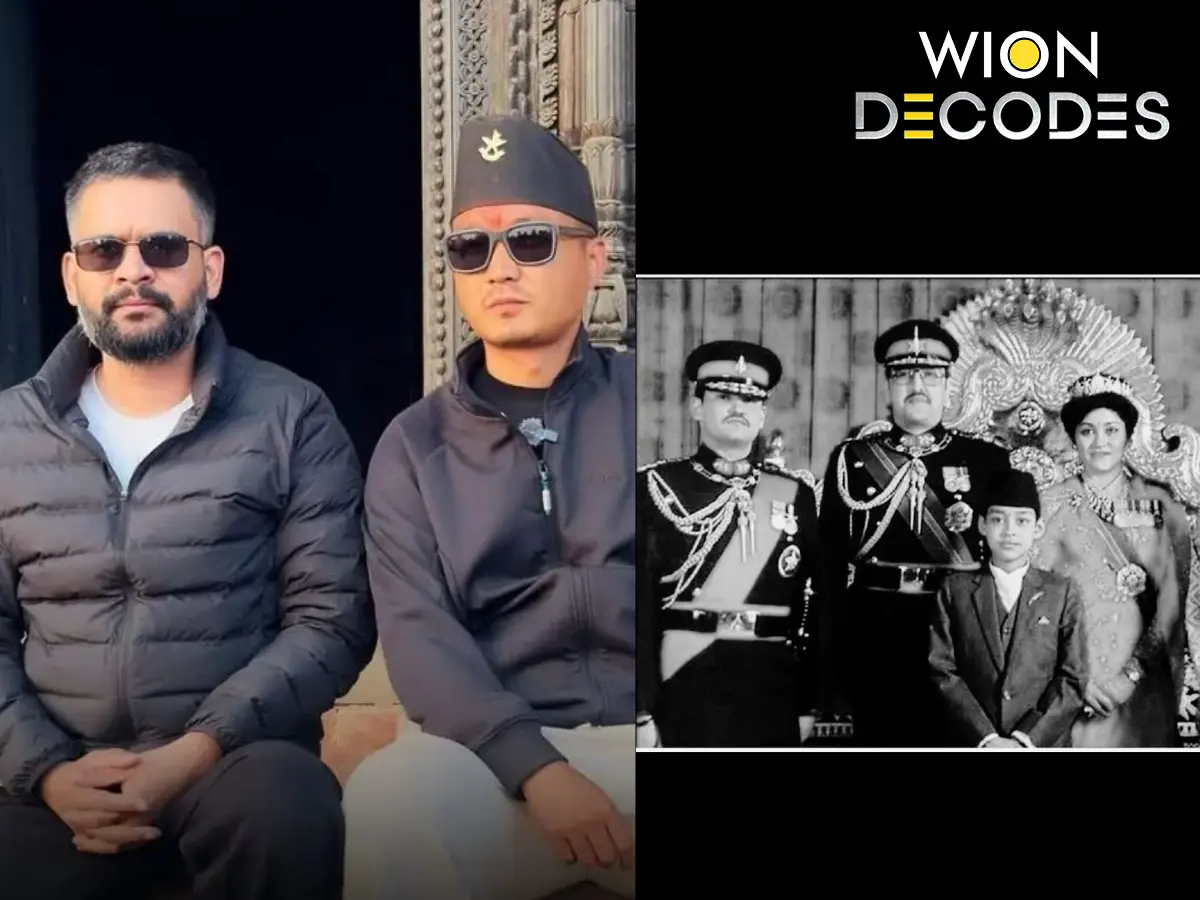
The 2001 royal massacre case , known in Nepal as ‘Durbar Hatyakanda’ is the case about the mysterious death of all family members of then-king Birendra Shah. On June 1, 2001, all family members of king Shah, including queen Aishwarya, were allegedly killed by then crown prince Dipendra at the Narayanhiti Royal Palace during a Friday dinner party. Official probe report claimed that Crown Prince Dipendra Shah, the heir to the throne, arrived heavily intoxicated and was sent to his room. But, he returned after sometime in combat gear and armed with automatic weapons that included an M16 assault rifle, an MP5 submachine gun, and a Glock pistol. Under the influence of alcohol, he reportedly killed his father, mother, brother, sister and other family members. He then shot himself and went into coma. However, he was declared the King of Nepal despite being in coma state. He died three days later, and the crown passed to his uncle, Gyanendra Shah.
How many people died in the massacre?
A total of ten people died in the massacre. The dead included King Birendra Bir Bikram Shah Dev, the reigning monarch; Queen Aishwarya Rajya Lakshmi Devi Shah; Prince Nirajan, the younger son; Princess Shruti, the king’s daughter and her husband Kumar Gorakh; Prince Dhirendra, King Birendra’s brother; Princess Shova, one of the king’s sisters; Princess Jayanti, another royal relative; and Sharada Shah, the wife of Kumar Khadga Bikram Shah.
What did the report say about marriage?
Trending Stories
The official investigation also cited a royal dispute over marriage. Dipendra was reportedly miffed with his family as they objected to to their marriage to a woman named Devyani Rana, a woman from an aristocratic Nepalese family. Dipendra was reportedly threatened with being disinherited, which allegedly drove him to a alcohol-and-drug-fueled rage.
Why the mystery?
The only person who was away from the palace on the fatal night was Prince Gyanendra - King Balendra's brother, who later inherited the throne. This raised questions among the public as to why he was the only one away during the incident. Moreover, his wife and son were present at the dinner but they miraculously survived while King Balendra's entire family died.
Another unanswered question raised by many was the inconsistencies in the report. The report said that Dipendra shot himself on his left temple, but in reality he was right handed. People suspected this to be a murder as a right handed man would not inflict himself a gunshot from his left hand. Moreover, the entire palace wing where the shooting occurred was completely demolished shortly after the event, making future forensic verification impossible.
Some people also say that for ordinary Nepalis, King Birendra had been far more than a political figure. So, his mysterious death led to disbelief. The fact that the news was initially suppressed and then released in confused, contradictory fragments by state media, only deepened public suspicion. Additionally, the team probing the death was chaired by then-Chief Justice Keshav Prasad Upadhyaya of the Supreme Court, with then-Speaker of the House of Representatives Taranath Ranabhat as the second member and then opposition leader Madhav Kumar Nepal of the Communist Party of Nepal (Unified Marxist-Leninist) as third member. However, Madhav Kumar resigned almost immediately, stating that the committee had been constituted by the palace rather than by Parliament. Moreover, the probe was completed within six days. This shattered the public confidence in the report's credibility. People claim that the report lacked forensic evidence. Bodies were cremated according to Hindu rites rapidly, before any independent.
What are the conspiracy theories?
The conspiracy theories regarding the massacre are wild ranging from RAW and CIA's involvement to "grand design” by foreign powers. It suggests suggests that India’s Research and Analysis Wing and the American CIA allegedly worked together — on the grounds that King Birendra had reportedly been resistant to certain geopolitical pressures and external strategic interests in the region. Former Prime Minister Madhav Kumar Nepal reportedly alleged in 2010 that external forces conspired to remove King Birendra. Former Prime Minister Girija Prasad Koirala and few others also said that the massacre was a “grand design” by foreign powers specifically aimed at destabilising Nepal’s powerful monarchy.
Why is the case reopening now?
Multiple leaders have batted for reopening the case as Nepalis demand clarity over the biggest crime in their contemporary political history taht also shattered the revered aura around their monarchy. In 2009, Madhav Kumar Nepal — the same man who had resigned from the original investigation committee — visited the Narayanhiti Palace, now a museum, and stated publicly that a new inquiry should be conducted to uncover the real causes of the incident.
The first prime minister of the federal democratic republic, Pushpa Kamal Dahal Prachanda, pledged during his tenure to reopen the investigation. In early 2024, former King Gyanendra himself broke his long silence on the matter at a public function, saying that suspicion had been manufactured through “political manipulation” and that witnesses were still alive who could speak to the truth. Soon after, then Prime Minister Prachanda announced yet another promise of reinvestigation.
What are the unanswered questions that the new probe will try to uncover?
- Was Crown Prince Dipendra really the sole gunman?
- Why was Prince Gyanendra absent from the palace that night?
- How did Gyanendra's wife and son survive?
- Did Dipendra really shoot himself in the manner described?
- Why was the investigation completed in just six days?
- Why was there no independent forensic investigation?
- Why were the bodies cremated so quickly?
- Why was the palace wing demolished soon after the massacre?
- Did the dispute over Dipendra's marriage fully explain the massacre?
- Were there political or foreign actors involved?
- Why was information released so slowly and inconsistently?
- Are there any forensic details that were hidden and can witnesses be really trusted?

