Murray quits as Djokovic's coach as partnership fails to serve any aces

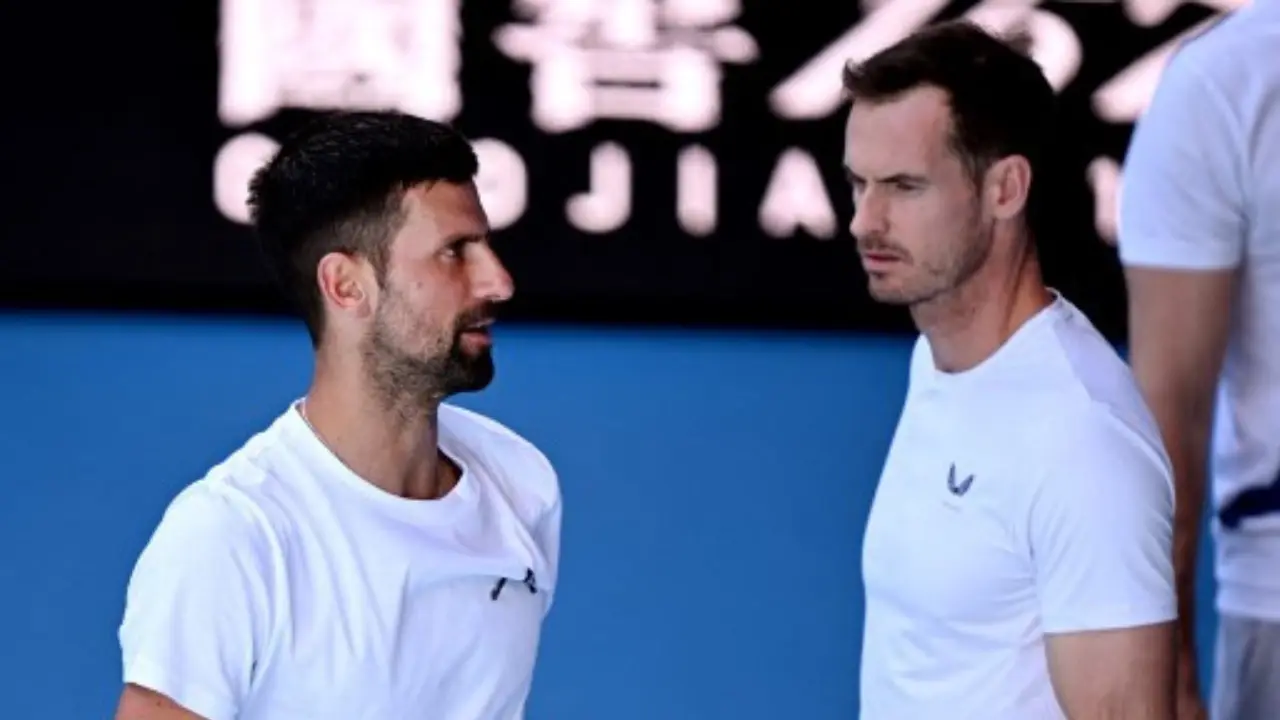
World, Sports: When former tennis player Andy Murray announced he would join Novak Djokovic’s team in a coaching role in December 2024, many hailed it as a masterstroke
When Novak Djokovic and Andy Murray revealed their unexpected coaching partnership in December 2024, days before the Australian Open, tennis lovers were divided—some curious, others undecided and in some serious doubt.
Two of the game's all-time greatest nemesis uniting not on opposite sides of the net, but on the same side of the court, was a twist of destiny few saw coming. Six months on, the partnership has been ended before the 2025 French Open.
It was an ambitious experiment. One that promised inside information, mutual respect, and a common sense of the sport's highest stakes. But it finished with hushed press releases and courteous goodbyes—putting stop to a relationship that perhaps never did find its beat.

From rivals to allies
To see why this partnership captivated and stunned in equal proportion, we must go back to the genesis of the Djokovic-Murray rivalry. Both born just one week apart in May 1987, the two rose to the junior ranks side by side and emerged as Grand Slam giants, facing each other in four major finals between 2011 and 2016.
Their head-to-head score tilted in favor of Djokovic (25–11) notwithstanding, there was no mistaking the reciprocal respect. Murray, intensely logical and notoriously stubborn, was nearly alone among rivals able to contend with Djokovic's ductility and grit in competition. Outside of it, however, their dispositions were different—one of spiritual compliance and open vulnerability in the case of Djokovic, and dry sarcasm and cautious emotional register for Murray.
When Murray announced he would become a member of Djokovic's staff as a coach in December 2024, it was universally called as a masterstroke. Djokovic, meanwhile, was struggling with form and injury issues, and appeared to be looking for a psychological advantage—and who was better qualified than someone familiar with his game better than anyone else?
A rocky start
However, barely a moment later, the arrangement appeared uncomfortable.
The Australian Open, their opening grand slam as partners, witnessed Djokovic being knocked out in the third round. His movement was messy, his temperament fragile. Murray, on the other hand, appeared surprisingly subdued in the box—a sharp contrast to Djokovic's longtime previous coach Goran Ivanišević, whose dynamism and tactical input were widely regarded as critical components in Djokovic's supremacy.
Publicly, they remained positive. “I really enjoy working with Andy,” Djokovic had said in March in an interview. “He sees the game differently and we’re trying new things.” Murray echoed the sentiment, calling the partnership “a learning experience.” But reports suggested friction behind the scenes.
Some of the friction could have been a product of the very nature of their relationship. Murray, even after retiring carried the heart of a fighter. His own life had been marked by pain, grit, and a certain rejection of orthodoxy. Djokovic, a 24-time Grand Slam champion, was a man wrestling with the existential burden of legacy.
Whereas Murray stressed upon strategic finesse and back-court stoutness, Djokovic's coaches apparently favoured sustaining intensity and ferocity. Their coaching philosophies intersected—not explosively, but sufficiently to build tension.
There were whispers Murray grappled with the limited control he was granted. A source told Sky Sports, "It never felt like Andy was ever really in charge. Djokovic still called most of the shots. Andy was more like an advisor than a coach."
A quiet breakup
The breakup was without drama, but also without affection.In statements issued to the media ahead of the French Open, both parties announced their split. “I really enjoyed deepening my relationship with Novak,” Murray said. “But we’ve decided to go our separate ways.”
Djokovic was equally courteous, saying, "Thank you, coach Andy, for all the har d work, fun & support over last six months on & off the court. I really enjoyed deepening our friendship together. "
The press releases were brief—professional, polished, and pointedly devoid of sentimentality.What's most revealing, perhaps, is the timing. Breaking up the partnership on the eve of Roland Garros sends the message that both men saw it wasn't working, and neither was prepared to drag it through the clay-court grind.
There are some partnerships, however high-minded in aspiration or storied in history, that just don't work. The Djokovic-Murray coaching saga is a reminder that friendship and rivalry don't always go hand-in-hand.
This was not the first unconventional coaching experiment that Djokovic had tried—his previous stint with Boris Becker, Andre Agassi, and even Marian Vajda each saw different levels of success. None were nearly as confusing, though.
What comes next?
For Djokovic, then, the French Open starts. Without Murray to support him, he'll rely on trusted staff and his own judgment to launch another Grand Slam bid—perhaps his final best chance at victory in Paris considering his recent struggles and age.
For Murray, there are questions regarding what he will do after playing. Will he go on a younger player's team? Will he take time to reassess? Either time or Murray himself will tell.
What’s sure is that this brief, turbulent partnership will be remembered—not for trophies, but for the curiosity it inspired and the conversations it sparked. It was a bold move. It just wasn’t the right one.

