
&imwidth=800&imheight=600&format=webp&quality=medium "Meta starts charging for AI but who will pay? Muse Spark 1.1 is its first paid model ever")
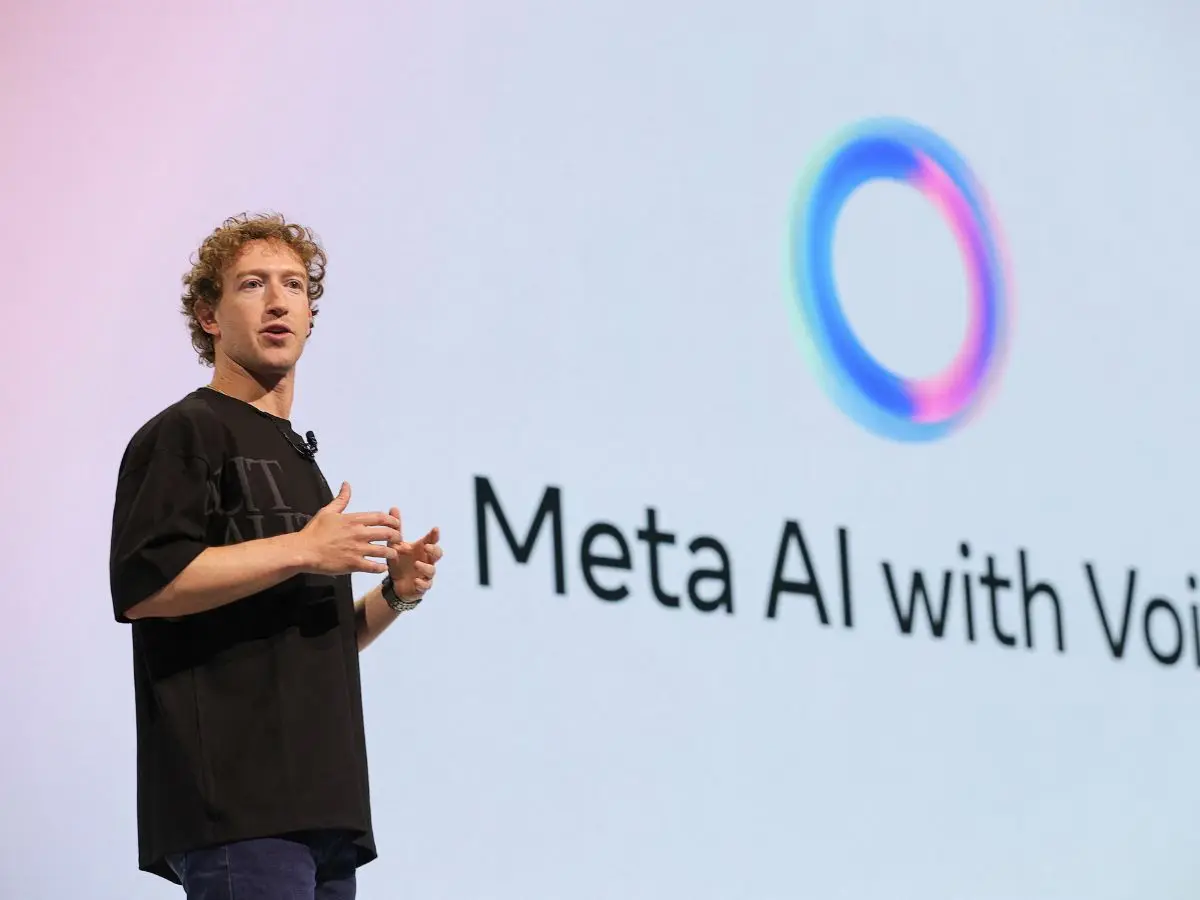
For a decade, Meta's artificial intelligence strategy was defined by one word: free. Open weights, open research, models given away to commoditise rivals' moats. On July 9, that era quietly ended. Meta launched Muse Spark 1.1 — and for the first time in its history, put a price on its own AI.
What Meta Launched
Muse Spark 1.1 comes out of Meta Superintelligence Labs, the elite unit Mark Zuckerberg assembled to chase frontier AI. It is a multimodal reasoning model built for agentic work — tool use, computer use, coding and multi-step execution — with a one-million-token context window. It ships in public preview through the new Meta Model API, the company's first paid developer platform.

The pricing is the pitch: $1.25 per million input tokens and $4.25 per million output tokens, with $20 in free credits to start. Zuckerberg framed it as roughly a quarter of what Anthropic and OpenAI charge for comparable models.
And the API is built for defection: it is drop-in compatible with both the OpenAI and Anthropic SDKs, meaning a developer can switch their application to Meta's model by changing a few lines of configuration. The switching cost is engineered to be near zero — aimed squarely at rivals' paying customers.
The End Of The Open-Only Era
Trending Stories
&im=FitAndFill=(700,400))
Why Chinese PL-15 air-to-air missiles use dual-pulse motors compared to European interceptors
)
Delhi’s balancing act: BRICS serves as a stage for West Asia diplomacy
)
Plane carrying prominent figure crashes at Libya’s Misrata airport: Report
)
Iran, India agree to deepen humanitarian and political ties, President Pezeshkian says
)
Trump says Canada eager to reach a deal, it could come ‘fairly soon’ if Ottawa treats US farmers better
&im=FitAndFill=(700,400))
Why European Meteor missiles use ramjet engines compared to standard US solid rockets
)
'Huge destructive power': North Korea calls its latest missile launches 'live-fire drill' even as US dismisses 'immediate threat'
)
Humans may lose control of AI: Anthropic CEO calls for slowdown, Altman, Musk back him
)
Natural caffeine sources gain popularity; matcha & botanicals offer calm energy
)
Video of Pakistani lawmaker struggling to read English tribute to Jinnah goes viral - WATCH
)
China thinned Himalayan troop presence in 2025, India defence report says; terms border situation 'stable'
)
Russian drone hits Warsaw-bound train near Polish border, Zelensky accuses Moscow of ‘deliberate’ targeting
)
Practical Magic 2 breaks Spidey spell over North American box office
)
First naval drone battle? Ukraine says Sargan 3000 sank Russian unmanned boat
)
Saudi Arabia discovers 110 million tonnes of Uranium-rich ore in Madinah region
)
China discovers vast gold and silver 'mine' in the Pacific with unheard-of deposits
)
‘Want to reset ties with India, have engagement based on mutual interests,’ says Bangladesh minister
)
Indian importers urge Bangladesh to lift export ban on 'Hilsa' fish ahead of Durga Puja
)
Israeli minister calls to strip Gaza film directors of citizenship
)
Did China give Iran intel before US base strike that killed 3 troops? Trump says, 'You’re right...'
)
Pakistan puts Pak Rs 70 lakh bounty on UN terrorist Masood Azhar; move draws skepticism in Delhi
)
Ganesh Chaturthi 2026: Devotees throng the iconic Lalbaugcha Raja pandal in Mumbai
)
Veteran Bollywood actress Nafisa Ali shares health update as Stage 4 cancer progresses, starts targeted therapy
)
‘Let’s go’: Newly declassified videos show dramatic rescue of US Air Force officers downed in Iran
)
Liam Neeson sparks romance rumours after holding hands with Stella Stocker at TIFF 2026
)
800 million years old - Scientists discover 'fingerprints' of supercontinent Gondwana in ancient rocks
)
Turkish Airlines plane flies through a storm three times, triggering severe turbulence
)
Did India risk its US trade deal despite softer stance at BRICS?
)
Women's Asia Cup 2026: India denied trophy once again despite winning the title
)
Russia proposes to build 360 kmph Ivolga FG trains in India: What happened on sidelines of BRICS
)
Crude oil prices jump more than $107 per barrel following Houthi attacks on Saudi
&im=FitAndFill=(700,400))
New OTT releases this week (September 14-20, 2026): Lust Stories 3, Waiting Hai, Irumudi- 5 new titles coming on Netflix, Prime Video and more
)
Orlando Bloom addresses Pirates of the Caribbean comeback and reunion with Johnny Depp
The significance is strategic more than technical. Meta spent years arguing that open models were its competitive weapon — that giving AI away would commoditise the closed labs' advantage while Meta monetised through its apps. Muse Spark 1.1 is the concession that the calculus has changed: Meta's newest frontier model now sits behind a paid API, exactly the way OpenAI's and Anthropic's do.
It is also the revenue line investors have been waiting for. Meta has poured tens of billions into AI infrastructure and talent; until July 9, none of its frontier models had ever directly earned a dollar. Meta has not abandoned open releases — but its best new work now has a price tag, and that tells you where the company believes the value sits.
The Price War Context
Muse Spark lands in the middle of the great AI price collapse of July 2026. OpenAI's new GPT-5.6 family starts at $1 per million tokens. Musk's Grok 4.5 runs $2 and $6. China's Kimi K3 undercuts everyone at $0.30 per million on cached input — and gives its weights away entirely on July 27. Frontier-class AI, which cost dollars per million tokens a year ago, is racing toward pennies.
Meta's entry as the aggressive price challenger completes the picture: every major lab is now fighting on cost, and the margin pressure that once applied only to open-source alternatives has reached the closed frontier.
The Curious EU Absence
One detail stands out: the public preview is available to US developers only, with no European Union access at launch. Meta has not detailed its reasoning — but the timing is hard to miss. The launch landed in the same fortnight that Brussels preliminarily found Instagram and Facebook's addictive design in breach of the Digital Services Act, with fine exposure above $12 billion, and ordered Google to open Android to rival AI assistants. Regulatory friction is visibly starting to shape where AI products launch first — and where they don't.
The company that spent a decade commoditising everyone else's moat has built a toll booth of its own. In 2026, it seems, frontier AI has become too expensive to give away — even for Meta.
