
&imwidth=800&imheight=600&format=webp&quality=medium "Dr Manmohan Singh’s legacy: Key reforms that shaped modern India")
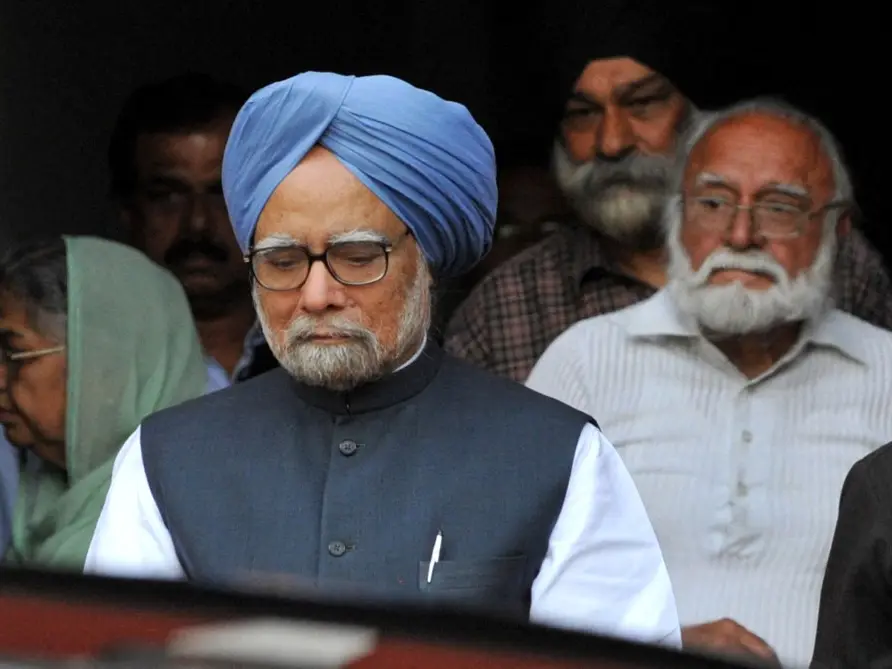
PM Modi recalled on Friday the contribution of Dr Manmohan Singh to the nation, and the Congress Party paid tribute to him on the occasion of his birth anniversary. Widely regarded as the architect of modern, neo-liberal India, his reforms paved the way for a market-based economy and global integration.
Key reforms by Dr Manmohan Singh
- Economic liberalisation: When Manmohan Singh became the Finance Minister, India had very low Foreign exchange reserves, barely enough to pay for two weeks of imports. He pledged 46.91 tonnes of gold with the Bank of England and the Bank of Japan to raise $400 million. Dr Singh started a series of deregulations. It was done for several reasons: macroeconomic stabilisation measures, creating demand within the country and from foreign sources, facilitating the global expansion of the Indian economy, and enhancing foreign trade and exports. He devalued the Indian currency to make Indian exports more competitive in the Global Market. India also joined the WTO in 1995.
- Privatisation and Divestments: Manmohan Singh oversaw massive government divestments. It sold stakes from state-owned enterprises and encouraged private investments in sectors like telecommunications, banking and civil aviation. It introduced a new Industrial policy to get rid of the ‘license raj’. More than 80 per cent of industries could expand their operations without government approval.
- Banking Sector Reforms: His banking sector reforms allowed banks to lend money to support the expansion and growth of private enterprises. Under the Narasimham Committee’s recommendation, he reduced the statutory liquid ratio (SLR) from 38.5 per cent to 25 per cent and the cash reserve ratio from 25 per cent to 10 per cent over the next decade. The process of licensing new private banks was eased, and SEBI was given more power to regulate the capital market.
- Social Welfare Scheme: Dr Singh started several social welfare schemes to provide benefits to the underprivileged and foster transparency. MGNREGA was done to create livelihood security, providing at least 100 days of wage employment in a financial year to the unskilled manual labour of every rural household. Right to Information was introduced in 2005 to promote transparency and accountability in governance. It mandated a timely response to citizen requests for information. It also made provisions for grievances in case of denied access to information. Right to Education was enacted in 2009, guaranteeing free and compulsory education for children between the ages of 6 and 14. The Food Security Act is a product of UPA 2, enacted to provide subsidised food to address hunger and malnutrition, covering two-thirds of the Indian population
- India-US civil nuclear deal: Dr Singh signed the historic nuclear deal with the US in 2008 to counter the growing Chinese influence, ending India’s nuclear isolation, which startedin 1998. Left parties quit the coalition in protest of the deal, questioning that it would hurt the sovereignty of the state.

Ironically, during the tail-end of his term as the Prime Minister of India, he was much maligned, mocked and abused by the media as well as the opposition over corruption allegations against his cabinet. Some critics of him termed his silence as the “art of taking a bath with the raincoat on”. Lal Krishna Advani called him “the weakest prime minister” ever.
"I honestly believe that history will be kinder to me than the contemporary media, or for that matter, the opposition parties in Parliament," Dr Manmohan Singh said famously at the Parliament in 2014.
On July 30, 2021, on the 30th anniversary of the economic liberalisation, Manmohan Singh recalled a few verses from the famous Robert Frost’s poem “Stopping by Woods on a Snowy Evening" – But I have promises to keep, miles to go before I sleep.Three years later, at the age of 92, he succumbed to an old-age-related ailment in New Delhi.

