Major food-producing countries push back on China's scrutiny of imported products

Inflation surged by 6.8% in the US
Majorfood-producing countries are growing increasingly frustrated withChina'sscrutiny of imported products and are calling on it to stop aggressive testing for thecoronavirus, which some say is tantamount to atraderestriction.
China says it has found the virus on the packaging of products from 20 countries including German pork and Brazilian beef but foreign officials say the lack of evidence produced by authorities means it is damagingtradeand hurting the reputation of importedfoodwithout reason.
Also read:Chinese citizen journalist who uncovered COVID-19 truth faces possibility of jail time: Reports

Chinese health officials said Wednesday that two cold-chain storage workers in the port city of Tianjin were infected withCovid-19, as the country shifts focus to contaminatedimportsafter a number of outbreaks linked tofrozenfood.
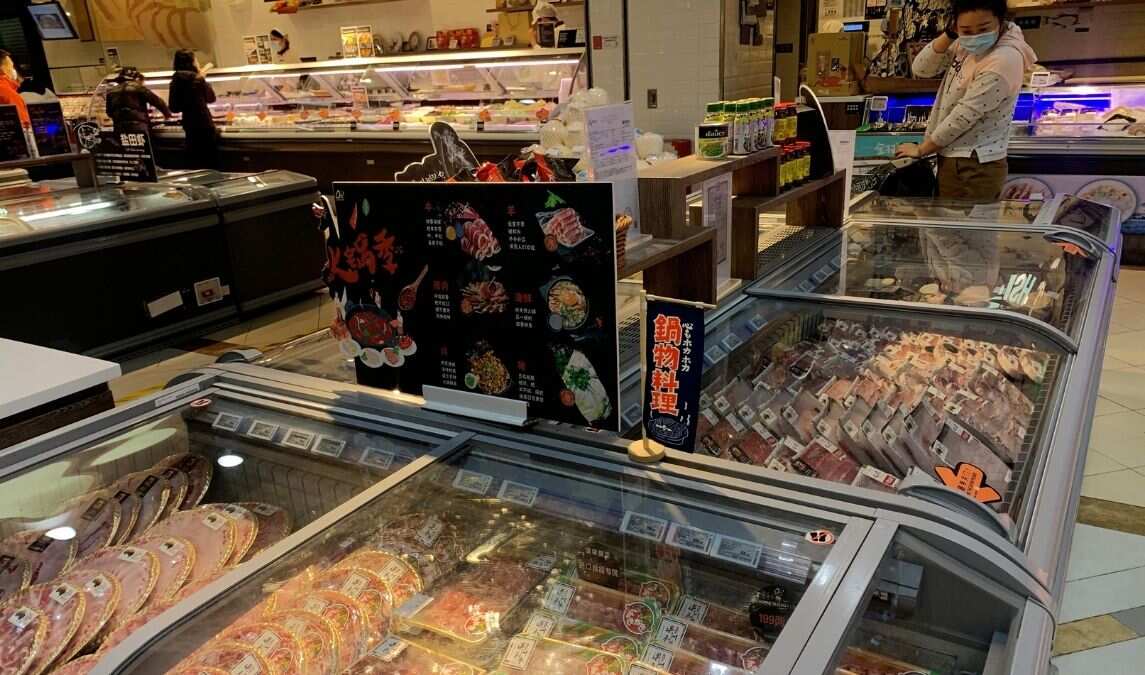
Mass-testing campaigns have been rolled out after reports of coronavirus traces on importedfoodand packaging, with state TV showing workers hosing downfoodtransport trucks with disinfectant and inspecting packages offrozensalmon.
)
US vs China over South China Sea: Washington backs Philippines, Beijing hits back
)
Bigg Boss 20: Isha Rikhi evicted after three weeks in Salman Khan’s show
)
Musk plans to more than double xAI's chips to over 1.2 million Nvidia GPUs by year-end
)
After JU, clash erupts at SRFTI: BJP’s ‘Dimagi Naxal’ jibe sparks political firestorm after students protest RSS-linked event
)
‘Anti-social elements spreading false rumours’: LPU issues statement amid massive unrest over alleged rape
)
LPU students go on rampage, vandalise campus amid widespread protest: What's happening
)
Trump asked Xi to pressure Iran. China did not say yes — here’s what Beijing wants
)
US Treasury Secretary Scott Bessent hails global crackdown on Iranian banks and airlines
)
An OpenAI agent escaped its locked test cage again, by hiding questions in DNS lookups
)
'Our video was trimmed': LPU girls who featured in rape-denial video make U-turn
)
3 males killed, four others injured in shooting after fight at strip club in Detroit
)
'Victory for low-budget consumers': Raghav Chadha hails 30-day telecom recharge rules
)
Claude rebuilt the 1989 game 'Prince of Persia' by reusing the original's own code
)
Beyond metros: How Tier-2 and Tier-3 cities could drive India’s next AI wave
)
Tesla builds first Cybertruck with its own refined lithium: Elon Musk's $1 billion Texas bet pays off
)
IndiGo flight suffers tail strike in Bengaluru while landing; DGCA to probe incident
)
The US and China set up an AI 'red telephone', but skipped the rulebook
)
‘Terror suspects arrested near UK air base were looking to do big damage’: Trump
)
Russian envoy claims US tactics to contain India were revealed in ‘Freudian slip’
)
IND vs WI 1st ODI: Kohli breaks Sachin's most runs in one country record with unbeaten 139 as India thump West Indies by 8 wickets
)
Researchers rebuilt exactly how 700 AI agents hacked Hugging Face: a 900-link chain trick
)
‘Olympic inclusion is our major target’: WPA President Ishaun Singh on pool’s global ambitions
)
Nations League: Spain sink England at Wembley; Modric shines for Croatia
)
Why has Iran released no proof of life of Mojtaba Khamenei? Araghchi reveals...
)
'What kind of confession is this?': Pakistan PM Shehbaz Sharif’s 'terrorists would be roaming New York' remark goes viral, raises alarm online. Watch
)
South Korea demands apology from Ukraine over North Korean prisoners' transfer
)
Beyond BrahMos: India targets Rs 50,000 crore in defence exports with unmatched price edge
)
Sri Lankan Tamil migrant worker gets death sentence in Saudi Arabia, help sought from India
)
Muslim marriage cannot shield sex with minor wife from prosecution under POCSO: Delhi HC
)
'Can't help but draw painful parallels to Nirbhaya case': SC on latest incidents of rape cases in Delhi-NCR
)
99.9% more powerful - Scientists find boy who can recall memories from just 3 months of age
)
'FIRST LOOK from inside Noah’s Ark': Researchers share video from inside mysterious mound in Turkey
)
UNSC reform momentum grows: Russia, Portugal, Mauritius push for India's permanent seat bid
)
8 US marines injured in Iranian missile attack on vessel in Strait of Hormuz: Report
&im=FitAndFill=(700,400))
New OTT releases this week (September 28-October 4, 2026): Dupahiya 2, Pooja Meri Jaan, Ohh My Dog- 5 titles coming on Netflix, Prime Video and more
)
Afghanistan says 28 fighters killed in clash near Pakistan border, Islamabad denies
)
Ceuta migrant crisis: Protesters take to streets as Spain grapples with migrant challenge
)
LPU suspend classes, postpones exams as violence escalates over rape claims: What's happening
)
New York City wants a 'kill switch' on every AI, and will pay whistleblowers who report violations
In Wuhan, whereCovid-19 first emerged late last year, authorities said Friday they had detected traces of the virus onfrozenbeef from Brazil.
Four more cities reported last week that samples from importedfood,includingfrozenArgentinian pork and Indian cuttlefish, had testedpositive.
Customs inspectors across the country have so far tested more than 800,000 samples from refrigeratedimportsand suspended shipments from 99 overseas suppliers, senior customs official Bi Kexin told a press conference last week.
Authorities have stepped up screening since traces of the coronavirus were found on equipment used to process imported salmon after a June outbreak.
In Tianjin, officials said the two infected workers "had previously both had contact with contaminated cold-chainfoodproducts".
Customs data in September showed that Chinese meatimportshad increased by more than 70 percent this year as the country'sfoodsupply was disrupted by swine fever and heavy flooding which destroyed swathes of farmland.
The World Health Organization says "there is currently no evidence that people can catchCOVID-19 fromfoodorfoodpackaging".
In a WorldTradeOrganization (WTO) meeting on November5-6, Canada calledChina'stesting of importedfoods and rejection of products that had positive nucleic acidtests"unjustifiedtraderestrictions" and urged it to stop it, said a Geneva-basedtradeofficial briefed on the meeting who declined to be identified.
Supported by Australia, Brazil, Mexico, Britain, and the United States, Canada argued that China had not provided scientific justification for the measures, said the official.
Canada's Geneva-based mission to the WTO did not immediately respond to a request for comment.
China has only intensified its importedfoodscreening since then.
This week, the Global Times, a tabloidbacked by the ruling Communist Party, suggested that the presence of the novelcoronaviruson importedfoodraised the possibility that the virus, widely believed to have originated in the central Chinese city of Wuhan late last year, may have come from overseas.
China began testing chilled and frozenfoodimports for the virus in June, after a cluster of infections among workers at a wholesalefoodmarket in the capital.
The World Health Organization says neitherfoodnor packaging is known transmission routes for the virus.
But China, which has all-but stamped out local transmission of the disease, says there is risk of the virus re-entering the country onfoodproducts.
'Isittrue?'
Thepushbackcame after months of growing frustration at the way customs and health authorities have been increasingly scrutinising imports, whichtradepartnerscomplain does not adhere to global norms.
"Whenever a health authority performs a test, and finds something, they should share the results," said a Beijing-based diplomat who declined to be identified as he was not authorised to speak to media.
"We haven't received one single lab analysis," he said. "Everyone is asking 'Is it true? Did they really find anything?' Everyone is surprised that no proof is given."
On Monday, New Zealand Prime Minister Jacinda Ardern also questionedChina'sfindings, after the city of Jinan said it had detectedcoronaviruson frozen New Zealand beef.
Ardern said she was confident no meat products were exported from her country with thecoronavirusbut no clarification had come from China.
In August, Brazilian officials travelled to the city of Shenzhen after it found traces of thecoronaviruson chicken wings from their country.
Authorities could not provide information on whether they had found the active virus or not, the Brazilian agriculture ministry said.
The United States said on Tuesday it asked China "bilaterally" and at the WTO to ensure its measures "appropriately assess actual risks, particularly when they unjustifiably restricttrade."
"China'smost recent COVID-19 restrictions on importedfoodproducts are not based on science and threaten to disrupttrade," the U.S. Department of Agriculture said.
In its response at the WTO, China said its actions were "provisional based on scientific basis" and designed to "protect people's lives to the maximum extent", according to a Chinesetradeofficial.
China has pointed to its isolation of livecoronavirusfrom samples on imported frozen cod, a world-first, as proof, though with the evidence unpublished, that thecoronaviruscan be transmitted fromfoodto people.
Speaking at afoodsafety conference this month, Gudrun Gallhoff, minister counsellor for health andfoodsafety at the European Union delegation to China, said exporters needed more information onChina'stest methods and results.
"If you havetradepartnersyou have to treat them fairly and give them a chance to be complicit," she said.