

&imwidth=800&imheight=600&format=webp&quality=medium "Khaleda Zia death ends saga of revenge politics with Sheikh Hasina in Bangladesh. Or will a new generation carry on? 'Battle of Begums' timeline")
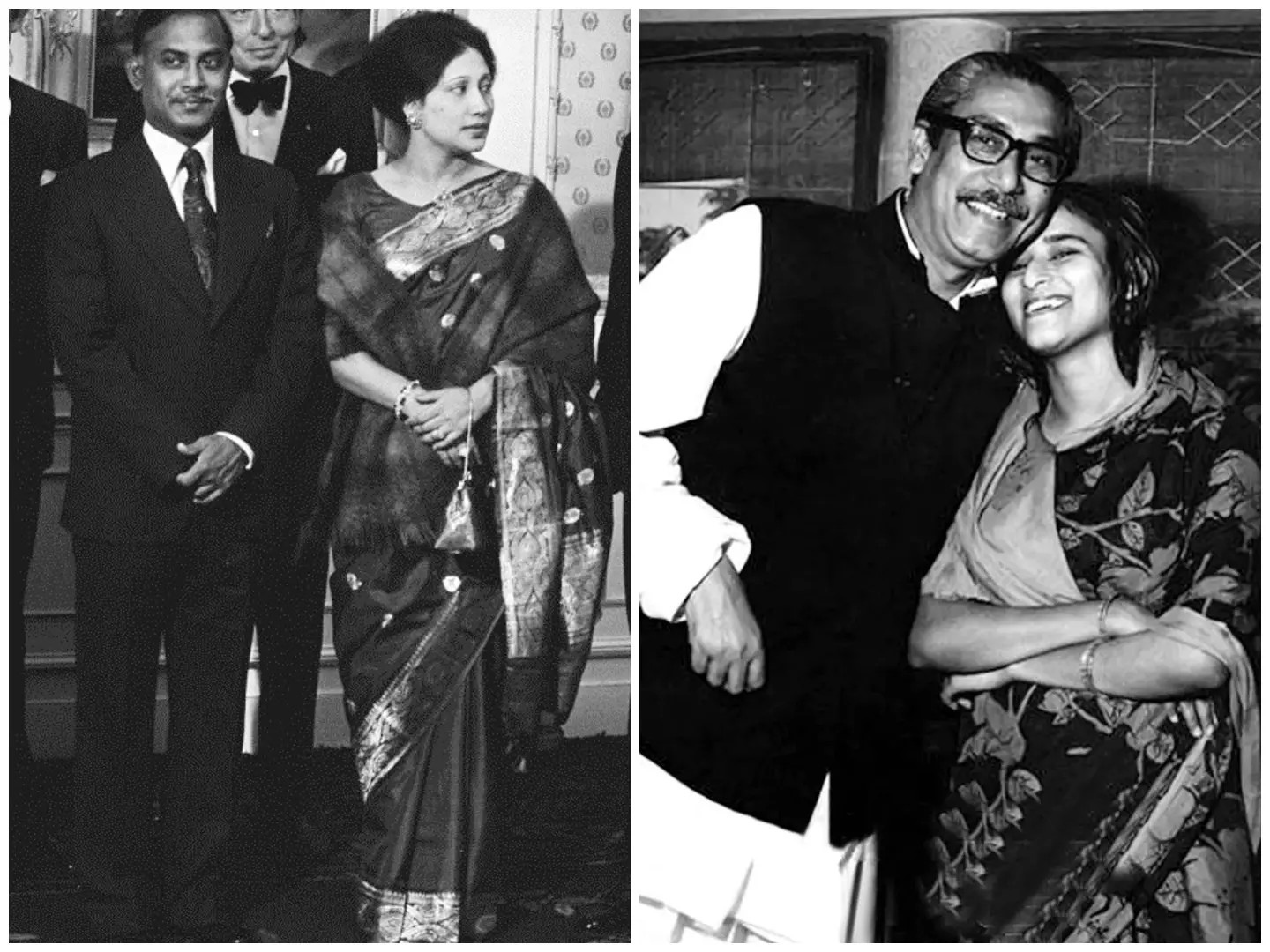
The death of Begum Khaleda Zia ends a major chapter in the decades-long revenge politics between the BNP leader and Awami League chief Sheikh Hasina, which shaped Bangladesh’s history as an independent nation. Much of the country’s political story since the 1970s has been a struggle for power between a widow and a daughter. Sheikh Hasina is the daughter of Bangladesh’s founding father, Sheikh Mujibur Rahman. Khaleda Zia, who died on Tuesday (Dec 30), was the widow of former military ruler General Ziaur Rahman. With Hasina ousted as prime minister in 2024 and Khaleda Zia’s son, Tarique Rahman, returning to Bangladesh after years of exile, an open question remains: will the BNP–Awami League rivalry pass into the next generation, or finally come to an end? Here is a timeline of how it all started, and evolved over four decades.
The roots of rivalry between Khaleda Zia and Sheikh Hasina
The seeds of this rivalry were sown on 15 August 1975, when Sheikh Mujibur Rahman was killed in a military coup along with at least 14 others, including his wife, three sons, close relatives and guards. Sheikh Hasina escaped the assassination because she was abroad at the time.
Over the course of her political career, Hasina pursued those responsible for the coup. Many were tried decades later, and at least 12 former military officers were executed by hanging between 2010 and 2020 after lengthy trials.
General Ziaur Rahman, who was aware of the 1975 coup but did not directly participate in it, consolidated power in its aftermath and eventually became president. His rule shifted Bangladesh away from the Awami League’s founding secular ethos and towards Bangladeshi nationalism. He rehabilitated Islamist political parties that had been marginalised after independence.
Trending Stories
&imwidth=180&imheight=135&format=webp&quality=medium)
Netanyahu warns Israelis of ‘existential threat’ from Iran, posts AI image of nuclear strike
&imwidth=180&imheight=135&format=webp&quality=medium)
Who is Eyal Zamir, Israeli army chief, who reportedly clashed with Netanyahu over Iran?
&imwidth=180&imheight=135&format=webp&quality=medium)
Can Putin cheat death? All about his daughter’s billion-dollar quest for immortality
&imwidth=180&imheight=135&format=webp&quality=medium)
Donald Trump targets Bill Maher in lengthy post after White House dinner, says ‘Don’t call anymore’
&imwidth=180&imheight=135&format=webp&quality=medium)
Telangana unveils AI avatar of IT minister D Sridhar Babu at Hyderabad DevFest 2026
&im=FitAndFill=(700,400)&imwidth=180&imheight=135&format=webp&quality=medium)
New OTT releases this week (October 26-November 1, 2026): Baththa, Akka, The One About Matthew Perry- 7 titles coming on Netflix, Prime Video and more
&imwidth=180&imheight=135&format=webp&quality=medium)
Grammy-winning singer Chris Brown to be sentenced in London after pleading guilty to nightclub brawl
&im=FitAndFill=(700,400)&imwidth=180&imheight=135&format=webp&quality=medium)
Why does this fighter jet have a golden window that looks like alien technology?
&imwidth=180&imheight=135&format=webp&quality=medium)
Israel elections 2026: How the country is gearing up for a crucial vote
&imwidth=180&imheight=135&format=webp&quality=medium)
Harry Kane favourite to win 2026 Ballon d’Or ahead of Lamine Yamal and Kylian Mbappé
&imwidth=180&imheight=135&format=webp&quality=medium)
'I've done my work sincerely': AR Rahman on facing backlash over Ramayana soundtrack
&imwidth=180&imheight=135&format=webp&quality=medium)
Pakistan airline PIA unveils new crew uniforms, faces online criticism
&imwidth=180&imheight=135&format=webp&quality=medium)
Fire breaks out at Delhi’s North Block, thick black smoke seen | VIDEO
&imwidth=180&imheight=135&format=webp&quality=medium)
IND vs NZ: Tilak Varma sets world record with most T20I catches in a year
&imwidth=180&imheight=135&format=webp&quality=medium)
Formula 1: Mercedes' Kimi Antonelli one race and ninth spot finish away from title after US Grand Prix win
&im=FitAndFill=(700,400)&imwidth=180&imheight=135&format=webp&quality=medium)
Why do some fighter jets have two engines while others use one?
&imwidth=180&imheight=135&format=webp&quality=medium)
Delhi's new entry rules for vehicles begin November 1. Here's all you need to know about the ban
&imwidth=180&imheight=135&format=webp&quality=medium)
Brazil re-elects factory worker Lula for fourth term; Indian PM Modi congratulates 'dear friend'
&imwidth=180&imheight=135&format=webp&quality=medium)
FIR filed against opposition MPs for ‘trespassing’ amid Jamia Millia students’ protest
&imwidth=180&imheight=135&format=webp&quality=medium)
'I promised Gautam & Kotak Sir that...': Tilak Varma opens up on match-winning mindset against NZ
&imwidth=180&imheight=135&format=webp&quality=medium)
Serbia’s student-led movement defeats Vucic’s party after 14 years in power: Why it matters
&imwidth=180&imheight=135&format=webp&quality=medium)
Clayface tops North American box office, Elizabeth Holmes documentary follows close behind
&im=FitAndFill=(700,400)&imwidth=180&imheight=135&format=webp&quality=medium)
How do army night-vision systems see in almost complete darkness?
&imwidth=180&imheight=135&format=webp&quality=medium)
Maldives opposition leader demands transparency on Muizzu Govt's Pakistan defence, security deals
&imwidth=180&imheight=135&format=webp&quality=medium)
‘That is a miss’: Ravi Ashwin questions Sooryavanshi’s demotion to No. 3 in 2nd T20I vs NZ
&imwidth=180&imheight=135&format=webp&quality=medium)
WATCH | Virat Kohli returns to training ahead of New Zealand ODI series
&imwidth=180&imheight=135&format=webp&quality=medium)
'Clear overkill': Putin rejects claims Russia is behind mass protests in Europe
&imwidth=180&imheight=135&format=webp&quality=medium)
'Hire the robot, fire the human': Bill Gates's words hint at a bleak future
&im=FitAndFill=(700,400)&imwidth=180&imheight=135&format=webp&quality=medium)
Armoured vehicles vs main battle tanks: What is the real difference?
&imwidth=180&imheight=135&format=webp&quality=medium)
Daler Mehndi controversy: Mika Singh’s team confirms Subodh Uniyal’s apology
&imwidth=180&imheight=135&format=webp&quality=medium)
Elon Musk’s Grok releases first AI-generated Odyssey episode, months after promising ‘historically accurate’ full-length film
&imwidth=180&imheight=135&format=webp&quality=medium)
'Hell of a beautiful a**': Trump compliments Nicki Minaj as rapper joins him in Michigan rally
&imwidth=180&imheight=135&format=webp&quality=medium)
'Already tired of his 9-to-5': Baby born with a moustache becomes internet sensation, video goes viral | Watch
&imwidth=180&imheight=135&format=webp&quality=medium)
'He is a red flag': Ex-India strength and conditioning coach on Rohit's fitness regime
&imwidth=180&imheight=135&format=webp&quality=medium)
Nagpur man fails to pay rent, allegedly prints fake Rs 500 notes worth Rs 37 lakh
Ziaur Rahman’s assassination and a BNP–Awami League unlikely alliance
On 30 May 1981, General Ziaur Rahman was assassinated during a failed military coup in Chittagong, along with at least 10 to 15 others. His widow, Khaleda Zia, later blamed elements linked to the Awami League.
What followed was another period of military rule under Hussain Muhammad Ershad, from 1982 to 1990. Despite their deep hostility, Sheikh Hasina’s Awami League and Khaleda Zia’s BNP formed an uneasy alliance to oppose Ershad.
This period saw repeated shutdowns, protests and violent clashes that paralysed the country and killed dozens. Eventually, sustained unrest forced Ershad to resign in December 1990.
Power seesaw between Zia and Hasina
In 1991, Bangladesh returned to parliamentary democracy. Khaleda Zia won the election and became the country’s first female prime minister. She governed from 1991 to 1996, with parliamentary support from the Islamist party Jamaat-e-Islami.
But stability proved elusive. In 1996, after months of protests, strikes and a disputed election, Sheikh Hasina won power and served as prime minister from 1996 to 2001.
Her term was marked by intense political confrontation, both rhetorical and physical.
In 2001, Khaleda Zia returned to power with a landslide victory and ruled from 2001 to 2006. Violence after the election killed dozens of Awami League supporters and members of minority communities, according to human rights groups.
An escalation of violence
Street clashes evolved into large-scale violence. On 21 August 2004, a grenade attack on an Awami League rally in Dhaka, aimed at Sheikh Hasina, killed at least 24 people and injured more than 300. Hasina survived but suffered permanent hearing damage.
A prolonged legal process followed. Courts later blamed Islamist militants and senior BNP figures for the attack, findings that the BNP rejected as politically motivated.
From 2006 to 2008, a BNP–Awami League deadlock over election administration led to further street violence. In January 2007, a military-backed caretaker government took power under a state of emergency, arresting both Hasina and Khaleda Zia on corruption charges. Dozens more people were killed during this period of unrest.
Hasina’s long rule: Historical justice or acts of retribution?
In the elections held at the end of 2008, Sheikh Hasina won a landslide victory, beginning a long period in office that lasted until 2024.
During this time, trials were concluded for those convicted of involvement in the 1975 coup that killed her father and much of her family. At least 12 former military officers were hanged, which Hasina described as historic justice. BNP supporters, however, accused her of selective retribution.
Between 2013 and 2016, Hasina’s government intensified prosecutions through the International Crimes Tribunal for atrocities committed during the 1971 war of independence. Several senior Jamaat-e-Islami leaders were executed by hanging, along with prominent BNP figures such as Salahuddin Quader Chowdhury and Ali Ahsan Mohammad Mojaheed.
These executions triggered widespread unrest. Protests, riots and petrol-bomb attacks erupted nationwide, leading to an estimated 200 to 500 deaths over several years, including civilians, police officers and protesters.
An election without the opposition
In 2014, the BNP boycotted the general election, demanding a neutral caretaker government to oversee the vote. With low voter turnout and most seats uncontested, the Awami League won overwhelmingly. Election-related violence killed dozens of people.
In 2015, the BNP launched nationwide blockades and shutdowns, known as hartals, against Hasina’s rule. At least 50 people were killed, many in arson attacks, and thousands were arrested.
In 2018, Khaleda Zia was convicted in corruption cases and jailed. She remained in prison or under house arrest until 2024. Supporters and international observers described the cases as politically motivated, a charge denied by the government.
The collapse of Hasina’s rule
In July and August 2024, student-led protests against Sheikh Hasina’s rule escalated into a mass uprising. Security forces responded with lethal force. Estimates of the death toll range from around 1,000 to 1,500, including protesters, bystanders and police.
On 5 August 2024, Sheikh Hasina fled Bangladesh for India, and an interim administration took over.
In the months that followed, Khaleda Zia was released from detention, and her convictions were overturned or suspended. By then, her health had significantly deteriorated.
In 2025, Sheikh Hasina faced trials in absentia for alleged crimes linked to the 2024 crackdown and other cases. Some tribunals sentenced her to death in absentia, in rulings criticised internationally as politically motivated and lacking due process.
Return of the son, and death of the mother
As Khaleda Zia’s health worsened, her son Tarique Rahman returned to Bangladesh from Britain after years in exile. Just days after his return, Khaleda Zia died at the age of 80.
This may mark the end of a rivalry that defined Bangladeshi politics for more than three decades. Yet it may also signal the beginning of a new phase of confrontation between the BNP and the Awami League, carried forward by a new generation.

