James Bond's job in danger from AI? MI6 boss has his say on technology

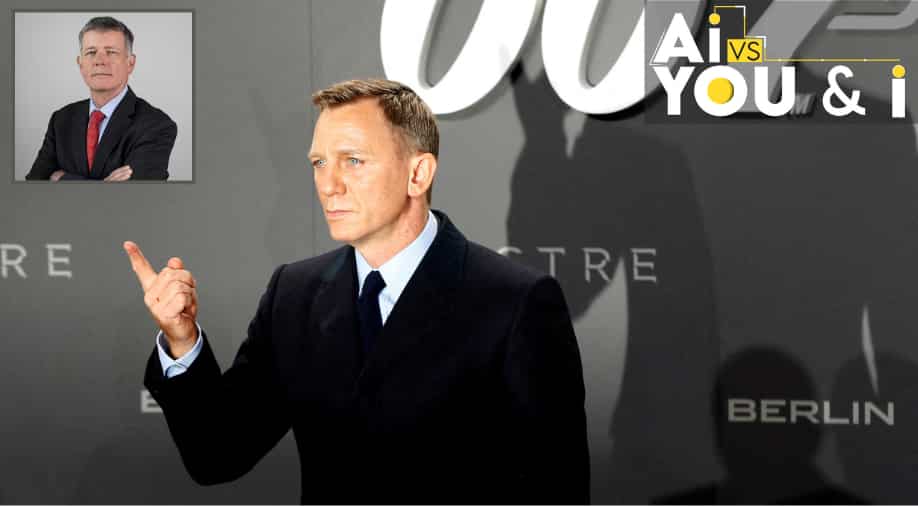
James Bond's job may be safe from AI, if one goes by the statement of MI6 chief
Sir Richard Moore, the head ofthe UK's foreign intelligence service, MI6 has said artificial intelligence (AI) will not be able to replacehuman spies, even as machines make accessing information 'infinitely easier'.
"AI is going to make information infinitely more accessible and some have asked whether it will put intelligence services like mine out of business. In fact, the opposite is likely to be true," said Moore, in a landmark address in Prague.
Moore lauded the human factor, simply because the spies had the capability to ask questions, one that machines may not necessarily ask when tasked with a job.

"They [human spies]are never just passive collectors of information: our agents can be tasked and directed; they can identify new questions we didn't know to ask; and sometimes they can influence decisions inside a government or terrorist group."
The MI6 boss is of the view that human intelligence will be able to unlock doors that AI may not be able to do. He added that advancing technology can also complement the 'human factor'.
"Human intelligence in the age of artificial intelligence will increasingly be defined as those things that machines cannot do, albeit we should expect the frontier of machine capability to advance with startling speed."
&imwidth=180&imheight=135&format=webp&quality=medium)
Blasts heard in Sanaa as Saudi-led coalition warns civilians to evacuate; Houthis vow retaliation
&imwidth=180&imheight=135&format=webp&quality=medium)
China's counter-surveillance industry booms amid heightened espionage fears | Gravitas
&imwidth=180&imheight=135&format=webp&quality=medium)
Saudi Arabia strikes Yemen oil sites as Houthi missiles target Riyadh; 'limited fire' breaks out at Aramco
&im=FitAndFill=(700,400)&imwidth=180&imheight=135&format=webp&quality=medium)
Navratri 2026: 9 days, 9 forms of Goddess Durga and 9 colours- Check the complete list
&imwidth=180&imheight=135&format=webp&quality=medium)
Trump accuses Houthis of driving up oil prices before US midterms, warns of consequences
&imwidth=180&imheight=135&format=webp&quality=medium)
New Delhi rejects Beijing’s claims and remarks on Ladakh location naming exercise
&imwidth=180&imheight=135&format=webp&quality=medium)
Russian woman and Bihar boy's love story goes viral after she reaches India to marry him
&imwidth=180&imheight=135&format=webp&quality=medium)
US Midterms 2026: In Alaska, cost-of-living anxiety meets strangest ballot in high-stakes Senate race
&imwidth=180&imheight=135&format=webp&quality=medium)
CMs Vijay-Naidu meet in Vijayawada, discuss water sharing, river-linking
&imwidth=180&imheight=135&format=webp&quality=medium)
'Don't ever mess with nature!': Trump’s tiger attack post triggers social media backlash as victim's family issues heartbreaking tribute
&imwidth=180&imheight=135&format=webp&quality=medium)
OpenAI employee arrested by FBI after allegedly hiding recording device in office
&imwidth=180&imheight=135&format=webp&quality=medium)
1,500 drones illuminate Mumbai sky as Cordelia Cruises unveils second ship, Cordelia Sky
&imwidth=180&imheight=135&format=webp&quality=medium)
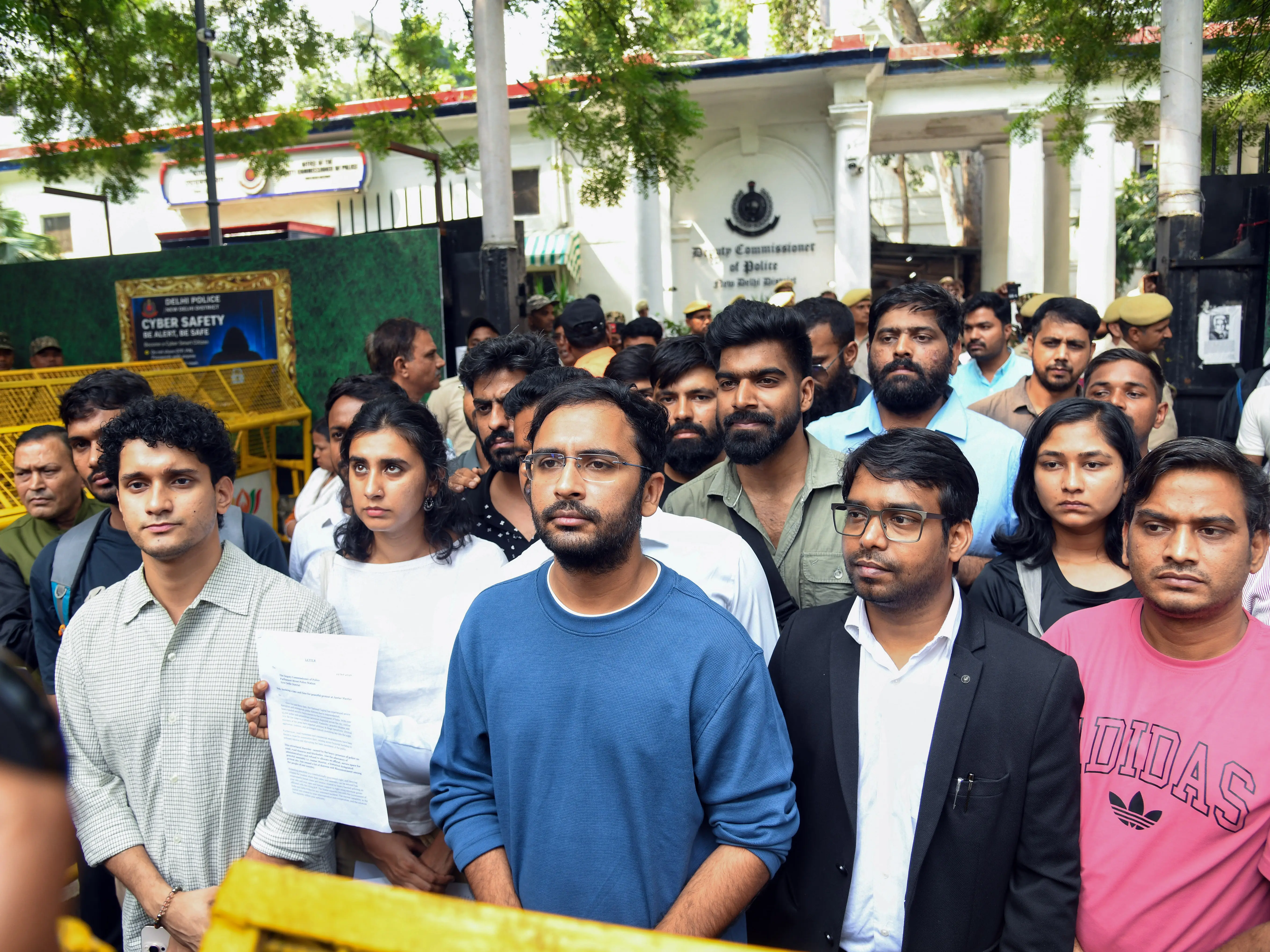
Delhi Police arrest Cockroach Janta Party's Saurav Das, Ashutosh Ranka, Ajinkya Shinde in Jantar Mantar case, to be produced before court
&imwidth=180&imheight=135&format=webp&quality=medium)
Pope Leo XIV diagnosed with lung cancer after surgery, Vatican says 'successful surgery and recovering'
&imwidth=180&imheight=135&format=webp&quality=medium)
Pakistan to chair UN-backed global Borrowers’ Platform as its own debt burden mounts, triggers sarcastic reactions on social media
&imwidth=180&imheight=135&format=webp&quality=medium)
Robot gropes girl, makes thrusting movements in bizarre crime in Germany
&imwidth=180&imheight=135&format=webp&quality=medium)
France accuses Musk of ‘online harassment’ of European leaders, warns of poll interference
&imwidth=180&imheight=135&format=webp&quality=medium)
MI5 chief warns Russia is UK’s ‘aggressor number one’ as Iran and AI threats grow
&imwidth=180&imheight=135&format=webp&quality=medium)
'Turn approver, resign, we'll forgive you': Rahul Gandhi claims receiving messages from CEC Gyanesh Kumar
&imwidth=180&imheight=135&format=webp&quality=medium)
Trump reconsidering calling off Nidal Hasan's execution livestream. Here's why
&imwidth=180&imheight=135&format=webp&quality=medium)
‘My president, I mean my husband’: Trump's new press secretary Katie Zacharia's first briefing goes off the rails in 14 minutes
&imwidth=180&imheight=135&format=webp&quality=medium)
‘How many people did she illegally bring from Somalia?’ Trump targets Ilhan Omar, questions her net worth
&imwidth=180&imheight=135&format=webp&quality=medium)
Marco Rubio to visit India next week, focus on energy cooperation and strategic ties
&imwidth=180&imheight=135&format=webp&quality=medium)
L Murugan resigns as Union Minister, expresses wish to return to grassroots
&imwidth=180&imheight=135&format=webp&quality=medium)
'Ouch!!! That must hurt': Kangana Ranaut hails Kamal Haasan's sharp reply to Elon Musk over Starlink row
&imwidth=180&imheight=135&format=webp&quality=medium)
Girl 'dead' for 8 hours wakes up at her own funeral, dad insists she wasn't breathing
&imwidth=180&imheight=135&format=webp&quality=medium)
Sidhu Moose Wala’s younger brother wins hearts by recreating late singer’s signature move at Toronto Hologram Show
&imwidth=180&imheight=135&format=webp&quality=medium)
UK school ditches technology, shifts from screen to pen and paper for learning
&im=FitAndFill=(700,400)&imwidth=180&imheight=135&format=webp&quality=medium)
New OTT releases this week (October 12-18, 2026): Sacrifice, Koffee with Karan S9, Roadies Rebirth- 6 titles coming on Netflix, JioHotstar and more
&imwidth=180&imheight=135&format=webp&quality=medium)
Anupam Kher joins Ranbir Kapoor's Ramayana as Jatayu, new poster unveiled
&imwidth=180&imheight=135&format=webp&quality=medium)
Netanyahu wants to join Saudi's war on Houthis, but Crown Prince denies: Report
&imwidth=180&imheight=135&format=webp&quality=medium)
Measles kills again: 6 dead in Pennsylvania as America faces its worst outbreak in decades | Gravitas
&imwidth=180&imheight=135&format=webp&quality=medium)
Ken Paxton's Dubai night out with two US fugitives sparks political storm as Texas Senate race tightens
&imwidth=180&imheight=135&format=webp&quality=medium)
Cornell University suspends fraternity parties over 2024 gang rape allegations
10, Downing Street on same page
The MI6 chief's views align with the version put forth by 10, Downing Street. Last month,Matt Clifford, UK Prime Minister Rishi Sunak's adviser on AI said vastly intelligent artificial intelligence(AI) systems may have the capability to "kill humans" within the next two years.
Clifford, who is currently constituting a government AI taskforce, said policymakers from across the globe need to work together to control the technology, which otherwise could have devastating consequences.
“You can have really very dangerous threats to humans that could kill many humans, not all humans, simply from where we’d expect models to be in two years' time,” said Clifford.
WATCH | Gravitas | ChatGPT Explained: How does the platform work?
The letter calling for ban on AI
Earlier in March, an open letter by theFuture of Life Institute, a think tank, signed by Elon Musk and Steve Wozniak amongst others, took a very cautious approach to the next generation of AI. The letter cited 12 pieces of research from experts that included former employees of OpenAI, Google as well as DeepMind.
"Powerful AI systems should be developed only once we are confident that their effects will be positive and their risks will be manageable," the letter stated.
Meanwhile,Geoffrey Hinton, often regarded as the 'godfather' of AI technology has already urgedgovernments to intervene and prevent AI machines from taking control of society.
Hinton, who recently left Google to speak more openly about the risks of AI, expressed his concern that the risks associated with AI should not be dismissed as science fiction or fear-mongering.
"Before AI is smarter than us, I think the people developing it should be encouraged to put a lot of work into understanding how it might try and take control away."
"Right now there are 99 very smart people trying to make AI better and one very smart person trying to figure out how to stop it taking over and maybe you want to be more balanced," he added.
(With inputs from agencies)
WATCH WION LIVE HERE: