Assassination Nation: From PMs and presidents to military chiefs, modern Iran's story is marked by murders of its top leaders

&imwidth=600&imheight=450&format=webp&quality=medium "Assassination Nation: From PMs and presidents to military chiefs, modern Iran's story is marked by murders of its top leaders")
Modern Iran's history is pokemarked by assassinations of political and military leaders Photograph: (others)
Modern Iran's history is pockmarked by assassinations of political and military leaders, intellectuals, activists and dissidents inside the country and abroad.
The Israel-Iran war has seen some of the most high-profile assassinations in recent years, including top aides of Supreme Leader Ali Khamenei, commanders of the regular army and parallel military force IRGC, as well as several nuclear scientists. But in the blood-stained history of modern Iran, such assassinations and targeted killings are nothing new. Those killed include presidents and prime ministers, as well as military chiefs. The murders were carried out by the Iran regime, Iran's foreign enemies like Israel, or by groups opposed to the Islamic Republic.
Here is a look at major assassinations in Iran since it achieved nationhood.
Political assassinations linked to the Pahlavi Dynasty (1925–1979)
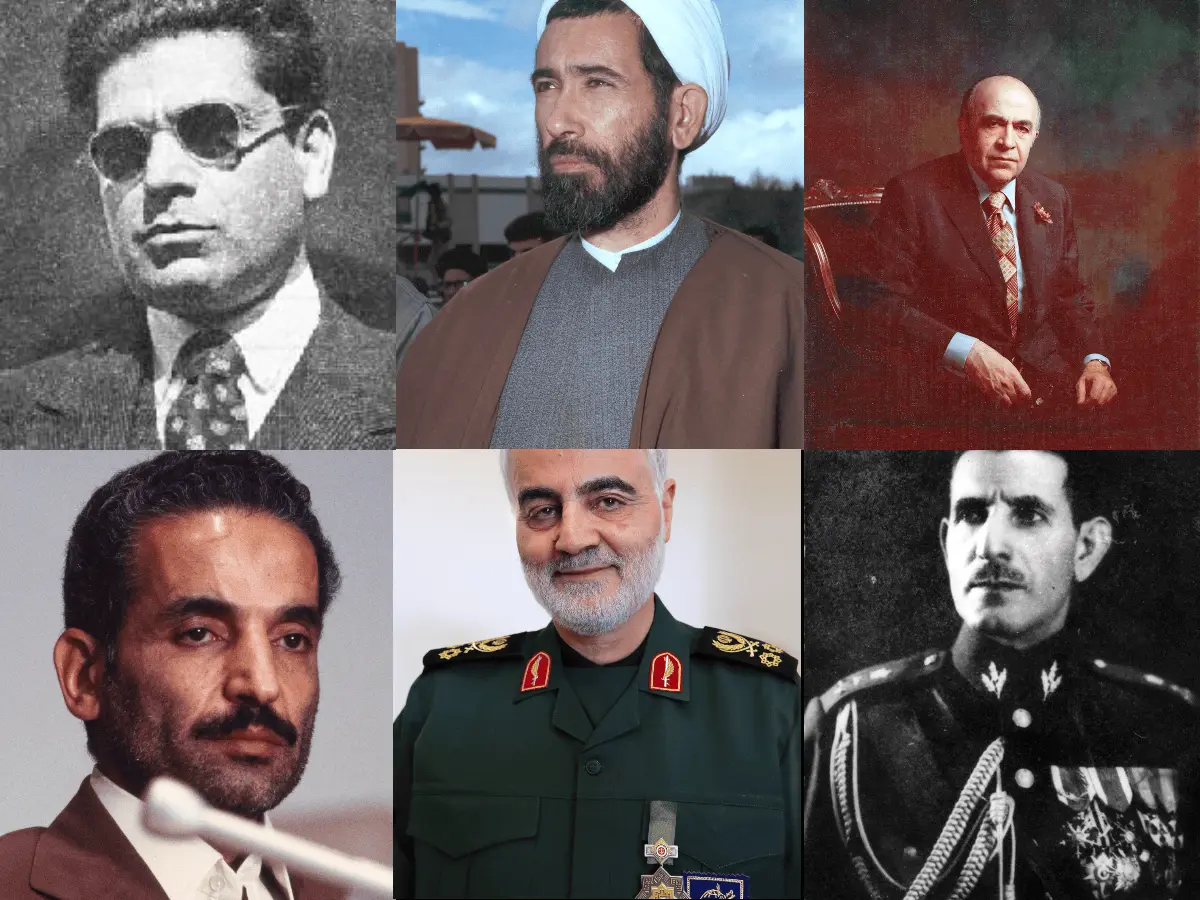
Prime Minister Abdolhossein Hazhir was shot dead in Tehran on 4 November 1948 by a member of the Fada’iyan-e Islam, a radical Islamist group. The pro-West politician was killed for backing the monarchy and alleged foreign influence.
Another Prime Minister Haj Ali Razmara was assassinated on 7 March 1951 outside the Baharestan Mosque in Tehran.The assassin was a member of the Fada’iyan-e Islam. The PM was killed for his secular policies and for holding talks with the British on nationalisation of Iran's oil.
Prime Minister Amir-Abbas Hoveida,who had already faced an assassination attempt, was executed on 7 April 1979. Hoveida was a long-serving prime minister under the Shah regime, having been in the post from 1965 to 1977. After the Islamic Revolution of 1979, Hoveida was executed at the end of a summary trial by the Islamic Revolutionary Court. He was one of the many Pahlavi-era elites eliminated by the Islamic Republic regime.
Shahriar Shafiq, a nephew of Shah Mohammad Reza Pahlavi and Naval officer, was shot dead in Paris on 7 December 1979. Later, an Iranian official claimed responsibility. This was an instance of how the Islamic Republic regime targeted loyalists of the Shah regime abroad.
Shapour Bakhtiar, the last prime minister under the Shah, who was opposed to the Islamic Revolution, was also killed abroad. While living in exile, Baktiar was stabbed to death in Paris by Iranian intelligence operatives posing as businessmen, on 6 August 1991.
Trending Stories
)
)
)
)
)
)
)
)
&im=FitAndFill=(700,400))
)
)
)
)
&im=FitAndFill=(700,400))
)
)
)
)
)
)
)
)
)
)
&im=FitAndFill=(700,400))
)
)
)
)
)
)
)
)
Killings of key figures associated with Islamic Republic: The 1981 mayhem
The killings of top leaders associated with the 1979 Islamic Revolution started as early as 1981. That year saw assassinations of at least four major figures, including a prime minister, a president and a chief justice. Notably, the same year saw an assassination attempt on Ali Khamenei, then a presidential candidate, but he survived.
Mohammad Beheshti, the Chief Justice under the Islamic Republic, was killed in a bombing on 28 June 1981 at the Islamic Republic Party headquarters in Tehran. The People’s Mujahedin of Iran or MEK was behind the attack that also killed 70 other high-ranking officials. Beheshti was a key figure in establishing the judiciary of the Islamic Republic.
A single bombing that wiped out the political leaders of Iran
One of the most high-profile attacks that caused multiple assassinations was a bombing of the presidential office in Tehran on 30 August 1981. The blast killed President Mohammad Ali Rajai,
Prime Minister Mohammad Javad Bahonar and Colonel Vahid Dastjardi, the head of the national police. The MEK was responsible for the attack that targeted the regime’s leadership.
Bahonar, a cleric, was a key ideologue of the Islamic Republic, while Dastjardi was a senior security official, making him among the first military-related targets of the Islamic Republic.
Ali Sayad Shirazi, Chief Commander of the Army was shot dead on 10 April 1999 outside his home in Tehran by an MEK operative. Shirazi was a key military figure during the Iran-Iraq War, serving as the deputy chief of the General Staff when he was killed.
Iranian regime's ‘chain murders’ targeting intellectuals and secularists
The Islamic Republic regime targeted many dissidents and intellectuals opposed to the regime in the 1980s and 90s. Most prominent among these was the ‘chain murders’ of 1998. These were targeted killings of secular activists orchestrated by Iran’s Ministry of Intelligence. Among the victims was Dariush Forouhar, Minister of Labor under Pahlavi era, killed on 22 November 1998 along with his wife. The couple was stabbed to death at their home in Tehran.
The military chiefs taken out from 2020 to 2024
The killings of military leaders of Iran were among the top priorities of its enemies, particularly Israel and the US. The most prominent among these is Qasem Soleimani, the commander of IRGC's Quds Force. On 3 January 2020, he was assassinated in a US drone strike near Baghdad International Airport in Iraq. Soleimani was not just another military official: he was an awe-inspiring leader of Iran who played a major role in regional operations that included training and arming anti-Israel militant groups like Hezbollah and Hamas. Soleimani was targeted by the US administration of Donald Trump during his first term in office, with reported help from Israel.
On 1 April, 2024, Israel conducted an air strike on the Iranian consulate in Damascus, Syria, killing Mohammad Reza Zahedi, the commander of IRGC's Quds Force. Zahedi was a senior commander overseeing IRGC operations in Syria and Lebanon, and the highest-ranking IRGC officer killed since Soleimani.
Wiped out: Top leaders and military officials killed in the June 2025 Israeli strikes on Iran
Numerous senior officials, both political and military chiefs, were killed during the first days of Israel's military offensive against Iran. They were killed between June 13, when the operation started, and June 15.
Among the political figures, the most prominent to have been killed was Ali Shamkhani, senior Adviser to Supreme Leader. Shamkhani was a former IRGC Navy commander who served as national security chief in 2013–2023. He was also a top nuclear negotiator of Iran.
Mohammad Bagheri, Chief of Staff of the Armed Forces, was killed in an Israeli airstrike in Tehran during the ongoing Operation Rising Lion. Bagheri was the highest-ranking military official under Supreme Leader Khamenei, and had coordinated operations of Iran’s regular armed forces and the IRGC.
The same Israeli attack also killed Hossein Salami, the IRGC Commander-in-Chief. Salami was a major general leading the IRGC since 2019.
Gholamali Rashid, Commander of Khatam-al-Anbiya Central Headquarters, was another military leader killed in the Israeli offensive in Tehran. The major general used to coordinate joint military operations between the IRGC and the regular army.
Amir Ali Hajizadeh, IRGC Aerospace Force Commander who oversaw Iran’s ballistic missile and drone programmes, was also killed in the Israeli airstrike. He was among the architects of Iranian attacks on Israel in 2024, in the wake of the Israel-Hamas war in Gaza.
Mohammad Kazemi, IRGC Intelligence Chief was killed in the Israeli airstrike in Tehran on June 15, along with Hassan Mohaqiq, IRGC Intelligence Deputy Chief.Mohsen Bagheri, IRGC Intelligence Officer, was also killed in the same airstrike.
Gholamreza Mehrabi, Deputy Intelligence Chief of Armed Forces , Mehdi Rabbani, Deputy Commander of Operations for Armed Forces, Davood Sheikhian, Air Defense Commander, and Khosro Hassani, Deputy Intelligence Chief of IRGC Aerospace Unit were all killed in Israeli air strikes on 13 June.
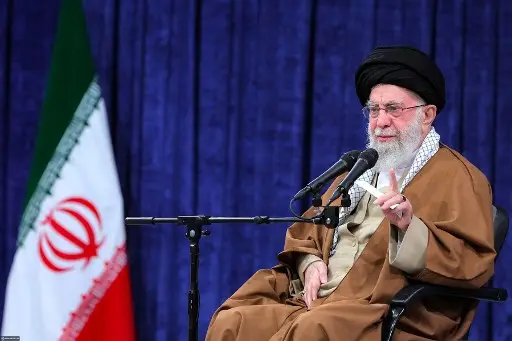
Those killed by Israel this month were key figures of Iranian Supreme Leader Ali Khamenei's inner circle. There is talk in the international media that Khamenei himself might soon become a target of assassination. That, if it happens, would be the most high-profile assassination in the blood-stained history of modern-day Iran.