Islamic State exploits virus, political crisis to boost Iraq attacks

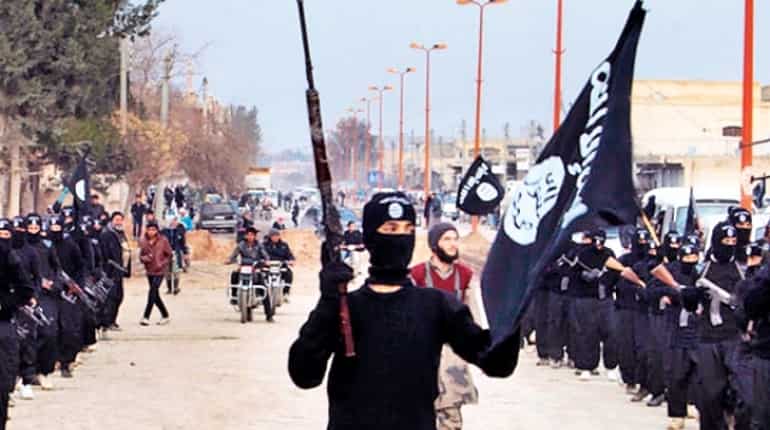
Islamic State flag
Islamic State group remnants in Iraq are exploiting a coronavirus lockdown, coalition troop withdrawals and simmering political disputes to ramp up deadly attacks, according to analysts and intelligence officials.
The bloodiest so far was an ambush early Saturday that killed 10 Iraqi fighters north of Baghdad that observers say demonstrated a new escalation in the jihadist group's tactics but one that could still be contained.

Iraq declared IS defeated in late 2017 but sleeper cells have survived in remote northern and western areas, where security gaps mean the group wages occasional attacks.
They have spiked since early April as jihadists plant explosives, fire on police patrols and launch mortars and rockets at villages, local security sources told AFP.
)
1,200 Indian and US troops begin high-altitude and desert drills
)
Water equivalent to two Pacific Oceans could be stashed 2,900 km inside Earth
)
Saudi turns to Israel for intelligence help as Houthi attacks intensify: Report
)
'Definitely feel bad for yourself': Kuldeep Yadav opens up on India Test snubs
)
Sydney Sweeney defends provocative ad choice, the internet is still not impressed
)
OpenAI boss Sam Altman repeats AI 'slow down' call, says world 'right to be afraid'
)
China's property crisis deepens as investment plunges nearly 20%
)
Delhi schools receive bomb threats in Punjabi, security checks find nothing suspicious
)
US Treasury yields cross 5% as Scott Bessent warns of ‘global issues’ impacting bonds
)
US fires up to 70 interceptors against Iran attack on Jordan, putting supplies under pressure
)
Ex-CIA officer caught with gold bars worth $40 million seeks plea deal | Gravitas
)
Saudi Arabia accuses Houthis of drone attack on Mecca, first-ever red alert in Islam's holiest site sparks panic
)
Spanish officer sent home from NATO base over affair with 'Russian spy' | Gravitas
)
‘Kill all in the name of...’: FBI arrests 21-year-old over alleged ISIS-inspired mass-casualty attack plot
)
Bitter Zelensky snubs Trump for playing politics with Ukraine war | Gravitas
&im=FitAndFill=(700,400))
New OTT releases this week (September 14-20, 2026): Lust Stories 3, Waiting Hai, Irumudi- 5 new titles coming on Netflix, Prime Video and more
)
West Bengal IPS officer Bushra Bano transferred after objections to ‘Assalamualaikum’, ‘Inshallah’
)
Ed Sheeran’s US tour loses all support acts after Macklemore’s removal | Controversy explained
)
Trump's Iran war faces fresh House rebuke; 7 Republicans join Democrats in push to end conflict ahead of midterms
)
Ex-India all-rounder Yuvraj Singh wants India to avoid 'massive changes' before ODI World Cup 2027
)
Who is Kalyan Bainsla, accused in the Gurugram hit-and-run case involving woman biker?
)
Elephants hide behind trees, stage surprise attack on poachers targeting rhinos in South Africa
)
Putin-linked Russian oligarch, Melania links: Why Trump skipped his son’s Bahamas wedding bash?
)
Saudi Arabia discovers 110 million tonnes of Uranium-rich ore in Madinah region
)
‘US military task force aiding Saudi Arabia forces with intel, planning support’: Official
)
Top military commanders from US, Israel, and 7 Arab nations held secret meeting on Iran War
)
India’s imports from Russia jump 57% in five months; China remains top import source
)
Los Angeles helicopter crash: At least three dead, several injured; NTSB to investigate
)
'Like a thug you are using agency to go after..': Kash Patel grilled by Senate Democrats over FBI firings, journalist investigations and hiring policy
)
Messi set to play in farewell match on October 6 in Argentina vs Benin friendly
)
Trump's name cannot return to Kennedy Center, US judge rules
)
Space mines, lasers & robotic arms: Lt Gen Pannu decodes US disclosure of weapons in space
)
'Now Trump is copying us': Shivakumar links US $5,000 plan to Congress guarantees
)
'She married her brother': Ilhan Omar faces criminal probe over immigration fraud claims
)
800 million years old - Scientists discover 'fingerprints' of supercontinent Gondwana in ancient rocks
"Combat operations have reached a level we haven't seen in a while," said Iraqi security expert Hisham al-Hashemi.
He said IS fighters were using abandoned villages to edge towards urban areas, looking to re-establish funding mechanisms, smuggling routes and hideouts while targeting local infrastructure and officials to cause panic.
Days before early Saturday's ambush -- which was multi-pronged and took place in Salahaddin province -- the jihadists claimed a suicide attack that wounded four people outside an intelligence headquarters in Kirkuk, a restive northern province.
An intelligence officer there said IS had tripled its attacks in Kirkuk in April compared to March.
In part, the escalation may be linked to security units being redeployed to enforce a nationwide lockdown aimed at curbing the spread of the novel coronavirus, which has infected more than 2,000 people and killed over 90 in Iraq.
The jihadists could also be exploiting the political deadlock in Baghdad, where top leaders are focused on tense talks over a new government, the consequences of a collapse in global oil prices and budget disputes with autonomous Kurdish authorities.